
Real estate software is not one category. For a working agent it is six separate layers that get bought at different times, from different vendors, and half of them overlap without anyone mentioning it. The question worth answering is not which tool is best but which layer you are short of.
This guide is written for agents, teams, and brokerages. If you manage rental units and collect rent, you want property management software, which is a different category with different vendors. If you buy and flip, you want investor software built around deal and lead data. Both get a short section below so you can tell whether you are on the right page.
One more thing worth saying plainly. Most software roundups for this industry carry affiliate commissions, which is why they run to twenty-one tools and never add the prices up. Prices below were checked in August 2026 against vendor pricing pages, and the total is at the end.
Start by naming which job you are buying for
Agent-facing software splits into six layers. Almost every product on the market lives in one of them, and knowing which one you are missing narrows the shopping list faster than any ranked list.
| Layer | What it does | Typical published price |
|---|---|---|
| Lead generation | Buys or generates inquiries from portals, ads, or predictive data | $189 to $899 / month, often plus a per-lead fee |
| CRM and follow-up | Stores contacts, runs automated sequences, tracks the pipeline | $33 to $179 / month solo, more per seat for teams |
| IDX website and search | Puts MLS listings on your own domain and captures registrations | Usually bundled with lead generation, $399 / month and up |
| Transaction and documents | Tracks contingencies, deadlines, signatures, and files to close | About $10 per transaction, or bundled |
| Marketing and listing presentation | Social templates, virtual staging, video, market reports | $7 per image to $74 / month |
| Conversation capture | Records the client meeting and turns it into notes | One-off hardware, from about $179 |
The channels feeding that first layer, and what each costs per closing rather than per lead, are broken down in the guide to real estate lead generation.
Two of these are load-bearing and the rest are optional. The CRM is where the business lives, and the follow-up automation inside it is what converts. Everything else is either feeding that system or presenting its output.
The CRM layer deserves its own comparison, since it is the one most agents get wrong first. Prices, seat counts, and which platform shape fits which business are in the CRM comparison for real estate.
Where the layers overlap and you pay twice
Overlap is the most common way agents overspend, and it happens because all-in-one platforms are sold as one layer while covering three or four.
The pattern repeats across vendors. Buy an IDX-plus-CRM platform and you have already bought the CRM layer, so a separate CRM subscription is now a duplicate. Buy a lead generation platform at the higher tiers and it usually includes the website and the CRM too. Buy a CRM-first tool instead and you keep your existing website, which is a saving if you like it and a gap if you do not own one.
Three questions settle most of it. Do you already own a website that ranks and converts? Do you buy portal leads, or does your business run on sphere and referral? And how many people need a login next year, not this year?
Answering those in order tells you whether you are buying one platform or assembling four tools. Assembling is cheaper per feature and costs you integration work. One platform is more expensive and simpler, and switching later means moving everything at once.
One caution on contracts. Several platforms in the lead generation and IDX layers require six or twelve month commitments and charge setup fees on top, so the first-year cost runs above twelve times the monthly rate. Ask for the first-year total in writing before comparing anything.
What a working stack costs once you add it up
A realistic solo agent stack runs about $250 to $600 per month, and a small team platform-first setup runs $900 to $2,000. The spread comes almost entirely from whether you are buying leads.
Two examples, built from published August 2026 prices.
- Assembled, sphere-driven solo agent. A relationship-first CRM around $49 per month, a marketing template subscription at $74, virtual staging at roughly $16, and transaction coordination at about $10 per deal. Call it $150 per month plus per-transaction costs, with no lead spend.
- Platform-first team buying leads. An IDX and lead platform from $399 to $899 per month, per-seat CRM upgrades, an AI nurture add-on in the low hundreds, and ad spend on top. This crosses $1,500 per month quickly, and the ad spend is usually the largest line.
A useful sanity check that circulates among agent coaches is to keep software at a low single-digit percentage of gross commission income. The number matters less than the habit of computing it, because software is bought monthly and reviewed annually, which is how a stack grows past what it earns.
Two costs that never appear on a pricing page. Migration, which burns roughly a month of momentum when you move a database, and the internal cost of tools nobody adopts. The second is larger than most agents expect, and it is a reason to buy the tier you will need in a year rather than the one that impresses in a demo.
What property management and investor software does instead
If you collect rent, screen tenants, or handle maintenance requests, you need property management software rather than anything above. That category is led by different vendors entirely, priced per unit rather than per seat, and built around accounting and compliance rather than lead conversion. It shows up in the same search results because the phrase overlaps, not because the products compete.
Investor software is a third category again, built around finding off-market property, pulling comparable sales, skip tracing, and estimating returns. An agent who also invests may run one of each, and they do not replace one another.
If either of those is your job, the rest of this page will not help much, and the vendor names in the search results above this one will serve you better.
The layer most stacks are missing
Every layer above assumes the information is already written down. None of them capture the conversation where the information first appears.
That is the gap. A buyer explains their real budget in the car. A seller mentions a timeline while walking the yard. An objection surfaces at the kitchen table that decides the whole deal. By the time an agent is back at a laptop, that detail has flattened into three words, and no CRM automation, lead score, or AI nurture sequence can recover what was never entered.
Meeting bots do not solve this either, because they join calendar invites, and a walkthrough is not a calendar invite.
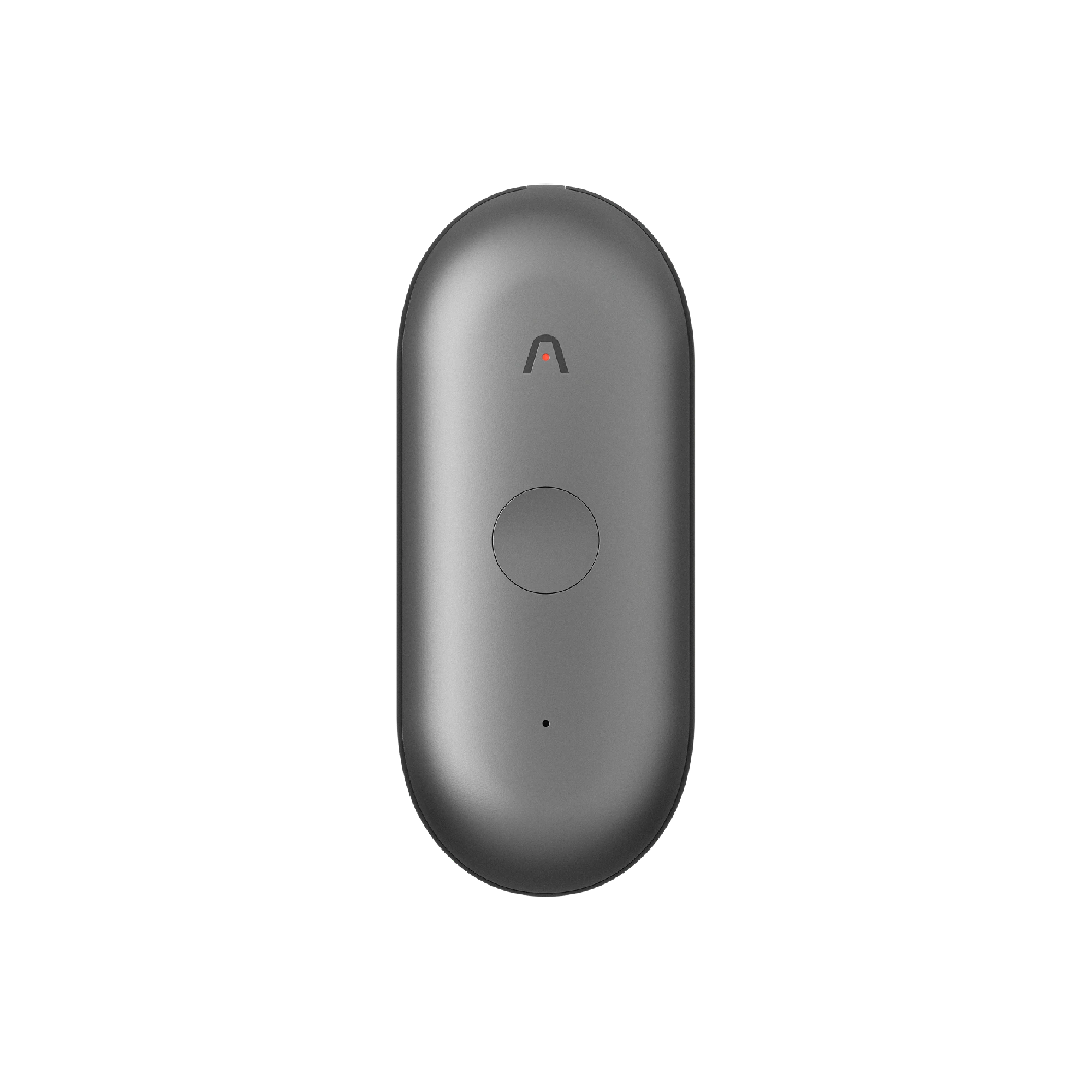
A physical AI note taker covers the part software cannot reach. Plaud Note Pro picks up clearly at up to 5 meters (16.4 feet)* with four MEMS microphones and AI beamforming, which is enough for an open floor plan or a table with three people at it. Smart dual-mode recording detects whether it is a phone call or an in-person conversation and switches without a setting change, so listing calls and buyer consultations land in one place. It runs up to 50 hours in Endurance mode** per charge, stores 64 GB on the device, and shows status on an InstantView AMOLED display. It is hardware rather than another monthly line.
For agents who spend the day walking properties instead of sitting at tables, the wearable version covers the same job.

Online meetings still count. Plaud Desktop captures Zoom, Teams, and Google Meet without sending a bot into the call.
Turn a walkthrough into records your other tools can use
Capture only pays off when the output lands in the fields your other layers expect. Plaud Intelligence transcribes in 112 languages with speaker labels, then formats through summary templates, so one showing produces a structured record instead of a transcript nobody rereads.
Build the template once to mirror your own CRM fields, and every showing afterward returns the same shape: buyer preferences, objections raised, properties reacted to, commitments made, next step and date. That is a paste rather than a rewrite. The same conversation can produce several documents at once when the follow-up email and the note for your transaction coordinator need different formats.
Ask Plaud searches the whole history, which matters most when a past client resurfaces two years later and the record has to answer for you. One agent describes working this way through client meetings, staying present in the room and sorting the record afterward.
Ask before you record a client conversation
Consent comes before any of the above, not after it. US recording law starts from a one-party consent baseline under federal law, and a group of states requires consent from everyone in the conversation. Calls cross state lines and in-person conversations are sometimes treated differently from phone calls, so the workable rule is to ask every time. Justia maintains a 50-state survey of recording laws worth reading once for your state. Before you record, take a moment to let others know and get their okay.
Two things to settle once. Fair housing exposure does not disappear because a summary was automated, so anything shaping a recommendation still needs a human read, which the National Association of Realtors covers in its guidance on AI use. And check where recordings live: Plaud sets out its posture in the trust center, including independently audited controls with SOC 2 Type II and no use of your data for AI training unless you explicitly opt in.
Fix the layer you are short of
Work out which of the six layers is weakest before comparing any vendor, because the tool that fixes a gap pays back and the tool that duplicates one does not. Ask every platform for the first-year total including setup and contract length, and check what your existing subscriptions already cover before adding another. Then look at the layer nothing in your stack owns, which is the conversation itself. See how agents handle that part on the real estate use-case page.