
Includes patient details, Subjective, Objective, Assessment, Plan, follow-up, risk or safety notes, and review checks. Format: Google Doc and PDF. Best for clinical, therapy, primary care, and allied health notes.
After a patient visit, clinicians still have to decide what belongs under S, O, A, or P. That sorting becomes harder when the conversation moves quickly, several concerns overlap, or organization and payer requirements add another set of fields.
We reviewed Reddit discussions from therapists, speech-language pathologists, and physical therapy practitioners. One therapist wanted a faster way to complete notes while still meeting insurance audit requirements and said they often included too much detail.
A practitioner learning SOAP notes understood the difference between subjective and objective information but was unsure where specific interventions belonged. In another discussion, a commenter judged a note by whether the next clinician could continue care from it.

The template helps the clinician separate what the patient reported, what was observed, what the clinician concluded, and what happens next. A later reviewer should be able to follow that sequence without reconstructing the encounter from the transcript.
SOAP note template
Download the template as a PDF, then paste it into your EHR, Microsoft Word, Google Docs, or internal documentation tool. Remove fields that do not apply to the encounter. Add any fields required by your organization, payer, specialty, or local regulations.


The SOAP note template: encounter details and the S, O, and A sections on the first page, the plan and return precautions on the second.
SOAP note example
Download the free SOAP note template as a PDF, then compare it with the filled example below. The example is fictional and for formatting only. It does not provide medical advice or replace clinical judgment.
This example shows note structure only. A licensed clinician must decide which assessment, risk, intervention, and follow-up details are appropriate for the encounter.
Encounter details
| Field | Details |
|---|---|
| Patient | [Example patient] |
| Date of service | [Example date] |
| Clinician | [Example clinician] |
| Visit type | Video follow-up |
| Start and end time | [Example start and end time] |
| Location or service setting | Telehealth |
| Diagnosis or presenting concern | Follow-up for anxiety symptoms and sleep difficulty |
S: Subjective
The patient reported increased work stress over the past two weeks and described difficulty falling asleep on several nights. The patient said breathing exercises helped during mild anxiety but felt less helpful during a recent presentation. The patient denied current intent to harm self or others when asked.
O: Objective
The patient arrived on time for the video visit and was engaged throughout the session. Speech was clear and goal-directed. Affect appeared anxious when discussing work stressors and relaxed somewhat during the grounding exercise. The clinician reviewed the patient's self-monitoring log for sleep and anxiety triggers.
A: Assessment
The patient's anxiety symptoms appear increased in the setting of work-related performance stress. Sleep disruption may be contributing to reduced coping capacity. The patient used previously discussed breathing techniques with partial benefit, suggesting the plan should add more specific preparation and sleep-support strategies. Risk concerns were not identified in the information documented during this visit.
P: Plan
Continue weekly sessions. Practice a brief grounding exercise before presentations and track anxiety intensity before and after the exercise. Review sleep routine and reduce late-evening work email exposure where feasible. Revisit coping strategies and sleep pattern at the next scheduled session. The clinician will review and sign the note according to clinic policy.
What is a SOAP note?
A SOAP note is a structured clinical progress note with four sections: Subjective, Objective, Assessment, and Plan. Subjective records relevant information reported by the patient. Objective holds observations and measurements. Assessment explains the clinician's interpretation, and Plan records the next actions.
For US providers, CMS says each encounter should be documented completely, accurately, and on time. Its general guidance includes the reason for the encounter, relevant history and findings, an assessment or diagnosis, a care plan, the date, and the identity of the observer. Specialty, payer, employer, and jurisdictional rules may require additional fields.
How to write each SOAP section
Subjective: what the patient reports
The Subjective section belongs to the patient story. Include the chief complaint, symptoms, concerns, relevant history, medication effects, functional changes, and patient quotes when they clarify the note.
Support a statement such as "patient is anxious" with what the patient reported, when it started, what makes it worse, what helps, and how it affects daily function. For visits with multiple concerns, number the concerns and carry the same numbering into Assessment and Plan.
Objective: what you observe or measure
The Objective section should hold observable and measurable information: vitals, exam findings, test results, screening scores, appearance, behavior, speech, mobility, or interventions used during the visit.
Keep interpretation out of this section. "Patient cried when discussing family conflict" belongs in Objective. "Patient is unable to cope with family conflict" belongs in Assessment only if the note supports that conclusion.
Assessment: what the information means
The Assessment section is the clinician's interpretation. It should connect the subjective and objective information to a working diagnosis, clinical impression, progress update, risk assessment, or treatment response.
Repeating the complaint under Assessment leaves the clinician's reasoning unstated. Record what changed, what stayed the same, what risk or uncertainty remains, and how those findings support the plan.
Plan: what happens next
The Plan section should make the next step clear. Include orders, referrals, medication changes, therapy goals, exercises, patient instructions, safety steps, follow-up timing, and care coordination when relevant.
Write the follow-up interval and the review task when they are known. For example, "Continue weekly sessions and review the sleep log at the next visit" tells the next clinician what should happen and when. If a patient should seek earlier help under certain conditions, record the trigger and the action.
How SOAP notes change by specialty
The four-part structure stays the same, but the content changes with the encounter.
| Setting | Subjective focus | Objective focus | Assessment and Plan focus |
|---|---|---|---|
| Primary care | Chief complaint, history of present illness, review of systems, medication and allergy updates | Vitals, physical exam, labs, imaging, point-of-care tests | Working diagnosis, differential, treatment, follow-up, safety-netting |
| Mental health or therapy | Mood, symptoms, stressors, function, patient quotes, risk disclosures | Affect, behavior, speech, engagement, interventions used | Clinical formulation, progress toward goals, risk, next therapy focus |
| Physical therapy | Pain, function, home exercise adherence, activity limits | Range of motion, strength, gait, mobility, tests performed | Progress toward goals, barriers, exercise progression, next treatment plan |
| Medication management | Medication benefit, side effects, adherence, symptom changes | Vitals, screening scores, observable mental status or physical findings | Response to medication, risk-benefit judgment, dose or monitoring plan |
| Group or family session | Participant reports, shared concerns, interaction context | Participation, communication patterns, observed responses | Group progress, individual implications, follow-up responsibilities |
A general SOAP template can cover many encounters, but specialty-specific prompts can help clinicians check the fields their setting requires.
SOAP vs DAP vs BIRP notes
Clinicians also use DAP and BIRP for therapy and behavioral health documentation. These frameworks group encounter information differently from SOAP.
| Framework | Sections | Best fit | What to consider |
|---|---|---|---|
| SOAP | Subjective, Objective, Assessment, Plan | Encounters where you want a clear split between reported information, measured findings, clinical judgment, and plan | Can feel longer when the encounter is simple |
| DAP | Data, Assessment, Plan | Therapy notes where data can combine subjective and objective information | Less separation between patient report and clinician observation |
| BIRP | Behavior, Intervention, Response, Plan | Behavioral health notes focused on what happened in session and how the client responded | Less room for broader medical or diagnostic detail |
Choose the framework your organization expects. If you are unsure, use the format required by your EHR, payer, supervisor, or licensing rules.
Capture an approved in-person encounter and prepare a SOAP-style draft with Plaud
For an encounter the organization permits to be recorded, an AI recording device can provide a source for the clinician to review while preparing a SOAP-style draft.
Use this process only for in-person encounters that the organization permits to be recorded. Before recording, confirm patient consent, the approved scope of the recording, who can access it, where it may be stored, and how long it may be retained. Follow the organization's privacy, security, documentation, and access policies, as well as applicable law.
After the encounter, Plaud can help prepare a structured starting draft. The clinician reviews the transcript and draft against the encounter before any information enters the chart.
1. Capture the encounter with Plaud Note Pro or Plaud NotePin S

Record with Plaud Note Pro

Record with Plaud NotePin S
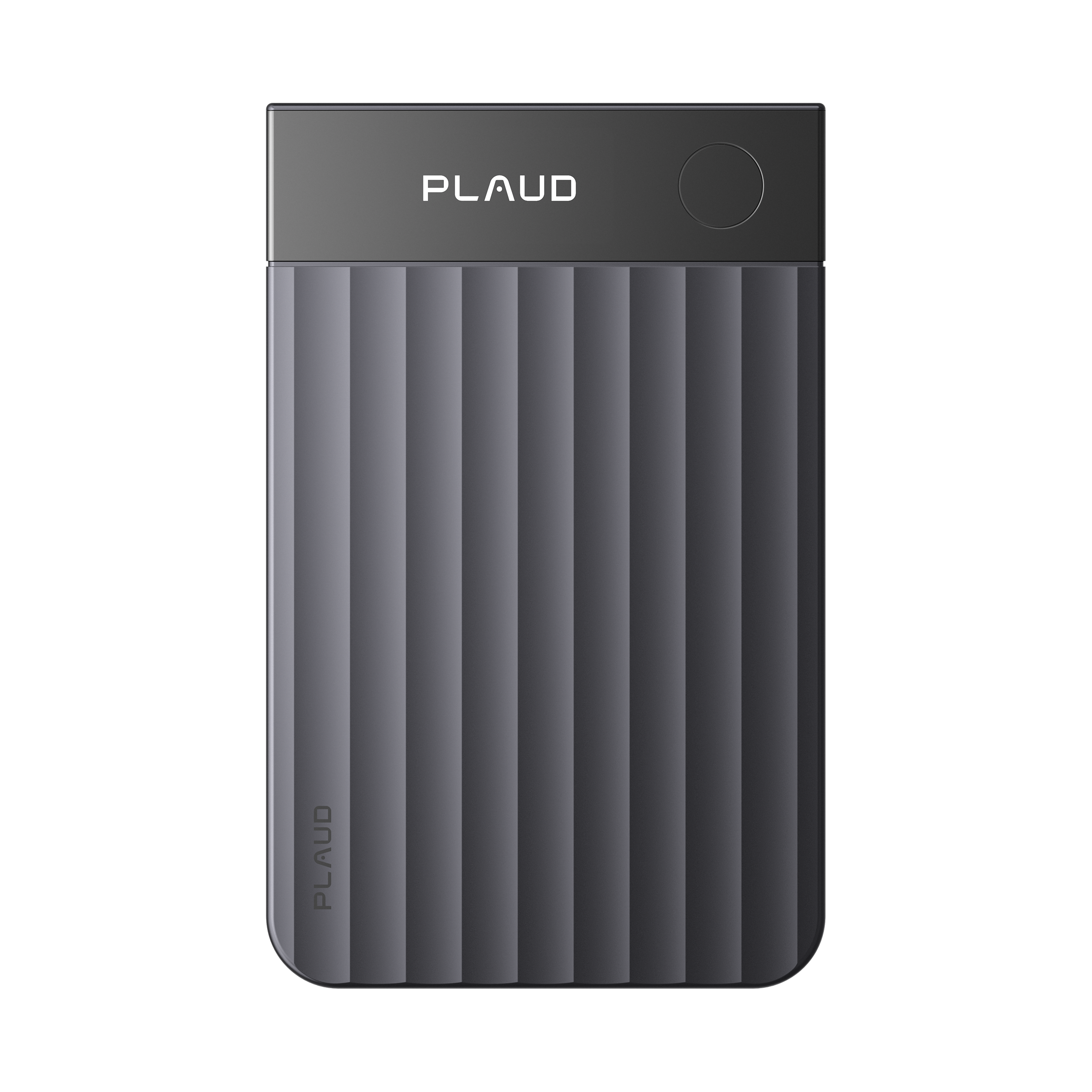
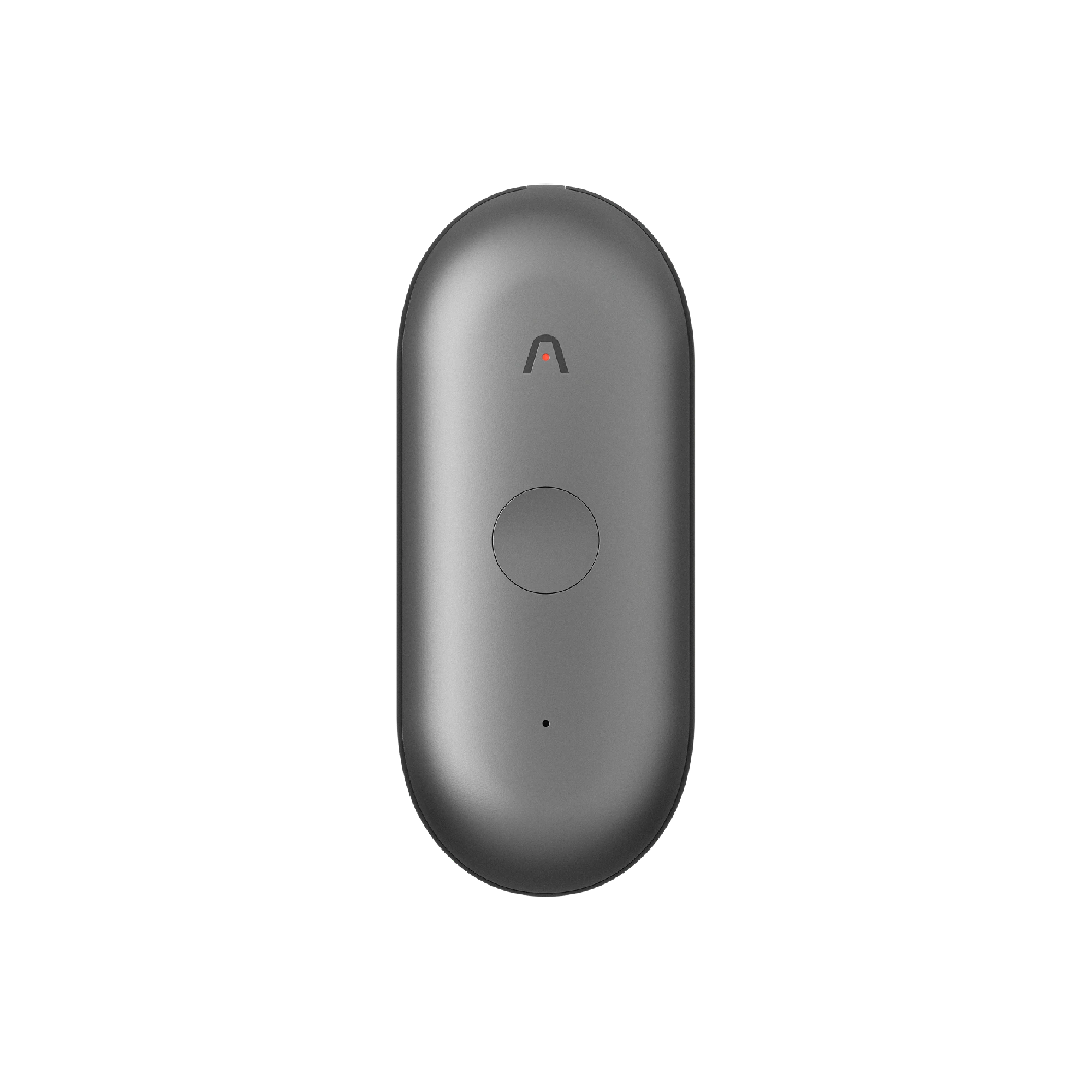
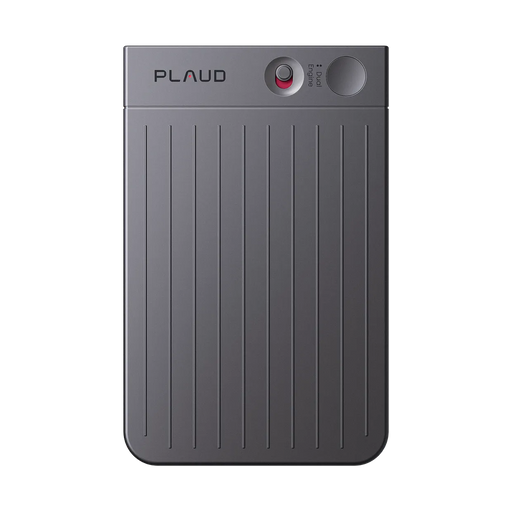
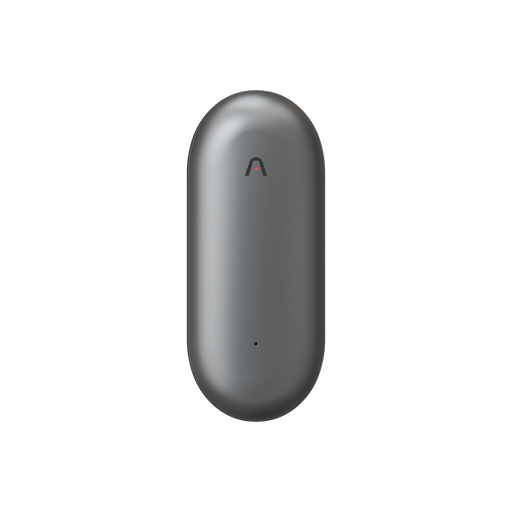
Use Plaud Note Pro when the encounter takes place in one consultation room and the device can remain with the clinician during the approved conversation. Use Plaud NotePin S when the approved care setting involves moving between rooms or stations.
Start and stop recording within the consent and policy limits established for that encounter. The recording supports the clinician's documentation process. It does not determine what belongs in the chart.

 Plaud Note Pro Desk consultations, longer conversations, and phone calls where a physical AI note taker fits the workspace Shop now
 Plaud NotePin S Wearable capture during approved in-person visits where the clinician moves between rooms or stations Shop now
Capture the encounter with consent, generate a transcript, and review a structured SOAP-style draft before anything enters the chart.
2. Generate a SOAP-style first draft with Plaud Web or Plaud App

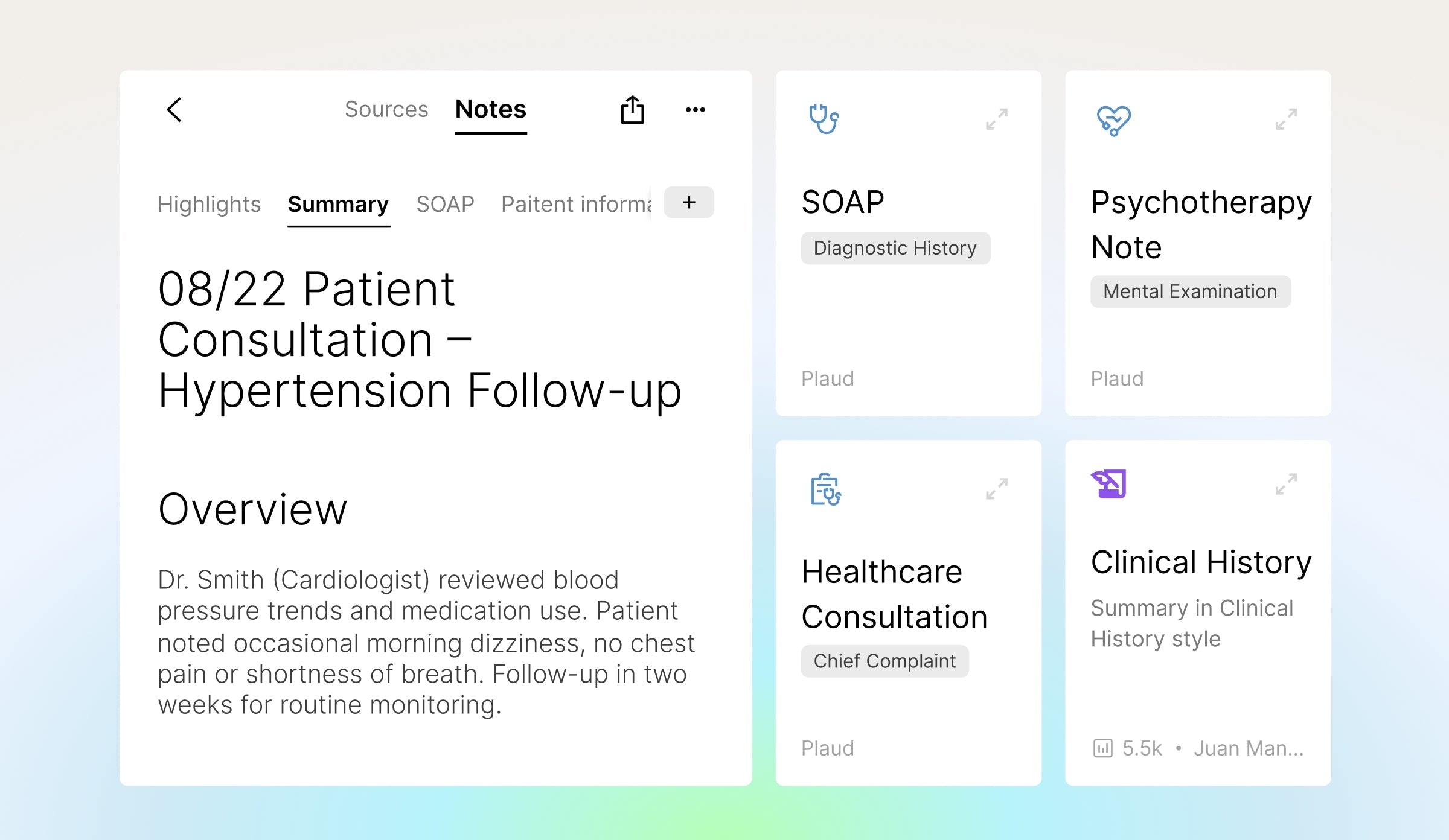
Pick the SOAP template and generate
View or edit more conversation details
Open the approved recording in Plaud App or Plaud Web and apply a SOAP-style summary template. The draft should separate patient-reported details, observable findings, clinical assessment, and plan.
Check the transcript and draft against the encounter before using any content in the chart. Confirm patient details, clinical findings, safety statements, orders, referrals, follow-up timing, and whether each statement belongs in Subjective, Objective, Assessment, or Plan.
Keep information outside the draft when it falls beyond the approved recording scope or requires a different formal documentation process.
3. Prepare a SOAP-style draft through Plaud MCP

Connect Plaud MCP to Claude or ChatGPT

Ask the assistant for a SOAP draft
Use Plaud MCP only when the organization has approved the connected account, AI assistant, access controls, and protected-health-information process.
After the transcript and summary are available in the approved Plaud account, a connected assistant can retrieve the relevant encounter record and prepare a SOAP-style draft. Give it a narrow request that identifies the encounter and marks anything missing or unclear for clinician review.
Find the approved follow-up consultation and prepare a SOAP-style draft with Subjective, Objective, Assessment, and Plan sections. Mark missing details as “to confirm.” Identify statements that require clinician verification. Do not add clinical findings, risk conclusions, orders, or follow-up instructions that were not documented in the encounter.
Review the draft against the encounter before it enters the chart. The clinician remains responsible for the clinical record, including the assessment, plan, and any safety documentation.
How clinicians use Plaud
Three healthcare professionals describe how they use Plaud in their own documentation work.
 From the ER to the Studio: How Dr. Owais Uses Plaud Note Pro to Capture Ideas at the Speed of His Work
  How a Minnesota Psychiatrist Uses AI to Support Neuropsychiatric Care
  Breaking barriers in healthcare: how Dr. William Choo uses Plaud.ai to transform patient care
Start with one cleaner note
Start with one routine encounter that falls within your organization's approved documentation process. Adapt the prompts to the specialty, then check whether the finished note shows the patient report, supporting findings, clinical judgment, and next action clearly enough for the clinician who needs to continue care.