Welcome to our Plaud vs. Limitless comparison.
If you’re trying to decide which AI voice recording device makes sense for you, this article will help clarify things.
We think Plaud AI is the better choice for most people, especially for recording meetings, lectures, interviews, and medical dictation. We’re a bit biased, but the specs don’t lie. Plaud has more artificial intelligence features than Limitless, a longer battery life, and ongoing support. It can record phone calls, which Limitless can’t do without speakerphone. It’s also a lot more affordable.
But it’s important to keep in mind that Plaud and Limitless are very different note taking devices intended for different audiences.
Allow us to explain before you scroll…
Plaud is an AI-powered voice recorder. You press record when something matters, such as meetings, interviews, phone calls, and lectures. It’s designed for professionals who need accurate, automated transcripts and structured notes they can actually use later.
Limitless AI, on the other hand, is a “memory” device. You wear it around your neck to capture everyday interactions, which you can then search later. It’s always on, so you don’t miss a thing (though this can raise legal questions, which we’ll get into later).
While Plaud and Limitless often get compared, they’re not really trying to solve the same problem.
In this article, we’ll give a full comparison of each product side by side, including use case, features, usability, and cost, so you can see which one fits your needs.
Note: Limitless was acquired by Meta in December 2025. The Limitless AI Pendant is no longer available for purchase. If you are still looking for a wearable AI recording device or note-taker, Plaud NotePin is still available. Please stay tuned for updates.
Plaud.ai Voice Recorder vs. Limitless AI Pendant: Quick Verdict

After taking a deep dive into both recording devices, it’s clear that Plaud is a better AI voice recorder than Limitless.
This is not because Limitless is bad, but because Plaud is actually built to be a voice recorder.
Plaud is an intentional voice recorder that records when you want it to. Just push a button to start recording and push it again to stop. After, Plaud AI will automatically transcribe, summarize, and create structured notes of your conversations. Plaud also records in more environments than Limitless, including phone calls, in-person conversations, online meetings, and field recordings.
Limitless is for passive recording, meaning it records everything, all the time. Limitless helps you remember things, but it isn’t great for productivity. We found that recording EVERYTHING has major drawbacks. One Redditor summed it up well: “I found the UI clunky, and since it captured everything, my summaries were all over the place.”

Limitless connects to Bluetooth, so it uploads, transcribes, and summarizes your interactions without you having to lift a finger. That’s really nice. But it doesn’t counteract the issues with information overload. It actually makes them worse, because you can’t choose what to upload and what not to.
Choosing Plaud or Limitless depends on your needs, but we think Plaud is better overall. Here’s how to choose which voice recorder is right for you.
Choose Plaud for:
- One-tap audio capture
- Accurate AI transcripts, summaries, and notes
- Recording multiple speakers
- Recording in multiple environments
- Strong data security and privacy
- Ongoing, highly rated support
Choose Limitless for:
- Passive audio capture
- Lifelogging
- Memory
- Recording daily thoughts and ideas to search later
Plaud.ai vs. Limitless: Complete Review
Let’s take a closer look at the Plaud and Limitless voice recorders.
What is Plaud.ai?
Plaud AI is an AI-powered voice recorder that captures audio from in-person meetings, phone calls, and online conversations. Then, it automatically turns those recordings into transcripts, summaries, and structured notes using natural language processing. Plaud is known for its high transcription accuracy (up to 98%), strong data security, and generous free plan.
Instead of recording everything and generating huge summary dumps, Plaud records only what you need and delivers real outputs you can search and learn from. It’s best for people who record often and prioritize accuracy and security. Our customers include businesspeople, students, medical professionals, journalists, and anyone else who wants to turn audio into info they can use later.
Unlike Limitless, support for Plaud is active and ongoing. Our team is constantly adding new capabilities based on user feedback. For instance, Plaud AI now accepts multimodal inputs, meaning you can add images to your AI transcripts and summaries. This is really helpful when you’re using slides, charts, resumes, or other visual info.
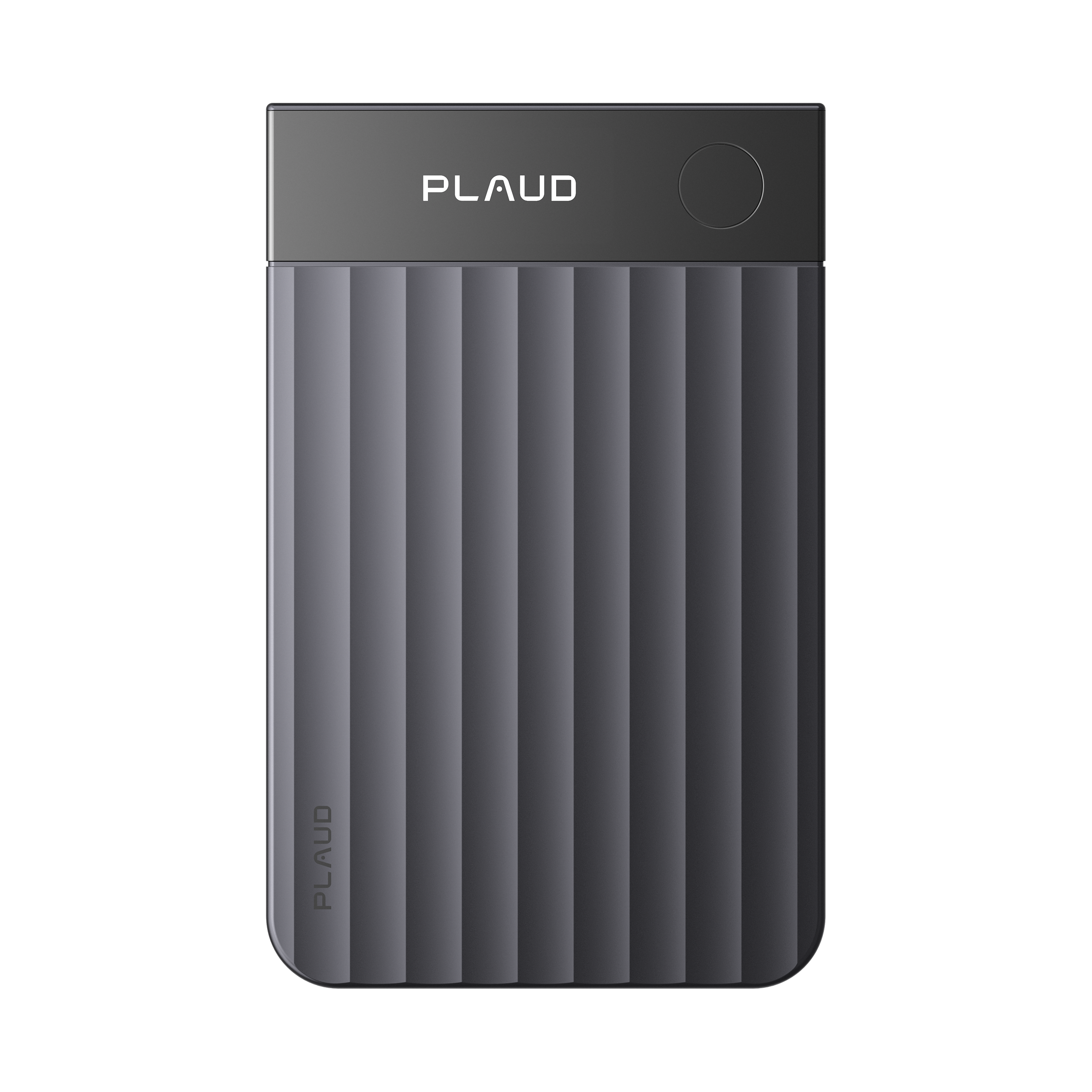
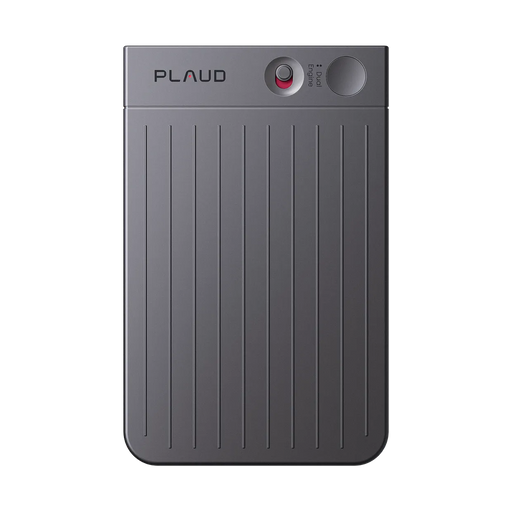
Plaud comes in a variety of sizes for different use cases, including the classic Plaud Note and the wearable Plaud NotePin.
Plaud Pros
- High performance mics record clear audio in many environments: online, in person, phone calls, field recordings
- Long battery life: 30 hours of continuous recording and 60 days of standby (on Plaud Note)
- High transcription accuracy (up to 98%)
- Automatic AI transcription, summaries, and structured notes 10,000+ custom templates help you organize information based on your needs
- Uses the latest AI models (GPT 5.2, Claude Sonnet 4.5, Gemini 3 Pro)
-
Generous free plan with all core AI features included
Plaud Cons
- You need to sync recordings to the app to use AI features like transcription
- Free plan includes only 300 transcription minutes
What is Limitless?
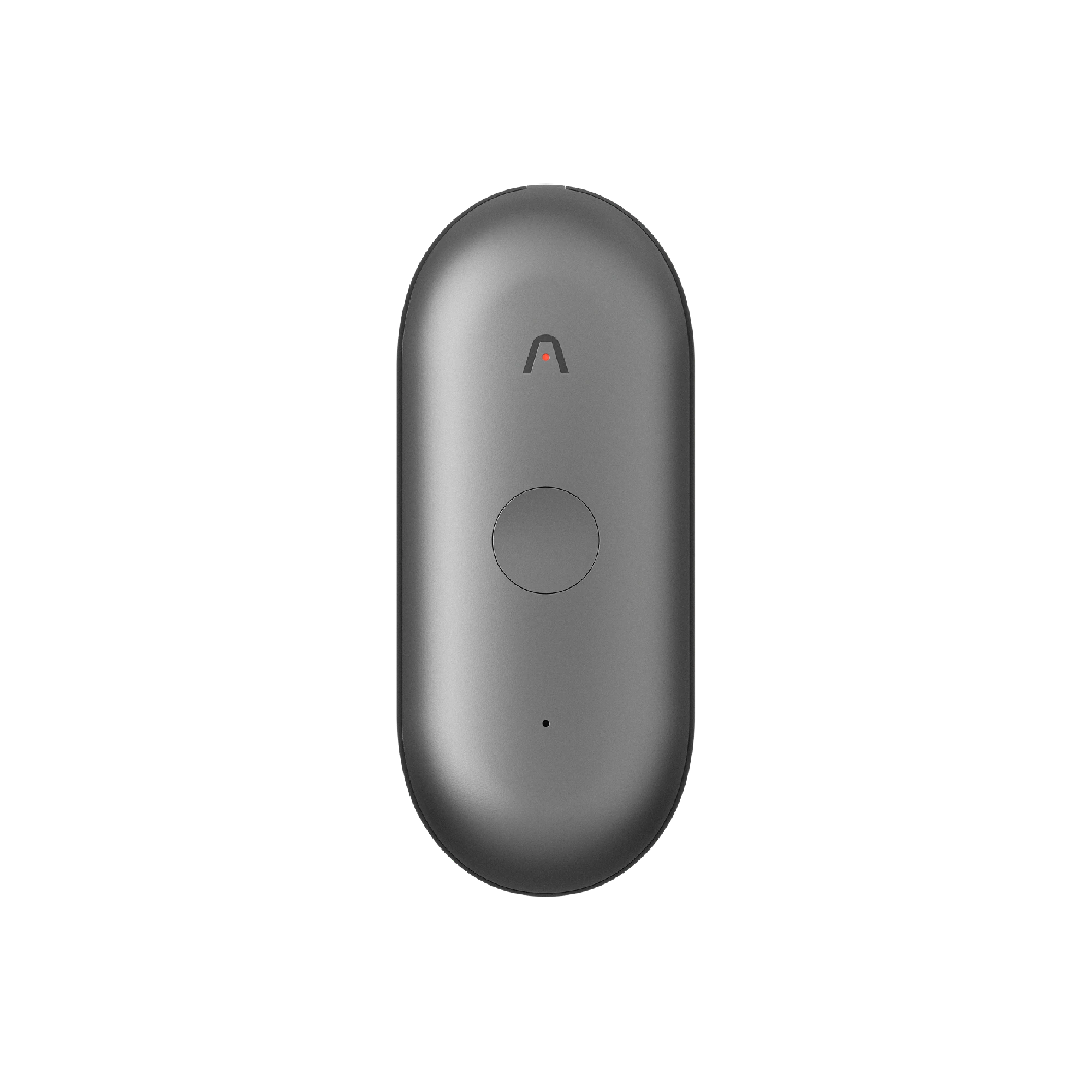
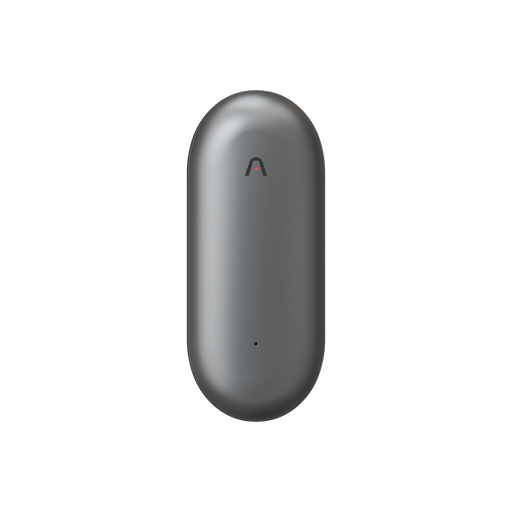
Limitless AI is a wearable “memory” device that records all of your daily interactions and automatically transcribes and summarizes them. You can access your Limitless lifelog on the app, where you can review your recordings and AI notes.
Instead of pressing record for specific moments, as you do with Plaud, you wear the Limitless pendant all the time and let it capture conversation passively. It’s good for helping you answer questions like, “What did I tell Sarah about pricing?” or “When did we agree to meet for lunch?” It focuses more on recall and less on productivity.
Limitless claims to be made for professionals, but according to reviews, it often falls short.
Limitless requires daily charging, which can get tedious. It also can’t record phone calls unless you use speakerphone. Many users have also complained that their pendant can’t recognize their voices, making their transcripts confusing and disorganized.
Here’s what one user said:

Then we get to the legal issues. In our opinion, Limitless may have some privacy concerns, given that in many states and situations, recording others without their consent is illegal. This can happen a lot when you record for the entire day. Limitless puts the legal responsibility on you, stating in its Privacy Policy: “It is your responsibility to inform other conversation partners of this Privacy Policy and provide notice to and obtain consent from all individuals with whom you interact…”
This is also the case with Plaud. But the difference is that Plaud doesn’t continuously record. You choose when to start and stop recording.
Limitless also has potential issues with data security. It encrypts your conversations to maintain your privacy. However, when you use Limitless’s “services” like AI transcription or summarization, the company “will receive audio recordings of your meetings and other audio...”
Overall, Limitless is a solid device for boosting your memory and capturing ambient audio. But it may not be reliable or secure enough to use in professional situations.
Further Reading: We recommend you understand recording laws in your jurisdiction before recording anything. Please check this guide out first.
Limitless Pros
- Captures conversations without needing to press record
- Automatically transcribes and uploads without having to sync to an app
- Ideal for memory support
-
Thousands of integrations with the Limitless API
Limitless Cons
- Can’t record phone calls Issues with voice recognition
- Battery requires daily charging (using USB C)
- Low on-device storage (35 hours)
- Lacks data security certifications
- Currently unavailable for purchase following acquisition by Meta
Plaud vs. Limitless: Key Differences
Plaud and Limitless both record audio and use AI to summarize it, but the similarities end there. The differences between their product and ours come down to intent, outputs, and practical constraints.
Here are the three key differences that are most important to most users:
1. Intentional recording vs. ambient capture
Plaud is built around intent, meaning you choose when a conversation is worth recording. That makes the AI transcripts and summaries easier to work with later.
Limitless takes a more ambient approach to things (which isn't necessarily bad).
Here's how it works...
You wear it throughout the day and let it capture interactions passively. If you’re in a situation where you want to capture everything over a longer period, it’s helpful. But it also means less control and more irrelevant data.
2. Productivity booster vs. memory booster
A major advantage of our recording device is that we've designed it to make you more productive.
Plaud turns recordings into structured information like transcripts with speaker labels, summaries, and action items. The goal is to save you time and boost productivity. You have a lot of control over the organization of this output, too. For example, you can choose from 10,000+ templates to structure your notes or create your own.
Limitless is more for memory support than getting work done. Once you transcribe the audio, you can search through your daily conversations so you don’t forget what was said, generate personal notes, and create summaries. That info can pile up fast, so if you want to organize more efficiently, you may need to integrate with another tool.
Plaud gives you everything you need right out of the box, which makes life easier when you’re using recordings for work, school, or anything that requires accuracy and privacy.
Further Reading: Check out our article on running more productive scrum meetings. Think scrums have to be boring? Think again.
3. Cost and long-term value
At Plaud, we charge you up front and give you everything out of the box. You buy the device once ($159 for the Plaud Note), and you get all the AI core features plus 300 minutes of transcription per month included. You only pay more money if you need extra transcription minutes, and even that’s pretty cheap (about $8 a month for 1200 minutes).
Limitless relies much more heavily on a subscription for ongoing value. The device itself costs $199 and includes 1200 minutes of transcription a month and unlimited storage. But when you’re recording everything, 1200 minutes doesn’t last long. Maybe 3 days. And according to users, you’ll get transcripts of songs you listen to, shows you watch, and other useless info.
But what if you just want Limitless to summarize and take notes based on your conversations without transcribing? It doesn’t work that way. You must transcribe first before accessing any of the other AI features. So, if you want to use Limitless as it’s intended, you’re on the hook for $29 a month.
Plaud.AI vs. Limitless: Features Comparison
Plaud AI and Limitless are both good voice recorders, but they serve completely different purposes. Let’s compare how they perform by comparing their key features.
First, we’ll break down the nuts and bolts of each recorder in the table below.
|
Feature |
Plaud AI |
Limitless |
|
Form |
Credit-card-sized recorder (Plaud Note) Wearable (Plaud NotePin) |
Wearable pendant |
|
Weight |
1.06 oz (Plaud Note) .059 oz (Plaud NotePin) |
0.63 oz |
|
Battery life |
30 hours continuous; 60 days standby |
About 1 day |
|
Device storage |
64 GB |
35 hours |
|
Cloud history |
Unlimited |
Unlimited |
|
Microphone |
2 MEMS microphones + VPU/advanced sensor (ideal for group recordings and multiple environments) |
Multiple beam-forming microphones (ideal for capturing the user’s voice in many environments) |
|
Transcription |
Automatic AI transcription |
Automatic AI transcription |
|
Speaker labels |
Yes |
Yes (labels the user) |
|
Languages supported |
112+ |
100+ |
|
Summaries & insights |
Structured summaries, notes, action items |
Summaries and notes |
|
Workflows & templates |
10,000+ templates |
Limited organizational structure |
|
Multimodal inputs? |
Yes |
No |
|
Offline recording? |
Yes |
Limited to 35 hours |
|
Privacy and data security |
ISO 27001, ISO 27701, GDPR, SOC 2, HIPAA, EN18031 |
Not listed |
|
Ideal use cases |
Meetings, field recordings, interviews, medical dictation, discreet recording, note taking |
Life logging, memory support, daily reminders, personal conversations |
|
Price |
$159 |
$199 |
Real-Time Transcription And Summarization
Winner: Tie
Both Plaud AI and Limitless AI handle transcription and summarization well. According to reviews, Plaud seems to have the edge when it comes to accuracy. But Limitless is more convenient because you don’t have to sync to the app. It uploads and transcribes automatically as long as you’re connected to the web.
With Plaud, you record offline and then sync to the app later, which is where the AI magic happens.
If you value accuracy, choose Plaud. If you want to record everything without worrying about uploads and syncs, choose Limitless.
AI-Powered Note-Taking
Winner: Plaud
Plaud is the clear winner here. Plaud Note and NotePin were built for pro-level note taking. They turn recordings into structured notes with action items, key decisions, speaker separation, and more. You can easily search your notes using keywords in the Plaud app to pull up info from past meetings or lectures.
With Plaud, you can decide how the AI organizes your notes with customized templates (you can also build your own). This makes it easy to generate output based on branded or compliance guidelines.
Limitless generates summaries and notes, but they’re closer to memory logs than productivity-driven notes. It doesn’t let you customize your output, but you can always integrate with other tools to do that. It’s just a hassle, and it has security implications too.
If you want notes that effectively replace manual note-taking, get Plaud.
Phone Call Recording
Winner: Plaud
There’s no contest here. Plaud AI is better for phone call recording because Limitless can’t record phone calls that aren’t on speakerphone.
Plaud uses a dual-mode recording system. You slide a switch to change from in-person recording to phone call mode. In call mode, Plaud uses a vibration pickup unit (VPU) to capture sound through vibrations instead of relying on the phone’s speaker. That means both sides of the call come through clearly, even in noisy environments.
Limitless can only capture whatever audio is audible in the room. It doesn’t interface with phone calls directly.
Further Reading: One of Plaud's most valuable business features is sales call recording. If you're looking for a device that records your sales calls for storage, analysis, and conversion improvement, Plaud is perfect for you.
Meeting Recording
Winner: Plaud
When recording multiple people, speaker separation and labeling are the most important features, and that’s why we have to give Plaud the edge here. Plaud AI handles this well. It identifies different speakers, labels who said what, and keeps the transcript readable. That’s the baseline if you ever need to review a meeting later and understand the context.
Limitless can generally recognize the wearer’s voice, but it struggles beyond that. In group settings, everything can blend together, which makes the transcript harder to use as an actual meeting record. Users have found that Limitless has a lot of trouble distinguishing between speakers, even when their voices are very different. Here’s what one user said:

Plaud also has another advantage for recording meetings. You can add images and visual context to your notes afterward, like slides, diagrams, charts, and other documents. That’s useful when meetings revolve around presentations or shared materials. Limitless doesn’t support this.
Pricing
Winner: Plaud
Plaud is more affordable, both upfront and over time. We know we are biased, but math is math.
Here’s what you’d pay for a year of unlimited transcription with both tools (not including the cost of the hardware):
- Plaud: ~$240
- Limitless: ~$348
The Plaud Note and Plaud NotePin cost less to buy upfront ($159), and Plaud AI’s subscription options are cheaper if you need more transcription minutes.
Plaud’s paid plans start at $8.33/month and go up to $19.99/month for unlimited transcription. If you stay on the free plan, you still get all the AI features and 300 minutes of transcription per month.
Limitless is more expensive on both fronts. The device costs $199, and ongoing access relies on subscriptions priced around $19/month or $29/month for unlimited transcription. That adds up quickly.
NOTE: We get this question often, so we want to address it here: Neither of these tools offers free trials. We know that many AI note taking tools on the market do offer them, but since we are hardware tools, we cannot.
Usability
Winner: Tie
Plaud AI and Limitless AI are both pretty intuitive.
Plaud’s hardware is simple. Press once to start recording and press again to stop.
The wearable recorder, Plaud NotePin, clips to your shirt, wristband, or lanyard for hands-free recording, and it’s more lightweight than Limitless. Plaud Note is about the size of a credit card, so it travels well and records discreetly.
Limitless is just as straightforward. You wear it around your neck and let it do its thing. Neither requires much setup or ongoing attention during the day.
On the software side, both offer mobile and desktop apps for reviewing transcripts, summaries, and past recordings. They are compatible with popular operating systems, including Mac. Navigation is clean on both, and there’s no steep learning curve. From a usability standpoint, they’re both strong.
Alternatives to Plaud and Limitless
In the interest of fairness, we just want to mention some additional recording devices that you might be interested in for other use cases:
- Bee: Similar to Limitless, Bee is an AI wearable that listens to conversations and generates daily summaries and memories. It helps you recall what happened throughout your day.
- Magmo: Magmo is a MagSafe-style call recorder that lets you record phone calls directly from your iPhone with a physical switch. But you should be careful about legal consent depending on how you use it.
- FoCase: This budget AI-powered voice and call recorder has built-in transcription and summarization. It’s inexpensive but not great for professional use.
- HiDock: HiDock is a popular AI voice recorder that pairs with Bluetooth earphones or desktop apps (like Zoom). It’s meant to sit on your desk, so it isn’t easily portable or wearable.
- Otter: Another popular ai note-taking device, but only for online meetings. See our full comparison here.
- Pocket: An AI thought companion with some nice features, but it's not designed for professional use cases like ours.
Verdict: Plaud vs. Limitless
The verdict is…**Drumroll Please**
Plaud AI is a better AI voice recorder than Limitless. Plaud is more affordable, secure, accurate, and feature-rich. Limitless is great for jogging your memory, but if you want to record important interactions when multiple speakers are involved, Plaud gets the job done.
We’re a little biased, yes. And overall, it depends on your needs. But we believe that Plaud delivers more benefits in more situations to a wider range of users.
Limitless is for casual users making recordings for personal use. Plaud is for professionals, doctors, lawyers, journalists, students, researchers, and casual users too. It has the accuracy and tools to deliver genuinely useful output, and it’s backed by top security certifications.
Plaud also offers stronger meeting and call recording, reliable speaker labels, structured summaries, long battery life, and a free plan that actually lets you use the product.
At the end of the day, the choice comes down to what you expect from your recordings.
Choose Limitless if you’re experimenting with ambient AI and want a wearable that helps you remember everyday conversations, assuming availability and subscription costs aren’t a concern.
Choose Plaud if you record and transcribe often and want those conversations to turn into clean, searchable, structured notes without extra work. It’s the better option for meetings, interviews, phone calls, lectures, and professional use cases where accuracy matters.