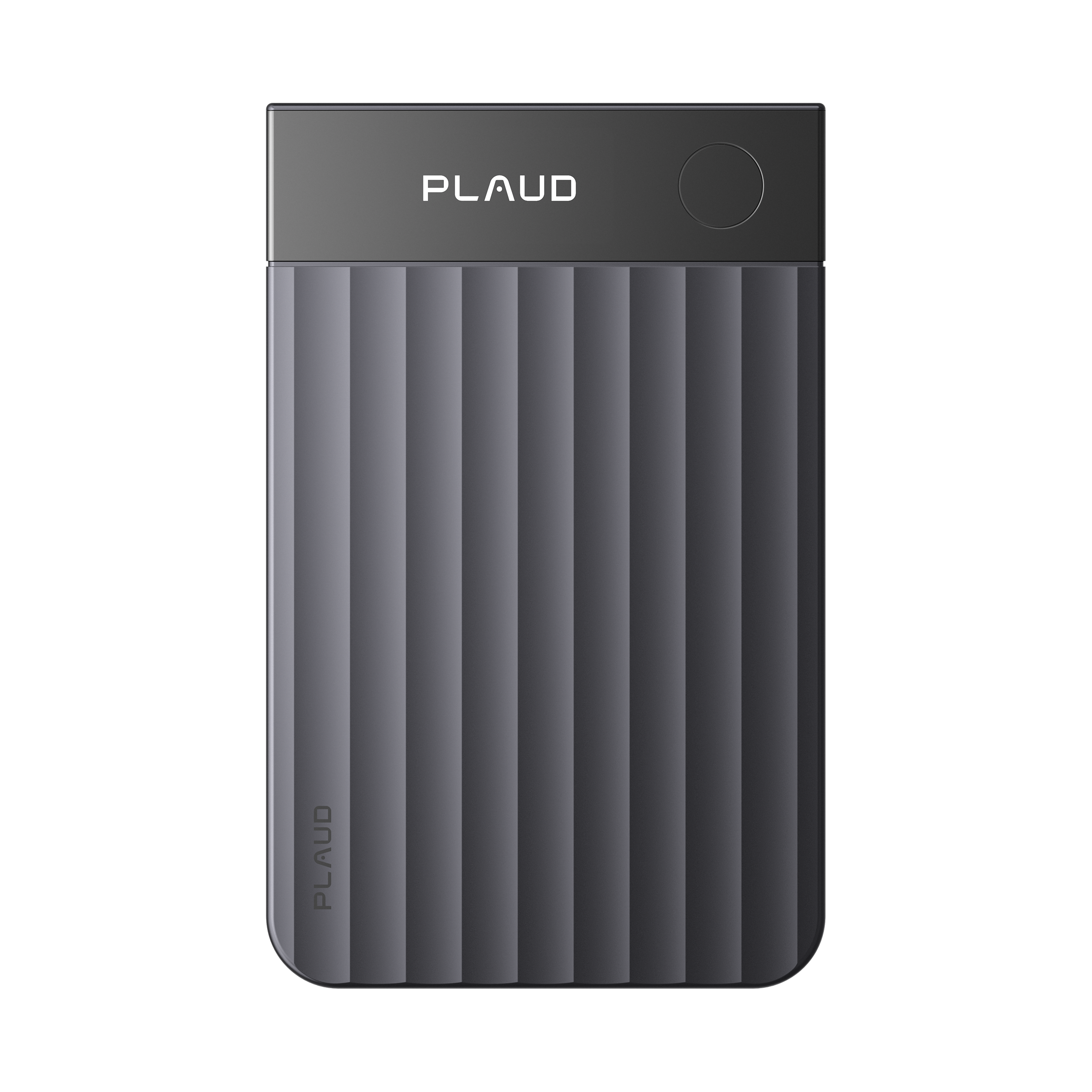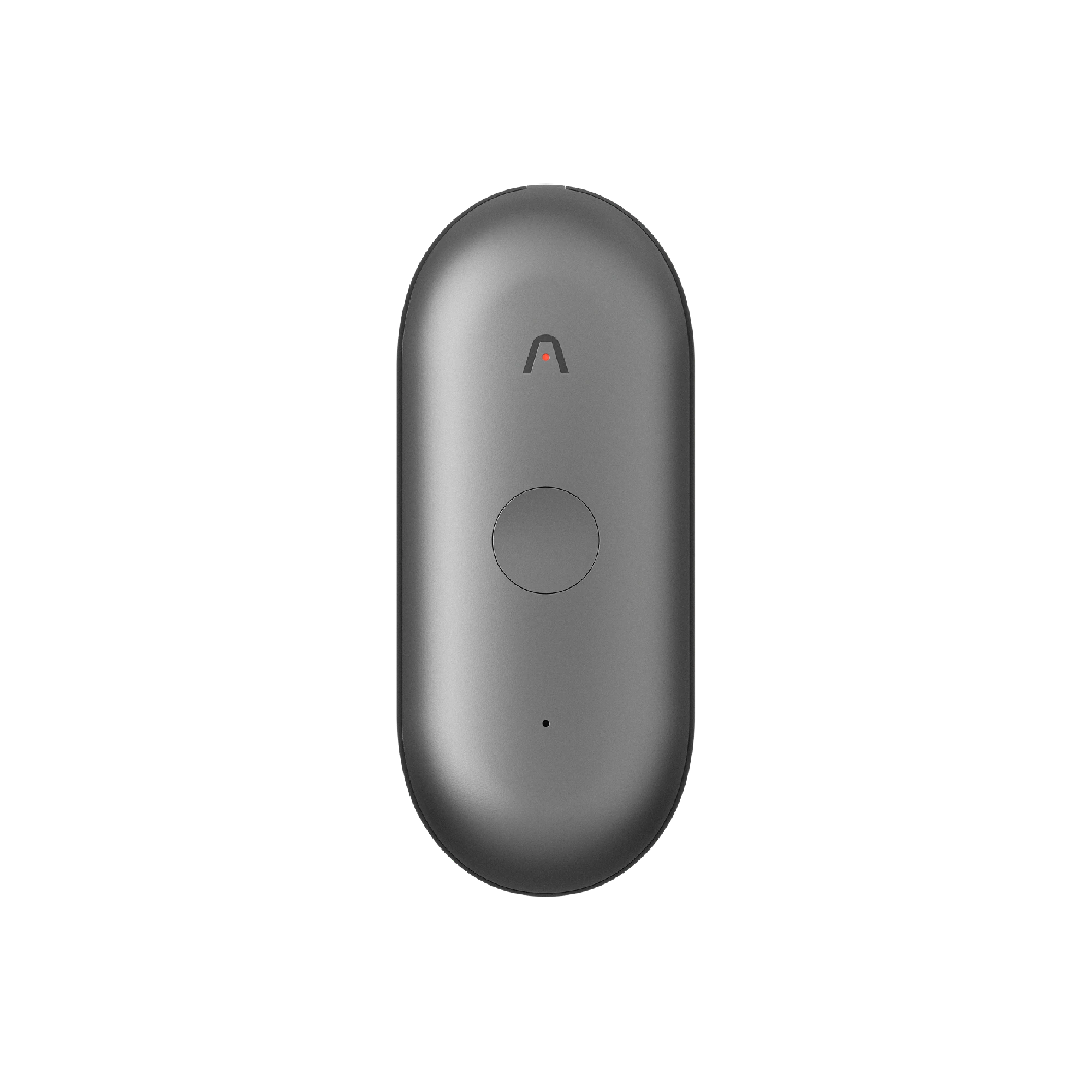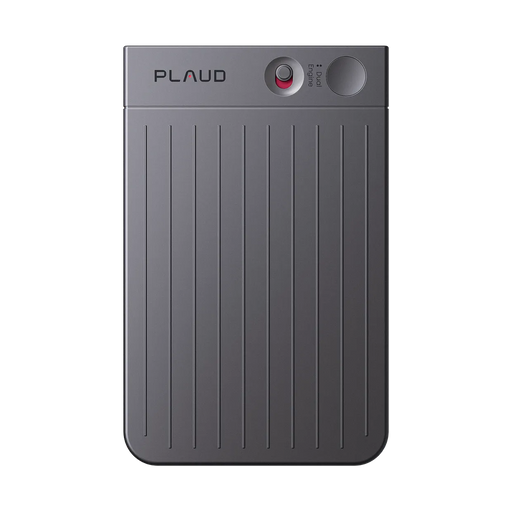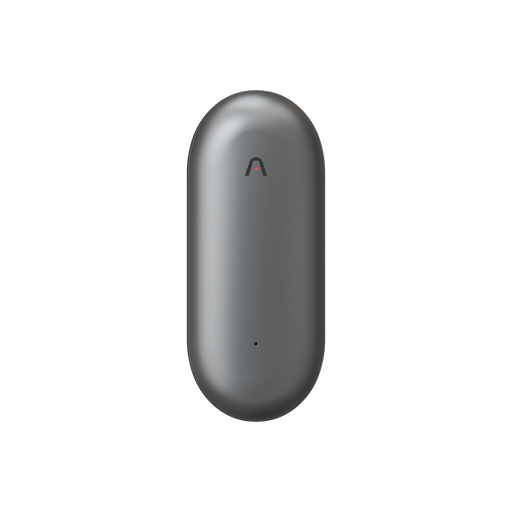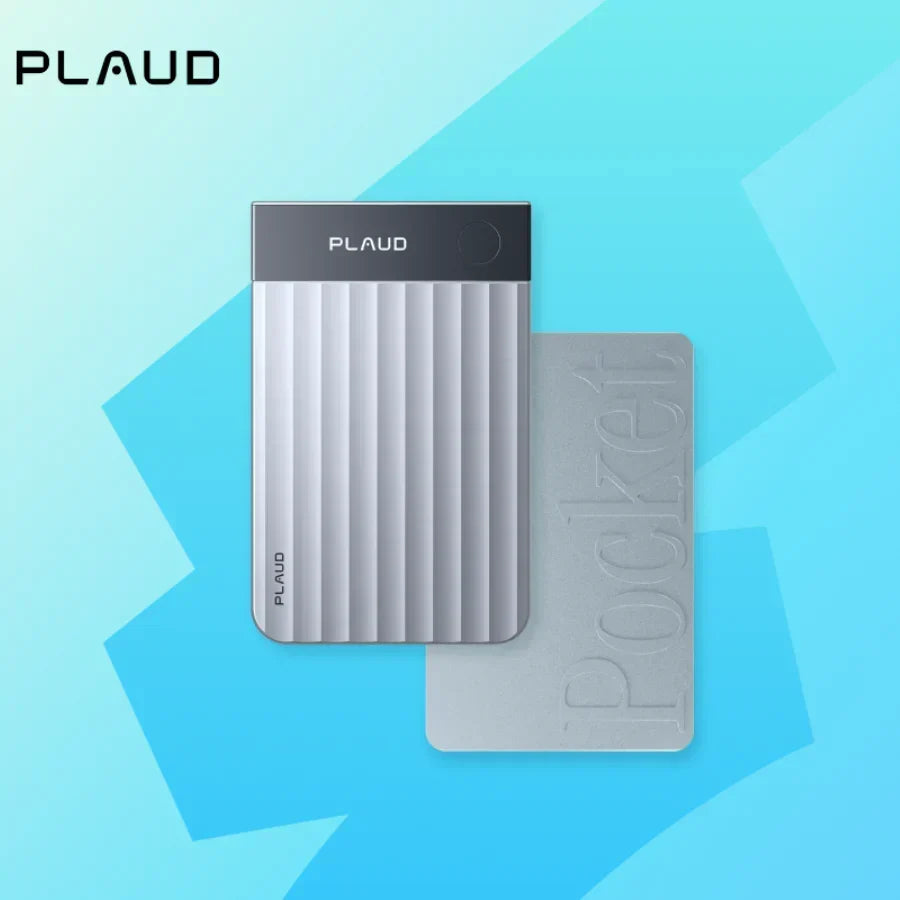
Welcome to this Pocket vs Plaud comparison guide.
Below, we're going to break down the differences between these two AI note taking devices to help you choose the right one.
Aside from the price, both tools look a lot alike (Pocket is cheaper). But there are quite a few differences in the fine print. For example, Pocket's battery lasts just four days, while Plaud Note's lasts for 30 hours of continuous recording or 60 days on standby.
Plaud also has a much more generous free plan, including its core AI productivity features and automated tools. Nearly all of Pocket's AI features are locked behind a $20/month paywall.
There's a lot to consider, and we'll dig into the details below. But overall, we think Plaud is the best choice (surprise!) if you need to record or take notes often. If you want accurate and automatic transcription, multimodal inputs, speaker labels, and custom templates, you get all that with Plaud for life, at one price.
Pocket is fine for making personal lists or recording single speakers when you don't have to record often.
Basically, if you're making a grocery list or spitballing ideas for your next world-dominating project, Pocket is fine. But for professional use cases (or if you want access to AI features), Plaud is the clear winner.
Keep reading to find out why.
Pocket vs. Plaud: what's the better voice recorder?

Plaud and Pocket are both AI voice recorders for transcription, summaries, and smarter notes. Plaud is a higher-end device meant for professional or classroom settings, whereas Pocket is more for general, day-to-day note-taking.
They look similar at first, but once you actually use them, it's easy to see that Plaud is built for professional, real-world work, while Pocket is built for casual, occasional use.
For example, one advantage of Plaud is that it gives you access to more AI features in the Plaud Starter Plan (auto summaries, speaker identification, and more), along with reliable transcription quality. That'll come in handy when you're poring over meeting notes or lecture audio.
Here's one example of using Plaud in a business setting:
You have a meeting with an important client, and there are four speakers in the room. Plaud can identify individual speakers and apply speaker labels on the Plaud Starter Plan. Pocket has a hard time determining who said what, and if you want it to add speaker labels, that'll be an extra $20.
Four months later, you want to access those same meeting notes. On Plaud, they'll be waiting in your secure Plaud cloud storage (you just need to use the Plaud app). On Pocket, they may be gone, because the free plan only keeps summaries for 30 days. Want unlimited cloud history? That'll be $20.
Don't get us wrong, Pocket is great for what it does. It makes sense if you're on a tight budget and just want to capture quick thoughts and lists. It even does a decent job with lecture notes, because there's usually just one person speaking.
Overall, Pocket is great for summarizing your thoughts and making you more organized. Plaud's AI features and automated workflows save you time and make you more productive.
Further Reading: If you need some tips on running meetings, we have a complete guide on the topic!
Discover more


Features comparison of Pocket and Plaud
Pocket and Plaud are physical recording devices that work without an internet connection. Take a quick look at the differences between Plaud and Pocket in the table below.
| Feature | Plaud Note | |
|---|---|---|
| Weight | 1.06 oz (30 g) | 1.83 oz (52 g) |
| Thickness | 0.12 inches (2.99 mm) | 0.2 inches (5 mm) |
| Battery life | 30 hours continuous; 60 days standby | Four days of active use |
| Device storage | 64 GB | 64 GB |
| Cloud history | Unlimited | 30 days (on free plan) |
| Mic | 2 MEMS microphones + 1 vibration conduction sensor (VCS) for clear pickup in conversations and phone calls | 2 studio mics + 1 contact mic |
| Languages supported | 112 languages | 120+ |
| Transcription | 300 minutes of AI-powered transcription included in the Plaud Starter Plan | Unlimited transcription in free plan (not automated) |
| AI speaker labels and speaker separation | Yes | Not included in free plan |
| Multimodal inputs? | Yes (add photos, slides, diagrams, etc. to your notes) | No |
| AI models | GPT-5.5, Gemini 3.1 Pro, Claude Sonnet 4.6 | GPT-5, Claude, Gemini |
| Workflows & templates | 10,000+ custom template library | 5 summary styles in free plan (100+ in paid plan) |
| Summaries & insights | Automatic summaries, notes, and action items | Automatic summaries, mind maps, and action items |
| Privacy and data security | ISO 27001, ISO 27701, SOC 2 Type II, and EN 18031 certified; GDPR-aligned and built to support HIPAA workflows | No public certifications listed |
| Price | $159.00 | $199 (frequently discounted to $99) |
Plaud vs. Pocket: complete review
Let's look at Plaud and Pocket voice recorders to see what makes each stand out.
What is Plaud?

Plaud is an AI-powered voice recorder designed to record in all environments, including online meetings, phone calls, and in-person conversations. Then, it automatically transcribes audio, adds speaker labels, generates summaries, and organizes everything into structured notes using templates.
Plaud does a lot more than just record audio. It's made for people who record often and need to actually use that information later. It's built for real-world interactions like meetings, interviews, lectures, therapy sessions, clinical dictation, and phone calls.
With Plaud, you're not left with a pile of audio files to sort through at the end of each week. Instead, Plaud turns all your recordings into searchable transcripts and formatted notes. For professionals who record or dictate often, this saves countless hours.
Many users love Plaud for the quality of its transcripts and summaries, even in difficult rooms. One reviewer called it "freakishly accurate" and "dead simple" to use out of the box.

It's a bit more expensive than Pocket, but Plaud is the obvious choice when accuracy, privacy, and productivity matter.
Why we love Plaud:
- High-quality recordings for in-person conversations, online meetings, phone calls, field recordings, and more
- Automatic transcription with speaker labels and timestamps
- Automated summaries and notes, plus post-recording workflows with 10,000+ custom templates
- 30 hours of continuous recording and up to 60 days on standby
- Strong data security and encryption
- Multimodal inputs
- Desktop and mobile app
- A generous free plan that includes the core Plaud Intelligence features, templates, and unlimited cloud storage
- Multiple devices to choose from, including Plaud Note Pro, Plaud Note, Plaud NotePin S, and Plaud NotePin
Plaud cons:
- Only 300 minutes of transcription on the Plaud Starter Plan
- You need to sync with the app after recording to use AI features
What is Pocket?

Pocket is a more casual AI note taking device focused on capturing voice memos, ideas, and short conversations in daily life and turning them into summaries or action points.
It's positioned as a personal "thought companion" rather than a professional documentation tool. If you have a poor memory, Pocket might be a good tool for dictating mental notes (recordings on Pocket are even called "memories" in the app).
Pocket includes unlimited transcription, summaries, and mind maps on the free plan, so you can start recording as much as you want. However, things will start to get hairy if you want to record multiple speakers and remember who said what later. Speaker labels and separation are locked behind a paywall.
You'll likely be disappointed using it in professional situations, too. Virtually all of its advanced AI features and storage require a monthly subscription ($20). Even bulk exporting isn't permitted on the free plan.
You have to tediously export recordings one by one if you want to view notes and summaries on the app.
Once you export them, they'll only stick around for 30 days before your history clears.
Pocket's lower upfront price is an advantage if you only record occasionally. But you'll soon find that without a subscription, Pocket is basically a traditional voice recorder that summarizes conversations (if you want to bother manually exporting them one at a time).
Plaud, on the other hand, gives you access to its core AI features on the Plaud Starter Plan.
What we like about Pocket:
- Lower upfront cost, especially when discounted
- Unlimited transcription and summaries on the free plan
- Good for quick notes and personal organization
Pocket Cons:
- Very limited free plan (30-day history, 2 Ask Pocket queries per day)
- Subscription required for most AI features ($19.99/month or $199/year)
- Shorter battery life
- Thicker and heavier than Plaud Note
- Less suited for professional or regular recording
AI voice recording and note-taking features comparison
Below, we're going to compare Plaud and Pocket feature by feature to explain how each tool performs in the real world. We are obviously a bit biased here, but we want to show head-to-head how our AI voice recorder stacks up to the competition.
Pocket is a solid option if you're on a tight budget and just need basic note taking. But once you look past the headline price, there are tradeoffs in battery life, locked features, and long-term usability.
Plaud offers a comprehensive set of productivity tools on the Plaud Starter Plan. And, if you need more transcription minutes, you can upgrade for cheap.
AI note-taking features
Winner: Plaud
Plaud is the clear winner in the AI note-taking category. Pocket isn't bad, but Plaud does everything it does plus a lot more.
Plaud is designed to do much more than record audio and take notes, even on the Plaud Starter Plan. It transcribes conversations automatically and turns them into structured summaries with action items. When multiple speakers are involved, Plaud recognizes and labels them (so you can actually understand who said what in your notes).
You can also take screenshots of presentation slides, add graphics, and more after the fact, thanks to multimodal capabilities. You can't do that with Pocket, so if your lectures or meetings include visuals, your notes will only be partially complete.
Finally, Plaud organizes your notes according to your needs (clinical, legal, branded, and so on) using templates you've chosen or designed. This saves loads of time. Imagine not having to manually organize your notes into company-approved or compliance-ready formats.
On the app, Plaud transforms everything you record into a searchable database of knowledge, which matters when you're reviewing meetings weeks later or pulling deeper insights from multiple recordings. Pocket does a decent job summarizing thoughts and generating action points, but it comes with far fewer productivity tools (basically none in the free plan).
Call recording
Winner: Tie
Both devices can handle call recording well. If there are multiple speakers on a call, Plaud would be the better option, unless you're paying for Pocket's Pro plan.
Plaud and Pocket have different mics, but both are ideal for recording phone calls.
Plaud has dual mode recording, so you simply slide a switch to change the recording mode from in-person recording to phone call recording. The phone recording mode uses a vibration conduction sensor (VCS) to capture clear audio from vibrations instead of the phone's speaker. Pocket's contact microphone works similarly.
Both products include a magnetic case that attaches to your phone for hands-free recording on the go.
Warning: Please understand the recording laws in your state or jurisdiction before recording phone calls, and let the people you are with know before you record.
Summarization and transcription
Winner: Plaud
Both Plaud and Pocket offer AI transcription and summaries. Pocket offers unlimited transcriptions and summaries as part of its free plan, while Plaud offers 300 minutes. Pocket also covers more languages for transcription (120+ vs Plaud's 112). But Plaud still comes out on top because of the quality of its output.
Plaud's transcriptions are accurate and automatic. One reviewer noted that recording with Plaud even in an "ugly, louder room" produced the "cleanest transcripts." It also supports speaker labels, time stamps, and search on the Plaud Starter Plan.

Pocket does not automatically transcribe, and it doesn't separate speakers or label them on the free plan. Pocket also has some questionable reviews regarding AI summaries. One Reddit user noted, "I had a 20-minute casual meeting today…. [Pocket] came up with 20 action items that are completely ridiculous."

Plaud can organize summaries and notes however you want. You can design your own template or choose from 10,000+ others. Pocket includes just 5 summary styles as part of the free plan and 100+ if you pay.
With Plaud, you only upgrade if you need more minutes (the Plaud Pro Plan is about $8 per month on the annual price for 1,200 minutes, and there's a Plaud Unlimited Plan too). With Pocket, you get unlimited transcription minutes and summaries, but none of the features unless you upgrade for $20/month.
Privacy and security
Winner: Plaud
Plaud is designed for use by professionals in sensitive fields, such as legal, medical, and research. It has secure device storage and fully encrypted cloud storage, with AES-256 encryption at rest and TLS 1.2+ in transit.
Plaud is certified to ISO 27001 (information security), ISO 27701 (privacy information management), SOC 2 Type II, and EN 18031 (EU radio equipment cybersecurity). Its privacy practices are GDPR-aligned, it supports CCPA rights requests, and its handling of protected health information is built to support HIPAA workflows. You can review the full list in the Plaud Trust Center.
Pocket encrypts its cloud storage as well and describes its security as enterprise-grade. However, as of this writing it does not publish any third-party security certifications or audit reports. For regulated work such as legal documentation, clinical notes, or enterprise procurement, that gap matters, because most security reviews ask for evidence rather than a description.
It's also worth being precise about a common misconception: HIPAA has no certification program. Vendors can be assessed against HIPAA requirements and sign a business associate agreement, but no one is "HIPAA certified," including us.
Audio quality
Winner: Plaud
Both devices record clear audio, but Plaud's hardware is built to handle more environments. Plaud Note uses two MEMS microphones with a pickup range of about 3 m (9.8 ft), and Plaud Note Pro steps up to four MEMS microphones with AI beamforming and a range of about 5 m (16.4 ft), which is the better pick for conference rooms and group conversations.
Pocket uses two studio microphones plus a contact mic and advertises a longer nominal pickup range, but in practice it's tuned for close-range capture and single-speaker dictation. It's great for recording your own notes or a lecture if you're near the front.
Pricing
Winner: Tie
This really depends on your needs. Pocket wins on upfront cost when it's discounted, and we can't argue that a $99 promotional price is cheaper than $159. Its list price is $199, so the gap depends on when you buy.
However, Plaud Note wins if you actually want AI features without paying every month. Pocket's lower price looks attractive, but most useful tools sit behind a subscription. Plaud costs more upfront, but includes a comprehensive set of AI features for long-term use.
If you transcribe 20 hours per month or less, a Plaud Note device will end up saving you a lot of money.
Reputation
Winner: Plaud
Plaud has a much longer track record. But to be fair, it has been around longer than Pocket.
Since 2023, Plaud has been used by more than 2.5 million people globally across 170+ countries, with over 2 million devices shipped worldwide.

Plaud holds a 4.7 TrustScore on Trustpilot, the independent review site, and 4.6 out of 5 on G2, where verified business users review software and hardware. Forbes has covered Plaud devices as a standout in the category.

Pocket launched in 2026 and has grown quickly, with strong consumer ratings of its own. What it doesn't have yet is a track record with business buyers: there's no meaningful presence on G2, no published security audits, and no multi-year history of enterprise deployments to point to. If you're buying one device for yourself, that may not matter. If you're buying for a team, it usually does.
Are there any alternatives to Plaud and Pocket?
Plaud isn't the only option out there, and it's not the cheapest option either. If you just need basic notes or you're experimenting with AI note-taking for the first time, a simpler solution might make more sense. Here are a few alternatives worth exploring, depending on your needs.
Some alternatives to Plaud and Pocket include:
- Limitless: A wearable pendant with recording capabilities. Plaud has more features for business, as you can see in this comparison article. Limitless was acquired by Meta in December 2025 and stopped selling the pendant at that time.
- Omi: Omi is a budget-friendly AI wearable for capturing quick thoughts and summarizing conversations. It's fine for casual note-taking, but it doesn't offer the same depth of templates, organization, or long-term workflows as Plaud (for a wearable Plaud device that clips to your wristband or shirt pocket, check out Plaud NotePin).
- Otter.ai: Otter is a software-only AI note-taker. It's a very popular option for recording online meetings. It works well with Zoom and Google Meet, but it's not built for in-person conversations. You can even record MS Teams meetings with some built-in apps if you want to give that a try.
- REcolx: REcolx is another hardware-based AI voice recorder focused on basic transcription, key takeaways, and analysis. It's good at recording in noisy environments, but it doesn't have as many features as Plaud.
- Chimenote: Chimenote is an AI voice recorder and real-time translator. It's a more complex and expensive option than Plaud or Pocket, but if you need a basic translator as well as a note taker, this tool might be helpful.
- Fireflies: One of the most popular tools for summarizing meetings and providing transcripts. But it's not capable of recording in-person meetings and doesn't deliver the same quality as Plaud. You can read our full comparison here.
The verdict: Plaud vs. Pocket
The research and reviews show that Plaud is a better AI voice recorder than Pocket. We are biased, yes. But the truth is the truth.
Plaud offers more features, a stronger battery, and a much more comprehensive free plan than Pocket. Plus, we have a longer history of satisfied customers and a published security posture that holds up to enterprise review.
Pocket has a lower upfront price, but you won't have access to nearly any of its advanced AI features without paying $20 a month. And Pocket does things to bug you into paying more, like restricting you to one-by-one exports on the free plan. If you record short bursts often, that gets really annoying.
If you have to pay $20 a month to actually use Pocket, it becomes obvious that this recorder is not very affordable at all.
But at the end of the day, the choice between Plaud and Pocket comes down to how often you record and what you expect to do with those recordings.
- Choose Pocket if you want a budget-friendly way to capture thoughts, make quick lists, or summarize short, single-speaker recordings. This way, you won't have to upgrade, and it'll actually be cheap. It's kind of a shame, though, that you won't be able to use a bunch of the stuff you paid for.
- Choose Plaud if you record and transcribe often and want your conversations to turn into productive notes without extra work. It's the better choice for meetings, interviews, calls, lectures, and professional use cases where accuracy matters. Even on the Plaud Starter Plan, you get the core Plaud Intelligence features, including transcription, summaries, 10,000+ templates, speaker labels, multimodal input, and unlimited cloud storage.
If you want to use the AI features of your AI note taker (who would want that…?), Plaud makes a lot more sense.