Three months ago, I sat in a procurement review meeting where the Chief Medical Officer and the Chief Information Security Officer were arguing about the same product from opposite directions. The CMO wanted an AI documentation tool deployed yesterday because physician burnout scores were climbing and documentation time per encounter had crossed 16 minutes on average. The CISO wanted to reject the same tool because its cloud architecture could not guarantee that patient audio data would remain within the hospital's data governance perimeter. Both were right. And that tension, between clinical urgency and security mandates, is the defining challenge for anyone tasked with evaluating AI note takers at the institutional level.
As a hospital informatics leader who has assessed over a dozen AI documentation platforms across security review, pilot deployment, and physician adoption tracking, I have learned that the tool your doctors love in a demo is rarely the tool that survives your compliance committee. Here is how to navigate both sides.
How we chose the best AI note takers for medical documentation in 2026
Evaluating AI note takers for hospital-wide deployment requires a fundamentally different framework than individual physician purchasing. The criteria that matter to a doctor choosing a personal tool (transcription quality, summary usefulness, ease of use) are necessary but insufficient for institutional decisions. Security architecture, deployment logistics, and organizational change management carry equal or greater weight.
Hospital procurement is not an individual purchase
When a physician buys an AI recorder for personal use, the risk surface is small: one provider, one device, one set of patient encounters. When a hospital deploys the same technology across 50, 200, or 500 providers, every risk multiplies. A data breach affecting one physician's recordings is an incident. A breach affecting an institutional deployment is a regulatory crisis.
This distinction shapes every evaluation criterion. Individual physicians ask "does this save me time?" Hospital informatics leaders must ask a longer sequence: Does this meet our data residency requirements? Can we deploy it without rebuilding our network architecture? Will physicians actually use it consistently enough to justify the investment? Can we demonstrate compliance to auditors? What happens when the vendor's API changes or their pricing model shifts?
The tools on this list were evaluated through this institutional lens, not the individual one.
The 3 decision variables
Data security and compliance architecture. This is the gate that opens or closes everything else. The evaluation starts with data flow mapping: where is audio captured, where is it transmitted, where is it processed, where is it stored, and who has access at each stage? For hospitals operating under HIPAA (and increasingly under state-level health data privacy laws that exceed HIPAA's requirements), the architecture must be defensible at every node. Key differentiators include: local versus cloud processing, encryption standards (at rest and in transit), SOC2 certification status, BAA availability, and data retention controls.
Deployment model and IT burden. Some AI documentation tools require deep integration with existing EHR/HIS infrastructure, which means months of IT project work, interface engine configuration, and testing. Others operate as standalone devices that physicians can start using with minimal IT involvement. Neither approach is inherently better; the right choice depends on your hospital's IT capacity, timeline, and existing infrastructure. A tool that requires six months of integration work may deliver superior long-term value, but a tool that deploys in two weeks may address the immediate physician burnout crisis while the longer-term solution is being built.
Physician adoption and sustained use. The most secure, well-integrated tool in the world is worthless if physicians do not use it. Adoption barriers in healthcare are well-documented: physicians are skeptical of new technology (justifiably), resistant to workflow changes during already-pressured clinical days, and quick to abandon tools that add friction. The tools that achieve sustained adoption tend to share specific characteristics: minimal setup per encounter, no mid-consultation interaction required, and output that reduces rather than rearranges documentation work.
Enterprise assessment table
|
Tool |
Security level |
Deployment model |
Adoption barrier |
Best for |
|
Plaud Note Pro |
AES-256, SOC2 Type II, local storage option, E2E encryption |
Standalone hardware; minimal IT integration; 2-week pilot possible |
Very low (one-press recording, no software training) |
Hospitals needing fast deployment with data-on-premises option |
|
Nuance DAX Copilot |
Enterprise-grade, Microsoft security stack, BAA available |
Deep EHR integration (Epic/Oracle Health); 3-6 month implementation |
Moderate (requires workflow change, app interaction) |
Large health systems with existing Microsoft/Nuance contracts |
|
Abridge |
SOC2, HIPAA compliant, Epic App Orchard certified |
EHR-integrated via App Orchard; moderate implementation timeline |
Moderate (tablet/workstation dependent) |
Academic medical centers on Epic seeking AI scribe capability |
|
DeepScribe |
HIPAA compliant, SOC2, cloud-based processing |
SaaS with EHR integration options; specialty-specific setup |
Low-moderate (ambient capture, minimal physician interaction) |
Multi-specialty hospitals wanting specialty-tuned templates |
|
3M/Solventum + Ambient |
Enterprise healthcare security, established compliance track record |
Deep HIS/CDI integration; significant implementation project |
High (complex system, requires dedicated training) |
Large hospital networks needing CDI and coding integration |
5 best AI note takers for medical documentation

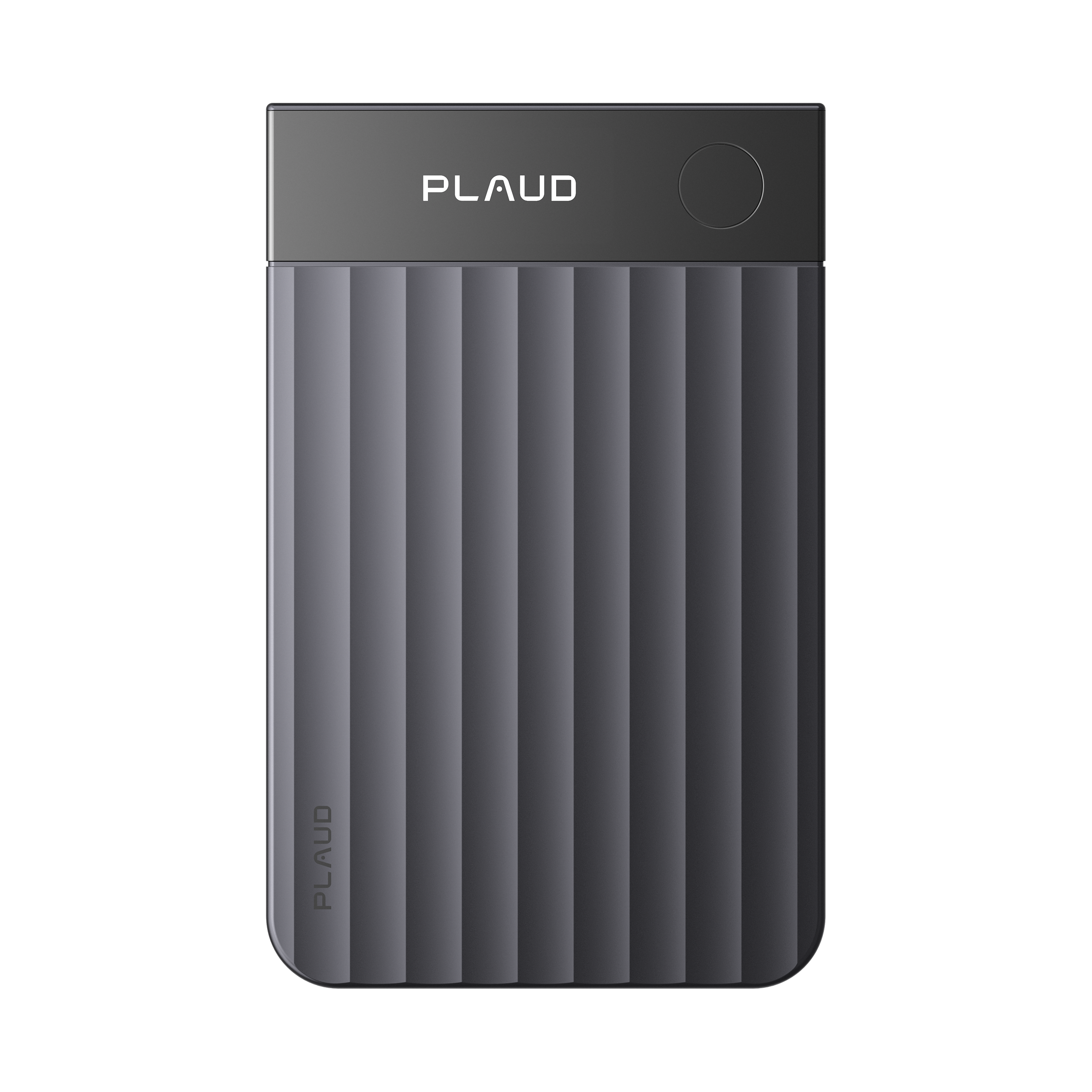
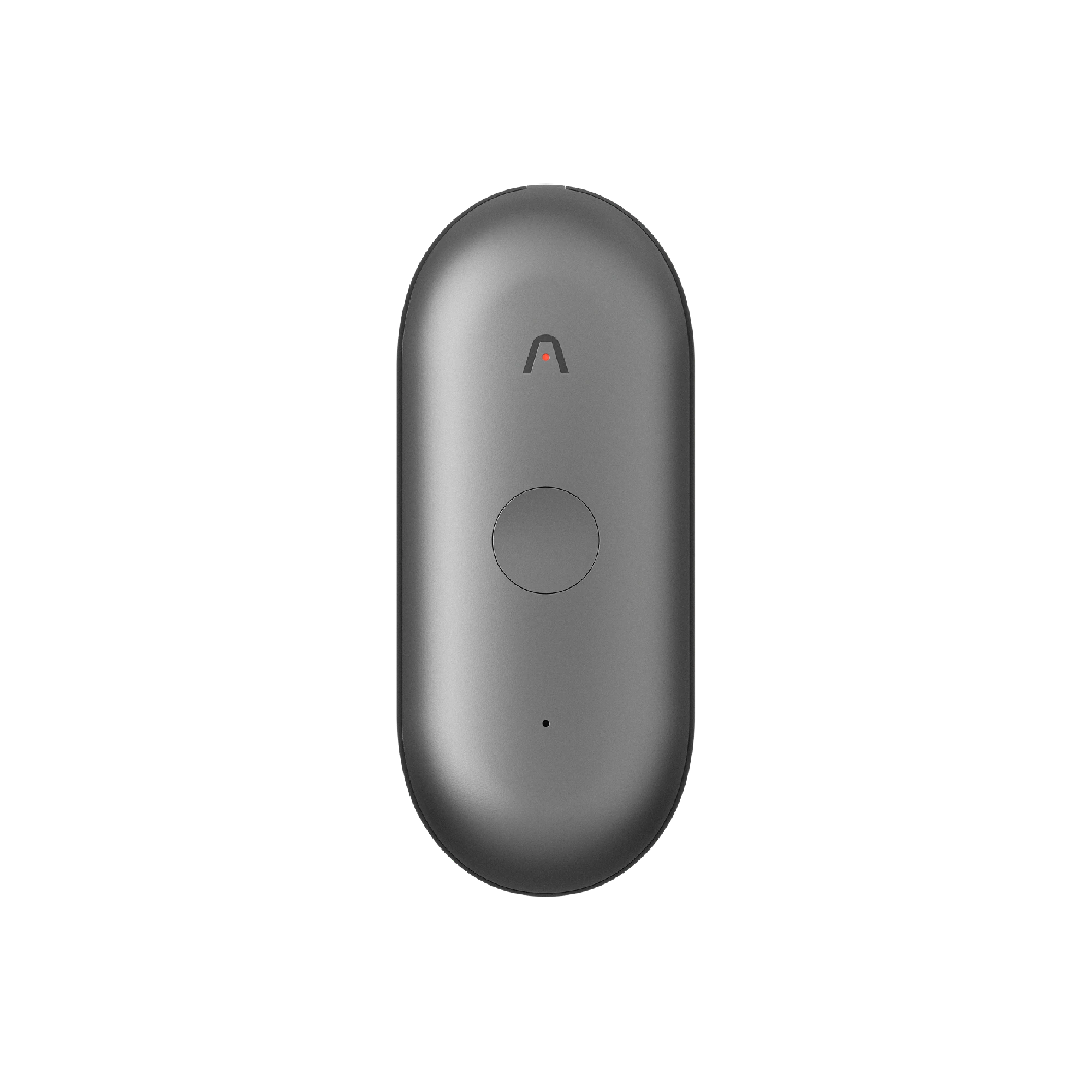
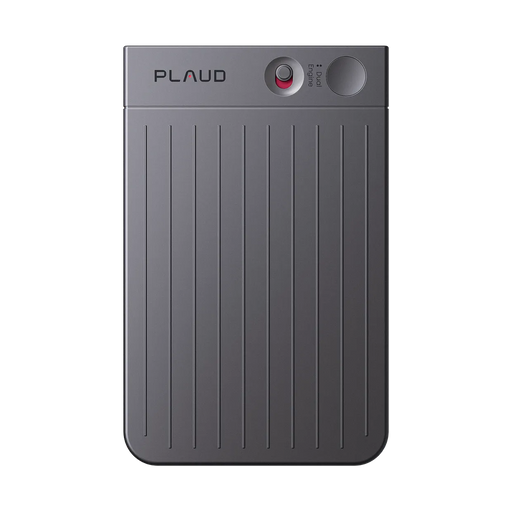
1. Plaud Note Pro: Hospital-grade security with rapid deployment
One-line positioning: Local storage and end-to-end encryption in a device your doctors will actually use.
Why it works
The Plaud Note Pro solves the procurement paradox that most hospital informatics leaders face: the tool that is easiest for physicians to adopt is usually the hardest to get through security review, and vice versa. The Note Pro breaks this pattern by combining consumer-grade simplicity with enterprise-defensible security architecture.
From a data security standpoint, the Note Pro's architecture addresses the most common CISO objections. Audio is captured and stored locally on the device with AES-256 encryption. Plaud's security framework includes SOC2 Type II certification, and the end-to-end encryption pathway means that even during the transcription process, data exposure is minimized. For hospitals with strict data residency policies (particularly relevant in jurisdictions with state-level health privacy laws that exceed federal HIPAA requirements), the local storage capability is a significant differentiator. Patient audio does not need to traverse a public cloud to reach a transcription server in another jurisdiction.
From a deployment standpoint, the Note Pro requires virtually zero IT infrastructure work. There is no EHR integration to configure, no interface engine to build, no HL7/FHIR mapping to validate. A department can go from unboxing to productive use in a single day. For hospital informatics leaders who need to demonstrate quick wins to administration while longer-term integration projects are in progress, this deployment speed is strategically valuable.
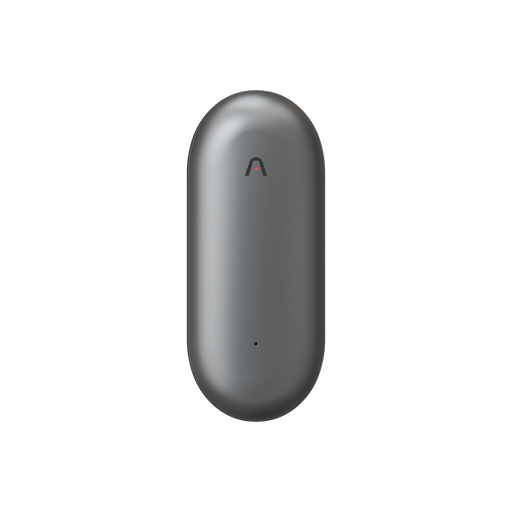
The device itself eliminates most adoption barriers. The 5-meter (16.4 feet) pickup range means it captures clearly whether placed on a consultation desk, an exam room counter, or a conference table during an MDT meeting. One press starts recording. One press stops it. There is no app to open mid-encounter, no screen to check, no workflow to remember. Plaud.AI's transcription engine processes recordings with speaker differentiation across 100+ languages and applies customizable summary templates, meaning physicians receive structured output (SOAP notes, consultation summaries, procedure notes) rather than raw transcripts they need to edit.
In pilot deployments I have observed, the Note Pro achieves sustained adoption rates above 80% at the 90-day mark, which significantly outperforms the industry average for physician-facing health IT tools. The primary driver is simplicity: physicians do not perceive it as "another IT system" but rather as a recording device that happens to produce documentation.
Where it is not the best choice
The Note Pro operates as a standalone device, which means generated notes need to be manually transferred into the hospital's HIS or EHR system (via copy-paste, export, or dictation workflow integration). For institutions where the primary documentation bottleneck is the EHR interface itself (rather than the capture and structuring of clinical content), a natively integrated solution that writes directly into the chart may deliver greater efficiency gains. Additionally, the current platform does not offer centralized fleet management (device provisioning, usage analytics across departments, template governance at the organizational level), which larger hospital networks may require for scaled deployment.
2. Nuance DAX Copilot: Deep EHR integration for enterprise health systems
One-line positioning: Ambient AI that drafts clinical notes directly inside your Epic or Oracle Health chart.
Why it works
Nuance DAX Copilot, now operating within the Microsoft health technology ecosystem, represents the most mature EHR-integrated ambient documentation solution on the market. For hospital informatics leaders whose primary requirement is bidirectional EHR integration (AI-generated notes populating directly into EHR fields without manual transfer), DAX Copilot is the benchmark.
The security architecture benefits from Microsoft's enterprise infrastructure: Azure cloud with healthcare-specific compliance certifications, HIPAA BAA availability, and a security posture that most hospital CISOs are already familiar with evaluating. The compliance documentation is extensive, which reduces the security review timeline for institutions already operating within the Microsoft ecosystem.
Clinical note generation has improved substantially. The system produces structured notes across most common specialties, and the ability to have draft documentation appear in the EHR within minutes of the encounter ending eliminates the transcription-to-chart gap entirely. For health systems where documentation backlog is a systemwide issue (notes signed days after encounters, impacting coding accuracy and revenue cycle), this real-time integration has measurable financial impact.
The physician experience is reasonably streamlined: the AI listens through a smartphone app, processes the encounter, and presents a draft note for physician review and signature within the EHR. Adoption data from published deployments shows that physicians who complete the initial workflow adjustment period (typically 2 to 3 weeks) report significant satisfaction gains.
Where it is not the best choice
Implementation is the primary barrier. DAX Copilot requires deep integration with the EHR platform, which typically involves 3 to 6 months of project work including interface configuration, testing, workflow redesign, and physician training. For hospitals that need an immediate solution for physician burnout, this timeline may be prohibitive. The cost structure is enterprise-level, often $200+ per provider per month, making it a significant budget line item that requires C-suite approval. The system depends on a smartphone microphone for audio capture, which means recording quality varies across clinical environments (quiet office versus busy ward) and lacks the acoustic optimization of purpose-built recording hardware. Institutions with limited IT project bandwidth may find the implementation demands difficult to resource alongside other priorities.
3. Abridge: academic-grade AI scribe with epic integration
One-line positioning: Clinically trained AI documentation with built-in patient transparency.
Why it works
Abridge has established itself strongly in the academic medical center segment. Its official Epic App Orchard certification provides a standardized integration pathway that reduces (though does not eliminate) the implementation complexity compared to custom EHR integrations. For hospital informatics leaders evaluating tools specifically for Epic-based environments, the App Orchard certification signals that Abridge has met Epic's technical and security requirements, which can accelerate internal approval processes.
The platform's clinical AI model is specifically trained on medical conversations rather than adapted from general-purpose speech models. This training translates to better comprehension of clinical terminology, abbreviation handling, and the natural structure of physician-patient encounters. The resulting documentation quality tends to require less post-generation editing than tools built on general transcription engines.
Abridge's patient-facing transparency feature (displaying a real-time summary visible to the patient) addresses a specific institutional concern: patient consent and awareness. For hospitals navigating the evolving regulatory landscape around AI in clinical settings, having a tool that makes the AI documentation process visible to patients can be a proactive compliance and trust-building measure.
Security and compliance architecture includes SOC2 certification and HIPAA compliance, with a BAA available for institutional deployments.
Where it is not the best choice
Abridge is a software platform without dedicated recording hardware, so audio capture quality depends entirely on the workstation or tablet microphone used. In environments with variable acoustics (which describes most hospitals), this can create inconsistent documentation quality across departments and settings. Language support is more limited than hardware-based solutions like Plaud (which supports 100+ languages), potentially limiting usefulness in linguistically diverse patient populations. Pricing is negotiated at the institutional level and typically requires a meaningful financial commitment. For hospitals not running Epic, the integration advantage is significantly reduced.
4. DeepScribe: specialty-tuned ambient AI for multi-department deployment
One-line positioning: Pre-built documentation templates for 40+ specialties, deployed department by department.
Why it works
DeepScribe offers a compelling value proposition for multi-specialty hospitals: the ability to deploy a single AI documentation platform across departments, with each department receiving specialty-specific note templates. Cardiology encounters generate cardiology-appropriate documentation structures. Orthopedic consultations produce a different format. Psychiatry notes follow yet another template. This specialty awareness reduces the post-generation editing that physicians in specialized fields typically need to do with general-purpose documentation tools.
From an institutional deployment perspective, DeepScribe's department-by-department rollout model aligns well with how most hospitals actually adopt new technology: starting with a willing pilot department, demonstrating results, and expanding. The vendor provides specialty-specific onboarding, which can reduce the internal training burden on hospital informatics teams.
DeepScribe's hybrid model (AI generation plus human clinical documentation specialist review) adds a quality assurance layer that some hospital administrators find reassuring, particularly during the early adoption phase when trust in AI-generated clinical documentation is still being established.
The platform is HIPAA compliant with SOC2 certification, and integration options with major EHR systems are available, though implementation complexity varies by platform.
Where it is not the best choice
The human review component introduces a time delay between encounter and note finalization, which may not suit institutions where real-time documentation is a priority (for example, emergency departments or high-acuity inpatient services where disposition decisions depend on timely documentation). The per-provider cost is at the higher end of the market (often $300+ per provider monthly for the full-service model), which can make budget approval challenging, particularly for initial pilot phases. The software-only model means audio capture depends on ambient microphones without hardware optimization. For hospital informatics leaders who need a rapid, low-cost pilot to demonstrate value before committing to enterprise procurement, the cost and implementation requirements may be a barrier to the "start small, prove value, then scale" approach.
5. 3M/Solventum with ambient clinical documentation: CDI-integrated documentation platform
One-line positioning: Documentation, coding, and clinical documentation integrity in a single enterprise platform.
Why it works
For large hospital networks where medical documentation is inseparable from clinical documentation improvement (CDI) and revenue cycle management, 3M's healthcare information systems (now operating under the Solventum brand following the 2024 spin-off) offer the deepest integration between ambient clinical documentation and downstream coding workflows.
The value proposition here extends beyond physician documentation efficiency. The platform connects the clinical note to the CDI query process, coding suggestions, and compliance checks, creating a documentation-to-reimbursement pipeline that addresses the concerns of both clinical and financial leadership. For hospital informatics directors who must justify AI documentation investment to CFOs (not just CMOs), this revenue cycle connection provides the most direct financial ROI narrative.
The security and compliance architecture reflects decades of healthcare IT deployment: established HIPAA compliance, mature BAA processes, and integration patterns with virtually every major HIS/EHR platform. For hospital CISOs who are more comfortable evaluating established healthcare IT vendors than newer AI startups, this track record can simplify the security review process.
Where it is not the best choice
This is the heaviest implementation on the list. Deploying the full 3M/Solventum ambient documentation suite is a major IT project, often measured in quarters rather than weeks, requiring dedicated project management, extensive interface work, and significant physician training. The total cost of ownership (licensing, implementation, maintenance, training) typically exceeds all other options on this list by a considerable margin. For hospitals that need a quick response to physician documentation burden, this is not a rapid-deployment solution. The physician-facing experience, while functional, tends to feel more like an institutional system than a personal productivity tool, which can impact adoption rates, particularly among younger physicians who expect consumer-grade user experiences from their technology.
So which one should you pick?
The decision maps to three institutional scenarios:
If your priority is data staying on-premises with fast deployment, the Plaud Note Pro offers the most practical path. You can run a 2-week pilot in a single department with minimal IT involvement, collect physician feedback and usage data, and present results to your compliance committee with real evidence rather than vendor promises. The local storage architecture and end-to-end encryption address the most common CISO objections, and the sub-$6,000 cost for a 20-physician pilot makes budget approval straightforward.
If deep HIS/EHR integration is non-negotiable, Nuance DAX Copilot (for Microsoft/Epic/Oracle Health environments) or Abridge (for Epic-specific deployments) provide the tightest chart integration. Budget for 3 to 6 months of implementation work and enterprise-level licensing costs, and ensure your IT team has the bandwidth to manage the project alongside existing priorities.
If your strategy is pilot-first, then scale, start with the Plaud Note Pro in one or two departments to establish baseline metrics (documentation time saved, physician satisfaction, adoption rate), then use that data to build the business case for a broader enterprise platform investment if needed. This approach manages institutional risk while delivering immediate relief to the departments with the highest documentation burden.
Conclusion
Hospital procurement of AI documentation tools is fundamentally a sequencing problem. The priority order is not debatable: security and compliance must be satisfied first, physician adoption determines whether the investment produces returns, and feature richness is a distant third. A tool with every feature but questionable security will never deploy. A tool with perfect security but poor usability will deploy and be abandoned. The tools that succeed institutionally are the ones that clear the compliance gate and then disappear into the physician's workflow.
The practical next step is specific and measurable: select one or two departments for a controlled pilot, deploy the tool with the lowest adoption barrier that meets your security requirements, and track two numbers for 30 days. First, average documentation time per encounter before and after. Second, physician usage rate at day 7, day 14, and day 30. Those two metrics will tell you more about institutional fit than any vendor presentation or feature comparison spreadsheet. Let the data make the decision