At first, an AI voice recorder doesn’t feel necessary. A year ago, most people would have said the same. Your phone records. AI can summarize. Apple and Google are adding this everywhere. So it feels like you already have what you need.
Then you start using voice recording more than almost anything else on your phone. And somehow, the phone still isn’t enough. The idea isn’t the problem. It just doesn’t hold up in real life the way you expect.
You’re in the car and an idea hits. You’re walking between meetings and need to capture something quickly. A conversation starts, and halfway through you realize you should’ve been recording.
In all of these moments, the issue isn’t really the AI itself. It’s timing. You either start recording too late, or not at all.
What does a hybrid work week actually look like?

Hybrid work is now the default for many teams. A typical week moves between video calls, in-person meetings, and quick calls throughout the day.
Most people start with Voice Memos. It’s already there, easy to use, and works fine for occasional recording. But once meetings stack up, small issues begin to add up. Recordings cut off, transcripts get messy, and notes take extra time to clean up.
That’s usually when people start wondering whether the problem is the tool, or just the way they’re capturing things.
For someone mostly on video calls from a home office, this setup is genuinely useful. The audio is clean, transcripts are accurate, and summaries arrive without extra steps.
Apple has clearly decided that meeting documentation belongs in the OS. For many users, that’s enough.
Apple has taken this seriously for years. Voice Memos now supports live transcription. Newer iOS versions include call recording and system-level capture for video calls. Notes can record and transcribe meetings, and Apple Intelligence adds summaries.
For clean, controlled environments like video calls, the results are often solid. For many people, this already covers most needs.
But there are situations where it starts to break down.
Where does phone-based AI voice recording break down?
The limitations don’t show up in ideal conditions. They show up in everyday situations.
- Interruptions during recording. Voice Memos can stop when a call comes in. Airplane mode helps, but it’s not practical if you need to stay reachable. A recording can cut off at the worst moment, taking key information with it.
- Microphone placement in larger rooms. A phone on the table captures nearby voices clearly and distant voices inconsistently. In group meetings, parts of the conversation can disappear from the transcript.
- Friction in the moment. When a conversation starts unexpectedly, even small steps like unlocking your phone and opening an app create enough delay to miss it. Most failures happen before recording even begins.
- Processing overhead at scale. Recording is only step one. You still need to organize files, generate transcripts, extract action items, and move notes. Each step is small, but across a week, it adds up.
Do software AI note takers solve the problem?

An AI note taker records, transcribes, and summarizes conversations so you don’t have to take notes manually. These tools run on your laptop or phone and act as software-based AI voice recorders.
They come in two forms:
- Bot-based tools that join meetings as participants
- Bot-free tools that capture system audio in the background
Both produce transcripts, summaries, and action items. For teams that spend most of their time on video calls, this works well.
But the limitation is the same: they require a screen.
They don’t capture conference room meetings, calls on the go, unexpected conversations, or discussions after the meeting ends.
You don’t lose information in meetings. You lose it in between them.
What changes when you use a dedicated AI voice recorder?
A dedicated AI voice recorder works independently of your phone, starts recording instantly, and can be placed where audio capture actually works.
Instead of thinking about how to record, you just record.
The difference looks small on paper. In everyday use, it’s noticeable.
Some people go further with a wearable AI voice recorder like the Plaud NotePin S. It clips to your clothing and records hands-free throughout the day.
For people moving between environments, removing even one step makes a difference.
How does hardware compare to software in real situations?
No tool wins every scenario. The question is which gaps matter for your actual week.
| Scenario | iPhone or software tools | Plaud Note Pro | Plaud NotePin S (Wearable) |
|---|---|---|---|
| Video calls | Works well | Works, no bot | Works, no bot |
| Phone calls | iOS recording | Vibration sensor | Picks up naturally |
| Scheduled in-person meetings | Mic placement limits quality | 4-mic array, 5m range | Worn on body, always capturing |
| Spontaneous conversations | Requires opening an app | One press to record | Always on, no setup |
| Noisy environments | Inconsistent | Dedicated noise handling | Close-proximity capture |
| Recording interrupted by calls | Possible on iPhone | Records independently | Records independently |
| Hands-free capture all day | Not possible | Requires placement | Designed for this |
| Exporting notes | Manual | Automated workflows | Automated workflows |
How does the Plaud AI voice recorder work day to day?
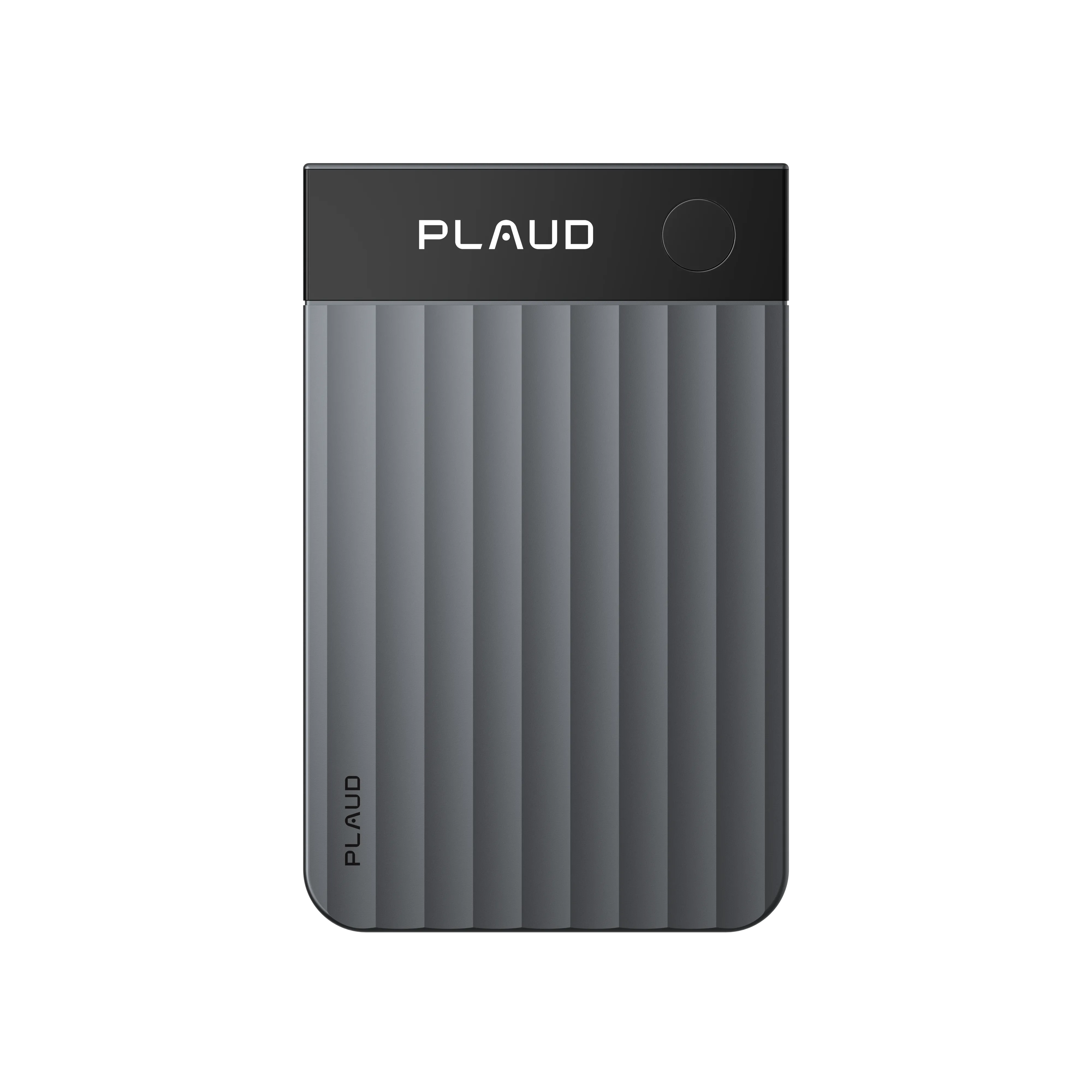
Plaud Note Pro is a hardware AI voice recorder built for people who move between different types of meetings.

In meeting rooms, four MEMS microphones capture audio from multiple directions with an up to 5-meter range. Participants across the table are captured more consistently than with a phone.
For video calls, Plaud Desktop records system audio without adding a bot. It works across platforms and keeps recordings consistent.
For wearable capture, the Plaud NotePin S clips to your clothing and records hands-free throughout the day. This is especially useful for people constantly moving between environments.
After the meeting, recordings sync and are processed into transcripts, summaries, and action items. Everything stays in a consistent format, reducing cleanup time.
When is your phone already enough?
Most people don’t need hardware. If your meetings are mostly video calls and you record occasionally, your phone works fine as a basic AI voice recorder.
Voice Memos plus a software note-taker covers a lot of ground for remote-first work.
When does a dedicated AI voice recorder start to make sense?
A dedicated AI voice recorder becomes useful when your week regularly includes in-person meetings, calls on the go, spontaneous conversations, or frequent idea capture outside a screen.
At that point, the limitation isn’t AI capability. It’s coverage.
If you move between environments all day, a wearable AI voice recorder like the Plaud NotePin S goes further by removing setup entirely.
Which tool actually covers your whole work week?
You don’t need an AI voice recorder just because it exists. But if your work moves between calls, rooms, and everything in between, the question becomes simple: Will something actually be recording when it matters?
For fully remote work, a phone and software note-taker are often enough. For hybrid work, a dedicated AI voice recorder fills the gaps. For people constantly on the move, a wearable recorder removes the decision entirely.