
In r/ADHD threads about meeting memory, the most common phrase isn't about distraction or inattention. It's: I was there the whole time, and I still don't know what happened.
The cause is a working memory failure. ADHD affects the system that holds information while you're still using it. It does not affect the part that stores long-term memories. The two are different, and the difference changes what actually helps.
This covers what ADHD does to your memory in high-stakes work situations, why the fixes you've already tried backfire, and a meeting workflow used by ADHD adults who stopped blanking out after back-to-back sessions.
What ADHD actually does to your memory (it's not what most people think)
Yes, ADHD affects memory. But it does not affect the kind that stores your childhood or the name of your first manager. Working memory is the main target: the system your brain uses to hold and process information while you are actively using it. Long-term memory, in most cases, stays intact.
Working memory: the brain's RAM that ADHD keeps resetting
Working memory is your brain's active workspace. When someone in a meeting says "get the Q3 report to me by Friday," working memory holds that sentence while you keep listening to the next one. In ADHD brains, this workspace is smaller and clears faster. A side comment, a notification, or a brief distraction can wipe it clean before the information has been saved anywhere.
Full attention does not guarantee retention. In ADHD brains, working memory clears before information can be stored. A 2024 study in NeuroImage: Clinical confirmed that adults with ADHD show weaker brain connections in the networks that support working memory, for both verbal and visual tasks.[5

Why you might remember childhood clearly but forget today's meeting
Long-term memory is a different system. It holds conversations from years ago, skills you learned in your twenties, and songs you haven't heard since school. ADHD does not significantly impair it.
A 2024 review in Physiological Research confirms this directly. Working memory problems are a core feature of ADHD. Long-term retention stays largely intact.[4] This is why an ADHD professional can recall a client meeting from three years ago in detail but draw a blank on this morning's decisions. The two systems are independent: ADHD impairs working memory but leaves long-term memory largely intact.
| Memory type | What it does | ADHD impact |
|---|---|---|
| Working memory | Holds and processes information while actively in use | Reduced capacity; clears faster under load |
| Long-term memory | Stores information for hours, years, or decades | Generally intact; not a primary ADHD deficit |
| Prospective memory | Remembers to do something in the future | Notably affected. Intentions get lost when working memory resets. |
For more on how ADHD affects executive function and memory systems, CHADD's overview of executive function and ADHD is a useful starting point.
The situations where ADHD memory problems hit hardest
Three situations push working memory past its limit most reliably:
- High-participation meetings: Tracking the speaker, managing your contributions, and waiting for your turn all at once. Working memory runs out of space and incoming information gets dropped.
- Sequential instructions: By the time someone finishes giving three tasks, the first is often gone.
- After interruption: Any break in attention clears working memory almost completely. A question, a notification, or a side conversation is enough. Re-entry means re-encoding from scratch.
Adults with ADHD report this pattern across clinical settings and communities like ADDitude. Both are predictable outcomes of a working memory system that has run out of capacity, not failures of effort.
Why the productivity fixes you've already tried don't work for ADHD brains
Most meeting tools are built for a different problem. Handwritten notes, Notion templates, recording apps, structured agendas: they help organize information you already retained. They don't help when working memory never held the information in the first place.
From handwritten notes to Notion: why capture tools fail mid-meeting
Many adults with ADHD describe the same experience: five pages of meeting notes that read like they were written by someone else.
- Handwritten notes use the same working memory as listening. Chase the notes and you stop encoding the conversation. Stop writing and the notes have no context. The act of capturing blocks the capturing from working.
- Apple Notes and Notion: the notes exist, the organizing gets skipped. Structuring takes another round of mental effort after an already-depleted session. Most ADHD adults skip it.
- Recording apps with full playback create 60 minutes of content to re-process. Most ADHD adults don't go back. The information is saved but rarely reviewed.
- Structured agendas improve input order but don't expand real-time working memory. A well-organized agenda does not stop information from falling out while it's being presented.
Adding note-taking to an overloaded working memory makes things worse. Cognitive load research consistently shows that dividing attention between two tasks degrades performance on both, particularly when mental resources are already limited.

The "be more organized" problem
Working memory problems in ADHD are physical, not motivational. As Dr. Russell Barkley's executive function model explains, ADHD affects the brain mechanisms that hold information active. It has nothing to do with caring or intent.
Asking an ADHD brain to "pay closer attention" does not expand working memory. It is like breathing harder to increase lung size. The effort is genuine, but the limit is physical.
The right question: how do I build a system that remembers for me?
What actually works: offload, don't improve
The ADHD adults who handle high-stakes meetings best have stopped relying on working memory to do the job.
Cognitive offloading means using tools to handle what your brain would otherwise need to hold. Research published in the Quarterly Journal of Experimental Psychology shows it directly boosts task performance for people with limited working memory (Grinschgl et al., 2021).[1] For ADHD, where working memory is physically constrained, this matters even more (Tolonen et al., 2024).[5
When a tool outside your brain handles storage, your working memory is free to focus on understanding what's being said and responding to it.
Offloading works in three steps:
- Capture: A recording handles what working memory cannot hold. You don't need to do anything mid-conversation.
- Mark: Press to Highlight flags the moments that matter, without pausing or switching attention.
- Extract: AI turns the recording into a structured summary covering decisions, action items, and next steps. The output covers decisions, action items, and next steps in a format ready to act on.
What "offloading" your working memory looks like in practice
Old workflow
- Enter meeting: try to listen and take notes at the same time
- Hit working memory limit by meeting 2 or 3
- Leave with incomplete notes
- Spend 45+ minutes trying to reconstruct
- Give up partway through
New workflow
- Start recording before the meeting begins
- Focus entirely on listening and participating
- Press Highlight when something critical is said
- Leave the meeting
- Read the AI summary. Action items, decisions, and next steps are already extracted.
Working memory is freed from storing information and can focus on the conversation as it happens.
Why this works for ADHD brains
ADHD working memory has two key traits: smaller capacity and high sensitivity to interruption. External capture systems bypass both. They work regardless of whether attention holds, and they retain content when focus shifts.
There is a second benefit: presence. When you are not trying to encode, retain, and note information all at once, you can give full attention to what's being said. One Plaud NotePin S user with ADHD described it directly: "fully present during meetings" (user review ID 30). In a back-to-back meeting day, that difference compounds quickly.
See how Plaud NotePin S supports ADHD workflows
ADHD template · Press to Highlight · 20 hours all-day recording
How to manage ADHD memory at work: before, during, and after meetings
ADHD coaches consistently find that the biggest gains come from systems set up before the meeting starts, not during. What follows is a Before, During, and After framework built around working memory limits.
Before: set up your external memory system once
- Change default meeting length to 50 minutes. The 10-minute buffer after each session is built into the calendar, so it happens regardless of how the meeting went.
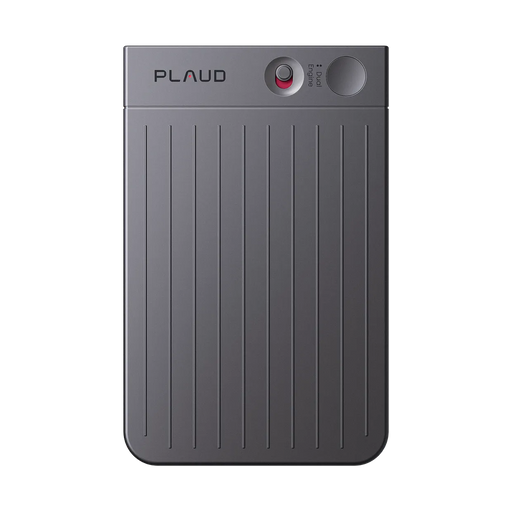
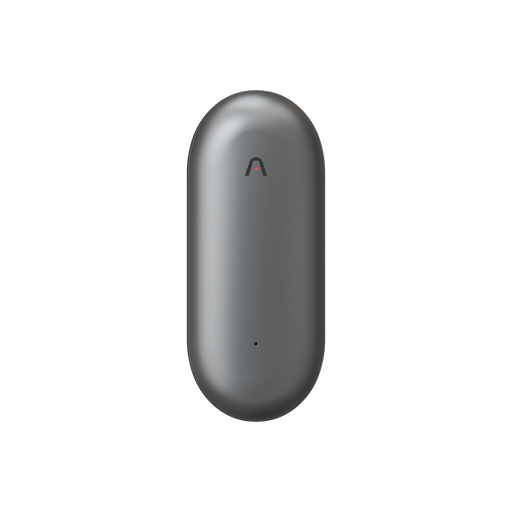
- Open the recording device before the meeting starts. Plaud NotePin S is a wearable AI note-taking device that offers 20 hours of continuous recording on a single charge. Start it in the morning and it runs through every meeting without re-activation (Plaud product specification).
- Select the ADHD summary template in the Plaud App. Every session then outputs in a format built for ADHD recall: key decisions, action items, participants, next steps. As one NotePin S user confirmed: "specific adhd one or a notes template" and "transcriptions can be re-summarized using a template".
- Block 10 minutes immediately after each meeting. Label it "review." This block is when the value of the recording gets extracted. Without it scheduled, the review gets skipped.
During: stop trying to capture everything
During the meeting, the only task is listening.
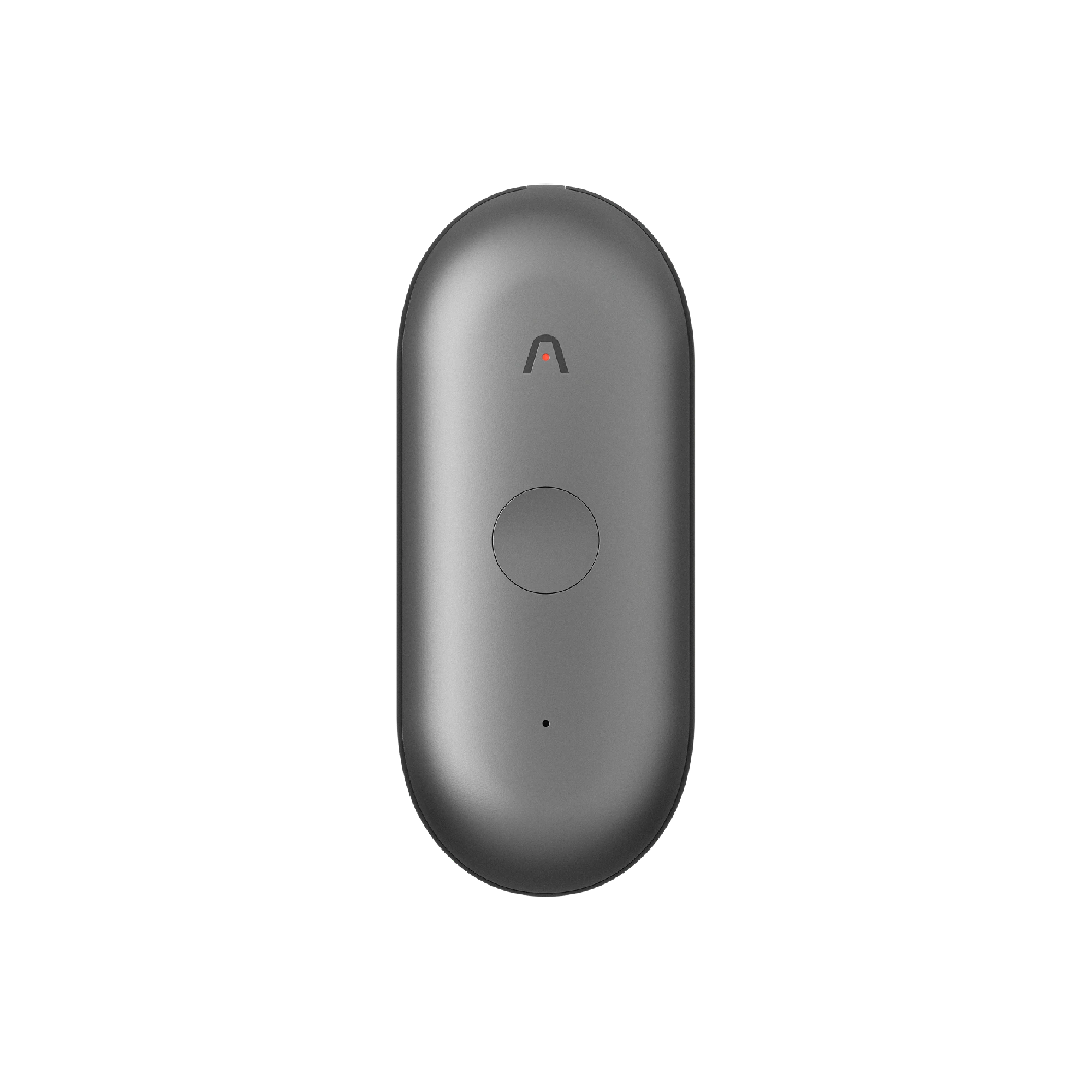
- When a decision is made or an action item assigned, press the button once. Plaud NotePin S has a physical button. Pressing it marks that moment in the recording, and the AI summary prioritizes highlighted segments. The whole interaction takes under a second and interrupts nothing.
- In the last 2 minutes, say your action items out loud: "My action item is [X] by [date]." It enters the recording. The AI extracts it at summary time. This technique is widely shared in ADHD productivity communities. Saying action items out loud re-encodes critical information while you still have context.
- If you lose focus, resist the urge to reconstruct what you missed. The recording covers it, and attempting a mental catch-up adds load without recovering content.

After: the 10-minute review
A common pattern among ADHD adults in professional settings is spending significantly longer after a meeting trying to reconstruct what happened than the meeting itself took. ADHD coaches typically recommend keeping the post-meeting review short and time-bounded to avoid this.
- Open Plaud App and read the AI summary. The ADHD template covers key decisions, action items, participants, and next steps.
- Copy action items into your task tool.
- Confirm the most important item for the day is on the list.
- Anything not finished in this window waits until tomorrow. Close the review and move on.
The hard stop matters because ADHD perfectionism, the urge to keep organizing until everything feels resolved, can extend a short review session indefinitely. A fixed time limit is what makes the system repeatable in practice.
Start your next meeting differently
Set up once. Let the system handle the rest.
When ADHD memory problems go beyond the meeting room
Working memory problems in ADHD don't stop at individual meetings. Research on ADHD and work performance shows they affect many daily situations. Two patterns show up most often in professional settings.
ADHD forgetting vs typical forgetting: the key difference
In typical forgetting, information was stored but becomes hard to access later. In ADHD, the problem usually comes earlier: information is not held in a stable way during the initial experience, so there is little to retrieve.
A 2023 study in Frontiers in Psychology found that people with ADHD who were unmedicated performed worse during the storage phase. They used fewer deep learning strategies when first taking in information. Retrieval practice helped everyone, but did not make up for storage problems in the ADHD group (Minear et al., 2023).[2
Brain research in Scientific Reports supports this. In ADHD, the process of taking in and stabilizing information is compromised. The brain does not prioritize incoming information well (Ortega et al., 2020).[3
The practical result: an ADHD professional who "wasn't paying attention" may have been fully engaged and still not stored what was said. The working memory system didn't have the resources to stabilize the information. The cause is a storage constraint, not a motivational one.
The distinction matters. "I was there but I don't remember" is not a sign of disengagement. It's what happens when the brain's storage process fails under heavy mental load. The practical fix is capturing the content externally, regardless of whether storage succeeds.
The weekly sync problem: why you can't remember what you decided last week
This is one of the most common ADHD work frustrations in communities like r/ADHD and ADDitude. You were present and engaged for the decision. A week later, you come up blank when asked about it.
Working memory content that doesn't enter an external system fades fast. By the next weekly meeting, it's gone. The reason has nothing to do with importance. It was not stored durably in the first place.
Plaud NotePin S stores AI summaries from every recorded session, searchable in the Plaud App. The workflow before a weekly sync: open last week's summary, scan for decisions made, walk in with context. The alternative is entering the meeting with no record of what was decided.

The ADHD memory toolkit: what to start with
The ADHD professionals who handle back-to-back meetings best are not fighting their working memory. They've stopped expecting it to do a job it was never designed for.
This reframe is central to how ADHD coaches approach the problem. Working memory in ADHD is a constrained resource, a biological fact rather than a character flaw. The right response is to design around it.
- Working memory in ADHD is a constrained resource, and that doesn't change with more effort in the moment. The useful response is building a workflow around its actual limits.
- Choose one external capture tool and set it up today. A single tool used consistently outperforms multiple tools used occasionally.
- In your next meeting, change one thing: start recording before the meeting begins and focus entirely on listening.
- After the first week, remove anything you didn't actually use. Most people find the system that holds up is simpler than what they originally planned.
Why Plaud NotePin S works for ADHD
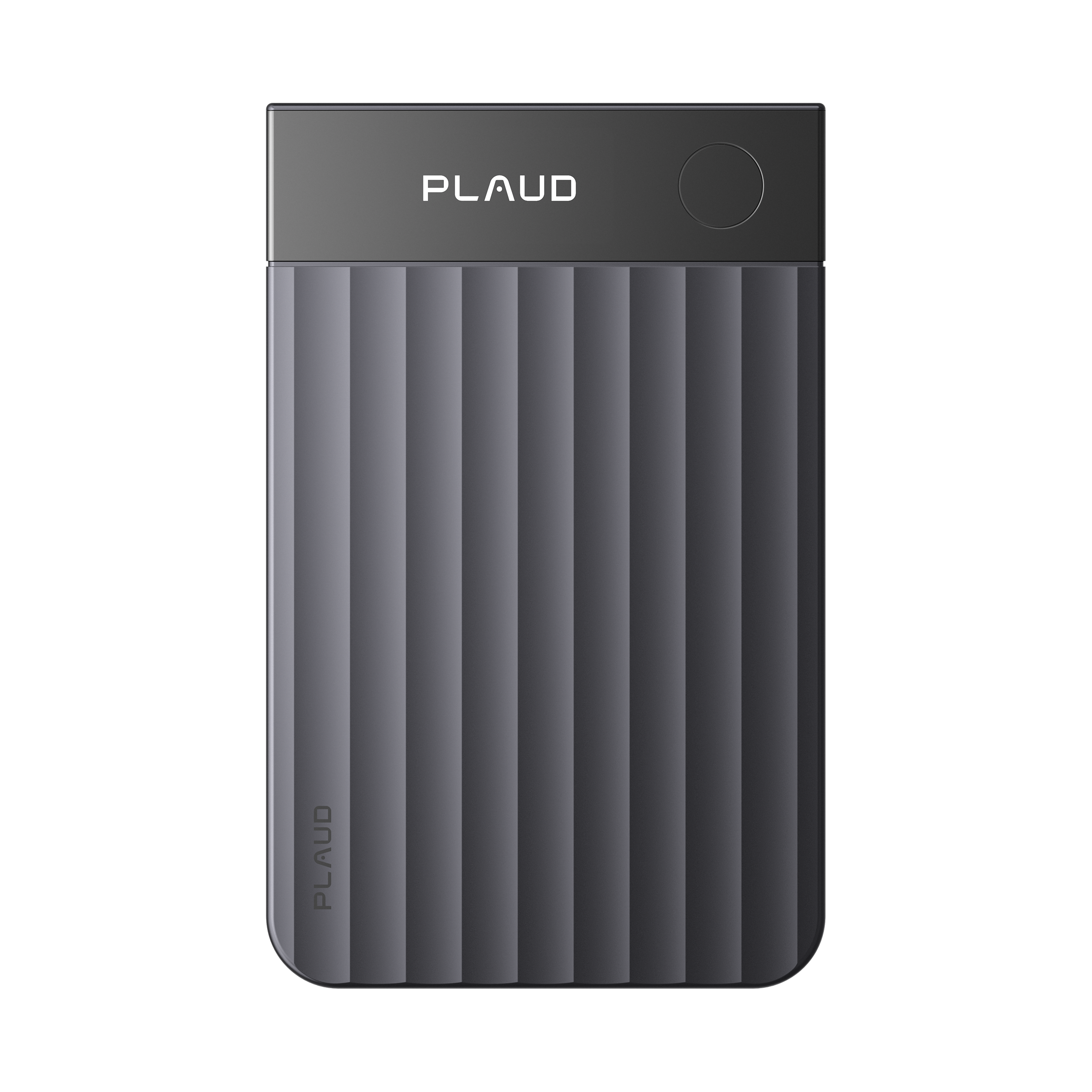
Plaud NotePin S is a wearable AI note-taking device built to run passively throughout a full work day. Three features address the working memory problem directly:
- ADHD summary template: The Plaud App includes a summary template built for ADHD. It outputs key decisions, action items, and next steps in a format matched to how ADHD brains retrieve information.
- Press to Highlight: Pressing the physical button once marks that moment in the recording. The AI summary prioritizes highlighted segments, with no note-taking or working memory required.
- 20 hours continuous recording: Starting it once in the morning covers every meeting in the day, with no per-meeting setup and no gaps between back-to-back sessions.
Plaud NotePin S is SOC 2 and GDPR compliant. This matters for ADHD professionals in healthcare, legal, and other regulated fields where data security is required.
Plaud NotePin S: built for the way ADHD brains actually work
ADHD template · Press to Highlight · 20 hours all-day recording · SOC 2 certified
See Plaud NotePin S · $179[Plaud NotePin · $159
References
- Grinschgl, S., Papenmeier, F., & Meyerhoff, H. S. (2021). Consequences of cognitive offloading: Boosting performance but diminishing memory. Quarterly Journal of Experimental Psychology, 74(11), 1836-1854. https://doi.org/10.1177/17470218211008060
- Minear, M. E., Coane, J. H., Cooney, L. H., Boland, S. C., & Serrano, J. W. (2023). Is practice good enough? Retrieval benefits students with ADHD but does not compensate for poor encoding in unmedicated students. Frontiers in Psychology, 14, 1186566. https://doi.org/10.3389/fpsyg.2023.1186566
- Ortega, R., Lopez, V., Carrasco, X., Escobar, M. J., Garcia, A. M., Parra, M. A., & Aboitiz, F. (2020). Neurocognitive mechanisms underlying working memory encoding and retrieval in Attention-Deficit/Hyperactivity Disorder. Scientific Reports, 10, 7771. https://doi.org/10.1038/s41598-020-64678-x
- Tian, T., Xu, X., Song, J., Zhang, X., Zhang, D., Yuan, H., Zhong, F., Li, J., & Hu, Y. (2024). Learning and memory impairments with attention-deficit/hyperactivity disorder. Physiological Research, 73(2), 185-199. https://doi.org/10.33549/physiolres.935202
- Tolonen, T., Leppamaki, S., Roine, T., Alho, K., Tani, P., Koski, A., Laine, M., & Salmi, J. (2024). Working memory related functional connectivity in adult ADHD and its amenability to training: A randomized controlled trial. NeuroImage: Clinical, 42, 103696. https://doi.org/10.1016/j.nicl.2024.103696
- Vega, A. J., Hernandez, G. V., Anwar, A. I., Sharafi, B., Islam, R. K., Shekoohi, S., & Kaye, A. D. (2025). Cognitive impairment in adult attention deficit hyperactivity disorder: Clinical implications and novel treatment strategies. Clinics and Practice, 15(8), 150. https://doi.org/10.3390/clinpract15080150
Disclosure: This article is published by Plaud Inc. Plaud NotePin S is a Plaud product. User reviews referenced (ID 28, ID 30, ID 91) are from verified purchasers of Plaud NotePin and Plaud NotePin S.