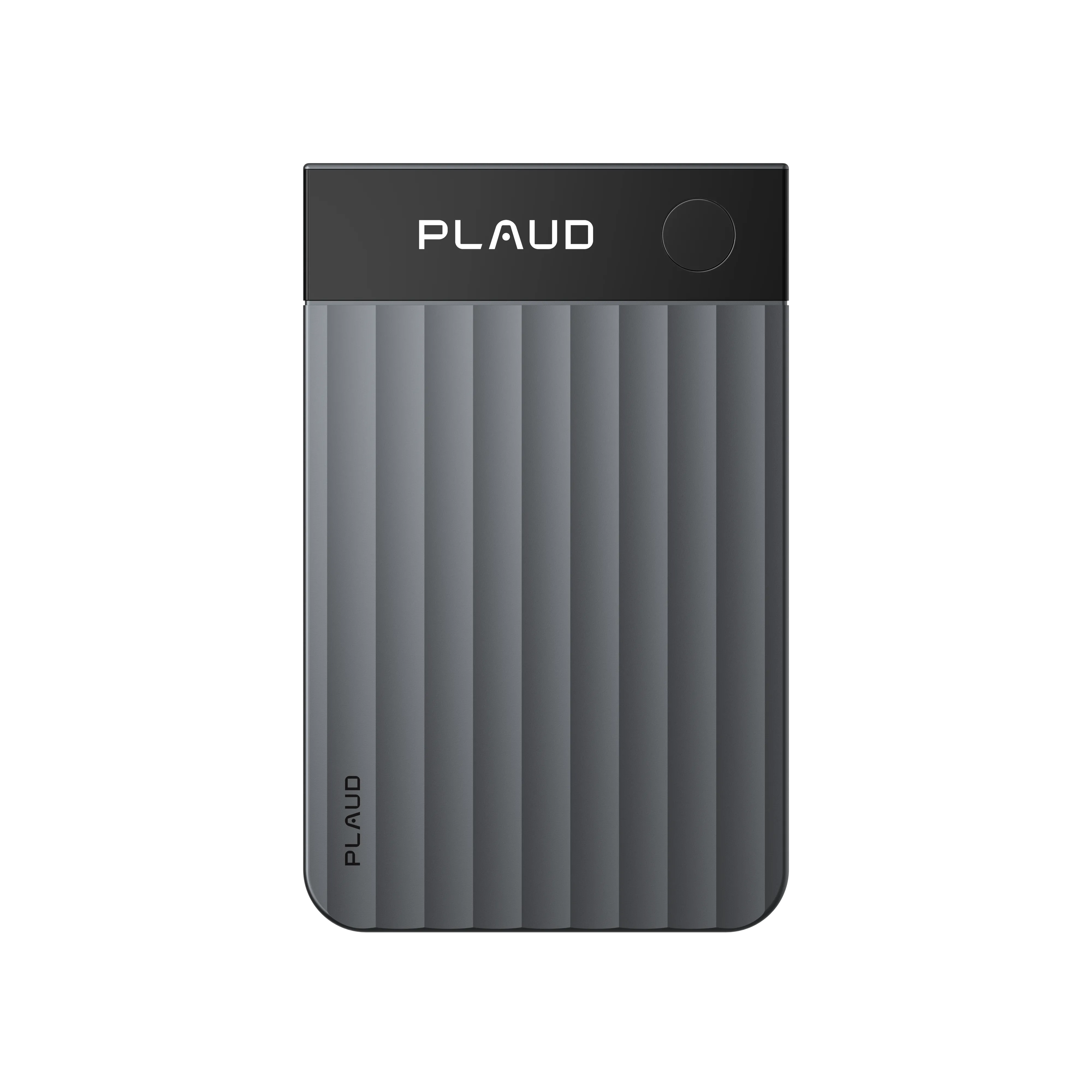
For Elliot, work doesn’t happen on a screen.
It happens in conversation.
As the CEO of a global tech PR agency, his days are defined not by documents or dashboards, but by dialogue—client calls, strategy sessions, internal debates, and moments where a single sentence can change direction.
“My job is helping technology companies get their story right—especially when the stakes are high,” he says. “And those decisions don’t happen in docs—they happen in dialogue.”
That means everything important—every insight, every nuance, every turning point—exists in the flow of conversation. And for years, that created a quiet but constant tension.
The Cost of Being Present
Like many professionals whose work depends on thinking and communication, Elliot used to face a trade-off he couldn’t solve.
To be fully engaged in a conversation meant risking the loss of detail.
To capture everything meant stepping out of the moment.
“Before PLAUD, it was messy—notes everywhere, relying on memory,” he recalls. “And memory is unreliable.”
The problem wasn’t just forgetting what was said. It was losing what mattered.
“The biggest pain was losing nuance. Meetings would end, and the real insight would disappear.”
That insight—the exact phrasing, the hesitation in a client’s voice, the subtle shift in direction—is often what shapes strategy. And once it’s gone, it’s gone.
For someone whose role is to find signal in noise, that loss isn’t small. It compounds.
A Different Way to Work
Elliot first heard about Plaud through people he trusted—other operators who think deeply about how they work.
But what made it stick wasn’t the technology itself. It was how little it asked him to change.
“It didn’t feel like a tool,” he says. “It felt natural—like it fit how I already work.”
Now, when a conversation matters, he simply turns it on.
No switching modes. No breaking eye contact. No dividing attention.
Just staying in the moment.
“I wanted to stay fully present in important conversations—without worrying about capturing everything.”
That’s exactly what changed.
From Conversation to Intelligence
One of the moments that made the impact clear came after a client call.
It was the kind of conversation where wording matters—where the difference between what’s said and what’s meant can define the entire direction of a project.
After the meeting, instead of trying to reconstruct what happened, Elliot opened Plaud.
“It had already pulled out the decisions and next steps I cared about,” he says. “It pulled out exactly what I cared about.”
What used to be fragmented—scattered across memory, notes, and follow-ups—was now structured.
Clear. Actionable. Reusable.
“That changed our strategy.”
And that’s the shift: conversations are no longer fleeting moments. They become assets.
Thinking, Not Remembering
Perhaps the biggest change isn’t what Plaud captures—it’s what it frees up.
“It took away the mental load,” Elliot explains. “I don’t waste energy remembering—I use it thinking.”
That shift is subtle, but powerful.
Instead of splitting attention between listening and documenting, he can fully engage:
- Listen more closely
- Respond more thoughtfully
- Think more clearly in real time
“I listen better. I’m more present.”
And in his line of work, presence isn’t a soft benefit. It’s a competitive advantage.
Alignment at Scale
The impact extends beyond individual conversations.
Within his team, Plaud has changed how information flows.
“Everyone’s aligned around the same reality, not different notes.”
No more mismatched interpretations. No more lost context. No more time spent reconciling what was actually said.
Just a shared understanding—grounded in the conversation itself.
What Gets Lost—And What Doesn’t
At its core, Elliot’s work is about filtering:
“What actually matters versus what’s just noise.”
But for a long time, even the signal wasn’t guaranteed to survive.
Ideas would surface—and disappear.
Insights would emerge—and fade.
“Some ideas felt important in the moment—and then they were just gone.”
Now, that’s no longer the case.
“If Plaud disappeared tomorrow,” he says, “I’d miss the trust—that nothing important gets lost.”
A New Definition of Presence
Technology often promises more output—faster, better, more efficient.
But Elliot sees something different here.
“It changed how I see AI. This isn’t about outputs—it’s about intelligence.”
Plaud doesn’t think for him. It doesn’t replace judgment or creativity.
“PLAUD doesn’t think for me. It makes sure my thinking isn’t wasted.”
And that’s the real shift.
Being present is no longer a trade-off.
It’s no longer something you have to choose at the expense of capturing value.
You can stay fully engaged—while everything that matters is preserved.
The Work That Happens in Conversation
For people like Elliot—leaders, advisors, decision-makers—work isn’t defined by what’s written down.
It’s defined by what’s said, heard, and understood in real time.
“People whose value comes from thinking and talking—that’s who this is for.”
Because in the end, the most important moments in work don’t happen after the meeting.
They happen inside it.
And now, for the first time, they don’t have to be lost.