
Quick question: can you actually understand your notes when you review them weeks later? Probably not. Methods like Cornell or mind mapping sound great in theory, but when professors talk fast and cover tons of material, your hand can't keep up. This guide breaks down why traditional note-taking struggles in modern classes and how AI tools can help by handling the recording while you focus on thinking.
What are the different methods of taking notes? Traditional note-taking methods
You've probably heard about these note-taking methods in study skills classes or seen them recommended online. Each one has people who swear by it, but they all run into the same problems when you actually try to use them in real lectures.
1. The outline method

The outline method organizes information hierarchically using bullet points and indentation. You start with main topics and indent subtopics underneath, creating a visual structure that shows how ideas relate to each other.
What works about it
This is especially effective if your lectures are organized in a logical order. This is easy to write out, as you are simply listing points, not creating complete sentences, and then you can easily determine what points are main ideas and what points are details. This is one way to make note-taking seem easy if your teacher lays things out logically.
Where it falls short
The problem? Lectures are never thoroughly organized. Because your teacher is covering subjects, personal anecdotes, and random questions, your outline goes into disarray. You find yourself puzzling over what goes under what topic, and you spend mental cycles determining what constitutes "the right" structure, rather than actually listening.
And if your class is hurried, you're not absorbing material while you spend time perfecting your indentation.
What it looks like in practice
Say you're in a biology lecture about cells. Your outline might look like:
I. Cell Structure
- A. Membrane Phospholipid bilayer
- Selective permeability
- B. Cytoplasm Organelles
- Cytosol
II. Cell Functions
- A. Energy production
- B. Protein synthesis
See how neat that looks? Now imagine trying to create that structure in real time while your professor is talking and you're trying to understand mitochondria for the first time.
2. The Cornell method
The Cornell system organizes your page into three parts, with the left section reserved for clues/questions and the right section used to take notes. Note-taking takes place in the right section, and after class, you move your questions/clues to the left section and make a summary at the end.
What works about it
This approach forces you to go back and analyze your notes after class, and this method is really effective for learning. The cue card column assists you in learning for tests by allowing you to conceal your notes and practice testing on your own, with only your questions in front of you.
Where it falls short
Cornell notes involve a lot of work after class time. Preparing those cue questions and summarizing takes up time, and if you don't get it right, you might not even remember what your scrambled notes are talking about. Meanwhile, you're still furiously jotting down notes in your right-hand column, and you're missing half of what's going on.
What it looks like in practice
For that same biology lecture, your page would look like this:
Left column (Cues/Questions):
- What is selective permeability?
- Main cell structures?
- Energy production location?
Right column (Notes):
- Cell membrane = phospholipid bilayer, controls what enters/exits the cell
- Membrane, cytoplasm (has organelles + cytosol), nucleus
- Mitochondria = powerhouse of the cell, ATP production
Bottom (Summary): Cells have specialized structures that perform specific functions. The membrane controls substance movement, the cytoplasm contains organelles for various processes, and mitochondria produce energy.

Again, looks great. But you had to go back after class and add those cue questions and that summary. If you skip that step, you have incomplete notes in one column.
3. The boxing method
The boxing method separates different topics or concepts into literal boxes on your page. Each box contains information about one specific idea, and boxes don't connect to each other. You're creating visual chunks of information that keep different topics from bleeding together.
What works about it
This method is excellent for lectures that cover distinct, unrelated topics in one session. The visual separation helps your brain keep concepts organized, and when you review, you can focus on one box at a time without getting confused. It's also flexible because boxes can be different sizes depending on how much content each topic has.
Where it falls short
The boxing method completely fails when ideas are interconnected. If your professor explains how concept A relates to concept B, your boxes can't show that relationship. You end up with isolated chunks of information with no sense of how they fit together. Also, you need to predict how big to make each box, which is impossible when you don't know how long the professor will talk about each topic.
What it looks like in practice
In a history lecture covering multiple events, you'd draw separate boxes:
Box 1: French Revolution
- 1789 to 1799
- Causes: debt, famine
- Outcome: Napoleon rises to power
Box 2: Industrial Revolution
- 1760 to 1840
- Steam power, factories
- Urbanization began
Box 3: American Revolution
- 1765 to 1783
- Taxation without representation
- Independence achieved
Works fine for separate events, but what if your professor spends 20 minutes explaining how these revolutions influenced each other? Your boxes can't show that.
4. The charting method
The charting method uses a table format with columns for different categories and rows for different topics or time periods. You're creating a spreadsheet on paper, filling in cells as your professor covers each aspect of each topic. It's super organized and systematic.
What works about it
When you need to compare multiple things across the same criteria, charting is unbeatable. It's perfect for lectures that systematically cover characteristics, dates, causes, and effects, or any other parallel information. The visual layout makes comparisons obvious, and studying later is easy because everything is already organized.
Where it falls short
Most lectures don't follow a neat chart structure. If your professor explains things in a narrative way, jumps around between topics, or goes deep on one aspect before moving on, you'll struggle to fill in your chart. You end up with lots of empty cells and information that doesn't fit the categories you predicted. Plus, drawing tables takes time you don't have during fast lectures.
What it looks like in practice
Comparing different psychology theories, you'd create a table:

Perfect for this type of content. But your professor needs to actually present information in this parallel way, which doesn't always happen.
5. The mind mapping methods

Mind mapping starts with a central concept in the middle of your page and branches out with related ideas radiating outward like a tree or spider web. You connect ideas with lines and can add sub-branches from any branch. It's a visual, non-linear way of organizing information that mirrors how your brain actually makes connections.
What works about it
Mind mapping is fantastic for visual learners and for seeing how concepts interconnect. It encourages you to think about relationships between ideas rather than just listing them. The non-linear format means you can add information wherever it fits naturally, and the visual nature makes it memorable. When done well, mind maps can capture the big picture of a topic beautifully.
Where it falls short
Creating a good mind map requires you to understand relationships as the lecture happens, which is really hard when you're hearing concepts for the first time. If your professor presents information linearly but you're trying to figure out how everything connects spatially, you'll get overwhelmed fast. Mind maps also get messy quickly if the lecture is dense or disorganized, and you can run out of space in weird ways.
What it looks like in practice
For a lecture on climate change, you'd draw the main topic in the center with branches spreading out.
At the center, you'd write "Climate Change" and then branch out to major topics like "Greenhouse Gases" (which branches to CO2 and Methane), "Rising Temps" (which branches to Sea Level Rise and Extreme Weather), and "Causes" (which branches to Fossil Fuels and Agriculture). Each of those can have its own sub-branches.
This works great after you understand the material, but imagine trying to draw this while simultaneously listening to explanations, examples, and data. You're making spatial decisions about where to put information while also trying to understand it.
6. The Zettelkasten method
Zettelkasten (German for "slip box") involves writing each individual idea on a separate note card or digital note with a unique identifier. You then link related notes together, building a web of interconnected knowledge over time. It's less about capturing a single lecture and more about building a personal knowledge system.
What works about it
This method is incredible for long-term learning and making connections across different sources and time periods. By forcing you to express each idea clearly on its own card and think about how it connects to previous knowledge, you develop a deep understanding. It's especially powerful for research, writing projects, or building expertise in a field over months or years.
Where it falls short
Zettelkasten is completely impractical during lectures. You can't write individual cards while your professor is talking because it's way too slow. The method requires reflection and careful linking, which you don't have time for in class. It's really a post-lecture processing method, not a note-taking method, which means you still need another way to capture information in the moment.
What it looks like in practice
After a series of lectures, you might create cards like:
Card 202A: "Cell membranes are selectively permeable," and you'd link this to cards 195F and 203B
Card 203B: "Osmosis is passive transport across membranes," and you'd link this back to 202A and forward to 204C
Card 204C: "Active transport requires ATP energy," and you'd link this to 203B and 180G
Each card is an atomic idea that connects to others. Brilliant for building long-term knowledge, but impossible to do while simultaneously listening to a lecture.
Traditional note-taking methods all struggle with speed and completeness. You physically can't write fast enough to capture everything, which leads to incomplete or subjective notes that miss important context and details.
Plus, your notes aren't searchable. Need to find something from three weeks ago? You're flipping through pages hoping you'll recognize it. And methods like Cornell require significant post-lecture time for organization and summarization that most students don't have or skip entirely.
AI tools fix this completely. You get full, searchable transcripts with automatic summaries, plus time-stamped access so you can jump back to hear exactly what was said at any moment. No writing, no missing content, no flipping through notebooks.
Why AI note-takers are more effective for students
Your goal as a student isn't to take perfect notes. It's to understand what you're learning and remember it when exams come around. Notes are just a tool to help you get there. AI note-takers can help you focus on what actually matters.

1. Traditional methods can't keep up with college life
Writing by hand has its benefits, but think about your actual week. Back-to-back lectures, dense readings, multiple subjects all at once. Sound familiar? Traditional note-taking can't keep up, and you end up with bits and pieces scattered across notebooks and apps you'll never find again.
2. AI lets you think instead of scribbling
What happens when AI handles all the recording and transcribing? You can actually listen to your professor instead of racing to write everything down. You engage with the ideas, ask better questions, and follow along in real time. Meanwhile, the AI captures everything and organizes it for easy review later. Doesn't that sound better?
3. You're not giving up control, you're clearing the clutter
Think of it this way. AI handles the boring mechanical stuff so your brain can do what it's good at, which is thinking and connecting ideas. You're not handing over your understanding. You're just getting rid of the busywork that blocks real learning.
How to actually use an AI note-taker in class: Your Plaud Note Pro guide
Why bother with AI note-taking?
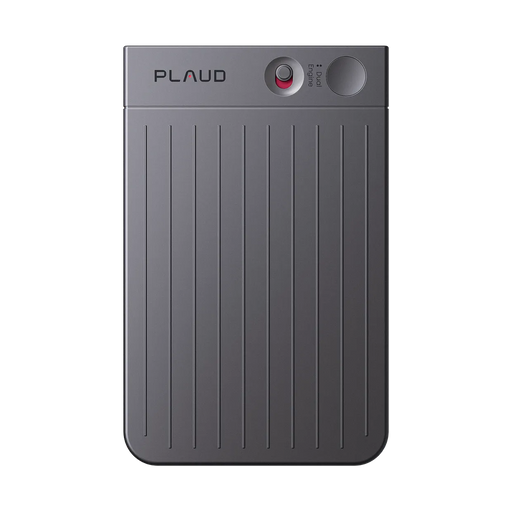
Ever tried to listen to your professor and take notes at the same time? You're either really listening or frantically scribbling—you can't do both well. Plaud Note Pro fixes this by capturing everything while you stay focused on understanding.
Getting started: Your class-by-class workflow
Step 1: Setting up (takes 30 seconds)
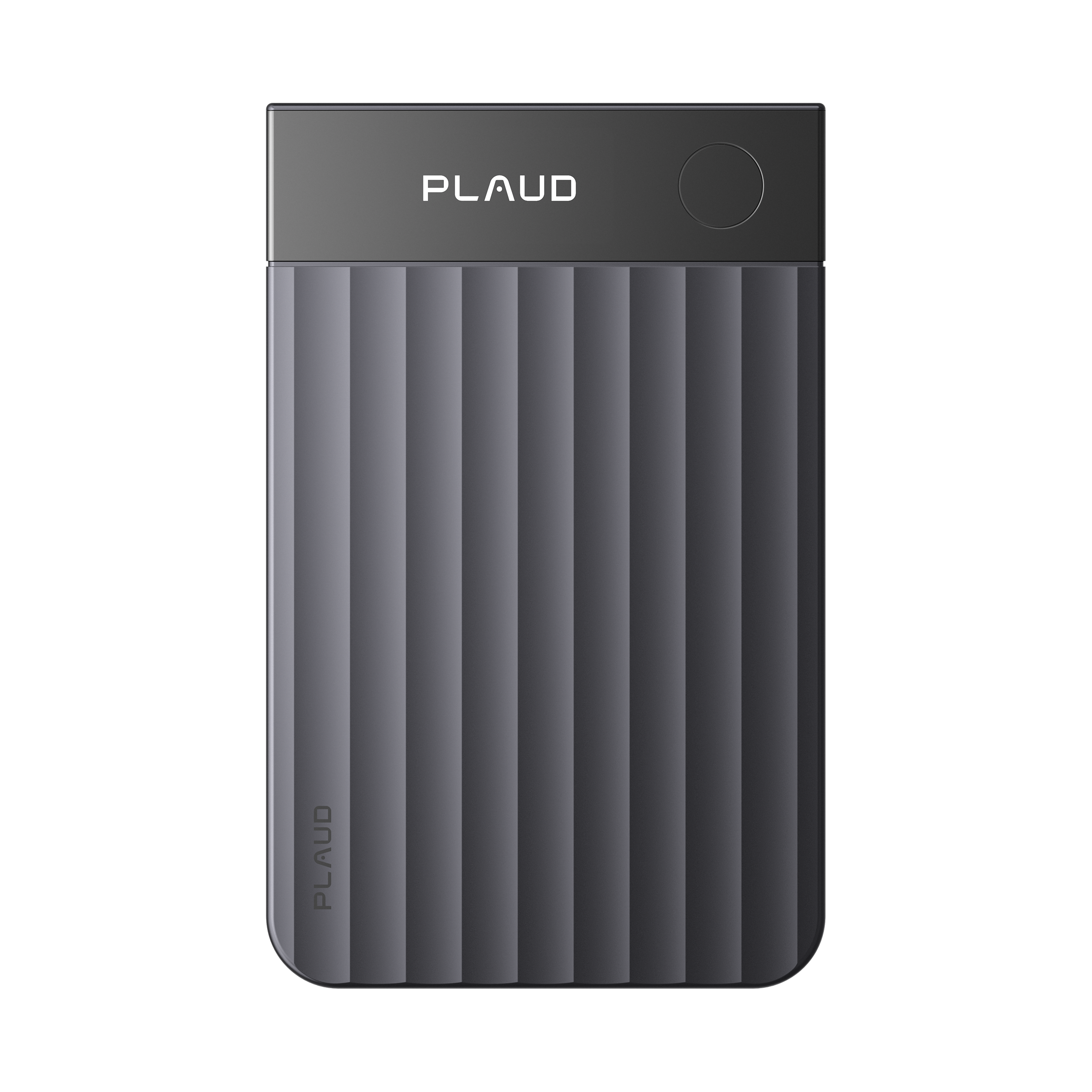
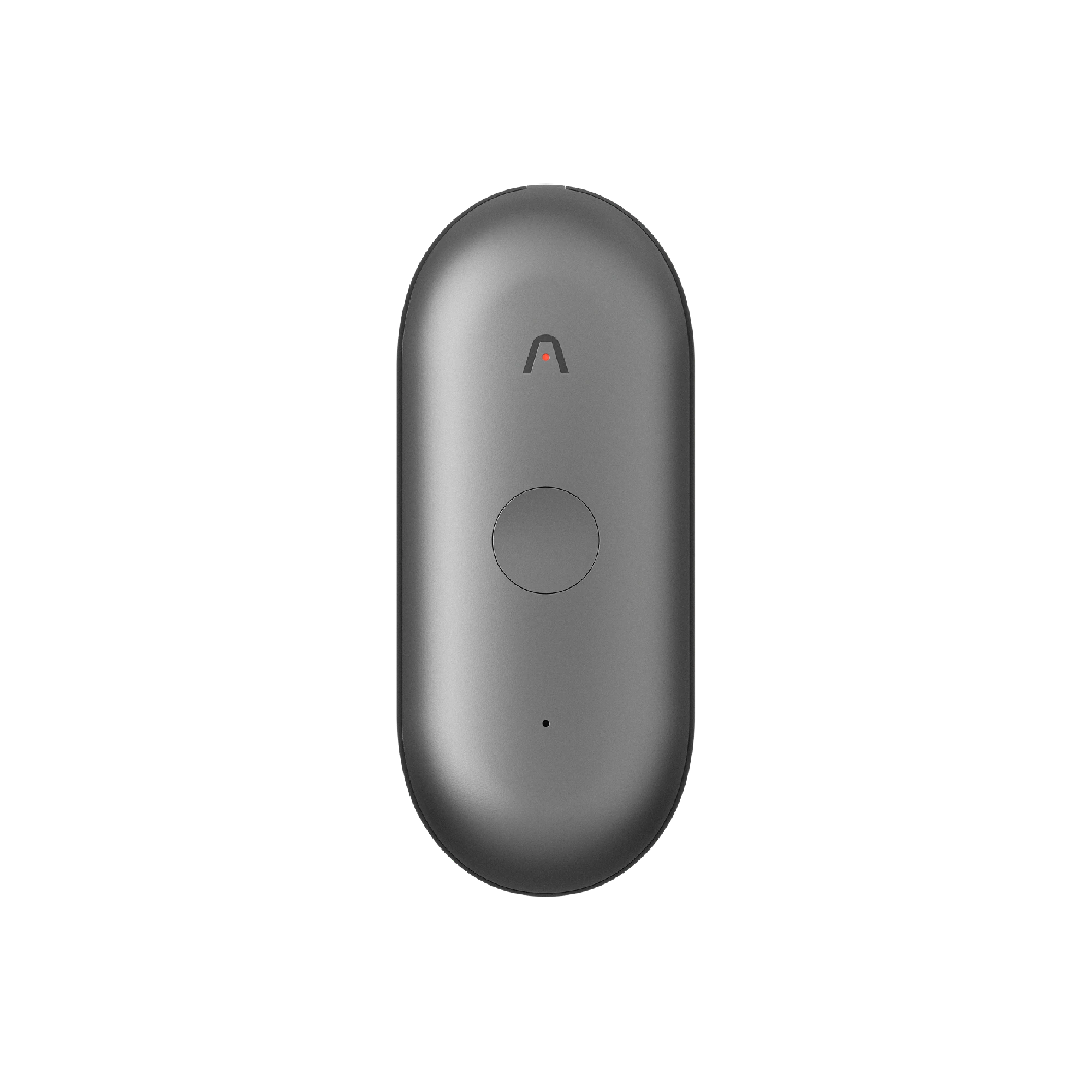
Attach Plaud Note Pro to the back of your phone with your MagSafe case, check your AMOLED screen to make sure you've got 50 hours of battery left, and then you're all set. It picks up audio from up to 5 meters away, so even back-row seats work fine.
Step 2: Recording your lecture
- Starting is ridiculously simple: Press the button once when class starts. The AMOLED display confirms it's recording and the device automatically detects it's in an in-person setting, firing up its four-microphone array.
- Mark the important stuff: When your professor says "This will be on the exam" or explains something complex, tap the button. Each tap bookmarks a 30-second audio clip. Later, instead of reviewing two hours of lecture, jump straight to these moments and get through everything important in about 10 minutes.
- Capture visuals as you go: Open the Plaud app and snap photos when your professor writes equations on the whiteboard or shows important slides. The app automatically syncs each image to that exact moment in your audio recording, so when you're studying later, you'll hear exactly what was being explained about each visual.

Step 3: Right after class: Let it do the work
Press the button to stop recording. Here's what happens automatically:
Wi-Fi transfer in 5 GHz automatically uploads your lecture right away—this means, like, before you can pack your bag. The Flow system automatically transcribes all your recordings and produces notes with support for 112 languages.

Quick review while it's still fresh in your memory: Open up the app, locate today's lecture, and go through those points you bookmarked. Listen to those crucial 30-second clips, monitor your synced pictures, and scan through your AI summary. All set! It takes 5-10 minutes, and you've reviewed all that's important.
Step 4: Studying later: Search and ask questions
1. Finding stuff is instant: Type "thermodynamics" in the search bar and find every mention across all your lectures in seconds. Search by date, by professor's name, or by any keyword.
2. Talk to your notes: This is the game-changer. Instead of scrolling through hours of recordings, ask questions:
- Type "What did we cover about thermodynamics?" and get instant answers with timestamps
- Ask "Summarize last Tuesday's lecture" for a quick overview
- Request "Make me a mind map of cellular respiration," and the AI generates a visual study aid automatically
- Query "What exam topics were mentioned this week?" to compile your highlighted moments

Pro tip: Add your course-specific jargon to the custom glossary (words like "heteroscedasticity" or "stoichiometry") and the AI gets way more accurate at understanding your recordings.
3. Create study materials your way: Ask Plaud to generate mind maps from your recordings—choose from over 10,000 templates. Send transcripts directly to Notion for your course wiki, to Google Drive for backup, or to whatever note-taking app you prefer.

Step 5: Collaborating with study groups
1. Share your recordings: Generate a shareable link after class and text it to your study group. When they click it, they get everything—full audio, transcript, AI summary, your highlights, and all photos of the whiteboard.

2. Catch up on missed classes: When someone shares their Plaud link, click it, and you're essentially in that lecture. Use Ask Plaud with questions like "What were the main topics?" to get up to speed fast by jumping straight to highlighted moments.
Step 6: Handling multiple classes
The 50-hour battery easily handles six to eight lectures without charging. While walking between classes, Wi-Fi transfer works in the background, uploading your previous lecture. Each class automatically becomes its own separate, organized recording.
Why does this beat taking notes by hand
Let's be real about what you're actually getting:
|
What you need to do |
Manual notes |
Plaud Note Pro |
|
Capture everything |
Miss 60-70% while writing |
Get 100% with a four-mic array |
|
Stay focused |
Brain stuck in transcription mode |
Actually understand—ask questions and participate |
|
Review later |
Decipher rushed handwriting |
Searchable transcripts are ready instantly |
|
Find information |
Flip through pages |
Type keywords, find it in seconds |
|
Handle visuals |
Skip it or draw poorly |
Snap photos that sync with audio |
|
Study for exams |
Re-read everything |
Jump to highlighted moments only |
|
Share with others |
Copy or scan incomplete notes |
One-click sharing of complete recordings |
Bottom line: Traditional notes mean choosing between listening and writing. Plaud Note Pro removes that choice. Students review material in 20% of the time by jumping to important moments instead of re-reading notebooks.
Who else can benefit from AI note-taking?
1. STEM students: Handle complex content
Snap photos of equations on the whiteboard—they sync to the audio so you hear the full explanation later. The specialized terminology recognition handles words like "stoichiometry" correctly. Use mind maps to visualize how concepts connect, and review lab procedure demonstrations with perfect accuracy.
2. Medical and law students: Stay compliant
HIPAA-compliant recording protects patient information in medical lectures. Legal terminology gets transcribed accurately ("res ipsa loquitur" won't become nonsense). Document case studies with audio and visuals, then jump to highlighted key cases for rapid exam prep.
3. Language learners: See and hear together
The 112-language transcription shows correct spelling while you hear pronunciation. Replay native speaker audio at exact moments for clarification. Build custom glossaries of new vocabulary and share recordings with language partners for practice.
4. Remote learning: Works everywhere
Phone call recording mode uses vibration conduction to capture Zoom lectures with zero quality loss. The device automatically switches between in-person and call modes. Apple Find My integration helps you track it down if you lose it between home and campus.
Quick tips that actually matter
Here's what makes the biggest difference in daily use:
- Hit record right when class starts to catch the opening context that frames everything else.
- Tap to highlight generously—every tap is just a bookmark, and you can review all highlights in a fraction of the time.
- Photograph visuals immediately when they appear because slides change and whiteboards get erased.
- Transfer recordings during breaks since Wi-Fi upload is basically instant.
- Review highlights within 24 hours while context is fresh—takes 10 minutes and dramatically improves retention.
- Use Ask Plaud for homework questions because your professor probably already explained it in some lecture.
- Share recordings with study groups right after class so everyone stays caught up.
- Build your course glossary in week one with technical terms so transcription stays accurate all semester.
- Create weekly mind maps to connect concepts across lectures. Set up Flow integrations early to automatically route different courses to different folders.
What you're really getting
Plaud Note Pro frees your brain to think and understand while it handles capturing and organizing. You understand more in class because you're listening instead of transcribing. You study more efficiently by reviewing AI summaries and highlighted moments instead of pages of notes. And you have complete, searchable records of every lecture available whenever you need them.
You're capturing what you hear, say, see, and think—all in one device that actually works the way you need it to. That's the deal.
How to choose the best note-taking methods?
Picking the right note-taking method isn't about finding the "best" one—it's about finding what actually works for your specific situation. Here's how to think through that decision.
1. Consider your learning style
Start with how your brain naturally processes information. Different learning preferences point toward different methods.
|
Learning style |
What works for you |
Methods to try |
|
Visual |
Pictures, diagrams, spatial relationships |
Mind mapping, boxing |
|
Logical |
Structure, hierarchy, clear organization |
Outline, Cornell |
|
Relational |
Connections between ideas, big-picture thinking |
Charting, Zettelkasten |
But here's the thing: most people don't fit neatly into one category. You might be visual for some subjects and prefer linear notes for others. That's completely normal.
With Plaud Note Pro, press the button to record your lecture, then let Ask Plaud do the rest. Want a visual mind map? Just ask. Prefer a structured summary? Request that instead. The app gives you over 10,000 templates to play with, so you can turn the same recording into whatever format clicks best for you.
2. Match the method to the content
Different subjects demand different approaches. Before choosing a method, think about what you're actually trying to capture.
- Facts, dates, and definitions — The outline method keeps these organized in a clear hierarchy that's easy to scan later.
- Comparisons across multiple topics — Charting lets you see similarities and differences at a glance.
- Relationships between concepts — Mind mapping visually shows how ideas connect and build on each other.
- Distinct, separate topics — Boxing keeps unrelated concepts from bleeding together.
- Dense material requiring deep review — Cornell forces you to process and summarize, which strengthens retention.
- Long-term knowledge building — Zettelkasten creates a web of linked ideas that grows over time.
Why stress about matching methods to content when Plaud Note Pro handles it all? Hit record, capture the full lecture, then ask the AI to pull out key facts, build comparison charts, or map out how concepts connect. See something important on the whiteboard? Snap a photo through the app, and it automatically links to that exact moment in the audio. You get the visual and the explanation together.
3. Be honest about the lecture format
Your professor's teaching style matters more than most students realize. Consider these factors before committing to a method.
|
Lecture style |
Challenge it creates |
What might work better |
|
Fast-paced, dense content |
No time to organize or format |
Simple outlines or AI recording |
|
Jumps between topics randomly |
Hard to maintain structure |
Boxing or mind mapping |
|
Well-organized and linear |
Easier to follow along |
Outline or Cornell |
|
Heavy on visuals and diagrams |
Can't capture drawings while listening |
Photo-based capture |
|
Discussion-based, lots of Q&A |
Unpredictable flow |
Flexible methods like mind mapping |
If your professor moves fast or teaches in a non-linear way, you'll struggle with methods that require you to make organizational decisions while simultaneously listening.
No matter how your professor teaches, Plaud Note Pro keeps up. Lecture moving too fast? The four microphones catch everything while you listen. Professor jumping all over the place? Tap the button whenever something important comes up, and you can skip right to those moments later. Lots of diagrams and visuals? Snap photos through the app, and they sync to exactly what was being said at that moment.

4. Factor in your actual life
Here's where students often go wrong: they pick a method that sounds great in theory but doesn't fit their reality. Be honest with yourself about these questions.
- How much time do you have after class? — Cornell and Zettelkasten require significant post-lecture work. If you've got back-to-back classes or a packed schedule, that processing might never happen.
- How consistent are you with systems? — Zettelkasten only works if you maintain it regularly. An abandoned system helps no one.
- How many subjects are you juggling? — Managing different methods for different classes adds cognitive load. Sometimes simpler is better.
- What's your energy level after lectures? — If you're exhausted after class, methods requiring immediate review will fail.
The best method is one you'll actually use consistently—not the one that looks most impressive.
Too busy for complicated systems? Plaud Note Pro keeps things simple. Just press record when class starts and press again when it ends. Your lecture uploads over Wi-Fi almost instantly, and the app transcribes and summarizes everything on its own. No post-class homework required. You can skim through an AI summary in five minutes instead of spending an hour cleaning up messy handwritten notes.
5. Think about what happens after class
Note-taking doesn't end when the lecture does. You need to review, study, and find information later. Ask yourself these questions.
|
Question to ask |
Why it matters |
|
Can I search these notes easily? |
Finding specific information shouldn't take forever |
|
Will I understand my handwriting in two weeks? |
Rushed scribbles become useless during exam prep |
|
How long will it take to review everything? |
An efficient review beats re-reading entire notebooks |
|
Are the key concepts easy to identify? |
Important information should stand out visually |
Methods that seem efficient during class can become time sinks during exam prep if they're not organized or searchable.
Need to find something from weeks ago? Just type a keyword into the Plaud app, and it pulls up every mention across all your recordings. Want to skip straight to the good stuff? Click on your highlighted moments to jump right to those key 30-second clips. You can even ask questions like "What did the professor say about thermodynamics?" and get answers with timestamps. No more flipping through pages hoping you'll spot what you need.
6. Consider whether you need to share
If you're part of a study group or sometimes miss class, think about how your notes will work for others.
- Hand-drawn mind maps — These might make perfect sense to you, but look like chaos to classmates who weren't there.
- Personal abbreviations and shorthand — Your quick symbols won't mean anything to someone else trying to study from your notes.
- Incomplete outlines — Missing context makes shared notes confusing rather than helpful.
- Messy boxing layouts — Without your mental framework, others can't follow the logic.
If collaboration matters, you need notes that others can actually use without you there to explain them.
Want to help out your study group without rewriting everything? After class, generate a shareable link in the Plaud app and send it over. When your friends click it, they get the full audio, the transcript, an AI summary, all your highlighted moments, and any photos you took. Everyone stays on the same page without trying to decode anyone's rushed handwriting.

7. Know the real tradeoff
Here's what it comes down to: every traditional method forces you to split your attention between capturing information and understanding it.
|
What you're doing |
What suffers |
|
Writing everything down |
Comprehension and engagement |
|
Listening carefully |
Completeness of your notes |
|
Formatting and organizing |
Both listening and capturing |
|
Drawing diagrams |
Missing what's said while you draw |
|
Can I connect ideas across different lectures? |
Exam questions often span multiple class sessions |
The faster the lecture, the worse this tradeoff gets. You end up either with incomplete notes or a shallow understanding—sometimes both.
What if you could stop choosing between listening and writing? With Plaud Note Pro, you press record and let the four microphones handle the capture. Tap the button to bookmark important moments as they happen. Snap photos of anything visual, and they link right to the audio timeline. After class, review your highlights, read the AI summary, and ask questions about the content. You never have to scribble a single word during the lecture.
What's the best way to take notes? It depends
The right note-taking method comes down to what you're learning and how your brain works best. But every traditional approach has the same limitation—you can't fully listen while you're busy scribbling. That's where Plaud Note Pro comes in, capturing everything so you can finally focus on understanding instead of transcribing.
FAQ
What are the methods for note-taking in college?
College students typically choose from six popular methods, each suited to different situations.
- Outline method: The outline method uses bullets and indentation to arrange main ideas and subtopics in an organized fashion.
- Cornell method: Divide your page into three parts, with your notes documented on your right part, and your cue questions noted down in your left section.
- Boxing method: To keep unrelated ideas distinct, you can draw individual boxes for each topic you address.
- Charting method: Make a table with columns to enable you to compare various categories of information simultaneously.
- Mind mapping: The topic should be placed at the center, and lines radiating from it can be used to connect ideas.
- Zettelkasten: Start by writing all your ideas on index cards and then interconnecting those cards to construct your own personal knowledge base.
What are the 5 R's of note-taking?
The 5 R's come from the Cornell method and turn passive note-taking into active learning.
- Record: Write down key information in the main notes section during class.
- Reduce: Go back after class and condense your notes into short cue words or questions in the left column.
- Recite: Cover your notes, look at only the cues, and explain the material out loud from memory.
- Reflect: Think about what you learned, make connections to other concepts, and form your own opinions.
- Review: Revisit your notes regularly—daily or weekly—to move information into long-term memory.
Which method can be used effectively to take notes?
The most effective method depends on your class format and learning style.
- Use the outline method when your professor teaches in a clear, organized structure and presents information in a logical sequence that you can follow along with.
- Use the Cornell method when you have time after class for review and want a built-in system to test yourself on the material later.
- Use the charting method when your lecture focuses on comparing multiple topics, theories, historical events, or any information that fits naturally into categories.
- Use mind mapping when you're a visual learner who needs to see how concepts connect, especially for subjects where ideas build on and relate to each other.
- Use AI tools like Plaud Note Pro when lectures move fast or cover dense material—they capture everything automatically so you can focus on understanding instead of scrambling to write.
What is the 3-step note-taking method?
This simple framework breaks effective note-taking into three phases.
- Capture: Record information during class—either by writing key points or using a device like Plaud Note Pro to capture audio.
- Process: Shortly after class, organize and summarize your notes while the material is still fresh in your mind.
- Review: Revisit your notes regularly over the following days and weeks to strengthen long-term retention.