Are you looking for a reliable AI note taking device for in-person meetings? At Plaud, we design note takers for a living, and we’ve tried just about all of them.
We created this list of some of our favorites to help you choose the right AI note taker for your needs.
If there’s one thing we’ve learned, it’s that recording in-person meetings is harder than it should be.
AI note taker apps need WiFi and quit at the worst moments. Free recorder tools capture audio, but can't summarize anything. And the smart tools that actually work cost too much and were clearly built for Zoom (and not real meeting rooms).
What you actually want is simple: press a button, get accurate transcripts, and let AI pull out the action items automatically.
That’s what we built Plaud for (and some of the other tools below do a decent job as well). Keep reading to learn more about the best AI voice recorders for meetings.
Best AI Meeting Recorder for Physical Meetings: Quick Overview
"I just want to record a real meeting and get a smart summary, not pay for corporate features I'll never use." If that sounds familiar, then you are reading the right review.
Most AI note-taking tools aren’t built for in-person meetings. They're designed for Zoom and Microsoft Teams calls, which creates problems when you try to use them in the real world.
With that being said, here are our top 7 note-takers:
|
Tool |
Price |
#1 Advantage |
Skip if… |
|
Plaud |
$159 one-time payment. Includes all AI features + 300 minutes transcription/month. |
Physical recorder that captures in-person audio and generates meeting notes and summaries |
You want a software-only solution |
|
Jamie |
Free: 30 minute meeting limit |
Accuracy-focused and bot-free note taking software |
You need an affordable note taking tool |
|
Hyprnote |
Free: Use your own API keys Pro: $8/mo for integrations and cloud sync |
Local-first note taker that does not send data to remote servers. Can use without the internet. |
You want fully automated cloud capture without manual note taking |
|
Otter |
Free: 30-minute limit and 300 transcription minutes/month Business: $20 per user/month for unlimited recordings and (4 hr limit) |
Meeting assistant for transcription and summaries, and works with lots of apps (Zoom, Teams, Google Meet, etc.) |
You don’t like bots joining your meetings |
|
Granola |
Free: limited meetings and history Business: $14/month for unlimited AI meeting notes |
AI improves your own written notes with context and integrations (great if you’re already taking notes) |
You want to commit fully to the meeting and avoid taking notes manually |
|
MeetGeek |
Free: limited storage and 3 hrs transcription Business: $17 per user/month for unlimited transcription and transcript storage |
Automatically joins meetings and takes notes across your tech stack |
Accuracy is a priority (some users report accuracy issues in transcriptions and notes) |
|
Fathom |
Free: Unlimited recording and transcription |
Comprehensive free plan for single users includes unlimited recording, transcription, and storage |
You (or anyone you work with) uses Android |
What's the Best AI Meeting Recorder for Face-to-Face Meetings?
The best AI meeting recorder device is Plaud, because it combines high-quality recording hardware with AI tools for transcription, automated notes, and summaries. It does everything that software-based AI note takers do, but it’s an AI note taker physical device, so it’s built for the real world (and not just digital spaces).
We’re a little biased, but that doesn’t change the facts. Plaud is the only tool on this list that’s built for in-person meetings, phone calls, and field recordings. It’s trusted by over 1.5 million professionals for recording business meetings, lectures, interviews, dictation, and more.
At Plaud, we’re confident that we make the best AI hardware devices for meeting note taking. But we know Plaud isn’t the only in person meeting recorder, and it might not be right for you.
So, we’ve put together a list below of more top tools to help you find the best AI note taker for in person meetings.
Along with Plaud, these are the note takers that businesses are using today to automate note taking and boost productivity.
#1) Plaud

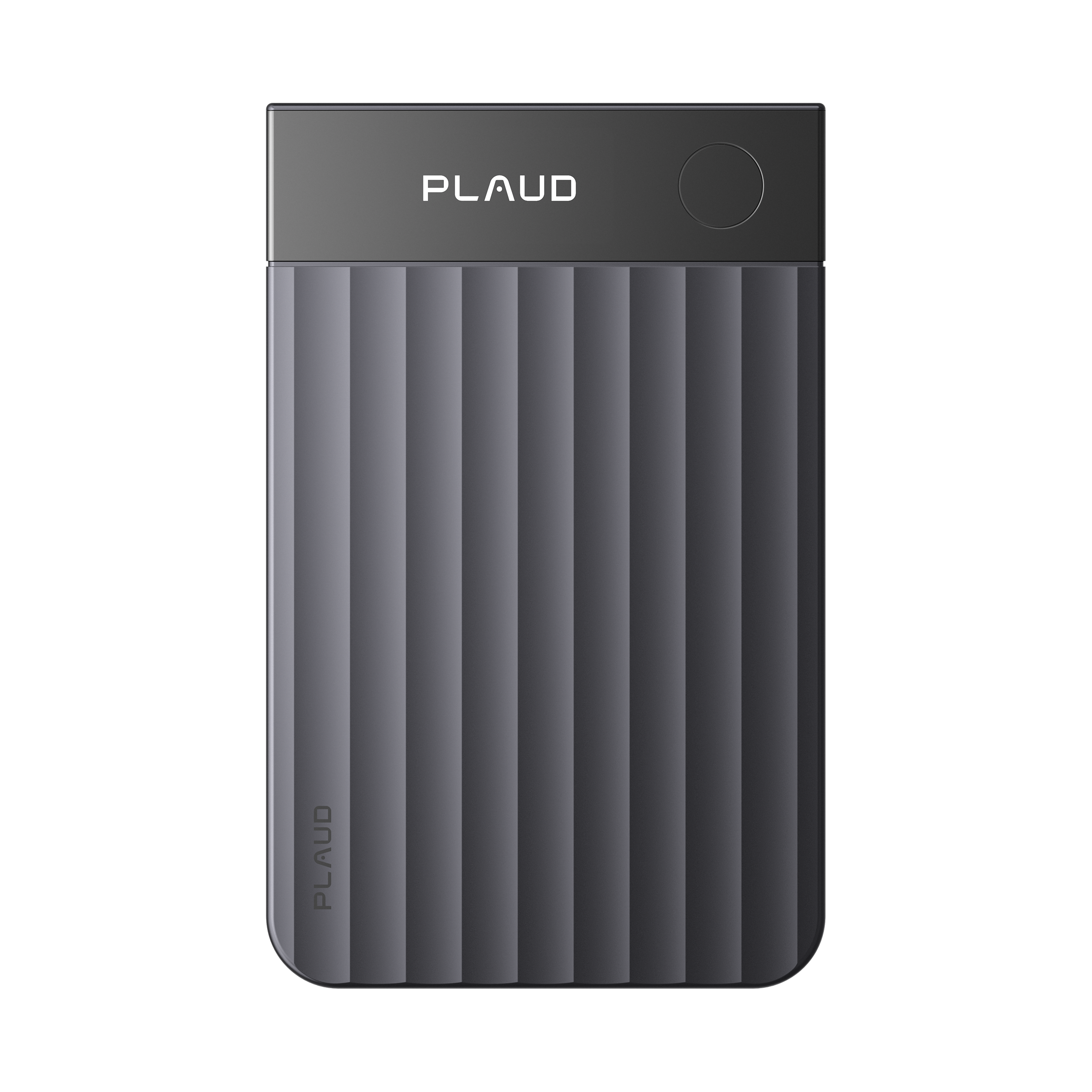
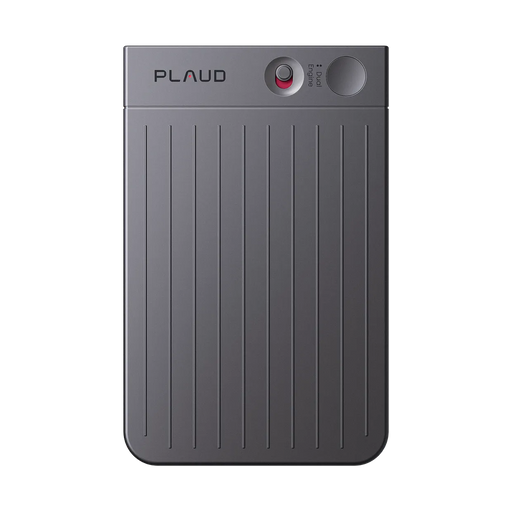
Plaud is a physical AI note taker that records in-person meetings, phone calls, and online meetings. Then, it automatically transcribes your audio files and generates detailed summaries, searchable notes, and action items using natural language processing.
Plaud is a hardware-based solution, so you’ll never have to worry about time limits or invasive bots. And it’s much more flexible than apps when it comes to in-person recordings.
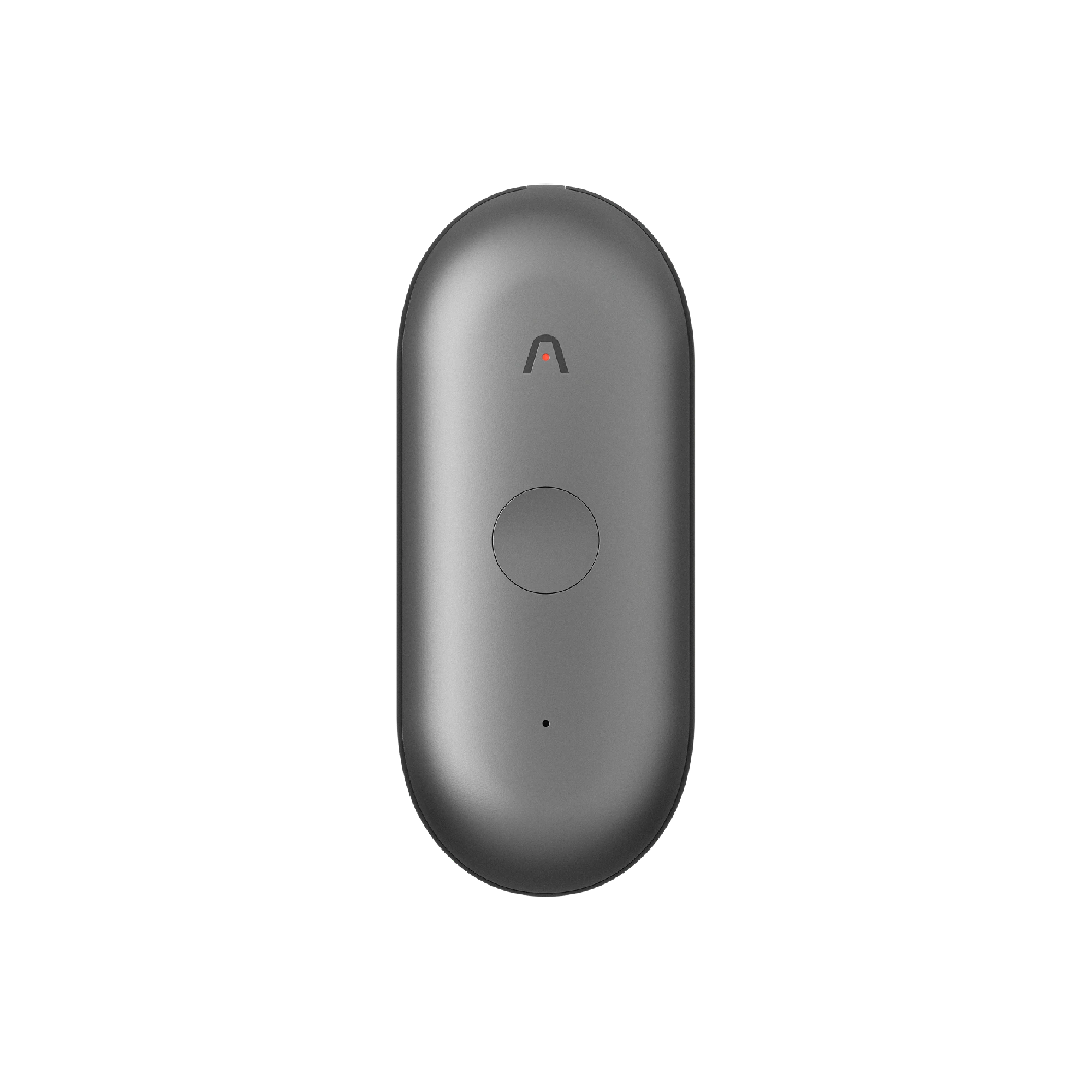
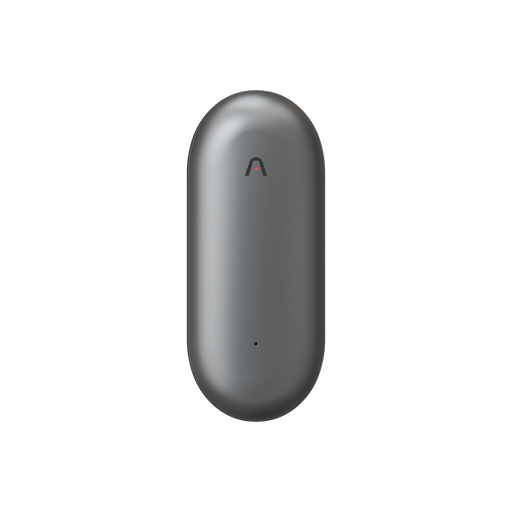
We built Plaud Note and Plaud NotePin (the wearable version) with two high-quality MEMS microphones and noise reduction tech. This allows for recording in all sorts of environments, including noisier places like cafes and conference rooms.
Our hardware recorder is built for professionals who can’t afford indecipherable transcripts or messy meeting summaries. Plaud AI achieves up to 98% transcription accuracy because we use the latest LLM models for AI tasks (even on the free plan).
Just press the record button and forget about it. Plaud handles busy rooms, multiple speakers (plaud is great at automatic speaker identification), and long sessions. That’s why it’s trusted by over 1.5 million businesspeople and creators worldwide, including RELEX, Diary of a CEO, and Law by Mike.
If you need an in-person meeting note taker device that has all the collaborative and AI features of software solutions (but without the annoying limits), Plaud is the answer.
Pros
- High live transcription accuracy, even in group settings
- Long battery life (30 hours continuous recording, 60 days standby)
- Ultralight and portable
- Dual recording mode for phone calls and in-person meetings
- No bots in meetings or time limits
- Searchable notes and transcripts
- Multimodal input
- 10,000+ template library and custom templates for summaries
- Strong data security (ISO 27001, ISO 27701, SOC 2, HIPAA, GDPR, EN 18031)
- Generous free plan includes all AI features + 300 transcription minutes
Cons
- Requires a physical AI device to record meetings
-
Limited free transcription minutes
Price
- $159 one-time for the device (includes free plan)
-
Optional paid plans for additional transcription minutes
Key Features
- In-person recording for business meetings: Plaud is designed specifically for real rooms and business settings. It handles distance, background noise, and multiple speakers better than phone-based recorders.
- Structured AI summaries and templates: Recordings are automatically turned into clean summaries, action items, and formatted notes. Customize your output using thousands of templates.
- Trusted privacy and long-term reliability: Plaud has a strong track record with professionals who care about data handling and consistency.
Further Reading: Here's a complete guide on how to use Plaud Note.
#2) Jamie

Jamie is a software-based AI notetaker that records meetings using your computer or phone’s built-in microphone and then turns it into transcripts, summaries, and action items. It’s more like a meeting software tool than a recorder, but it works well and has a solid reputation.
Jamie is well known for its strong data privacy features and adheres to GDPR, so you won't have anything to worry about there. It also integrates with tools like Notion, Google Docs, OneNote, and HubSpot to make life a little easier for your team.
At Plaud, we don’t like bots butting into our meetings, and that’s one positive aspect of Jamie. You don’t have to grant extra permissions or deal with a virtual participant showing up in calls.
However, because Jamie is software-based, you’re limited by the quality of your device’s mic. If you’re using a phone or laptop, poor recording quality will affect transcript accuracy. Plaud was designed with multiple MEMS mics and noise reduction specifically for capturing in-person conversations. Not saying we are better, but...well, I guess we are saying that!
So, unless you’re planning to carry external mics around for all of your in-person recordings, you might want to choose Plaud.
Jamie Pros
- Bot-free audio capture across platforms (Zoom, Teams, Google Meet, etc.)
- Detailed summaries with transcripts, speaker labeling, action items, and decisions
- Strong privacy standards and GDPR-compliant hosting
-
Integrates with popular tools like Notion and Google Docs
Jamie Cons
- Audio quality depends on mic placement and hardware quality
- No bot means no built-in video recording or platform-native capture
-
Pricing is steep compared to other apps
Price
- Free: 10 meetings/month (30 min each)
- Plus: ~€25/month (20 meetings, 2h limit)
-
Pro: ~€47/month (unlimited meetings, 3h limit)
Key Features
- Bot-free meeting capture: Jamie doesn’t join as a separate bot. Instead, it listens in the background across online and offline meetings.
- High-quality summaries and transcripts: Jamie creates searchable summaries that highlight key points, decisions, speakers, and action items.
- Focus on privacy: Jamie is hosted in the EU with GDPR compliance. Audio is deleted after transcription to protect sensitive information.
#3) Hyprnote

Hyprnote is a local-first AI notepad built to capture and summarize meetings on your device. It processes audio and generates summaries without sending your data to remote servers, and it also works offline.
Hyprnote is an affordable option, with the free plan allowing you to plug in your own API keys to generate transcripts for pennies. However, this also creates a steeper learning curve for those who just need reliable notes without having to get technical in the backend. Keep in mind that it isn’t truly free. You’re just paying the LLM instead of Hyprnote.
The “free” plan is also pretty restrictive, mostly because it lacks integrations (which we think is a major disadvantage). If you actually want to use this with colleagues, you’ll need to upgrade. Even then, you don’t get much.
Like Jamie, you’ll also run into accuracy issues with in-person meeting audio if you don’t have decent microphones for recording.
Hyprnote can be a good starter option if you need locally-stored AI transcripts and summaries. But it doesn’t leave you much room to grow.
Hyprnote Pros
- True local processing keeps all transcripts and summaries on your own device
- Bot-free capture listens directly on hardware without popping into meetings
-
Offline functionality
Hyprnote Cons
- Cloud features and integrations locked behind a paywall
- Not as convenient for teams as cloud-first tools with built-in admin controls
- Works best where privacy matters more than convenience
-
Longer learning curve than other tools
Price
- Free: Local transcription & summaries on device
- Pro: ~$8–$20/month for cloud sync, shareable links, integrations, and advanced AI features
Key Features
- Local AI meeting capture and transcription: Audio is processed on your own device. Nothing is automatically sent to third-party servers.
- Post-meeting AI summaries: After meetings, Hyprnote combines your typed notes and automatic audio context to generate structured AI meeting summaries.
- Bring your own API keys: You can bring your own AI keys (OpenAI, Gemini, custom models) for more control over output quality and cost.
#4) Otter

Otter.ai is one of the most popular AI meeting assistants.
While it has a lot of great features for remote team meetings, it was built primarily for online meetings rather than in-person meetings. It’s true that Otter can record in-person meetings, but you need to use the mobile app and record via your phone. That brings us back to the problem of poor phone mics, which can result in bad audio quality and cratering AI accuracy.
Otter works by joining your Zoom, Google Meet, or Microsoft Teams calls as a bot. During meetings, it transcribes and summarizes in real time. Afterwards, everything is searchable, editable, and shareable. Otter also integrates with tons of apps and tools, so you can transcribe and generate notes in many digital spaces.
Otter has become a standard for remote teams and online classrooms, but it’s not recommended for in-person meetings or phone calls. That’s where Plaud is king.
Otter Pros
- Real-time transcription and summaries for online meetings
- Integrates with major platforms (Zoom, Teams, Google Meet, Slack, Google Calendar)
- Search transcripts and notes with Otter AI chat,
- Editable transcripts and team collaboration features
-
Works across web, iOS, and Android
Otter Cons
- Built for virtual meetings first, in-person quality depends on mic setup
- Free plan is very limited
-
Bots can be intrusive
Price
- Basic: Free (300 minutes/month; 30-minute limit per conversation)
- Pro: $16.99/month (higher minutes and limits)
-
Business: $30/month (team features and more minutes)
Key Features
- Real-time transcription and summaries: Otter’s AI Meeting Agent joins your online meetings and transcribes conversations live.
- Extensive integrations: Link Otter to your calendar so it automatically captures meetings on Slack, Notion, Google Docs, CRM tools, and more.
- Collaborative transcripts: Team members can comment, edit, highlight, and export transcripts.
#5) Granola

Granola is an AI-powered “notepad” for in-person and online meetings. It is designed to enhance your own note-taking with AI transcription and summaries instead of just producing raw transcripts. If you want to continue taking your own notes, Granola might be for you. If you’re looking for an AI note-taker to do the work for you (so you can engage fully in meetings), then you might want to skip this one.
Granola captures your computer’s audio in the background while you take notes. It then turns what was said and what you wrote into clear summaries, action items, and decisions. This can help improve the AI’s accuracy because you’re supporting the app with manual note taking. That’s also the kicker: You have to do more work.
Also, Granola doesn’t record audio. It just listens. So, if you’re confused about something, you can’t go back and verify what was actually said in full detail.
Overall, Granola is good at what it does, but in our opinion, it doesn’t do enough. We prefer note takers like Plaud that generate real data like searchable transcripts and audio recordings. We might be crazy, but we also like our note taking AI to take notes for us, and not the other way around.
Granola Pros
- AI-enhanced notes that combine your own writing with automated summaries
- No meeting bots or plugins required
- Templates and “recipes” make notes consistent and actionable
-
Works with common video calls and on desktop
Granola Cons
- No audio or video recording, so you can’t replay spoken details afterward
- Feature set can feel basic compared to fuller meeting platforms
-
In-person recording quality relies on device mic quality
Price
- Free: Core meeting notes with limited history and features
- Business ($14/user/mo): Unlimited notes, advanced AI models, integrations, team folders
Key Features
- AI-enhanced notepad: Granola improves your written notes with AI. You can type during the meeting, and Granola uses its transcript to improve them.
- Templates and recipes: Built-in templates and “recipes” (stand-up, research calls, sales) help structure notes quickly.
- Background audio transcription: Granola captures desktop audio without requiring bots or plugins, which keeps meetings distraction-free.
#6) MeetGeek

MeetGeek is an AI meeting assistant built to automate transcription and note taking across all of your digital environments. Just add it to your calendar and it will auto-join calls across your apps (Zoom, Google Meet, Teams), capture audio and video files, and turn everything into searchable transcripts, action items, and structured notes.
It’s a popular choice for teams that want one tool to handle all meeting admin without manual recording or note-taking.
Like Otter, MeetGeek was primarily designed to capture virtual meetings, not in-person interactions. The mobile app can record in-person conversations on the go, but doing that may reduce the quality of your output. Background noise, multiple speakers, and mic positioning may lead to inconsistent results.
MeetGeek is a great tool for online meetings at a competitive price compared to others. But for reliable in-person recording, you’re better off using an AI voice recorder built for the task, like Plaud.
MeetGeek Pros
- Fully automated meeting assistant that captures and summarizes virtually every online meeting
- Works across major conferencing platforms and integrates with 7,000+ apps
-
Searchable library and analytics for teams
MeetGeek Cons
- Built mainly for online meetings, in-person recordings depend on mobile mic quality
- Free tier is very limited
-
Long list of features can be overkill if you just need transcription and notes
Price
- Free: limited monthly transcription and storage
- Pro: 9.99/user/month (20 hours of transcription and 1 year storage)
-
Business: $17/user/month (unlimited AI summaries, transcription, and advanced features)
Key Features
- Automated Meeting Assistant: MeetGeek joins online meetings, records conversations, transcribes speech, and generates structured summaries wherever you meet.
- Cross-platform support & integrations: It connects with calendars and 7000+ apps (Notion, Slack, CRM systems), letting teams push notes and insights into the tools they already use.
- Searchable archives + analytics: Everything is stored in a central repository, searchable by keywords. Meeting analytics to help teams discover patterns and insights.
#7) Fathom

Fathom is an AI meeting assistant built mainly to record, transcribe, and summarize your online meetings only. So, what is it doing on this list of AI note takers for in-person meetings?
We found a way to work around the in-person recording restriction by starting a virtual meeting app during a face-to-face meeting. So, we guess it is possible for Fathom to record in person meetings...they quality just won't be that good.
There are a few issues.
For one, this setup can be awkward, and issues with mic quality, feedback, and echo can impact the quality of transcription and summary.
But free is free. And Fathom is one of the most comprehensive free AI note takers.
Like other apps on this list, Fathom joins your call, captures everything said, and delivers transcripts and clear summaries. Unlike the others, it offers unlimited recording, transcription, and storage for free.
So, if you’re looking for an in-person AI note taker that’s free and unlimited, this is it. It’s wonky, but if you’re not super concerned with accuracy and collaborative features, it works ok.
Fathom Pros
- Unlimited transcription and recordings on the free plan
- Automatic summaries and action items
- Integrates with calendars and can sync notes to CRMs
- Search and highlight tools for past meetings
Fathom Cons
- Doesn’t record in-person meetings
- No Android version
- Workarounds (virtual meeting during a real meeting) can lead to poor audio quality and echo
- AI features like advanced meeting summaries, action items, and conversational AI are limited to 5 meetings per month
Price
- Free: Unlimited recordings, unlimited transcripts, basic summaries.
- Premium: Around $16/user/month with advanced summaries and AI action items
- Business: $20/user/month with cross-meeting summaries and advanced syncing
Key Features
- Automatic online meeting capture: Fathom joins your scheduled Zoom, Google Meet, or Teams call to record audio and create transcripts.
- Instant AI summaries & insights: Fathom delivers summaries, key points, and next steps that are easy to share or store.
- Searchable archive & integrations: Every recording and transcript becomes searchable, and you can push summaries into CRMs or productivity tools with integrations.
Didn't find what you were looking for? Try our guide to the best AI note takers for productivity.
How to Choose an In-Person Meeting Note-Taker?
Choosing an AI note-taker for in-person meetings requires finding the features you need for the environments you record in. Do you record in quiet, indoor spaces? With multiple speakers? In the field? This guide will help you define your needs around the key features of AI note takers so you can choose a tool that fits how you work.
Further Reading: How to run effective meetings.
Usability
Note takers shouldn’t obstruct your meetings with complicated setups, distracting bots, or time limits.
Think about how easy the tool is to set up and use. Is it a standalone device, a mobile app, a desktop app, or a browser extension? Does it require constant internet access? In-person meetings don’t require the internet, so your AI note taker shouldn’t either.
Tools that are simple to launch and offer intuitive controls save time and reduce frustration. With Plaud, all you have to do is push record. Other AI note taking tools require an extensive setup and integration.
Productivity Features
AI note takers offer long lists of productivity features, but not all of them are important. Here are the key features that all AI note takers should have:
- Automated, editable transcripts: Your note taker should turn audio into text that you can edit later.
- Automated summaries and notes: Summaries and key points help you easily share and review meeting content.
- Searchable transcripts and notes: Your AI generated summaries and transcripts are not useful unless you can easily search them for key terms.
- Speaker separation and labels: Without this, it’s impossible to remember who said what in meetings. Look for speaker identification as well as speaker talk time.
- Action item extraction: AI should be able to detect the most important parts of meetings, like tasks and assignments.
- Multimodal inputs: Meetings and lectures usually involve visual aids. You should be able to add these to your notes.
Audio Quality
Audio quality determines the quality of AI generated features, so this is really important (and it’s often where meeting software tools fall short).
Most mobile and laptop mics aren’t designed for capturing a room of voices clearly. If you’re using a software-based tool for in-person recording, the quality of transcription and summaries will vary wildly based on distance, ambient noise, and where participants are sitting.
Hardware solutions like Plaud use higher-quality MEMS microphones and multiple pickup patterns to capture audio more reliably across the room. This leads to better audio, higher transcription accuracy, and cleaner notes later.
Also, don’t assume that you’re going to get audio recordings. Some tools (like Granola) don’t record audio at all.
Transcription and Summary Quality
An AI note-taker’s main job is to turn spoken words into transcripts and summaries. Most modern tools can produce good summaries with clear structure… IF the audio feed is solid.
When recording in-person settings, transcription quality is only as good as the mic input.
A software tool might be excellent for virtual calls, but the accuracy can drop drastically when relying on a phone mic in a noisy room. Poor mics lead to poor transcription. Poor transcription results in poor notes and summaries. And in the end, you’re stuck trying to fix an AI-slop meeting summary while your boss is asking, “Where are those meeting notes?”
Hardware-centric solutions like Plaud solve this problem by capturing cleaner audio upfront.
Further Reading: check out our guide on transcribing audio with AI.
Use Case
If you’re brainstorming notes for your side hustle or recording voice memos, most AI note-takers will do the job.
But for serious professional use cases (like legal consultations, medical consults, therapy sessions, and client interviews), you need high accuracy and strong privacy. Many AI note taking apps do not provide adequate security for these data-sensitive use cases.
Cloud-first tools may process data externally, which introduces risk. Hardware-based and on-device processing tools tend to offer better security for sensitive workflows.
When dealing with sensitive data, verify the data security certifications of your AI note taking tool. Look for certifications like ISO 27001, ISO 27701, EN 18031, SOC 2, and HIPAA.
Multi-Language Support
If you work with international teams, you need a tool that supports multiple languages in the same app. Plaud supports more languages than any of the other top tools on our list (112+).
By comparison, Jamie supports 99+, which isn’t bad. Hyprnote supports 50+, while Otter supports just 4 core languages. If you operate (or aim to grow) internationally, language support is going to be very important.
Why Plaud Note Pro Works Best for In-Person Meetings?
Plaud is built for in-person meeting recording, and Plaud Note Pro is our most advanced product. With 4 MEMS mics and a VPU for phone call recording, it’s designed to capture clear in-person audio in most environments. Here’s why Plaud Note Pro is the best note taker for in-person meetings.
Here are just a few of the key features:
Offline & Hands-Free Recording:
- Record up to 50 hours continuously without internet connection
- One-button operation—long-press to start, long-press to stop
- Automatically detects phone calls vs. in-person meetings
- 60-day battery life eliminates phone drain
- Files auto-transfer when reconnected to WiFi
AI-Powered Transcription & Summaries:
- Recognizes specialized legal, medical, and technical terminology
- Supports 112+ languages with consistent quality
- 10,000+ customizable summary templates for compliance and branding
- Add photos (whiteboards, slides) to summaries for complete records
Ask Plaud AI Assistant:
- Search transcripts conversationally ("What were the action items?")
- Create mind maps and custom summaries on demand
- Perfect for catching up on missed meetings
Pro Tips:
- Tap during recording to highlight key moments
- Place device centrally within 5 meters for optimal audio
- Train the glossary with specialized terms for accuracy
- Share meeting links immediately to reduce follow-ups
- Set up Flow integrations once for automated documentation