
"OneNote alternative" is five different requests sharing one search box. Someone who writes with a stylus and someone who cannot find a note from last March need opposite tools. Sort by the complaint first.
What is the best OneNote alternative?
The best alternative depends on how you use OneNote, and the single biggest fork is whether you type or write by hand. If you type, Notion gives you the structure OneNote's free-form canvas never had. If you use a stylus, none of the popular picks work and you want GoodNotes or Xournal++ instead. If you want no AI anywhere near your notes, Obsidian and Joplin are built that way. And if the slow part is writing meetings up afterwards, that is a capture problem rather than an app problem.
| If you want | Start with |
|---|---|
| Structure so old notes stay findable | Notion |
| Handwriting and PDF markup on iPad | GoodNotes |
| Handwriting on Windows or Linux, free | Xournal++ |
| Plain local files and no AI | Obsidian |
| Open source with encrypted sync | Joplin |
| Something free that already works | Apple Notes or Google Keep |
| Meetings turned into notes without typing | Plaud Note Pro |
Is OneNote being discontinued?
No. OneNote itself is not going away. What retired is one specific app: OneNote for Windows 10, the old UWP version that shipped with Windows 10, reached end of support on 14 October 2025 and switched into read-only mode. You can still open, view, and export what is in it, but you cannot create, edit, or sync notes there anymore.
Everything else is still supported. The OneNote service, notebooks stored in OneDrive or SharePoint, and the newer OneNote app for Windows all continue as normal. Microsoft's position is that you install the current OneNote app, sign in with the same account, and your cloud-synced notebooks open where you left them. Microsoft documents the specifics on its own OneNote for Windows 10 support page.
Worth saying plainly, because a lot of people arrive at this search from an in-app warning banner: if that banner is the only reason you are here, you may need a different OneNote app rather than a different note app. The rest of this guide is for people with an actual complaint.
Why people are leaving OneNote in 2026
The complaints cluster into six reasons, and each one points at a different replacement.
- Notes go in easily and never come back out. The infinite free-form canvas is OneNote's best feature and its most repeated frustration. Once a notebook grows, finding a specific note again gets hard, because there is little structure to search against.
- Windows and Mac are not the same product. The Mac build is often described as cleaner, sync can lag, and some people restart the app to force it to catch up.
- There is no native Linux client. Web only. This is the single most common reason Linux users leave, and it has no workaround inside Microsoft's lineup.
- Leaving the Microsoft account. A smaller group has no feature complaint at all. They no longer want their notes tied to a Microsoft sign-in.
- They want no AI involved. This objection shows up more than any feature request, and it is specific: not "I do not need AI" but "I do not want my notes processed or used for training."
- The file format feels like a lock. Notes live in OneNote's own format, which nothing else opens, so the exit path is unclear until you try it.
OneNote alternatives by what you're trying to fix
| If your main complaint is | Consider | Why |
|---|---|---|
| Can't find old notes | Notion | Databases and linked pages give search something to work with |
| Want the notebook-and-tag feel, better search | Evernote | Closest to OneNote's mental model, but check the price first |
| Write with a stylus on iPad | GoodNotes | Built around handwriting and PDF markup, with handwriting search |
| Write with a stylus on Windows or Linux | Xournal++ | Free, open source, native Linux, PDF annotation |
| No AI touching your notes | Obsidian | Local plain-text files, no cloud account required |
| Open source with encrypted sync | Joplin | Markdown files, end-to-end encryption, sync where you choose |
| Free and already on your device | Apple Notes | Built into Mac and iPhone, no account, no subscription |
| Free, fast, cross-platform capture | Google Keep | Instant capture, works anywhere, minimal structure |
| Notes written from a conversation, not typed | Plaud Note Pro | Records and transcribes, a different job than any note app |
The best OneNote alternatives for structure and search
Choose one of these when the problem is that content disappears into your notebooks. Both replace the free canvas with something search can index.
Notion

Notion swaps OneNote's free-form pages for structured pages, databases, and linked references, which is the direct answer to "I can never find anything." Sync is consistent across every major platform, including a usable web app on Linux. The free plan covers one member with unlimited pages, and Plus is $10 per member per month billed annually.
Two tradeoffs. There is a real learning curve, and Notion's databases are more structure than a simple note habit needs. Full Notion AI now sits on the Business tier at $20 per member per month, so it is not a cheap way to add AI. There is also no stylus support worth the name.
Best for: people whose notes are really documents and wikis. Our Notion alternatives guide covers what happens if Notion turns out to be the wrong fit too.
Evernote

Evernote's notebook-and-tag model feels closer to OneNote than Notion's database approach, and its search reaches into text inside images and scanned documents, which is genuinely strong.
The price is the problem, and it is worth being specific rather than vague. Since the Bending Spoons acquisition the free plan is capped at 50 notes and one notebook, Starter runs $99 a year, and the Advanced tier that removes the caps and unlocks the AI tools is $249.99 a year. For a lot of people leaving a free Microsoft app, that is the end of the conversation. Confirm current pricing before you commit years of notes to it, and see our Evernote alternatives guide if the numbers rule it out.
Best for: people who want OneNote's shape with better search and have budget for it.
The best OneNote alternatives for handwriting and stylus
If you write with a pen, stop reading the popular lists. Notion, Evernote, Obsidian, Apple Notes, and Google Keep are all typing tools, and swapping to any of them means giving up handwriting entirely. Two options genuinely replace what OneNote does with ink.
GoodNotes
GoodNotes is the pick for anyone who used OneNote mainly as a digital paper notebook. The pen feel is more refined than OneNote's, handwriting search and handwriting-to-text conversion work well, and PDF annotation is a first-class feature rather than an afterthought. The free tier allows three files, Essential is $11.99 a year, and Pro at $35.99 a year adds cross-platform sync across iPad, Mac, Windows, Android, and web. Apple users also have a one-time purchase option, and the advanced AI features sit behind a separate AI Pass add-on.
The tradeoff is structure. GoodNotes organizes fixed-size pages into notebooks and folders, so you lose OneNote's unlimited-zoom canvas for sprawling diagrams.
Best for: students and professionals who handwrite and mark up PDFs, mostly on iPad.
Xournal++
Xournal++ is the free, open-source answer, and the only option here with a proper native Linux build. It handles stylus input, pressure sensitivity, PDF annotation, and typed text, and it runs on Linux, Windows, and macOS. Files are stored locally in an open format, so nothing is held in anyone's cloud.
The tradeoffs are real. There is no built-in sync, so you pair it with a folder in Dropbox, Nextcloud, or your own storage. Mobile support is not comparable to GoodNotes, and the interface looks like the utility it is rather than a polished consumer app.
Best for: Linux and Windows users who want to keep handwriting and pay nothing.
The best OneNote alternatives with no AI
A meaningful share of people searching for a OneNote alternative want AI out of the picture entirely. That request has three different levels, and it helps to know which one you mean: an app that does no AI processing by default, an app where you can switch AI off, or an app whose vendor cannot use your content for training because it never holds your content. The two below answer the third and strictest version.
Obsidian

Obsidian stores every note as a plain Markdown file in a folder on your own disk, with no account, no cloud requirement, and no AI processing of your content. It has a native Linux build, which OneNote does not. The app is free for personal and commercial use, with optional Sync at $4 per month billed annually if you want encrypted cross-device sync rather than rolling your own.
The tradeoff is that you build the system. Obsidian ships with almost no structure, and there is no handwriting or canvas to speak of, so a stylus user should look at the previous section instead.
Best for: typed knowledge work where you want to own the files outright.
Joplin

Joplin is the option when you want open source and encryption together. Notes are Markdown, end-to-end encryption is built in, and sync runs through Joplin Cloud from around $3 a month or through Dropbox, OneDrive, Nextcloud, or your own WebDAV server for nothing. It runs on Windows, macOS, Linux, iOS, and Android, and it imports from OneNote's export files.
The tradeoff is scope. No databases, no canvas, no handwriting, and the interface is plainer than the paid apps. Joplin stores and syncs notes reliably and does not try to be a workspace.
Best for: anyone who wants encrypted, portable notes across desktop and mobile.
The best free OneNote alternatives
OneNote is free, so any replacement that costs money has to justify itself. These two do not.
Apple Notes
Apple Notes is already installed on every Mac and iPhone, needs no separate account or subscription, and keeps its AI features minimal and opt-in. For leaving OneNote without adopting anything new, nothing is faster. Basic Apple Pencil support means it also handles light handwriting, though it is not a GoodNotes substitute.
The limits are the ecosystem and the depth. There is no real Windows, Android, or Linux client, and no database or heavy organization features for large collections.
Best for: Mac and iPhone users who want something free that already works.
Google Keep
Google Keep is the fastest way to get a thought recorded. It is free with a Google account, works on the web and on both mobile platforms, and syncs instantly. On Linux it installs cleanly as a web app.
Keep is deliberately shallow. Notes are cards with labels, there is no page hierarchy, no handwriting worth the name, and no offline desktop app. Storage counts against your Google account quota.
Best for: quick capture rather than a long-term knowledge base.
Which OneNote alternatives work on your platform
Platform is where OneNote loses people, so check this before anything else. OneNote itself has no native Linux client, which is the column to read first if that is your situation.
| Tool | Windows | Mac | Linux | iOS | Android | Handwriting |
|---|---|---|---|---|---|---|
| Notion | Yes | Yes | Web only | Yes | Yes | No |
| Evernote | Yes | Yes | Web only | Yes | Yes | Limited |
| GoodNotes | Yes | Yes | No | Yes | Yes | Yes |
| Xournal++ | Yes | Yes | Native | No | No | Yes |
| Obsidian | Yes | Yes | Native | Yes | Yes | No |
| Joplin | Yes | Yes | Native | Yes | Yes | No |
| Apple Notes | No | Yes | No | Yes | No | Basic |
| Google Keep | Web | Web | Web | Yes | Yes | Basic |
| Plaud Note Pro | Yes | Yes | Web | Yes | Yes | Not applicable |
OneNote alternatives compared on price and free plans
Prices were checked in August 2026 and quoted at annual billing where a discount applies. Confirm on each vendor's own pricing page before you buy, since these change often.
| Tool | Free plan | Paid from | Local files | Open source |
|---|---|---|---|---|
| Notion | Yes, one member | $10 per member per month | No | No |
| Evernote | Yes, 50 notes and 1 notebook | $99 per year, $249.99 for the uncapped tier | No | No |
| GoodNotes | Yes, 3 files | $11.99 per year, $35.99 for cross-platform sync | Partly | No |
| Xournal++ | Yes, everything | Free | Yes | Yes |
| Obsidian | Yes, full app | Sync at $4 per month, optional | Yes | No, source-available |
| Joplin | Yes, full app | Joplin Cloud from about $3 per month | Yes | Yes |
| Apple Notes | Yes | Free with iCloud storage limits | Partly | No |
| Google Keep | Yes | Free within your Google quota | No | No |
| Plaud Note Pro | Plaud Starter Plan, 300 min per month | $189 device, plans from $99.99 per year | No | No |
How to get your notes out of OneNote
Plan the exit before you pick a destination, because OneNote's export options are narrower than most people expect. There is no Markdown export, which matters if Obsidian or Joplin is where you are heading.
- Sync everything to OneDrive first. Anything held only on a local machine, particularly in the retired Windows 10 app, needs to reach the cloud before you start.
- Export per notebook or per section, not all at once. The desktop app does this from the File menu. There is no single button for a whole account.
-
.onekeeps everything but only opens in OneNote. It is a backup, not a migration format. - PDF keeps the layout and flattens your ink. Handwriting survives as a picture of handwriting, no longer editable or searchable as strokes.
- Reaching Markdown needs a converter or copy and paste. Joplin can import OneNote export files, and some third-party converters handle the rest. Test one notebook before you trust the whole set.
- Read-only does not mean stuck. The retired Windows 10 app still allows viewing and exporting, so you can get data out of it after the support cutoff.
Keep the OneNote notebooks in place for a month after you move. Migrations reveal what they broke in week two, not week one.
Do you even need a new note app?
Sometimes the honest answer is no, and switching costs more than it returns. Three cases where staying is the better call.
- A warning banner sent you here. If your complaint is the OneNote for Windows 10 notice, installing the current OneNote app resolves it. Nothing else has to change.
- The real problem is a habit, not a tool. If notes are unfindable because they were never titled or tagged, a new app inherits the same habit and you rebuild the same mess somewhere else.
- A second tool beats a replacement. Plenty of people keep OneNote for what it is good at, the pen and the canvas, and add one narrow tool for the part it handles badly.
The gap no note app closes: writing the notes
Every option above is a place you write into. None of them changes the fact that after a meeting or a lecture, someone still has to sit down and type it up. That is a separate problem, and it needs a different category of tool.
Plaud Note Pro

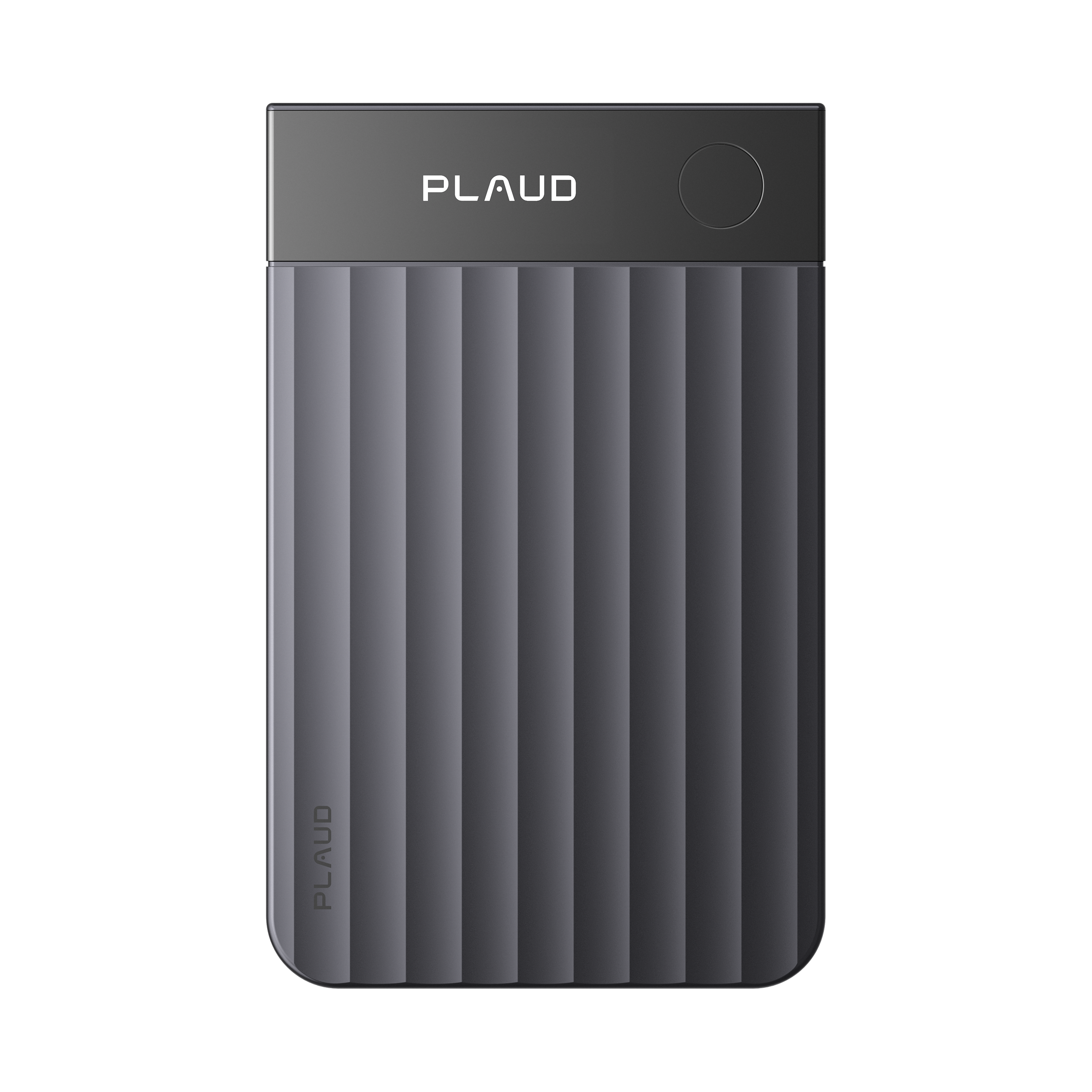
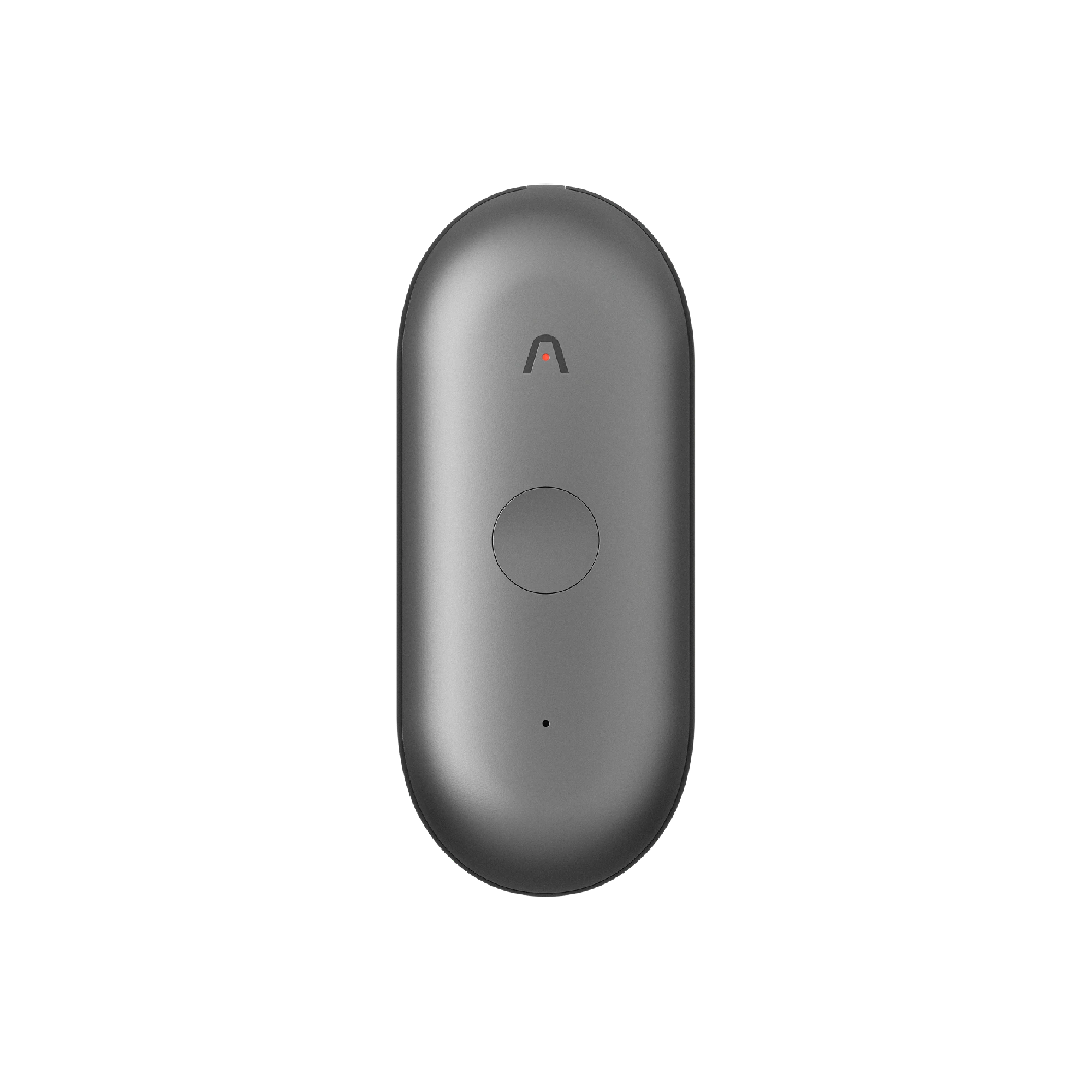
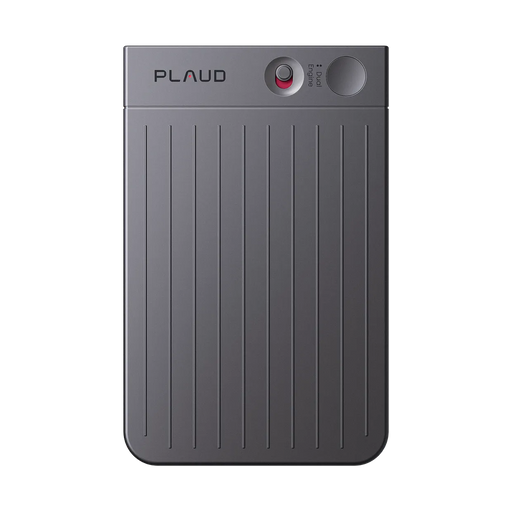
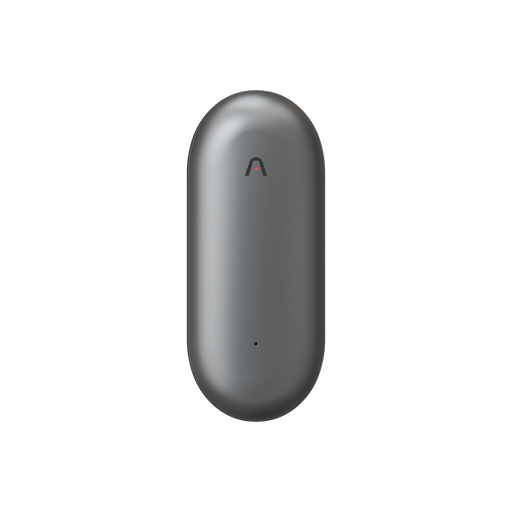
Plaud Note Pro sits earlier in the chain than any note app. It is a physical AI note taker, credit card sized at 0.12 inches thin, that records in-person meetings, lectures, and phone calls, and through Plaud Desktop captures online calls without a bot joining the room. Four MEMS microphones with AI beamforming pick up voices at up to 16.4 feet, which is what makes a lecture hall or a full meeting room work rather than only the person beside you.
Afterwards, Plaud Intelligence produces a transcript with speaker labels in 112 languages, plus a structured summary from one of 10,000 or more templates, which you export into whichever app you chose above. The device is $189 and includes the free Plaud Starter Plan with 300 transcription minutes a month. The Plaud Pro Plan is $99.99 a year for 1,200 minutes a month, and the Plaud Unlimited Plan is $239.99 a year. Plaud holds ISO 27001, ISO 27701, GDPR, SOC 2, HIPAA, and EN 18031 compliance, and your data is never used for AI training unless you explicitly opt in.
Being direct about who this is not for: if you came to this article because you want AI nowhere near your notes, this is the wrong tool, since AI processing is the entire point of it. Go back to the Obsidian and Joplin section. This answers the different complaint of not wanting to write notes by hand at all.
Best for: people whose real bottleneck is writing meetings up, not the app they write into.
Before you record, take a moment to let others know and get their okay.
Match the fix to the actual complaint
Name the specific thing that pushed you to search before you pick a tool, because these complaints do not share a solution. Findability, handwriting, platform support, AI aversion, and the Microsoft account are five different problems, and the popular recommendation lists quietly assume you are a typist. If your honest answer is that meetings and lectures never get written up properly, no note app fixes that, and Plaud Note Pro is built to. For a wider look at why typed note apps leave that gap, see our guide to note-taking software.