
What is the best Notion alternative?
There is no single best Notion alternative, because "Notion alternative" is four different requests wearing one search query. Sort the options by the complaint that sent you looking, and the shortlist gets short fast.
The best alternative depends on which part of Notion you use most. ClickUp is the strongest pick when your Notion workspace exists mainly to track projects. Obsidian is the pick when you want plain files on your own disk. AppFlowy is the pick when the requirement is open source. Coda is the closest match if you like Notion's shape and want less setup. And if the thing slowing you down is writing up meetings rather than storing them, that is a capture problem, not a workspace problem.
| If you want | Start with |
|---|---|
| Deeper project and task management | ClickUp |
| Simple board-based work tracking for a small team | monday.com |
| Notion's docs-and-databases feel with more built in | Coda |
| A team wiki that stays tidy | Slite or Nuclino |
| Plain local files you own | Obsidian |
| Notion's structure, stored locally and encrypted | Anytype |
| A local-first outliner | Logseq |
| Open source and self-hostable | AppFlowy |
| Open source with encrypted sync | Joplin |
| Structure decided for you, with AI built in | Capacities |
| Meetings turned into notes without typing | Plaud Note Pro |
Why people are leaving Notion in 2026
Most people leaving Notion are not missing a feature. They have decided one of Notion's tradeoffs no longer suits them. Six reasons come up again and again.
- Broad, not deep. Notion is a docs tool, a database, a wiki, and a project tracker at once, and each piece is thinner than a product built for that one job.
- Speed at scale. Large workspaces with many linked databases feel slow next to more focused tools, and the mobile apps take the worst of it.
- AI moved behind a higher tier. The standalone Notion AI add-on was retired, and the full AI feature set now sits on the Business plan at $20 per member per month billed annually, rather than being attachable to a $10 Plus seat.
- Team cost. Every member is billed, and workspaces collect members over time. A 20-person team on Business is $400 a month before any agent credits.
- US cloud hosting. Some teams want a vendor and a legal jurisdiction outside the US, which no plan tier changes.
- No local files. Others want notes stored as files on their own disk, readable in ten years without an account.
Reddit threads on this topic outrank almost every published listicle, which tells you how much of the decision is people comparing notes rather than reading feature grids.
Notion alternatives for project management
Pick a dedicated work tracker when your Notion setup is mostly databases pretending to be a project tool. Both options below start with tasks and layer docs on top, which is the reverse of Notion's order.
ClickUp

ClickUp is built around tasks, projects, and views first, with docs added later. Gantt charts, sprints, workload views, and dashboards all go further than Notion's database views, and the free plan carries unlimited members with capped storage. Paid plans start at $7 per user per month billed annually, with AI as a separate add-on.
The tradeoff is the one Notion has too. ClickUp is dense, and a team that mostly writes documents will find more surface area than it needs.
Best for: teams whose Notion workspace is really a task tracker.
monday.com
monday.com is the simpler board-first option, easier to hand to a non-technical team than either Notion or ClickUp. The free plan covers two seats, and paid plans start at $9 per seat per month billed annually.
Two things to check before committing. Paid plans carry a three-seat minimum, so a solo user or a pair still pays for three. Automations and integrations start on the Standard tier, not the entry one.
Best for: small teams who want visible boards and little setup.
Notion alternatives for docs, databases, and team wikis
Choose one of these when you like what Notion does but want a version that is either more capable in one direction or less work to set up. All three are cloud tools, so they answer the setup and depth complaints, not the hosting one.
Coda

Coda is the closest thing to Notion in shape, with documents, tables, formulas, and automations in one place, and stronger spreadsheet-grade computation than Notion databases. Pricing is the interesting part. Coda bills only Doc Makers, the people who build documents, and editors and viewers are free. Paid plans start at $10 per Doc Maker per month billed annually.
The tradeoff is that AI credits are metered on top, and the jump from the Pro tier to the Team tier is steep.
Best for: teams where a few people build and everyone else reads.
Slite
Slite is a knowledge base rather than a general workspace, with AI search over your own docs and a verification workflow that flags pages going stale. That focus is the point. There is less to configure because there is less it tries to do.
The tradeoff is that Slite has no permanent free plan, only a trial, and AI answers are capped per user on the entry tier. Paid plans start at around $8 per member per month billed annually.
Best for: teams whose main problem is nobody trusting the wiki.
Nuclino
Nuclino is the lightest tool here, closer to a fast shared notebook than a platform. Pages, a graph, and a board, with almost no setup. The free plan covers a small number of items, and paid plans start at around $6 per user per month.
The tradeoff is the ceiling. Teams that need heavy databases, automations, or granular permissions will outgrow it.
Best for: small teams who want to write and find things, nothing more.
Notion alternatives that keep files on your own disk
Local-first tools answer a different complaint entirely. Your notes are files or encrypted objects on your device, usable without an account and without a working internet connection. That solves data ownership and offline access, and it costs you real-time team collaboration.
Obsidian

Obsidian stores every note as a plain Markdown file in a folder you choose, with no account required and no cloud dependency. Linking between notes is core, and the plugin ecosystem covers most things Notion does natively. The app is free for both personal and commercial use as of early 2026, with optional Sync at $4 per month billed annually.
The tradeoff is setup. Obsidian ships with almost no structure, so you build your own system, and multi-person editing is not what it is for.
Best for: one person who wants full control over their own files.
Anytype

Anytype is the local-first tool that keeps most of Notion's feel. Objects, types, relations, and page-and-database views, stored encrypted on your device with peer-to-peer sync instead of a central server. The app is free and open source, and paid memberships buy network storage and larger shared spaces.
The tradeoff is maturity. The object model takes a week or two to learn, integrations are limited, and the published membership tiers change often enough that you should read the current pricing page rather than trust a comparison article.
Best for: people who specifically want Notion's structure without Notion's cloud.
Logseq
Logseq is an outliner rather than a page editor. Everything is a block, blocks link to each other, and the daily journal is the default entry point. Files stay local in Markdown, and the core app is free and open source.
Two tradeoffs matter. The long-promised database version is still not stable, which has pushed some users to look elsewhere. And Logseq is a personal tool with no real multi-user story.
Best for: people who think in bullets and want their notes local.
Open source and self-hosted Notion alternatives
If the requirement is that you can read the source or run the server yourself, the shortlist is genuinely small. Anytype and Logseq above both qualify. Two more are worth knowing.
AppFlowy
AppFlowy is the closest open-source match to Notion's interface, with pages, boards, grids, and calendars, and it can run entirely on your own infrastructure. The community edition is free, and the hosted paid tier starts at around $10 per user per month billed annually.
The tradeoff is that self-hosting means you own the upgrades, the backups, and the outages. Feature depth also trails Notion, particularly around formulas and permissions.
Best for: teams with someone willing to run the server.
Joplin
Joplin is the practical pick when encryption matters more than layout. Notes are Markdown, end-to-end encryption is built in, and sync runs over Joplin Cloud from around $3 a month or over Dropbox, OneDrive, Nextcloud, or your own WebDAV server for nothing.
The tradeoff is scope. No databases, no boards, and no graph view. Joplin stores and syncs notes well and does not try to be a workspace.
Best for: anyone who wants encrypted notes across desktop and mobile.
Notion alternatives with better built-in AI
If the reason for leaving is that Notion's AI now requires the Business tier, the honest answer is that most alternatives are behind Notion on AI, not ahead. One is worth a look, and one solves a problem none of the others touch.
Capacities
Capacities organizes notes as typed objects with views built for each type, so books, people, meetings, and projects each arrive with a sensible structure instead of a blank page. AI chat over your own notes is included, and there is a free tier with a paid Pro tier above it.
The tradeoff is that storage is cloud-only with no local files and no plugins, so it answers the setup complaint but not the ownership one. Check the current Pro price directly, since it varies by billing period and region.
Best for: people who want the structure decided for them.
Plaud Note Pro

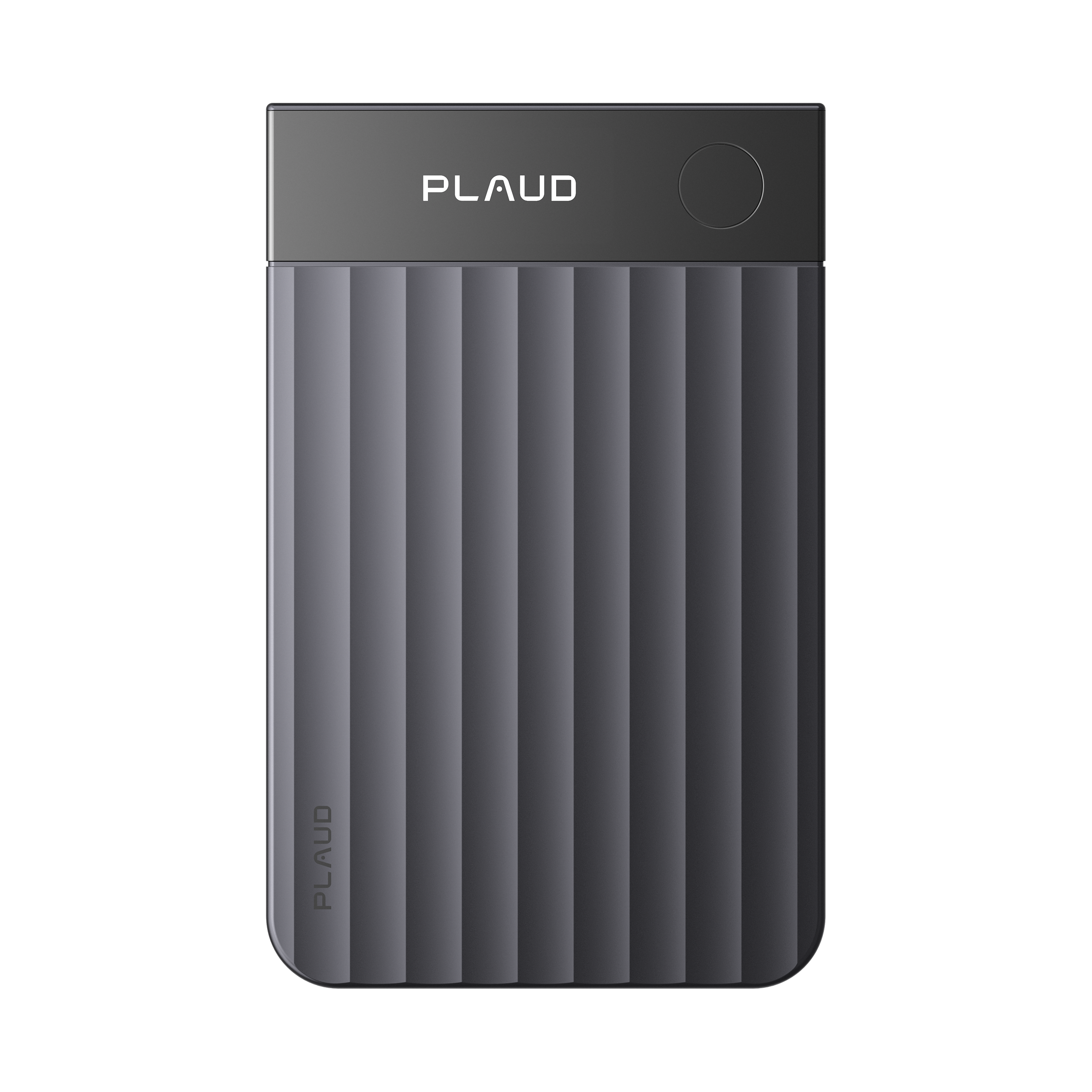
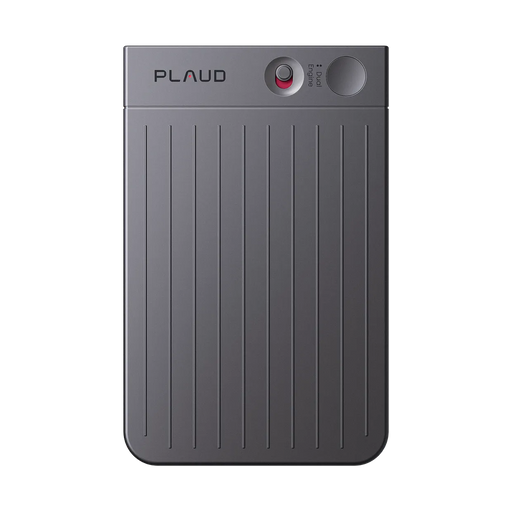
Every tool above is still a place you write into. Plaud Note Pro sits earlier in the chain and produces the note in the first place. It is a physical AI note taker, credit card sized at 0.12 inches thin, that records in-person meetings, phone calls, and, through Plaud Desktop, online calls without sending a bot into the room. Four MEMS microphones and AI beamforming pick up voices at up to 16.4 feet, which is what makes a full conference room workable rather than just the seat next to you.
Afterwards, Plaud Intelligence produces a transcript with speaker labels in 112 languages and a structured summary from one of 10,000 or more templates, which you then export into Notion or whichever workspace you land on. The device is $189 and includes the free Plaud Starter Plan with 300 transcription minutes a month. The Plaud Pro Plan is $99.99 a year for 1,200 minutes a month and the Plaud Unlimited Plan is $239.99 a year. Plaud holds ISO 27001, ISO 27701, GDPR, SOC 2, HIPAA, and EN 18031 compliance, and your data is never used for AI training unless you explicitly opt in.
Being direct about what this is not: if your complaint is Notion's databases, project views, pricing, or cloud hosting, this addresses none of it. It addresses one specific gap, which is meeting notes that get written badly or never get written at all.
Best for: people whose real bottleneck is capture, not storage.
Before you record, take a moment to let others know and get their okay.
Notion alternatives compared on price and data location
Below is the same list on the two questions people ask last and should ask first. Prices were checked in August 2026 and quoted at annual billing where a discount applies. Confirm on each vendor's own pricing page before you buy, since these change often.
| Tool | Free plan | Paid from | Where notes live | Open source |
|---|---|---|---|---|
| Notion (for reference) | Yes, one member | $10 per member per month | Vendor cloud, US | No |
| ClickUp | Yes, unlimited members | $7 per user per month | Vendor cloud | No |
| monday.com | Yes, up to 2 seats | $9 per seat per month, 3-seat minimum | Vendor cloud | No |
| Coda | Yes | $10 per Doc Maker per month | Vendor cloud, US | No |
| Slite | No, trial only | About $8 per member per month | Vendor cloud | No |
| Nuclino | Yes, limited items | About $6 per user per month | Vendor cloud | No |
| Obsidian | Yes, full app | Sync at $4 per month, optional | Your own disk | No, source-available |
| Anytype | Yes | Membership tiers, check current | Your device, encrypted | Yes |
| Logseq | Yes | Optional sync add-on | Your own disk | Yes |
| AppFlowy | Yes | About $10 per user per month hosted | Your disk or your server | Yes |
| Joplin | Yes | Joplin Cloud from about $3 per month | Your disk or your own sync | Yes |
| Capacities | Yes | Paid Pro tier, check current | Vendor cloud | No |
| Plaud Note Pro | Plaud Starter Plan, 300 min per month | $189 device, plans from $99.99 per year | Vendor cloud, certified | No |
Can you take your data with you when you leave Notion?
Your text travels well. Your databases mostly do not. Notion exports pages as Markdown or HTML and databases as CSV, and that CSV is flat, so what you get is the data your database held rather than the structure that made it useful.
Specifically, here is what does not survive the export:
- Relations come out as plain text, usually the linked page's title. The link itself is gone, and no receiving tool can rebuild it.
- Rollups and formulas export their last computed value, frozen. You get a snapshot, not a live field.
- Views, filters, and sorts do not export at all, because they were never content.
- Comments appear only in the HTML export, not in Markdown or CSV.
- Callouts and some block types degrade quietly rather than failing loudly, which matters if you are piping the output into another tool.
A workable order of operations: export as Markdown and CSV with the include-subpages option turned on, check the folder tree before you cancel anything, rebuild your two or three most important databases by hand in the new tool, and keep the Notion workspace on the free plan for a month as a read-only reference. Note also that a whole-workspace export can take up to a day to generate and the download link expires, and that workspace PDF export is being removed during 2026. Notion documents the current formats and limits on its own export help page.
Do you need a non-US Notion alternative?
This is a real search behind "Notion alternative," and it splits into three requirements that people often conflate. Getting the right one saves a migration.
- Local files. Your notes sit on your disk and no vendor holds them. Obsidian, Logseq, and Joplin.
- End-to-end encryption. A vendor may sync your data but cannot read it. Anytype and Joplin.
- Jurisdiction and hosting location. A specific company and a specific country hold the data under a specific legal regime. This one is not solved by picking a local-first app, and it is the one you have to confirm directly.
For the third, hosting region and legal entity vary by product and sometimes by plan tier, and vendors change providers. Ask the vendor in writing which entity is the data controller, where the servers are, and whether a data processing agreement is available. Do not infer it from where the company was founded.
How to choose a Notion alternative
Work through five questions in this order, and the list above collapses to one or two candidates.
- Which part of Notion do you open every day? Project tracking, team docs, and a personal knowledge base point at different tools.
- Can your data leave? Check the export path before you migrate in, not after.
- Where does it need to live? Local files, encrypted sync, and a specific hosting jurisdiction are three different answers.
- How much structure do you want to build? Obsidian and Logseq hand you a blank canvas. Coda and Capacities hand you a starting point.
- Who else needs to edit? Most local-first tools are single-player by design, and no plugin fixes that.
Then run the finalist in parallel for two weeks before you cancel anything. Migrations fail in week two, not week one.
Match the fix to the actual bottleneck
Name the one thing about Notion that pushed you to search before you pick a replacement. Project management, data location, pricing, and setup effort each point at a different tool on this list, and picking by review score instead of by complaint is how people end up migrating twice. If the honest answer is that your meetings never make it into any workspace cleanly, that is a capture problem, and Plaud Note Pro is built to close it. For a longer look at why typed note apps leave that gap, see our guide to note-taking software.