
After a client call, you open ChatGPT, type the few points you still remember, and get back something too vague to send. Most ChatGPT inputs come from notes reconstructed after the fact, and the gap between what was actually said and what you typed is what limits the output. Two fixes address this problem: start with better raw material, then set up a workflow where your AI tool retrieves meeting transcripts on demand. The result is a repeatable pipeline from meeting recording to finished client output.
Why do ChatGPT outputs disappoint even when your prompt looks fine?
Most ChatGPT inputs from a client meeting are a few bullet points reconstructed from memory, and they contain only a fraction of what was actually discussed. That gap is what produces generic output. The prompt structure is rarely the problem.
A well-structured prompt helps with tone, format, and structure, but it has a hard limit: it cannot invent the specific objection raised in the final ten minutes, the name attached to an action item, or the condition placed on budget approval. That information lives in the conversation itself. If it did not make it into the input, it will not appear in the output.
In client settings, that lost information typically falls into one of three categories. The first is too brief: a few bullet points that strip out nearly all context. The second is too vague: phrases like "discussed strategy" or "talked about pricing" that name topics without capturing what was said. The third, and most common, is reconstructed from memory, written down minutes or hours after the meeting when specific details have already compressed and faded.
What that compression means for the output is visible in a direct comparison. Given four bullet points from memory, ChatGPT produces a follow-up email that names no one, confirms nothing specific, and reads like a template. Given the full transcript of the same call, it extracts the client's Q3 deadline pressure, the CFO's condition for sign-off, and the verbal commitment made in the final five minutes.

The same input-quality principle applies across other AI tools as well. For a broader look at how to use AI tools at work, the patterns described here carry over directly.
What prompt structure actually produces specific outputs for professional work?
A four-part structure, Role plus Context plus Task plus Format, consistently produces specific outputs across professional work tasks. It appears in OpenAI's official prompt engineering documentation and maps directly to the deliverables that consultants and project managers produce every day.
| Component | What it does | Example |
|---|---|---|
| Role | Sets the perspective and expertise ChatGPT writes from | "You are a senior consultant writing a client follow-up" |
| Context | The information you pass in, ideally the full transcript | "Here is the transcript: [PASTE]" |
| Task | Specifies exactly what to extract or produce | "Extract decisions made, action items with owners, and open questions" |
| Format | Constrains the output structure and length | "Three bullet sections, maximum 200 words" |
The table above shows what each component does individually. Three worked examples show how they combine for deliverables you produce every week.
For a client meeting follow-up:
You are a senior consultant writing a follow-up email after a pricing discussion
with a SaaS client. Here is the transcript:
[PASTE YOUR TRANSCRIPT HERE]
Write a 150-word email summarizing what was agreed, what is still open, and the
next action with a deadline.For a project status update:
You are a project manager. From this sprint review transcript:
[PASTE YOUR TRANSCRIPT HERE]
Draft a stakeholder update covering decisions made, risks flagged, and next sprint
priorities. Format: three bullet sections, maximum 200 words.For a sales call debrief:
You are a sales rep debriefing a discovery call. Transcript:
[PASTE YOUR TRANSCRIPT HERE]
Extract the prospect's main pain point, the budget signal mentioned, and the next
step agreed. Format as CRM notes.In each case, the named role, the transcript, the specific task, and the format constraint are doing the same work. Swap the role and the task, and the same structure produces a different deliverable.
How do you give ChatGPT better raw material without manually copying anything?

Record the meeting and use the transcript as your input instead of reconstructed notes. The difference in what ChatGPT can extract is immediate: a full transcript contains specific names, decisions, and conditions that typed notes almost never do.
The four-part structure from the previous section applies directly to this input. The prompt for the manual version of this workflow:
You are a project coordinator. Here is the transcript of a client meeting:
[PASTE YOUR TRANSCRIPT HERE]
Extract decisions made, action items with owners and deadlines, and open
questions. Format as bullet points.Given a full transcript, that prompt produces output you can send with minimal editing. Given four bullet points, it produces a template.
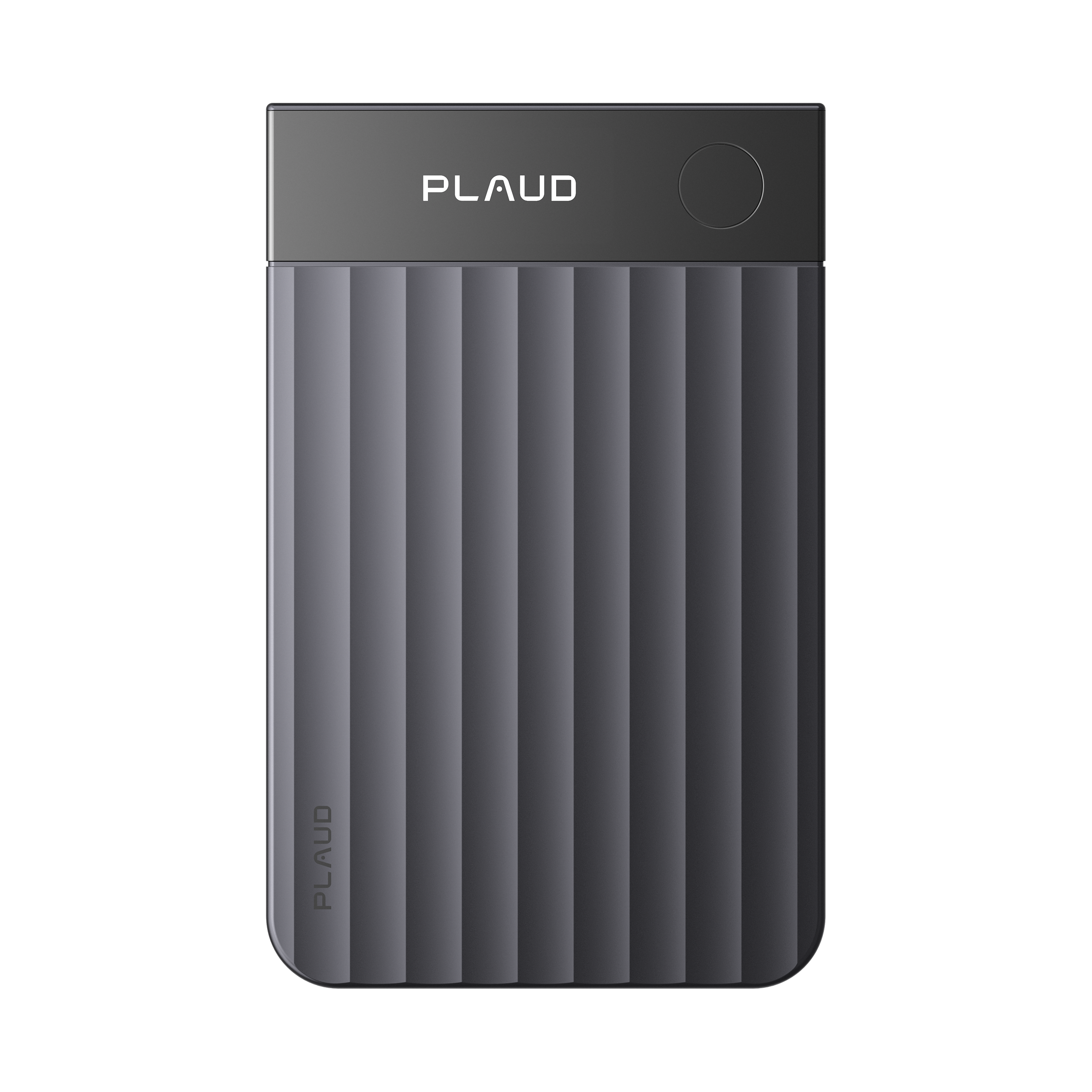
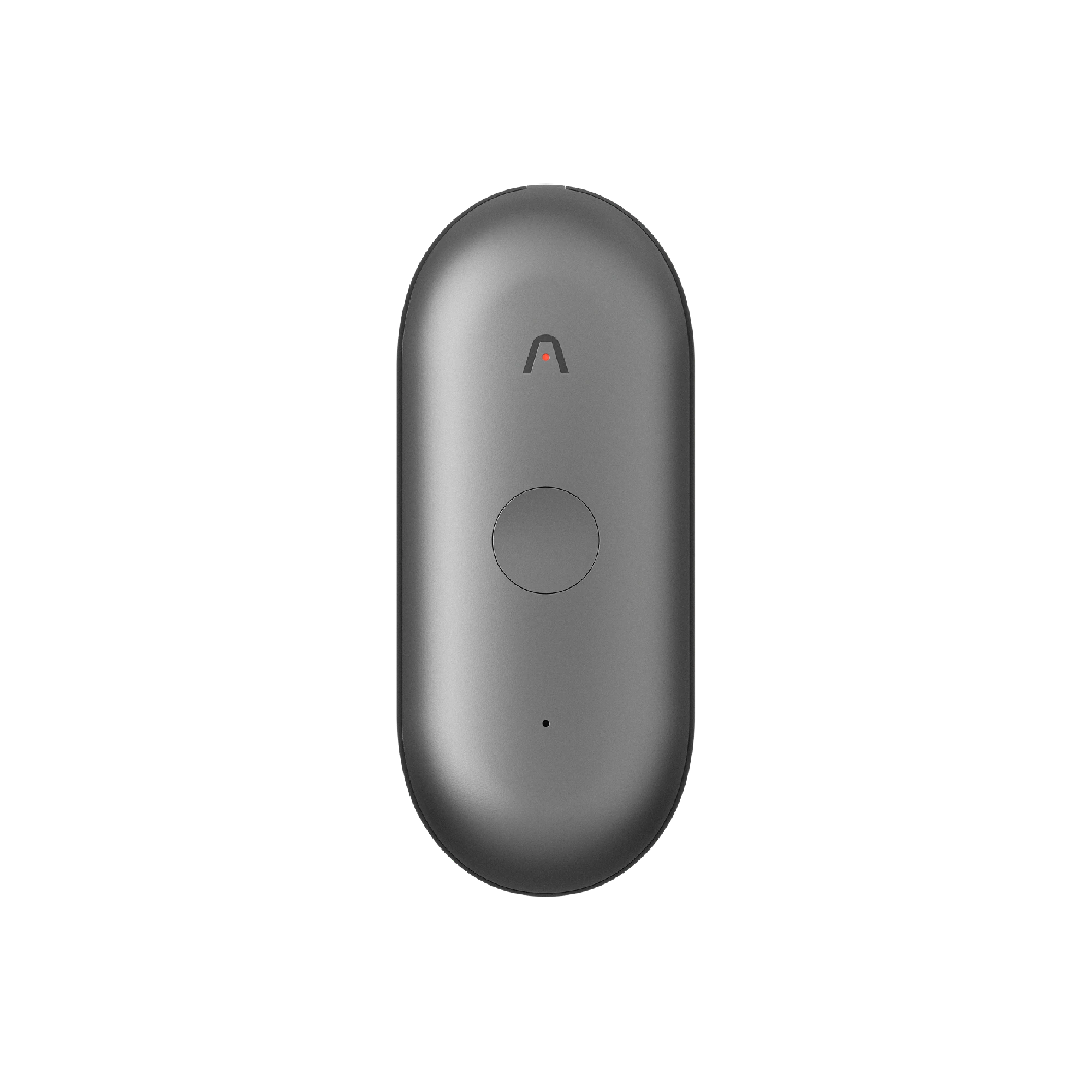
Getting that transcript without manually typing it requires a recording that converts automatically. Plaud Note Pro is a physical AI note taker that captures in-person meetings and phone calls with four MEMS microphones and AI beamforming, while Plaud Desktop captures online meetings through Zoom, Teams, and Google Meet without requiring a bot or a meeting link. Both deposit recordings into the same Plaud library, where Plaud Intelligence transcribes in 112 languages and generates summaries and action items on demand.

Plaud Note Pro
Plaud Note Pro can capture voices clearly from up to 5 meters away with 4 MEMS microphones and AI beamforming. Smart dual-mode recording enables auto detection between phone-call and in-person scenarios.
For teams using Claude Desktop or Cursor, there is a further step that removes the copy-paste entirely. Plaud's MCP server lets those AI tools pull any transcript from the Plaud library directly, with no export step. ChatGPT also supports Plaud's MCP server, allowing it to pull transcripts directly. For ChatGPT users today, the copy-paste workflow described above is the current path.
Two resources cover the capture-side decision in more detail: this guide to the best AI note takers for work conversations and this piece on active listening at work, which addresses the human-in-the-loop side of the same problem.
What does the full meeting-to-output workflow look like in practice?
Path A uses ChatGPT with a manual transcript paste. Path B uses ChatGPT, Claude Desktop, or Cursor connected to Plaud via MCP, eliminating the manual copy-paste step.

| Step | Path A: ChatGPT (manual) | Path B: ChatGPT, Claude Desktop, or Cursor via MCP |
|---|---|---|
| 1 | Record with Plaud Note Pro or Plaud Desktop | Same |
| 2 | Open Plaud App and copy the transcript | No action needed |
| 3 | Paste into ChatGPT and add the role-context-task-format prompt | Ask in natural language: "Summarize last Tuesday's client call and extract action items" |
| 4 | Review and send | The AI calls get_note or get_transcript automatically and returns the result |
| Time | A few minutes | Seconds |
Path A requires one additional element beyond the recording: the prompt itself. Use this template:
You are a project coordinator. Here is the transcript of a client meeting:
[PASTE YOUR TRANSCRIPT HERE]
Extract decisions made, action items with owners and deadlines, and open
questions. Format as bullet points.
Path B replaces the copy-paste step with a one-time setup. Install Node.js 20 or later, then run npx -y @plaud-ai/mcp@latest install. After that, ChatGPT, Claude Desktop, or Cursor can query your entire Plaud recording library through natural language. The full setup guide is at docs.plaud.ai/documentation/plaud_app/mcp.
The device choice depends on where the meeting happens. For in-person capture while traveling or working outside the office, Plaud NotePin S is a wearable AI note-taking device that records up to 20 hours continuously and deposits recordings into the same Plaud library. Both paths feed into the same workflow, whether the meeting was in person or online.

Regardless of device or path, two considerations apply before you run the workflow on sensitive content. First, record meetings only with the knowledge of all participants, as laws on recording consent vary by jurisdiction. Second, for meetings that contain confidential client information, check your organization's data policy before pasting transcripts into any external AI tool, including ChatGPT. Plaud uses OAuth authentication, and recording data stays within your Plaud account. The Plaud platform is SOC 2, GDPR, and ISO 27001 compliant. For teams with multilingual participants, AI transcription in 112 languages means the workflow applies whether the meeting took place in English, German, or Mandarin.
In testing this workflow across multiple client calls, output quality correlates directly with transcript completeness. A full transcript produces a structured follow-up in a single prompt. Notes reconstructed from memory typically require several rounds of follow-up prompts to reach a comparable result.
For teams managing consecutive sessions, this guide covers the capture-specific considerations: best AI note takers for back-to-back meetings.
Which ChatGPT workflows do knowledge workers use most reliably every week?
Each row in the table below shows the Path A prompt for a manual workflow and the Path B MCP upgrade for users running ChatGPT, Claude Desktop, or Cursor.
In each Path A prompt, replace [PASTE] with the full meeting transcript copied from the Plaud App.
| Role | Path A prompt (ChatGPT, works today) | Path B upgrade (Claude Desktop / Cursor via MCP) |
|---|---|---|
| Consultant | "You are a senior consultant. Transcript: [PASTE]. Summarize decisions, open questions, and next steps as a client-facing email, 150 words." | "Did Acme mention pricing concerns in any of our calls this month?" — searches across your full transcript library |
| Project manager | "Extract all action items from this retrospective transcript, grouped by owner: [PASTE]." | "Summarize all standup action items from this week" — searches across daily standup recordings |
| Sales | "You are a sales rep. Transcript: [PASTE]. Draft a three-sentence internal summary and a CRM note with BANT fields." | "Find all discovery calls where the prospect mentioned a competitor" — returns results from the full call library |
| Executive | "Transcript: [PASTE]. Extract strategic decisions made, risks flagged, and metrics mentioned." | "Pull the last three board prep meetings and list the metrics tracked each time" — longitudinal view across sessions |
| Any role | "Turn these bullet points into a concise professional email. Tone: direct, not formal. Maximum 150 words: [BULLETS]." | No MCP path — baseline workflow for users without full transcript input |
Transcript quality directly affects the output of the first four workflows. The fifth, email from bullet points, has no transcript dependency and serves as an entry point for users who have not yet set up a recording workflow.
Project managers](https://www.plaud.ai/blogs/articles/productivity-tools-for-project-managers) working through the second workflow will find additional context in this guide to productivity tools for project managers.
What do you do when the first ChatGPT output misses?

Send a targeted correction in the same conversation rather than starting a new chat. A follow-up that names exactly what to fix produces a better result than regenerating everything from scratch.
A correction that names the specific problem works better than "try again." For example: "The action items section is missing the deadline for item 3 and the owner for item 5. Fix only those two fields." That instruction tells ChatGPT exactly what to correct rather than giving it the full brief again.
If the issue is not a missing field but the overall structure, a constraint works better than a correction. "Rewrite the summary section as three bullet points, each under 25 words." If the issue is tone, name the target register directly. "The email reads as too formal. Rewrite it at the same register as a Slack message to a client you know well."
That said, there are cases where starting fresh makes more sense. Start a new chat when the conversation has accumulated so many corrections that the context has become confusing, or when you want to try a fundamentally different prompt structure. For standard outputs like meeting summaries and action-item lists, iteration within the same thread is faster than restarting.
References
- OpenAI. (2024). Prompt engineering guide. OpenAI Platform Documentation.