Most people start with a chat box.
That is the form of AI we all already know, and it already helps with meeting work. A chat tool like ChatGPT can clean up a transcript, shorten a recap, compare today’s notes with older documents, and turn rough bullets into a follow-up email. It can also help before anything looks like a proper note. You can talk through an idea, test a plan, or sort out a decision while the meeting is still fresh.
That makes a separate note-taking tool feel unnecessary at first. One tool covers writing, search, summarizing, document comparison, and follow-up questions. For people who already work inside docs, shared drives, and chat tools, another app can look like one more step without a clear reason.
The gap appears when meeting content has to move out of the conversation and into a repeatable workflow. Providing a strong answer in a chat is not always the best or most efficient choice.
What is a chat box AI and why do most people start here?
If you have ever typed a prompt into ChatGPT, Claude, or Gemini, you have used a Chat Box AI. For most professionals, this is the first and most common entry point into artificial intelligence.
At its core, a Chat Box AI is a highly flexible conversational interface powered by a Large Language Model (LLM). Its greatest strength is its absolute versatility. Because it is a general-purpose assistant, it can write code, draft follow-up emails, brainstorm marketing ideas, or perfectly summarize a messy meeting transcript if you paste it into the chat window.
This is exactly why people use it the most: it is accessible, multi-functional, and often free.
It is a brilliant, but passive, post-processing tool. It requires you to do the manual labor of capturing the information in the real world, transcribing the audio through another app, exporting the text, pasting it into the chat, and writing the prompt to get the format you want.
How AI note takers evolved from general AI
As professionals started using these general AI assistants daily, they quickly hit a bottleneck. The AI brain was incredibly smart, but the manual process of feeding it data and writing the same prompts over and over became a tedious chore. The problem appeared when the meeting content had to move out of a casual conversation and into a repeatable workflow.
The AI note takers came out of this problem.
Developers realized that for daily, high-frequency tasks like meetings, the system around the AI model matters just as much as the model itself. An AI note taker takes the same powerful "brain" and wraps it in a specialized, automated workflow.

Instead of relying on you to manually paste text, an AI note taker automates the entire pipeline from start to finish. It captures and converts spoken words into text with high fidelity. Then, without waiting for a manual prompt, it feeds that transcript into the LLM using pre-built, highly engineered templates—instantly generating structured summaries, action items, and mind maps.
Whether it is a meeting bot joining your Zoom call, a desktop app, or a dedicated hardware device capturing in-person audio, the evolution is clear. They transformed AI from a passive chat interface where you have to do the work, into a proactive workflow tool that does the work for you.
When chat-based AI stops being enough for meeting notes
A general AI assistant is strong because it can do many things at once. The same strength can create extra work in a meeting workflow.
- Flexible output means you still decide the format
- Connected tools still need setup and upkeep
- Strong post-meeting reasoning does not start capture by itself
- One-off prompting turns into repeat work in a busy week

This pattern is bigger than meeting notes. It shows up in research, writing, coding, and sales work too. People start with a broad tool because it is available and useful. Then a smaller category grows around the repeated task. Meetings follow the same path. Once the work becomes capture, recap, action items, sharing, and follow-up every day, dedicated note tools start to make sense. ChatGPT connectors and custom MCP connectors make the broad path more capable. They also add more moving parts for the user or the team to manage.
That is the point where dedicated AI note takers start to make sense.
How AI note takers handle meetings
For meetings, an AI note taker usually handles the same chain every time. It captures the conversation, creates a transcript, writes a summary, surfaces next steps, and keeps a record people can return to later.
That broad job now splits into a few common types.
Native meeting note tools

These live inside the meeting platform itself. Google Meet, Microsoft Teams, and Zoom all fit here. They work best for scheduled online meetings that already happen on screen. Meet can create meeting notes in Google Docs and send a recap. Teams recaps can include the recording, transcript, notes, summary, and follow-up tasks. Zoom can send a meeting summary after the call and place it in chat.
Bot-based meeting note takers
These tools join the meeting as a participant. Otter is a clear example. Its notetaker can auto-join Zoom, Google Meet, and Microsoft Teams meetings from the calendar, then transcribe and summarize the meeting. This type is useful when the main goal is automation inside scheduled online calls. It is less ideal for teams that do not want a visible bot in the meeting.
Bot-free desktop note takers

These tools keep the meeting free of a visible bot. Granola and Fireflies Desktop fit this group. Granola uses computer audio and positions itself around back-to-back meetings with no meeting bots. Fireflies also supports recording without a bot through desktop capture. This type works well for people who spend most of their meeting time on a laptop and want fewer interruptions inside the call itself.
In-person and hybrid meeting note takers

These tools cover meetings that do not stay inside a laptop. Some lean on mobile capture. Some use hardware. Some stretch across hardware, app, and desktop so one system can cover online meetings, room meetings, and follow-up capture after the meeting ends.
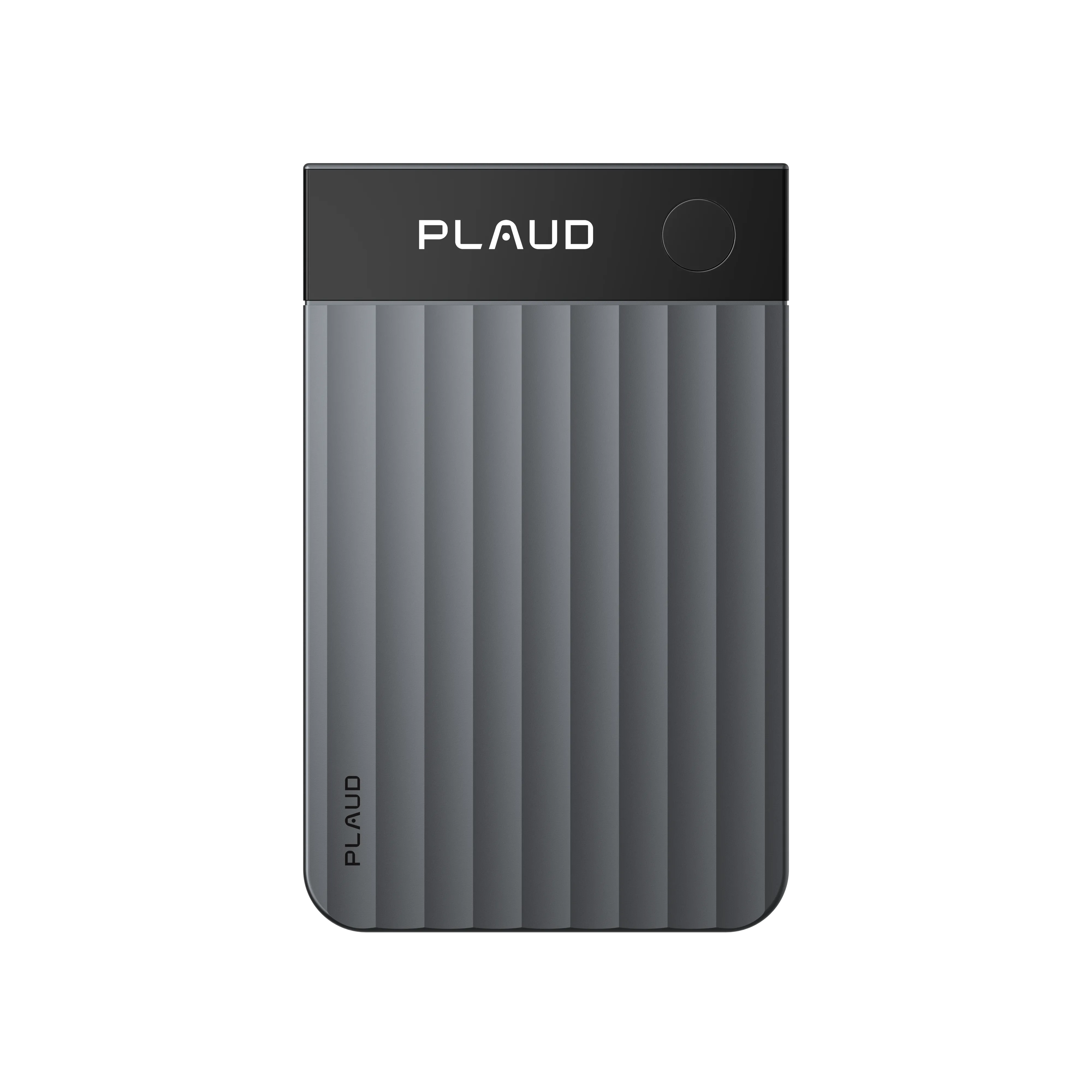
Plaud Note Pro and Plaud NotePin S sit in this category. Note Pro handles both online meetings through Plaud Desktop and in-person meetings through its four-microphone array with a 5-meter pickup range, which captures participants across a conference table more reliably than a phone placed on the same table. NotePin S is designed for full-day movement. It clips to a lanyard, lapel, wristband, or worn as a pin, and records throughout the day without a setup decision at the start of each conversation.
Both sync to the same app. Online recordings from Plaud Desktop and in-person recordings from the hardware land in the same workspace with the same output format, which matters when a single day moves between call, room, and everything in between.
Why a dedicated AI note taker still saves time
The qualities that make a general AI assistant flexible become friction once meeting notes are a daily task spread across different settings. No preset format means the output varies with every prompt. Repeated manual steps add up across a full week. Recurring meetings produce different note layouts each time. Custom workflows need attention whenever tools or permissions change.
A dedicated AI note taker handles most of these by making the decisions in advance. The capture, transcript, summary, and action item format are prebuilt and consistent. The vendor maintains that structure across updates, not the user.
| Meeting task | General AI assistant | Dedicated AI note taker |
|---|---|---|
| Cost (free option available) | Often free or low-cost | Usually requires subscription |
| Data privacy | No automatic recording required | Often involves cloud processing |
| Start from a live meeting | Usually starts after the meeting material exists | Built for capture |
| Turn output into a meeting record | User still handles part of the cleanup | As part of the flow |
| Keep the same structure each week | Depends on the chat process | More stable |
| Pull out next steps | Often needs extra prompting | Included |
| Share the result with a team | Often handled outside the chat | Usually closer to the note itself |
| Maintain the workflow | User carries more of it | Vendor carries more of it |
Limitations to considerDedicated AI note takers also come with trade-offs. They usually require a subscription, and hardware-based options add upfront cost. Many tools rely on cloud processing, which may raise data privacy considerations for sensitive conversations. Transcription accuracy can also vary depending on noise levels, accents, or recording conditions.
This matters most for people with recurring meetings and fast follow-up needs. Managers, project leads, customer teams, recruiters, and sales teams all run into the same pattern. The meetings themselves may differ. The need for a stable record and a quick next step does not.
Plaud removes that overhead at several specific points.
For template

The Summary Templates library includes over 10,000 prebuilt formats across meeting types, industries, and roles: sales calls, client briefings, legal consultations, research interviews, and more. Each template structures the AI output toward what matters in that context without a custom prompt. Users can also build and save their own.
For work flow

AutoFlow handles the post-meeting step without additional input: once a recording syncs, it transcribes, summarizes, and sends the output by email automatically.
For your questions

Ask Plaud lets you search and ask questions across all recordings, so a specific detail from a conversation two weeks ago is findable without opening every file.
How AI note takers fit different meeting scenes
No single meeting scene asks for the same note-taking setup every time. Online calls, room meetings, and mixed weeks ask for different kinds of capture and different kinds of follow-up. That is why the category now spans native meeting notes, meeting bots, desktop note tools, mobile capture, and hardware-based systems.
Plaud sits across several of those lanes. Plaud Desktop captures computer audio for online meetings without bots. Plaud devices cover in-person conversations and on-the-go recording. Those recordings can live in one unified Plaud workspace, which gives the product a broader role than a single recorder or a single desktop app.
Online meetings

For scheduled video calls, software handles most of the job well. Native tools like Google Meet and Teams already produce summaries. Bot-free options like Granola work in the background without adding a participant tile.
Plaud Desktop works the same way: it detects when a Zoom, Teams, Google Meet, or any other call starts and captures system audio automatically, without joining as a bot and without a manual trigger. Notes typed during the call and screenshots of slides feed directly into the AI context, so the summary reflects more than just what was said. Everything syncs to the same workspace as hardware recordings, so switching between online and in-person during the week does not split the record.
In-person meetings

In-person meetings create a different note problem. The issue is not the summary later. The issue is getting the meeting captured cleanly in the first place. A laptop is often not there. A phone is often busy with calls, messages, maps, or follow-up right after the conversation ends. That makes a dedicated device easier to justify. It is ready to record as a recorder, and it does not take over the phone while the meeting is happening.
Plaud Note Pro fits the sit-down meeting better. It makes more sense for client meetings, internal discussions, and other room-based conversations where the device can stay near the table and focus on the group. Plaud NotePin S fits the moving meeting better. It makes more sense for walking meetings, site visits, client tours, and quick follow-up conversations. Both pull recording out of the phone and put it into a tool built for the job.
Phone calls and calls on the go

A lot of real work happens here. One day starts with a video intro call, moves into an internal review, then ends with an in-person client meeting. The harder part is no longer one meeting. The harder part is keeping the notes from different meeting types inside one system that still feels consistent.
This is the scene where a wider setup helps. Plaud is stronger here because it does not depend on one meeting surface. Hardware covers the room. Desktop covers the call. The app keeps the records in one place after both.
Fast follow-up after meetings
Some meeting scenes are defined by what happens right after the call ends. Sales is an easy example. So are hiring debriefs, customer handoffs, and internal approvals. The note still has to turn into an email, a to-do list, or a short update for the next person.
Plaud has more depth here than a basic recorder. AutoFlow can generate transcripts and summaries automatically after sync or upload, and it can trigger follow-up actions such as emailing the summary. Ask Plaud can answer questions against one file or across all files, with answers grounded in transcripts and summaries. In practice, that moves Plaud closer to a meeting workflow tool, not just a capture device.
Which setup fits your week
If most notes start as text, transcripts, or docs that already exist, a general AI assistant covers the job well. It cleans, rewrites, compares, and extends that material without requiring another tool, and it handles the kind of back-and-forth thinking that no note taker replaces.
If the week includes recurring meetings with consistent follow-up requirements, a dedicated note taker saves more time than it costs. The savings come from less format drift, fewer repeated steps per meeting, and less time spent managing the record after every call.
If work moves between screens and rooms, what gets captured in the first place becomes the limiting factor. That is where software-only workflows start to leave gaps. A hardware or wearable note taker covers the capture side. A general AI assistant handles the thinking, rewriting, and downstream work after the notes already exist. For teams with mixed workflows, using both can be a practical approach depending on how often meetings happen and how structured the follow-up needs to be.