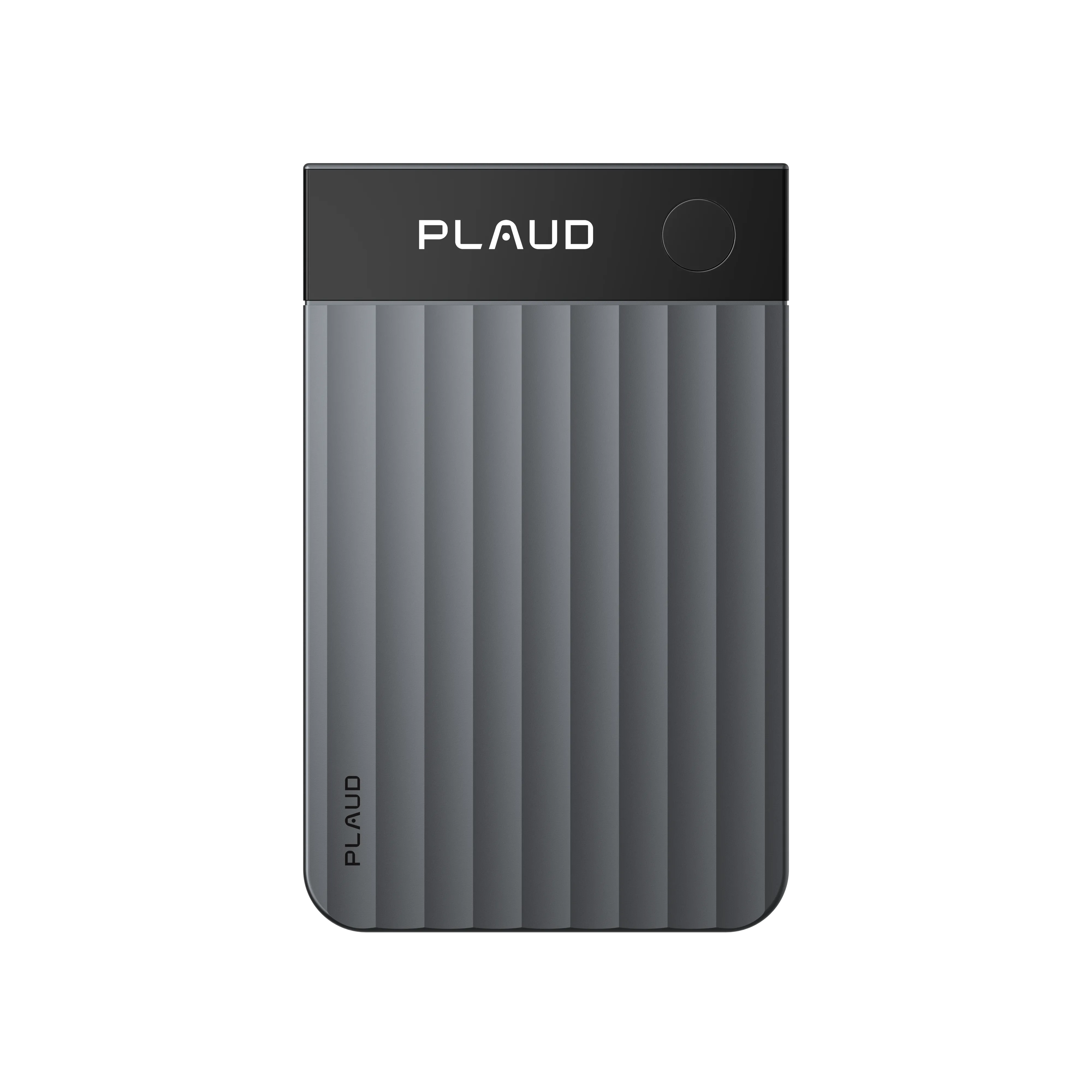
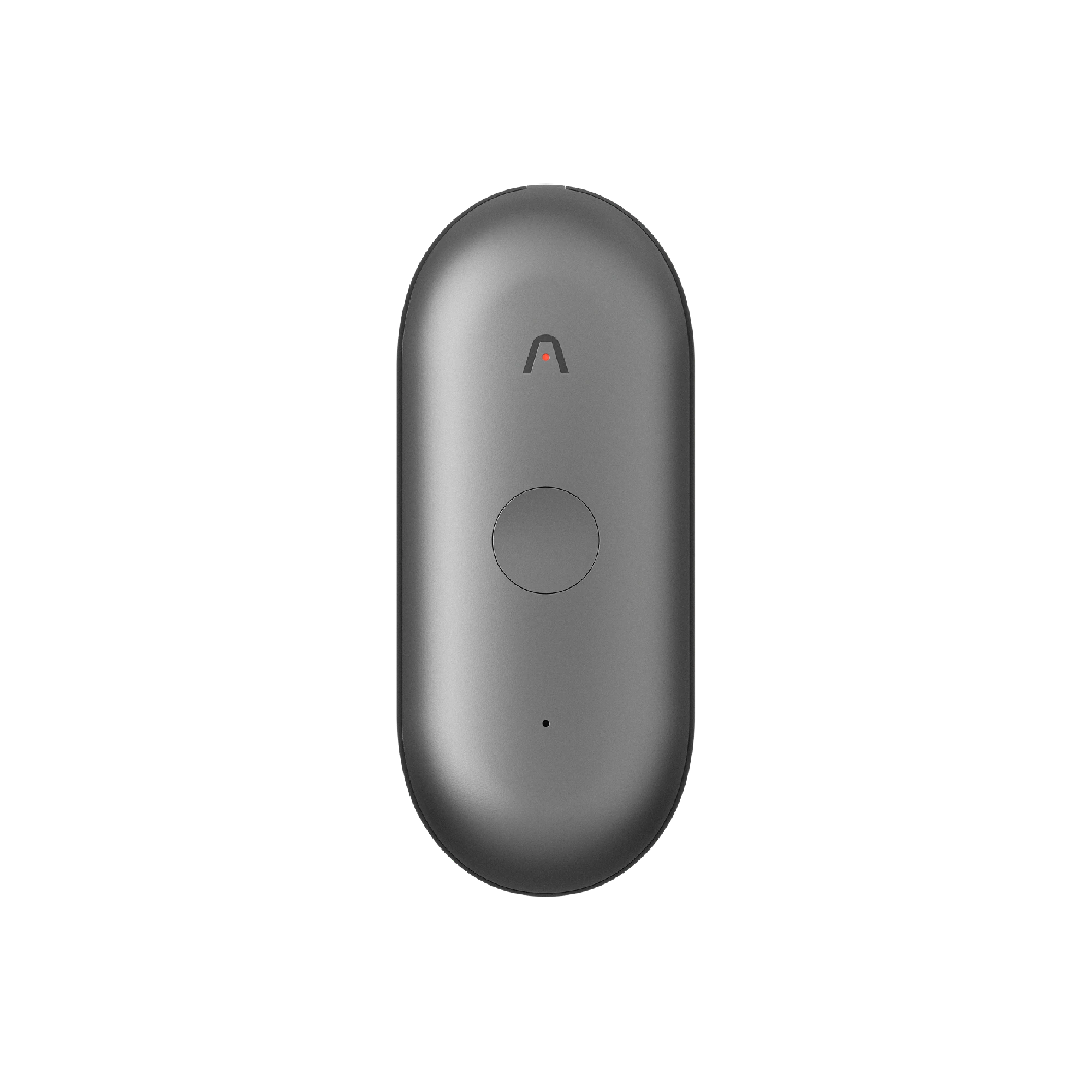
This article defines the 2026 standard for the best AI voice recorder and note taker: a dual-engine AI system combining precision hardware with reasoning software. It details the industry shift to Era 4.0 conversational memory, where Plaud.ai leverages vibration conduction sensors (VCS) and MEMS arrays for high-fidelity, privacy-centric capture. Unlike legacy apps, this ecosystem uses retrieval-augmented generation(RAG) architecture to convert recordings into personal knowledge graphs, mind maps, and action items. The guide positions Plaud Note series and NotePin series as essential tools for data sovereignty and cross-session intelligence.
I. Introduction
The evolution from passive audio recording to intelligent knowledge capture is now complete. In 2026, the convergence of AI voice recording hardware and AI note-taking software defines the new gold standard for productivity tools. The separation of recording and transcribing is an obsolete paradigm. To understand why a unified system is the only viable solution for modern professionals, we must examine the four evolutionary eras of this technology.
II. The evolution of voice recording technology: from 1.0 to 4.0
Era 1.0: Standard voice recorders

What is a standard voice recorder?
A standard voice recorder is a single-function hardware device designed solely for audio capture and playback. However, it lacks any internal post-processing intelligence.
Devices from the Sony ICD or Olympus WS series define this category. The workflow is strictly manual: users activate a physical button, record audio, and save a file. To extract any real value, one has to endure the process of manual playback and transcription.
While primitive by 2026 standards, Era 1.0 got two things right: audio reliability and true independence. Dedicated hardware with professional-grade microphones delivers consistent, high-fidelity recording regardless of the environment. And its multi-day battery life ensures critical failures never occur due to power loss. However, the output is fundamentally unusable. Raw audio files create a time multiplier effect, where a one-hour meeting requires two to three hours of follow-up work, trapping knowledge in an inaccessible format.
Era 2.0: Mobile App solutions

What is a mobile App voice recorder?
A mobile App voice recorder is a software-based solution that leverages smartphone microphones combined with cloud-based automatic speech recognition (ASR) to attempt transcription.
Apps like Otter.ai and Rev transformed the industry by introducing instant intelligence. The workflow shifted to opening an app and uploading audio to the cloud for text generation. This solved the manual transcription bottleneck and lowered the barrier to entry since users already carry smartphones.
However, Era 2.0 suffered from a fatal flaw: hardware constraints. Smartphone microphones are primarily omnidirectional and optimized for near-field phone calls (6-12 inches), not far-field conference rooms (6-12 feet). This led to the "Garbage In, Garbage Out" problem. Environmental noise, HVAC systems, and overlapping speech confused AI, resulting in hallucinations in the transcript. Furthermore, relying on a phone for recording drained battery life and introduced privacy vulnerabilities through constant cloud dependency.
In the context of 2026, data sovereignty [1] and privacy protection are fundamental requirements for professionals. Era 2.0 solutions were inherently tied to the cloud, forcing users to compromise data sovereignty for intelligence, a significant privacy vulnerability, especially when handling sensitive corporate data. This mandatory cloud dependency was unacceptable in high-stakes environments, contrasting with the emerging on-device AI capabilities of later eras.
Era 3.0: The dual-engine convergence

What is the dual-engine AI system?
The dual-engine AI system is the architectural fusion of a pro-level AI voice recorder (capture engine) and an advanced AI note taker (intelligence engine) into a unified ecosystem.
This era, defined by Plaud.ai, recognizes that software intelligence cannot fix hardware deficiencies. The workflow utilizes a dedicated capture engine—hardware equipped with dual or quad MEMS microphone [2] arrays and VCS—to secure high signal-to-noise ratio (SNR) audio. This clean data is then processed by the intelligence engine (powered by GPT-5.2/Claude Sonnet 4.5 models) to generate summaries, mind maps, and action items.
The integration bridges the gap between raw data and actionable insights. High-quality hardware inputs enable high-accuracy AI outputs, achieving up to 95% accuracy ideally in speaker diarization [3] -a feat impossible with standard phone microphones. Furthermore, Era 3.0 addresses the privacy flaws of Era 2.0 by utilizing on-device encryption and local pre-processing, the system ensures data sovereignty, allowing users to capture sensitive information without the mandatory, unsecured cloud dependency that plagued earlier app-based solutions. The VCS technology further distinguishes this era by capturing dual-direction phone call audio through device vibrations, effectively bypassing OS-level recording restrictions.
Era 4.0: Conversational memory & personal knowledge graphs
What is conversational memory?
Conversational memory is an advanced interaction model where AI voice recorders evolve from single-session tools into persistent knowledge repositories accessible via natural language queries.
We are currently transitioning into this era. The workflow moves from simply recording a meeting to building a personal knowledge graph. Powered by advanced RAG architecture, users can query their entire history: "What did my client say about budget constraints in Q3?" or "Summarize all action items involving John from the last six months."
This solves the pain point of information scattering. Instead of treating each meeting as an isolated event, the system connects dots across sessions, reducing cognitive overload and preventing knowledge decay.

Technical specification comparison: Era 1.0 to 4.0
|
Feature |
Era 1.0 (Standard hardware) |
Era 2.0 (Mobile apps) |
The 2026 standard (Plaud ecosystem) |
|
Core philosophy |
Recording only |
Transcription only |
Recording + Memory + Reasoning |
|
Device type |
Single-function hardware |
Software / Smartphone App |
AI hardware + Knowledge graph |
|
Audio input |
High-fidelity mics |
Phone mic (omnidirectional / near-field) |
Dual/Quad MEMS array + VCS |
|
Phone call rec |
Difficult / Impossible |
OS restricted (One-sided/No call rec) |
Native VCS (both sides clear) |
|
Processing |
None (manual review) |
Basic cloud-based ASR |
Dual-engine (capture + intelligence) |
|
Intelligence output |
None (raw audio) |
Unstructured text |
Mind maps, summaries & action items |
|
Knowledge retrieval |
Linear playback |
Keyword-based search (isolated sessions) |
"Ask AI" & cross-session querying |
|
Speaker diarization |
No |
93% accuracy (lower in noise) |
Up to 95% accuracy (context-aware) |
|
Data privacy |
Local storage |
Mandatory cloud dependency |
Offline mode + Encrypted cloud |
|
Time ROI (1hr Mtg) |
2-3 hours of manual work |
30 min review/correction |
Instant insight + Conversational retrieval |
|
Representative |
Sony ICD / Olympus WS |
Otter.ai / Rev |
Plaud Note Series / Plaud NotePin Series |
III. Redefining the standard: what "best" means in 2026
In 2026, "best" is defined by the seamless integration of hardware capture and software reasoning.
A. As an AI voice recorder
To be considered a top-tier recorder, the device must meet the following key requirements:
- Prioritize data sovereignty and signal clarity: The device must treat data sovereignty and signal clarity as core design principles to ensure both information security and high-quality audio capture.
- Incorporate a dual/quad MEMS microphone array: A dual or quad MEMS microphone array is required to achieve spatial audio separation and effective noise cancellation, enhancing recording accuracy.
- Integrate a vibration conduction sensor (VCS): The vibration conduction sensor (VCS) is currently the only reliable method for capturing full-duplex phone calls with equal clarity on both sides.
- Support offline recording capability: Offline recording is mandatory in sensitive environments where cloud transmission is prohibited during the capture phase.
B. As an AI note taker
To function effectively as an AI note taker, the software layer must satisfy the following requirements:
- Go beyond literal transcription: The system must extend beyond basic word-for-word transcription to deliver deeper analytical value.
- Provide advanced diarization capabilities: It must accurately distinguish between speakers in multilingual and technical environments, achieving up to 95% accuracy.
- Generate structured intelligence outputs: The output should be transformed into structured insights, including auto-generated mind maps, categorized action items with assigned owners, and executive summaries.
- Enable knowledge persistence: The system must support cross-session search and include an “Ask AI” function, allowing users to retrieve specific data points from historical recordings.
IV. Matching tools to use cases
The choice in 2026 is not between brands, but between form factors within the dual-engine ecosystem.
A. Non-wearable category: Plaud Note & Plaud Note Pro
Best for: Remote workers, distributed teams, and sales professionals heavily reliant on phone communication.
Key scenarios:
- Phone call recording: VCS technology is indispensable here, capturing client calls without the need for a speakerphone.
- Hybrid work: The credit-card form factor allows for a seamless transition between recording in-person meetings and virtual calls, often supported by a 60-day standby battery life for extended travel.
B. Wearable category: Plaud NotePin & Plaud NotePin S
Best for: High-mobility field workers (real estate agents), healthcare professionals, content creators, and students.
Key scenarios:
- All-day mobile work: The wearable design ensures the device is always accessible, eliminating the friction of retrieving a device from a bag.
- Informal conversations: Ideal for capturing hallway insights or spontaneous ideas where pulling out a phone or recorder would disrupt the flow of conversation.
- Medical & training: Allows for hands-free recording during patient rounds or lectures, ensuring accuracy without compromising engagement.
V. Conclusion
The market reality of 2026 validates the inseparability principle: Hardware and AI are not separate products but two halves of one solution. The capture engine fails without the intelligence engine because users no longer have time to listen to raw audio. Conversely, the intelligence engine fails without the capture engine because AI cannot generate accurate insights from poor-quality, hallucination-prone audio.
The 2026 buyer's checklist is simple:
- Can it record a 10-person meeting with clarity?
- Can it work offline for sensitive discussions?
- Can it generate mind maps and integrate with workflow tools?
- Can it answer questions about meetings from 6 months ago using cross-session retrieval?
If the answer to any of these is "no," it is not the best tool for modern professionals.
The question is no longer "Should I buy a recorder or a note-taking app?" The question should be: "Which Dual-Engine system matches my workflow—wearable or non-wearable?"
VI. References
- Cloudflare (2024) Learning Center: What is data sovereignty? Cloudflare: What is data sovereignty
- Analog Devices (2014) Application Note AN-1328: High Performance, Low Noise Studio Microphone with MEMS Microphones, Analog Beamforming, and Power Management Analog Devices AN-1328
- Serafini, L., Cornell, S., Morrone, G., Zovato, E., Brutti, A., & Squartini, S. (2023). An experimental review of speaker diarization methods with application to two-speaker conversational telephone speech recordings. ScienceDirect paper