As an engineering manager, my calendar is basically a wall of internal meetings. Sprint retros, architecture reviews, cross-team syncs, incident debriefs, 1:1s. If you're mostly in external sales calls or client-facing demos, this piece isn't for you. This is about the meetings where sensitive technical decisions happen behind closed doors.
Here's the problem I kept running into: someone brings up a critical dependency change in a sprint review, three people nod, and two weeks later nobody can agree on what was actually decided. I dig through Slack, find nothing conclusive, and now we're burning half a standup re-litigating a decision that was already made. Or worse, an architecture call surfaces a security concern, and the raw transcript ends up in a cloud tool that half the org has access to. That's not a productivity problem. That's a liability.
How we chose best AI note takers for Internal meetings in 2026
What makes internal meetings different
Internal meetings aren't like sales calls or client demos. The stakes around who sees what are completely different.
With external calls, you're recording a conversation you want to share widely, with your team, your CRM, maybe your manager. Internal meetings are the opposite. Sprint retros might surface interpersonal friction. Architecture reviews involve unreleased product details. Incident debriefs contain information that could be legally sensitive.
So the first filter isn't "which tool has the best summary." It's "which tool gives me control over where the data lives and who can access it."
What I actually looked for
After going through about a dozen tools over the past year, I've narrowed my evaluation to three things:
-
Access control and audit trails. Can I set who sees what at the org level? Can an admin pull an audit log of who accessed a specific recording? If the answer is "everyone on the team sees everything by default and there's no log," that's a dealbreaker for internal use.
-
Ecosystem fit. My teams live in Teams and Google Workspace. SSO matters. Calendar integration matters. If the tool doesn't play nicely with the identity and permissions layer we already have, adoption stalls. Engineers won't use a tool that asks them to create yet another account.
-
Storage and retention control. Where does the transcript live? Can I configure auto-deletion? Can I choose the data region? For incident debriefs and HR-adjacent conversations, I need to know the data isn't sitting in a vendor's cloud indefinitely.
Security at a Glance
5 Best AI Note Takers for Internal Meetings
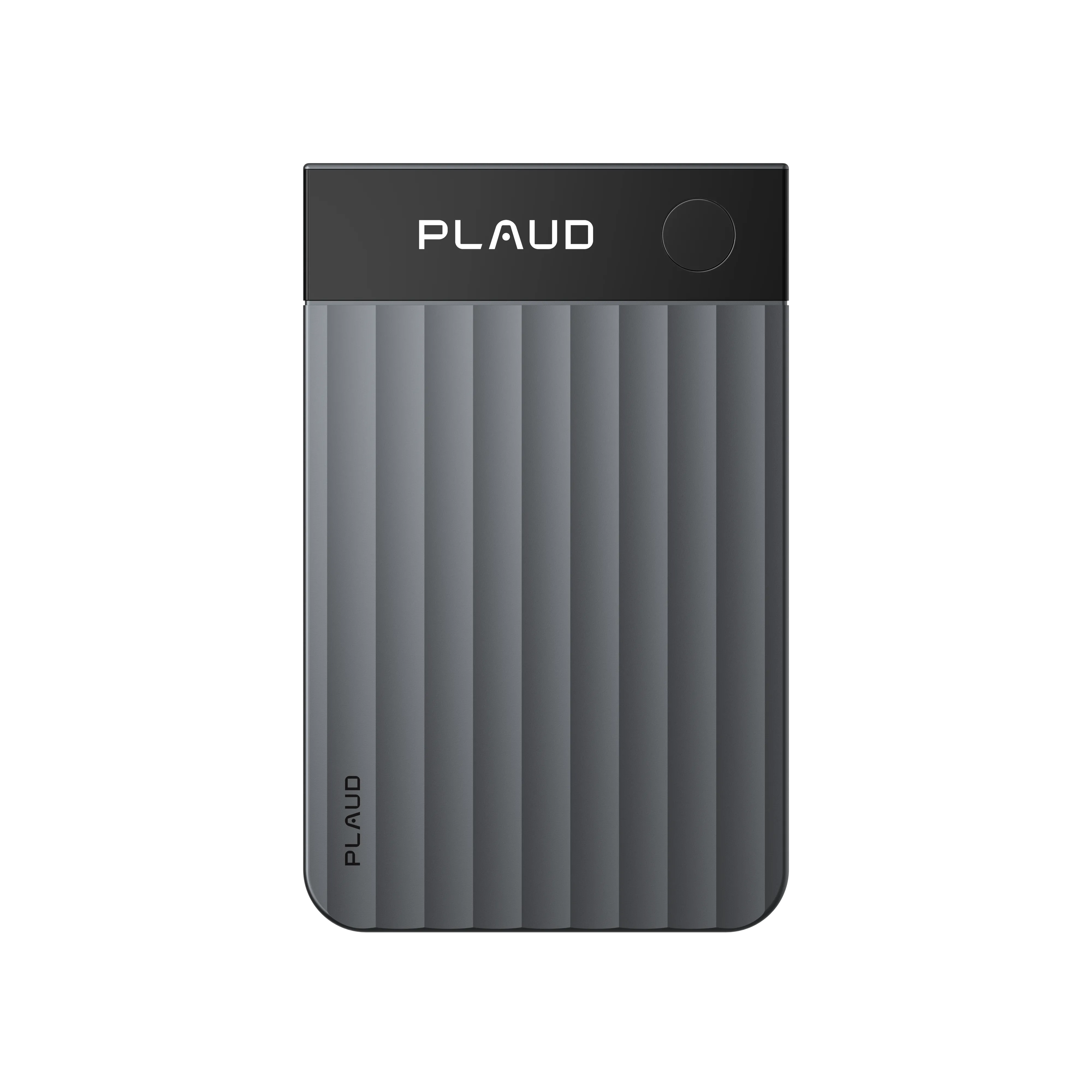
Plaud NotePin S
This is a capsule-sized wearable that records in-person meetings on the device itself, with encryption baked into the hardware. No cloud upload required unless I choose to sync.

Why It works for internal meetings
For an engineering manager, the biggest draw is the physical separation between recording and cloud. When I'm in an incident debrief or a sensitive 1:1, the audio stays on a tiny encrypted chip until I decide what to do with it. There's no bot joining a call, no third-party server receiving a live stream.
I clip it on during architecture reviews, and the room doesn't even notice. The highlight button is genuinely useful: when someone makes a commitment or flags a blocker, I tap it, and the AI knows to pay extra attention to that moment in the summary. The summary templates are surprisingly flexible. I use a custom one for sprint retros that pulls out decisions, owners, and open questions into separate sections.
Plaud also launched a Desktop app recently that captures online meetings without a bot. So for the mix of in-person standups and Teams calls that make up my week, one ecosystem covers both. And the compliance stack (ISO 27001, SOC 2, HIPAA, GDPR) means I don't have to fight with security review to get it approved.
Where it's not the best choice
The limitation is real-time collaboration. This is a personal capture device, not a team platform. If I want to share notes, I'm exporting them manually or pushing to Slack/Notion. There's no shared workspace where my whole engineering org can search past meeting transcripts. For org-wide meeting intelligence across dozens of teams, you'll need a platform like Fellow. But for controlled, high-trust recording of sensitive internal conversations, nothing else gives me this level of data ownership.
Fellow
Fellow is the tool that gets brought up most in enterprise IT conversations, and for good reason. It's built around admin controls first and note-taking second.
Why it works for internal meetings
The thing that matters most for internal use: IT admins can set granular policies on which meetings get recorded, who sees the recap, and how long data sticks around. Auto-delete rules on the Enterprise plan mean I can tell compliance that sprint retro recordings expire after 90 days automatically.
Fellow does both bot and botless recording under the same security framework, which is rare. Most tools that offer "botless" mode treat it like a separate product with fewer guardrails. Fellow keeps the same retention, access control, and audit policies regardless of capture method. It integrates deeply with Teams, Meet, Slack, and project tools like Jira and Confluence. For engineering teams, the Jira integration actually saves time because action items from meetings can flow directly into tickets.
Where it's not the best choice
Pricing can add up. The Enterprise plan starts at $25/user/month, and you need it for the retention policies and advanced permissions that make Fellow worthwhile for internal meetings. The free and Team tiers are too limited for any serious internal deployment. Also, Fellow is purely a virtual meeting tool. It doesn't help with in-person meetings unless you open a laptop and run the desktop capture. If your team does a lot of whiteboard sessions or conference-room standups, you'll need a second tool for those.
Microsoft copilot in teams
If your org is already deep in Microsoft 365, Copilot is the path of least resistance. It lives inside Teams natively, and meeting data stays within your existing M365 compliance boundary.
Why It works for internal meetings
The biggest advantage is that there's nothing new to deploy. Copilot uses your existing M365 identity, permissions, and Purview retention policies. Meeting recaps are stored in SharePoint, governed by the same eDiscovery and retention rules as everything else. For an engineering manager in a Microsoft shop, this means no separate security review, no new vendor to onboard, no shadow IT risk.
Admins can control Copilot at the policy level: enable it for certain meeting types, require saved transcripts, or disable it entirely for sensitive discussions. Sensitivity labels carry over, so if a meeting is marked confidential, Copilot respects those restrictions. The recap quality has improved a lot. It now generates structured summaries with speaker attribution, decision logs, and action items.
Where it's not the best choice
Copilot only works in Teams. If your org uses Google Meet for some teams, or if you do Slack huddles (which engineering teams love for quick syncs), Copilot can't capture those. It also requires a Microsoft 365 Copilot license, which runs about $30/user/month on top of your existing M365 subscription. I've also found that the summaries can miss nuanced technical decisions. When the conversation gets into the weeds of a specific implementation choice, the recap sometimes flattens things into generic bullet points. You still have to check the transcript for the details.
Granola
Granola runs locally on your Mac and transcribes system audio without adding a bot to the call. It's a lightweight personal tool, not an enterprise platform.
Why it works for internal meetings
The no-bot approach genuinely changes the dynamic in internal meetings. Nobody sees a "recording bot has joined" notification, which matters when the conversation involves performance feedback, organizational changes, or anything where people might self-censor. Granola captures the audio from your device, transcribes it, and lets you type your own notes during the meeting. After the call, its AI merges your notes with the transcript to produce a structured summary. The result feels more like your notes, not a generic AI output.
For an engineering manager who just wants to capture decisions and action items from a sprint retro without turning it into a recorded event, Granola hits a sweet spot. It also doesn't store audio recordings at all. Only text transcripts are kept. That's a meaningful privacy win for sensitive internal discussions.
Where It's not the best choice
Granola is still catching up on enterprise features. It recently achieved SOC 2 compliance, but there's no HIPAA support, and admin controls for team-wide policies are basic. The biggest gap for me: no org-level retention policies. I can delete my own notes, but I can't enforce a 90-day auto-delete across my engineering org. It also only works on Mac and iPhone (no Windows or Android support), which limits adoption for mixed-platform teams. And there's no in-person meeting support through a wearable. You need your laptop or phone present and running.
Fireflies.ai
Fireflies is one of the more established AI note-takers, with a searchable archive of meetings that makes it easy to find what was discussed across dozens of calls.
Why it works for internal meetings
The cross-meeting search is Fireflies' killer feature for internal use. When someone asks "did we discuss the database migration timeline in any meeting this quarter," I can actually search across all recorded meetings and find the exact moment. For engineering teams that make incremental decisions across many standups and syncs, that searchability is valuable.
Fireflies also supports private channels, so I can create a space for my team's meetings that other teams can't see. The AI generates structured notes with action items, and the analytics dashboard shows speaking time and sentiment across meetings, which is occasionally useful for retrospectives.
Where it's not the best choice
The bot-based recording is a problem for sensitive internal meetings. When a Fireflies bot joins a call, everyone sees it. I've had team members say they're less candid in retros because they know it's being recorded by a third-party tool. The Enterprise tier addresses some privacy concerns with configurable retention and private storage, but it starts at $39/user/month, which is steep.
The other issue: Fireflies' AI training policy is less clear-cut than Fellow or Plaud. On non-enterprise tiers, you need to check the terms carefully. For internal meetings where proprietary technical details come up regularly, that ambiguity made me nervous.
So which one should you pick?
There's no single best tool here. It depends on where your biggest risk and friction sit.
-
If your team runs on Microsoft 365 and Teams is the default meeting tool, start with Copilot. It's already inside your compliance boundary. No new vendor, no new security review. The gap is cross-platform coverage, so if you also use Meet or Slack huddles, you'll need a second tool.
-
If you handle a lot of sensitive internal conversations (incident debriefs, org changes, performance discussions), look at Plaud NotePin S. The on-device encryption and no-cloud-required model gives you the most control over where raw audio lives. Pair it with Plaud Desktop for online meetings.
-
If you need org-wide meeting intelligence with IT-grade admin controls, Fellow is the right choice. Retention policies, RBAC, audit trails, and cross-platform capture. It's the most complete enterprise platform on this list, with the pricing to match.
-
If you want a lightweight personal tool that doesn't change meeting dynamics, Granola works well for engineering managers who just need their own structured notes. Don't expect enterprise governance.
-
If searchability across a large volume of meetings is the priority, Fireflies' archive and cross-meeting search are hard to beat. Just weigh the bot-visibility tradeoff for sensitive discussions.
Conclusion
For internal meetings, the selection priority is: controllability first, then ecosystem fit, then note quality. The "best summary" doesn't matter if the raw transcript is sitting in a cloud you don't control, accessible to people who shouldn't see it.
My setup right now: Plaud NotePin S for in-person meetings and sensitive conversations where I want device-level control, plus Copilot for routine Teams calls that don't need extra protection. That covers maybe 90% of my week.
The next step worth taking: map your meetings by sensitivity. Category A (routine syncs, standups) can go through whatever cloud tool your org already uses. Category B (sprint retros, architecture reviews) should have access controls and retention policies. Category C (incident debriefs, performance conversations, legal-adjacent discussions) needs controlled storage, ideally on-device or within your own compliance boundary. Pick your tools based on that map, not on which one has the flashiest demo.