
AI in real estate is being used for four things today: valuing property, generating marketing copy and images, scoring and nurturing leads, and reading documents. Everything else is either a pilot or a pitch.
The gap between those two groups is the part most coverage skips. Institutional research and vendor marketing describe the same technology very differently, and an agent deciding what to pay for this quarter needs the difference spelled out.
This page maps the current uses by function, states what the adoption research shows, and names where the tools fail. It is written for agents, brokers, and teams rather than for institutional investors.
Where AI is being used in real estate today
Most working deployments fall into five functions. The ones nearest the top are established, and the ones nearest the bottom are still uneven.
| Function | What the tools do | Maturity |
|---|---|---|
| Valuation and market data | Automated valuation models estimate price from comparable sales, property characteristics, and market movement | Established, in use for years |
| Marketing and listing media | Generate listing descriptions, stage empty rooms, produce social copy and video edits | Established and cheap, quality varies |
| Lead scoring and nurture | Rank a database by likelihood to transact, then send tailored follow-up automatically | Established for teams with data, weaker on small databases |
| Document review | Extract dates, parties, and obligations from contracts and disclosures, and flag gaps | Working, still needs a human check |
| Conversation capture and summarization | Turn client meetings and calls into structured notes and next steps | Working, newest of the five |
Two patterns are worth noting. The first is that AI is landing hardest on tasks that are repetitive and text-based, which is why marketing and documents moved first. The second is that most of these run inside software agents already pay for, so the practical question is often which features to switch on rather than which vendor to add. Lead scoring and nurture both live in the CRM, and the current platform options are compared in this breakdown of CRMs for agents.
Institutional use looks different again. Larger firms apply AI to underwriting, portfolio research, and reporting, and property operators use it to optimize building systems and tenant service. That work rarely touches a residential agent's day.
What the adoption research shows, and what it does not
The credible published figures are estimates of potential rather than measurements of returns. Morgan Stanley's analysis puts the opportunity at around 37% of real estate tasks being automatable, worth roughly $34 billion in operating efficiencies across the industry over five years, in its assessment of AI in the sector.
Read that as a ceiling, not a forecast. It describes tasks a model could take over, which is not the same as savings any single brokerage has banked.
The labour effects are further along than the productivity claims. PwC and ULI's work on AI adoption in real estate reports that firms are mostly still in early stages internally, with the clearest change showing up in hiring for entry-level research and analysis roles rather than in headcount reductions among experienced staff. Job transformation is more common right now than job replacement.
What no source provides is a reliable per-agent return figure. Anyone quoting one is quoting a vendor.
Where AI fails in real estate
Four failure modes matter enough to plan around, and three of them carry legal exposure rather than just wasted spend.
- Fair housing. A model trained on historical patterns can steer recommendations in ways that create discrimination exposure, and automation does not transfer responsibility. The National Association of Realtors sets out the risk areas in its guidance on AI use in real estate, which also covers listing data being scraped for training and the growing patchwork of state AI rules.
- Confident wrong numbers. Automated valuations degrade in thin markets, on unusual properties, and after renovations the data does not know about. They are a starting range, not a price opinion.
- Fabricated specifics. Generative tools invent square footage, school ratings, and permit history that read plausibly. Anything going into a listing or a client email needs checking against the source.
- Client trust. Buyers and sellers notice when correspondence reads as generated. The tools that hold up are the ones working behind the scenes rather than the ones writing in your voice.
A workable rule: automate the tasks where a mistake is visible and cheap, and keep a human in the loop wherever a mistake is invisible and expensive. The same test decides what to hand to a person instead, which is laid out in delegating versus automating real estate admin.
Start with the software you already pay for
Before buying an AI tool, switch on the AI features in your existing stack, because most agents are already licensed for several and using none.
Current CRMs ship with lead scoring, suggested follow-up copy, and automation builders. Marketing platforms include listing description generators and image tools. Transaction products increasingly read uploaded documents and build the timeline for you. Portal and IDX platforms score database contacts by likelihood to transact. None of that is a new line item.
Three checks make this concrete. Open your CRM's settings and list every feature with AI in the name, then try two on real records rather than demo data. Ask your platform rep what is included at your current tier, since features often ship to plans quietly. And compare that list against whatever you were about to buy, because a surprising amount of new spend duplicates something dormant.
The ordering matters for a second reason. Tools inside your CRM write to the record you already keep, while a standalone tool creates a second place where information lives. Every extra place is somewhere a detail can go missing, so the bar for adding one should be higher than a feature comparison.
Where a standalone purchase does make sense is a job nothing in your stack does at all. For most agents there is exactly one of those, and it is the conversation itself.
Use AI on the conversation, not just the listing
The most common AI purchase in real estate is a marketing tool, and the most underused application is the client conversation. Marketing output is easy to check because you can see it. Conversation detail is where deals are won and where records fail silently.
The pattern is familiar. A buyer names their real budget in the car. A seller mentions a timeline while walking the yard. An objection surfaces at the kitchen table that decides the deal. Hours later that becomes three words in a CRM field, and no lead score or nurture sequence can work with what was never entered.
Meeting bots do not reach this, because they join calendar invites and a walkthrough is not a calendar invite.
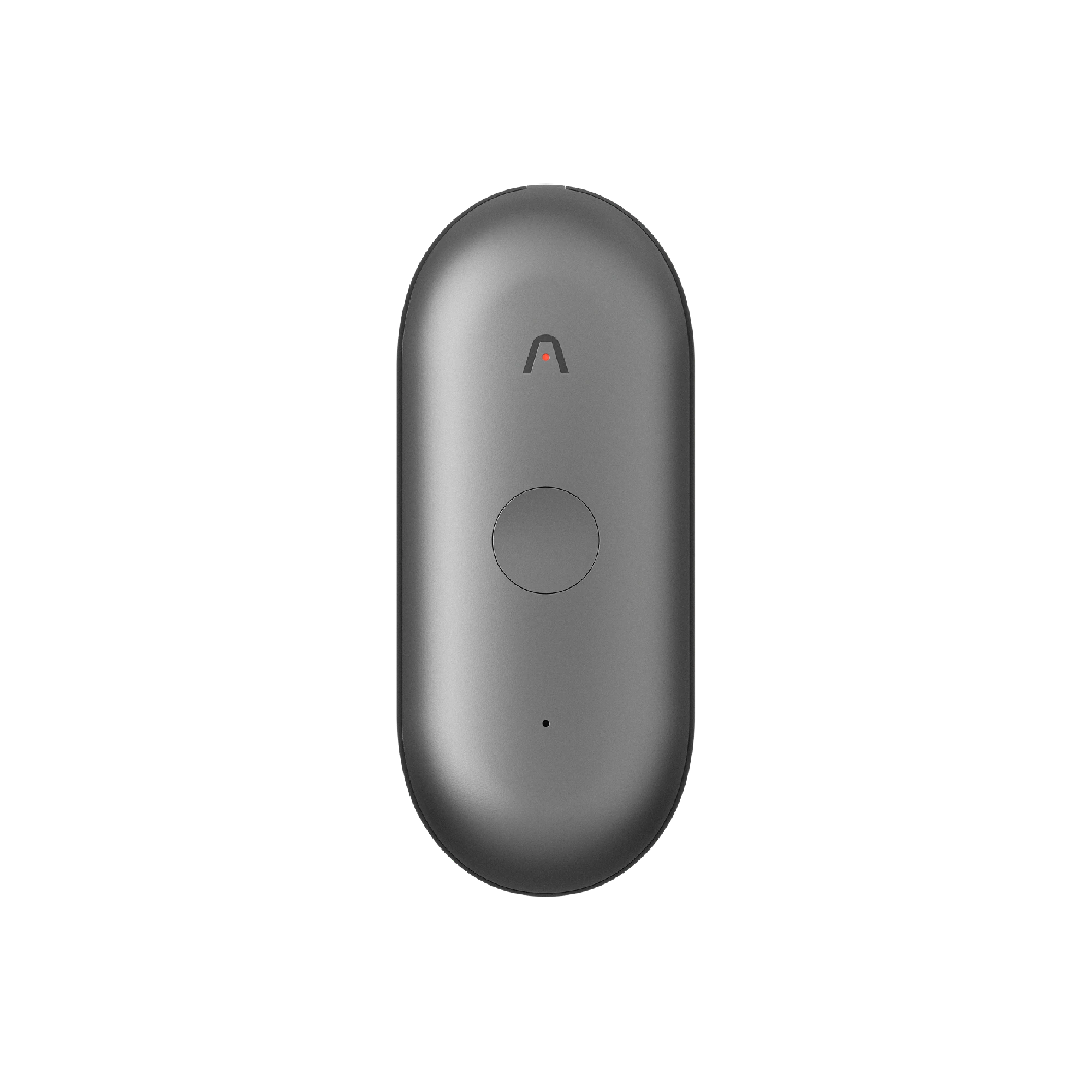
Plaud Note Pro records the room instead. It picks up clearly at up to 5 meters (16.4 feet)* using four MEMS microphones with AI beamforming, which covers an open floor plan or a table with three people at it. Smart dual-mode recording detects a phone call versus an in-person conversation and switches by itself, so listing calls and buyer consultations land in one place. It runs up to 50 hours in Endurance mode** per charge, stores 64 GB on the device, and shows status on an InstantView AMOLED display.
For agents on their feet all day, the wearable version does the same job hands-free. Plaud Desktop covers Zoom, Teams, and Google Meet without sending a bot into the call.

Plaud Intelligence then transcribes in 112 languages with speaker labels and formats the result through summary templates, so a showing produces buyer preferences, objections, commitments, and next steps in a fixed shape you can paste into your CRM. One conversation can produce several documents at once when the client email and the note for your transaction coordinator need different formats. Ask Plaud searches the whole history, which is what makes a client resurfacing two years later a solved problem. One agent describes working this way through client meetings, staying present in the room and sorting the record afterward.
This is the low-risk end of the failure list above. A summary you read before sending is a mistake that is visible and cheap.
Ask before you record a client conversation
Consent comes first. US recording law starts from a one-party consent baseline under federal law, and a group of states requires consent from everyone in the conversation. Calls cross state lines and in-person conversations are sometimes treated differently from phone calls, so the workable rule is to ask every time. Justia keeps a 50-state survey of recording laws worth reading once for your state. Before you record, take a moment to let others know and get their okay.
Check where recordings live, too. Plaud sets out its posture in the trust center, including independently audited controls with SOC 2 Type II and no use of your data for AI training unless you explicitly opt in.
Automate the task with the clearest cost
Pick one task where you can measure the hours and see the mistakes, and automate that before adding anything else. For most agents that is the record after a client meeting, since it is expensive in time, invisible when it fails, and the input every other tool depends on. Keep the human check wherever an error would be hard to spot. See how agents handle the conversation side on the real estate use-case page.