AI summary
Residency generates more clinical teaching than any resident can retain. This guide evaluates five AI note takers for doctors and medical residents in 2026: two wearable clip-on devices (Plaud NotePin line), two card-sized portable recorders (Plaud Note line), and one enterprise AI scribe. Unlike software-only AI scribes that require a phone or laptop, the hardware devices reviewed here function as an ambient capture layer that works during rounds, bedside teaching, and hallway consultations without requiring any screen interaction.
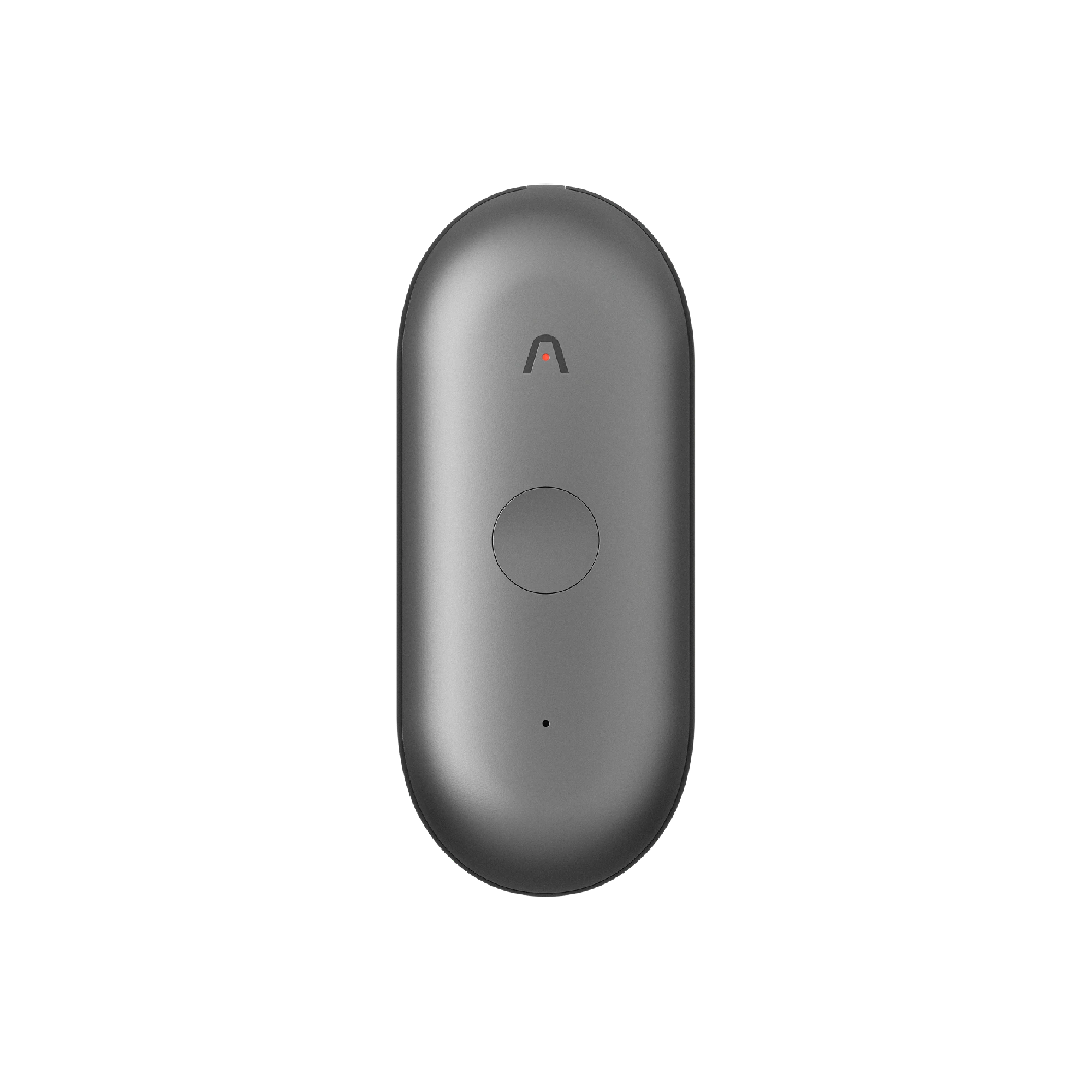
- Plaud NotePin — Best everyday wearable AI note taker for resident workflows ($159)
- Plaud NotePin S — Best premium wearable AI note-taking device for all-day clinical learning capture ($179)
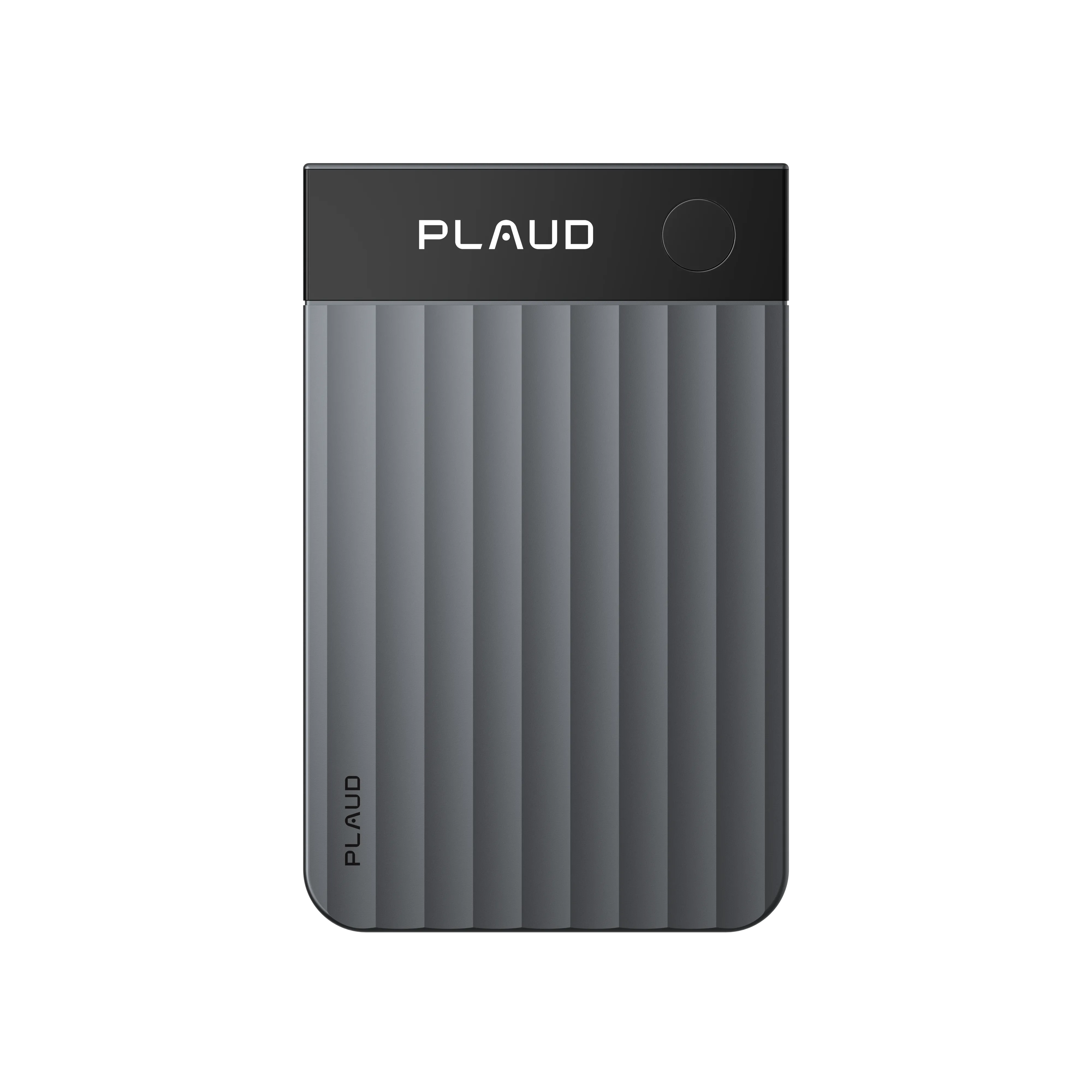
- Plaud Note — Best card-sized device for clinic encounters and phone consultations ($159)
- Plaud Note Pro — Best card-sized recorder for MDT discussions and large-group teaching conferences ($189)
- Nuance DAX Copilot — Enterprise AI scribe for EHR-integrated documentation (health-system deployment only)
Residency is an information firehose. During a single morning round, an attending might explain the reasoning behind a medication switch, flag a subtle imaging finding, correct your differential diagnosis, and give a bedside teaching pearl about a condition you will see once in your career. By the time you finish documenting the last patient's chart, half of those teaching moments have faded. A 2024 study in Academic Medicine found that residents retain only 20 to 30% of clinical teaching points delivered during rounds within 48 hours, and that structured note-taking during rounds improves retention to 60%+. But writing detailed notes while simultaneously examining patients, presenting cases, and responding to questions is nearly impossible. This guide evaluates five AI note takers through the specific needs of residents: portability across clinical settings, multi-scenario coverage, and the ability to revisit learning moments after the fact.
How we chose the best AI note takers for doctor consultations in 2026
Residents occupy a unique position: they are simultaneously clinicians and learners. The note-taking tool that serves them well must handle both roles across environments that change every 30 minutes.
Hardware capture vs. software AI scribe: why residents need both
A resident's day is not a sequence of scheduled meetings — it is a continuous rotation through distinct clinical environments, each with its own capture needs. Morning rounds involve bedside teaching, clinical decision-making, and plan adjustments for 8 to 15 patients. Clinic sessions require focused patient encounters with documentation. MDT discussions bring together specialists for complex case analysis. Hallway consultations with senior residents or fellows deliver informal but high-value clinical guidance. Teaching conferences provide didactic content. No single tool optimized for just one of these settings covers the full picture.
Most discussions of AI note takers for doctors focus on software-based AI scribes — tools that generate structured clinical notes via a phone or browser, typically with direct EHR integration. These tools solve clinic documentation well. What they cannot solve is the rest of the day: the attending's explanation at a patient's bedside during rounds, the fellow's guidance in a hallway, the MDT debate that shapes how you think about a whole disease category. Pulling out a phone to record at a bedside changes the dynamic; a browser-based scribe in a hallway is impractical. These are the moments where the highest-value clinical learning happens — and they are almost always unscripted and situational.
Dedicated hardware devices fill this gap. Worn on the body or placed on a desk, they function as an ambient capture layer that records continuously without any screen interaction, then convert audio into searchable clinical summaries — including SOAP note templates and 30+ clinical formats — after the fact. The tool's output serves two purposes: documentation support (helping you write notes faster) and educational retrieval (finding the teaching point from three weeks ago that you have mostly forgotten).
This guide covers both wearable devices (Plaud NotePin line) and card-sized portable devices (Plaud Note line) — each suited to different scenarios within a resident's day.
Data privacy and HIPAA compliance for clinical use
All Plaud hardware devices share the same privacy architecture: audio is captured and stored locally on the device, recordings are encrypted in transit and at rest when synced to the Plaud app, and Plaud does not use patient audio or transcripts for model training. A Business Associate Agreement (BAA) is available for healthcare organizations — contact support@plaud.ai before beginning clinical use. Clinicians should also follow their organization's own Protected Health Information (PHI) policies, including obtaining patient consent to record where required by applicable law.
The 3 decision variables for resident note takers
Portability and wearability: Can you carry or wear the tool across all clinical environments without it interfering with patient care? Residents move constantly: from the ward to the clinic to the conference room to the cafeteria where a senior resident explains an approach to a complex procedure. The tool needs to transition between these settings with zero setup time. Anything that requires positioning, connecting to a platform, or visible setup at each new location will be abandoned within a week.
Multi-scenario coverage: Does the tool work in a quiet clinic room, a noisy ward hallway, a conference room with 15 people, and a bedside encounter with a single patient? The acoustic environments a resident encounters in a single day span an enormous range. The tool needs to capture usable audio across all of them, or at least across the majority.
Learning retrieval: Can you search across weeks or months of recordings to find a specific teaching point, clinical reasoning explanation, or decision rationale? This is the feature that transforms a recording device from a documentation aid into a learning tool. The ability to query "What did Dr. Patel say about the indications for thrombolysis in submassive PE?" and get an answer with the exact audio timestamp turns every recorded round into a searchable clinical education library.
Quick Comparison
|
Tool |
Form factor |
Price |
Works well when |
Falls short when |
Best for |
|
Wearable |
$159 |
Bedside teaching, hallway consults, rounds, clinic encounters |
Large-group sessions; phone consultations; no EHR write-back |
Residents who want zero-setup wearable capture across the entire shift |
|
|
Wearable |
$179 |
All-day rounds, bedside teaching, hallway consultations |
Extremely noisy ICU; no direct EHR write-back |
Residents who want all 4 accessories included in-box plus Press to Highlight |
|
|
Card-sized, phone-attach |
$159 |
Clinic sessions, phone calls with consultants, study recording |
Needs fully hands-free capture; large conference rooms |
Residents who want a flexible recorder for clinic, study, and remote consults |
|
|
Card-sized, desk placement |
$189 |
MDT discussions, teaching conferences, large group rounds |
Daily pocket carry; individual budget constraints |
Departments wanting professional recording for group clinical teaching |
|
|
Software only |
Enterprise (health-system only) |
Clinic encounters requiring direct EHR write-back |
Teaching capture; rounds; portability; individual purchase |
Residents in health systems that have deployed DAX — use alongside a Plaud device for learning capture |
5 best AI note takers for doctor consultations
Plaud NotePin

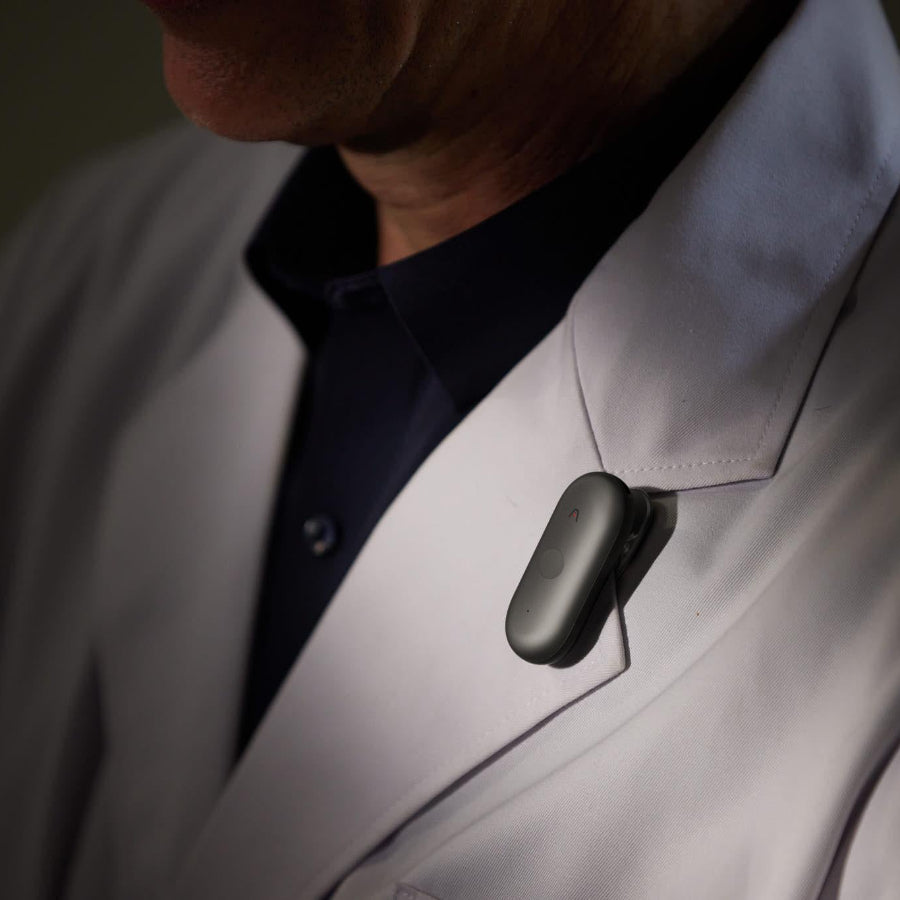
The everyday wearable AI note taker for residents — clip it on at the start of your shift and capture everything from rounds to sign-out.
Why it works
The portability problem for residents is not just about device size; it is about setup time. The highest-value teaching moments in residency are unscripted. The attending who corrects your differential at the bedside or the fellow who explains a procedure approach in the hallway does not announce themselves in advance. The Plaud NotePin addresses this directly: it clips to a white coat lapel or lanyard at the start of a shift and stays there. One press to record, one press to stop. By the time you have registered that a teaching moment is happening, the device is already capturing it.
The Plaud NotePin's dual-MEMS microphone array is built to handle the full range of acoustic environments a resident encounters in a single day — from a quiet clinic room, to a busy ward hallway, to a bedside with monitors alarming nearby. The dual configuration improves signal-to-noise ratio by 3 dB compared to single-mic solutions: audio signals combine with a 6 dB gain while ambient noise increases by only 3 dB. For AI transcription, audio quality is the upstream constraint on everything else; the dual-MEMS hardware keeps that input reliable across environments.
Capturing the teaching moment is only half the problem. Residents also need to retrieve it: finding the specific clinical reasoning an attending explained weeks ago, during a round they have mostly forgotten, is where most recording solutions stop being useful. Plaud NotePin recordings sync automatically to Plaud Web once private cloud sync is enabled, ensuring secure access and management across the Plaud App, Desktop, and Web. Recordings are transcribed in 112 languages, and the AI generates structured clinical summaries using templates including SOAP notes and 30+ specialized formats. The output can be transferred to other tools via Zapier without manual copy-pasting. Ask Plaud turns recorded rounds into a searchable clinical knowledge base rather than a folder of audio files no one revisits.
Where it is NOT the best choice
The NotePin has defined limits across three scenarios. Large-group sessions — MDT discussions, grand rounds, and teaching conferences with 12 or more participants — exceed its effective pickup range, making the Note Pro the appropriate choice for those formats. Phone consultations are not supported: without a vibration conduction sensor, the device cannot capture both sides of a call. The NotePin does not write directly into EHR systems; residents who need clinical notes generated directly into Epic or Cerner will require a separate documentation tool for that function.
Plaud NotePin S

The premium wearable upgrade — expanded accessory set and enhanced audio performance for residents who want all-day capture across every clinical setting.
Why it works
The Plaud NotePin S shares the same wearable form factor and core AI capabilities as the NotePin, with two practical differences for clinical use. First, all four wearing accessories — magnetic pin, clip, lanyard, and wristband — are included in the box, so you are not limited to the two accessories that ship with the standard NotePin. Second, the NotePin S has a tactile record button and supports Press to Highlight: a short press marks the exact moment of a key clinical teaching point in real time, signaling to the AI what to prioritize in the summary without interrupting the conversation.
The recording workflow is the same: wear it at the start of your shift, press once to start recording, and the device captures the encounter. There is no app to open, no device to position, and no visible setup that disrupts patient interactions.
The AI processing layer converts recordings into structured clinical output — SOAP notes, key decision summaries, action item extraction, and comprehensive meeting notes — via 112 language transcription with speaker separation. The Ask Plaud feature lets residents query across an entire rotation's worth of recordings to surface specific clinical teaching moments, each linked to the exact audio timestamp.
Where it is NOT the best choice
The NotePin S captures environmental audio from its position on your lapel, which means audio quality depends on proximity and ambient noise. In an extremely noisy ICU with monitor alarms, ventilator sounds, and multiple simultaneous conversations, transcription accuracy drops. The device does not write directly into EHR systems; it is an ambient capture and retrieval tool that serves as the audio layer in a clinical documentation workflow, not a replacement for EHR-integrated documentation.
Plaud Note

The card-sized recorder for clinic sessions, phone consultations, and study time.
Why it works
The Plaud Note is a card-sized device — roughly the size and thickness of a credit card — designed for specific sessions rather than all-day wear. It fits into a coat pocket or sits on a desk, and covers two scenarios that wearable clip-on devices do not handle as well.
In meeting mode, the Note captures in-person conversations at close range: clinic patient encounters (with appropriate consent), case discussions with co-residents, and attending teaching during sit-down rounds. In phone call mode, the device attaches magnetically to your smartphone to capture both sides of a phone consultation — when you call a radiology fellow to discuss an imaging finding, or when a subspecialty consultant calls back, those conversations contain clinical reasoning worth preserving.
The 30+ summary templates and Ask Plaud cross-recording search work identically to the NotePin line — including SOAP note generation from recorded encounters. For self-study, the Note also serves as an efficient lecture capture device: set it on the table during a noon conference, journal club, or M&M review, and the AI generates a searchable, summarized record of the session.
Where it is NOT the best choice
The Note requires you to physically produce and position the device for each recording scenario. During rounds that move from room to room, having to hold or place the Note for each patient encounter is less fluid than a clip-on device already on your coat. The Note's pickup range is designed for close-proximity recording, which means it is less effective in a large conference room or a round with 10+ participants spread across a wide space.
Plaud Note Pro

Professional-grade card-sized recorder for MDT discussions, teaching conferences, and large-group rounds.
Why it works
Multidisciplinary team discussions and teaching conferences present an acoustic challenge that smaller devices struggle with. When 8 to 15 clinicians sit around a conference table discussing a complex case, with radiologists referencing images, pathologists describing findings, and surgeons debating approaches, the recording device needs to capture clearly across a wide area with multiple speakers at varying distances.
The Plaud Note Pro is a larger card-format device designed for desk or table placement. It addresses this with a 5-meter (16.4-foot) pickup radius that covers a standard conference room. The 50-hour battery means the device can sit in the conference room for an entire week of daily MDT meetings, grand rounds, and case conferences without needing a charge. The audio quality at distance is noticeably superior to smaller devices, which matters when you need to capture the attending radiologist's comment from across the table during a tumor board.
For residency programs that want to create a shared learning resource, the Note Pro can serve as the department's recording device for teaching sessions. The AI-generated summaries and transcripts, processed through Plaud's 112 language engine with speaker separation, create a searchable archive of clinical teaching that all residents in the program can reference.
Where it is NOT the best choice
The Note Pro is larger than the NotePin or Note, which makes it less suited for carrying on your person throughout a shift. It is a device you bring to specific sessions — MDT meetings, teaching conferences, large-group rounds — rather than one you wear or pocket all day. For the informal, unscheduled teaching moments that happen throughout a shift, the NotePin's wearable form factor covers more scenarios.
Nuance DAX Copilot

For reference: enterprise EHR documentation tool, not a standalone resident learning solution.
What it does and when to use it alongside Plaud
Nuance DAX Copilot generates structured clinical notes (SOAP, H&P, progress notes) directly inside Epic, Cerner, or Athenahealth following a clinic encounter — it solves structured EHR documentation for formal clinic visits. It does not capture teaching moments during rounds, record MDT discussions, or function outside of EHR-connected clinic settings. DAX requires enterprise health-system deployment and is not available for individual purchase. If your residency program has deployed DAX, use it for clinic documentation. For rounds, bedside teaching, MDT discussions, and the rest of your clinical learning day — the environments where DAX does not operate — a Plaud device covers the ambient capture layer that DAX leaves open.
So Which AI Note Taker Should You Pick?
The right tool depends on which part of your residency workflow loses the most information today:
If you want one device that covers your entire shift — rounds, bedside teaching, hallway consultations, and clinic — without any setup: Plaud NotePin ($159) clips to your white coat at the start of your shift and stays ready across every environment. The dual-MEMS microphone and automated sync-to-summary pipeline cover the unscripted teaching moments and patient encounters that make up most of a resident's learning day. This is the everyday wearable for residents who want zero-friction clinical learning capture.
If you want all four wearing accessories included in-box and a tactile button with Press to Highlight: Plaud NotePin S ($179) ships with magnetic pin, clip, lanyard, and wristband, and adds a Press to Highlight feature that lets you mark key clinical teaching moments in real time with a short press. Best for residents who want the complete accessory set and more precise control over what gets flagged in their summaries.
If clinic encounters, phone consultations with specialists, and self-study sessions are your priority: Plaud Note ($159) covers all three in a card-sized device. Meeting mode handles in-person captures; phone call mode captures both sides of a specialist consultation. Best for residents balancing clinic work and independent study.
If MDT discussions, teaching conferences, and large-group rounds are the sessions you need captured: Plaud Note Pro ($189) delivers the audio range and quality that multi-speaker clinical discussions demand. Best deployed as a shared departmental resource for teaching sessions.
If your program has deployed DAX and clinic documentation is your main bottleneck: Use DAX for structured clinic note generation. For the clinical learning that happens everywhere else in your day, pair it with a Plaud device.
Conclusion
Residency generates more learning content per hour than any other phase of a medical career. The attending who explains the reasoning behind a ventilator setting change, the fellow who walks you through a procedure technique, the MDT discussion where five specialists debate a treatment approach: these moments contain clinical knowledge that no textbook can replicate, because they are contextualized to real patients and real decisions.
Software AI scribes solve one part of this problem: they make EHR documentation faster. Wearable devices and card-sized portable recorders solve the other part: they make sure the clinical teaching that happens outside of formal documentation encounters is not permanently lost. The right note-taking setup for a resident addresses both layers.
The practical next step: track your information loss for one week. At the end of each day, write down the teaching moments you remember and the ones you know happened but cannot reconstruct. That ratio tells you how much clinical knowledge you are currently losing, and which recording scenarios — rounds, clinic, conferences, hallway consults — represent your highest-value capture opportunities.