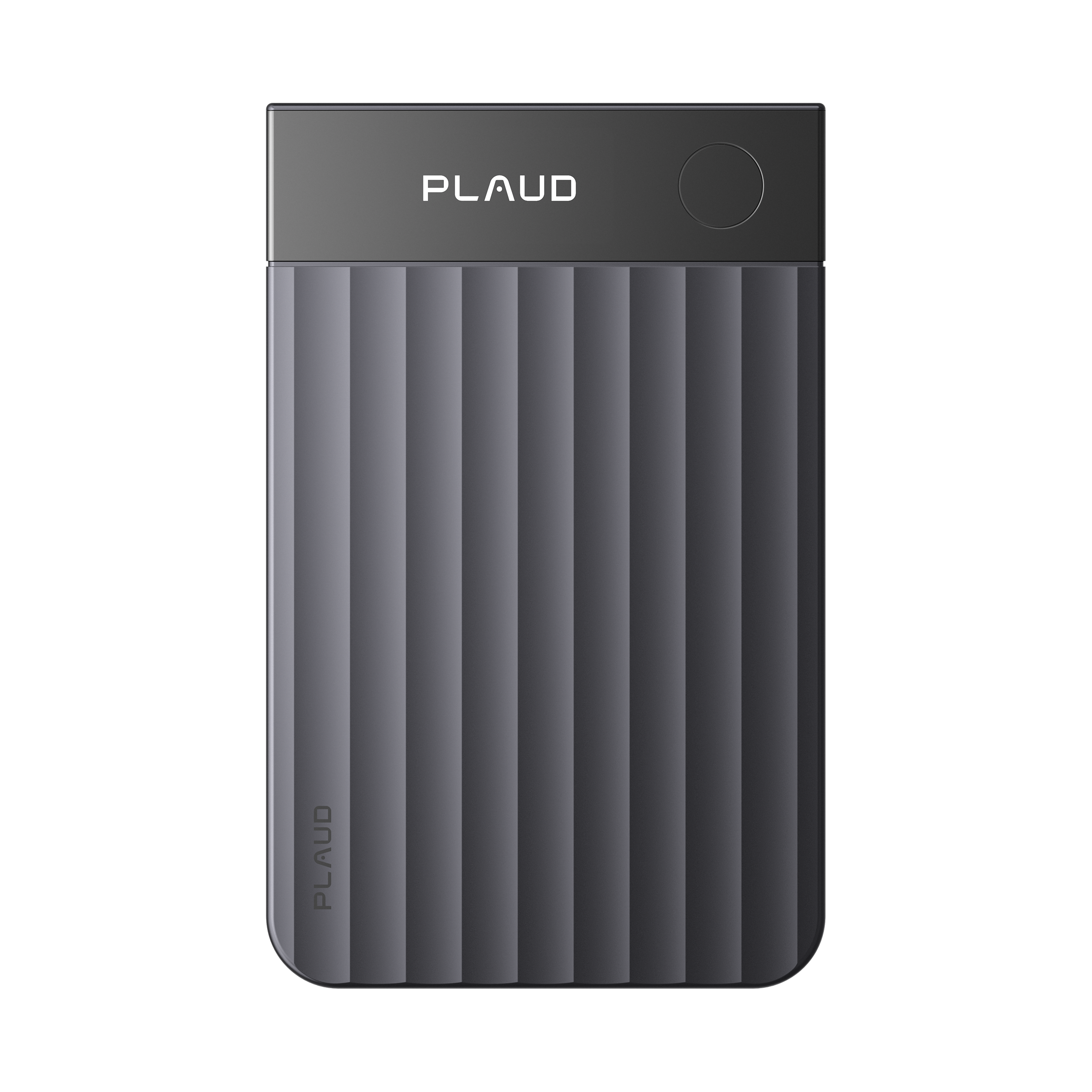
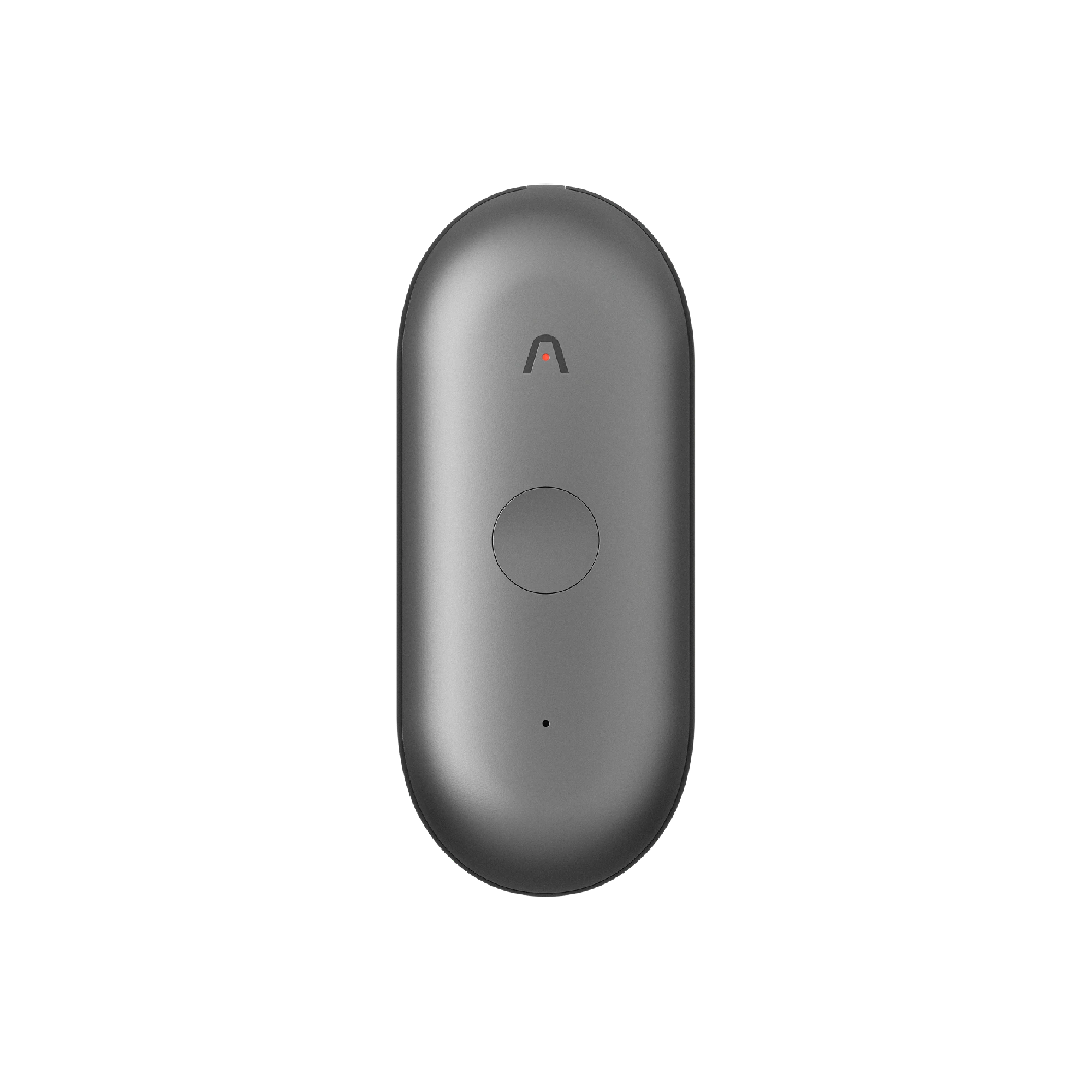
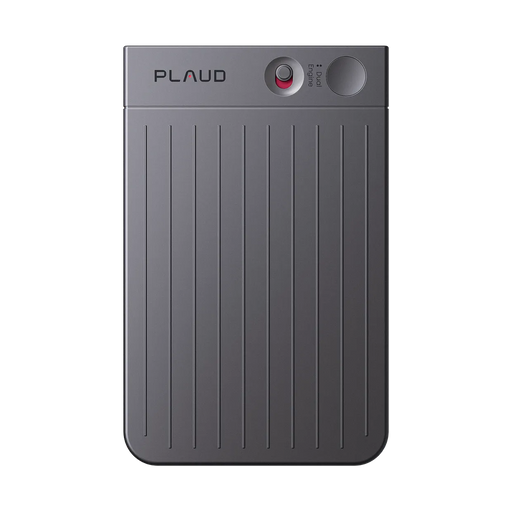
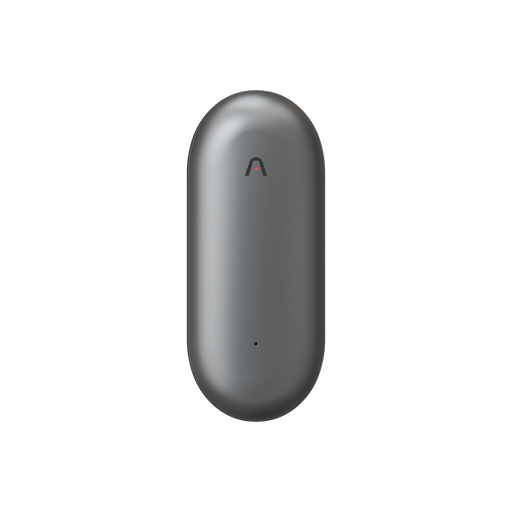
In an era of information overload, not only is memory a scarce resource, but attention has become one as well. As the definitive benchmark of the wearable AI memory capsule notetaker category, the Plaud NotePin is designed not just to record audio, but to serve as an "external digital memory bank" for professionals.
This article explores how the Plaud NotePin leverages its core dual-MEMS microphone[1] technology to create a seamless end-to-end workflow from hardware capture to intelligent AI output.
I. What is a "wearable AI memory capsule notetaker"?
The Plaud NotePin is specifically designed for "3H" high-impact professionals, those with high knowledge density, high value-impact, and heavy offline reliance. Its uniqueness lies in the deliberate alignment of four distinct defining characteristics:
True "wearability"

Unlike traditional handheld recorders, the Plaud NotePin features a 0.59 oz wearable design with 40-day standby, freeing you from holding a device or daily charging.
- Ultra-compact: The pill-shaped device weighs only 0.59 oz - approximately one-third the weight of traditional portable recorders.
- Multi-form Factor: It can be worn as a pin, necklace, or wristband, allowing for hands-free operation.
- Extended standby: With a 40-day standby battery life, it facilitates continuous readiness[2], largely relieving the pressure of daily charging.
"AI" intelligence layer

It goes beyond simple recording to actually understand content.
- Structured output: Utilizing cloud-based large language models (LLMs), it immediately converts unstructured audio into structured notes, such as summaries, action items, and key topic breakdowns.
- Conversational interface: The "Ask Plaud" feature allows users to query stored conversations using natural language (e.g., "What budget concerns did the client mention?") instead of manually searching through transcripts.
The "Memory capsule" metaphor

The device serves as an offload system for human working memory [3]. Like a physical capsule, it securely encapsulates information (compliant with GDPR, HIPAA, and SOC 2) and operates passively, requiring no further operation once activated.
A professional "notetaker"
With 64GB of storage (approx. 480 hours) and 20 hours of continuous recording, it is designed to replace manual note-taking in professional scenarios, producing organized outputs rather than just archival audio.
II. Core technology: How dual-MEMS microphones power "AI hearing"
The foundation of the Plaud NotePin's performance is its dual-MEMS (Micro-Electro-Mechanical Systems) microphone array. This hardware is critical because the connection between hardware and utility is linear: AI cannot process what it cannot hear clearly.
Superior technical specifications
- Dual-array configuration: Unlike single-microphone systems, the dual setup allows for beamforming[4] and spatial audio capture, significantly reducing background noise.
- Enhanced signal-to-noise ratio (SNR): The dual-microphone configuration achieves a 3 dB SNR improvement[5] through coherent signal averaging: audio signals combine with a 6 dB gain while noise increases by only 3 dB.
- Durability: MEMS technology utilizes semiconductor processes to create high-fidelity sensors resistant to mechanical vibration and temperature shock.
The data processing chain
The Plaud NotePin establishes a critical relationship chain:
- Hardware level: Dual-MEMS microphones capture wide-frequency audio while filtering ambient noise.
- Data level: Enhanced SNR audio provides "clean" raw data essential for Large Language Models (LLMs).
- Application level: This high-fidelity audio capture serves as a critical foundation for AI processing, significantly enhancing the potential for accurate transcripts and summaries.
III. Application scenarios
Thanks to the high-fidelity capture enabled by dual-MEMS technology, the Plaud NotePin excels in various environments:
- Healthcare (physicians): Accurately captures patient consultations even in busy hospitals, allowing AI to automatically generate SOAP notes[6].
- Business (executives/sales): Isolates speech in crowded networking events or conference rooms, helping to ensure no critical negotiation details are missed.
- Creative (journalists): Captures spontaneous ideas outdoors or on the move with high-definition audio, preserving the nuance of original thoughts.
Conclusion
The Plaud NotePin is not merely a voice recorder; it is a wearable AI memory capsule notetaker powered by dual-MEMS microphone technology. Solving the challenge of clear audio capture through professional hardware, it enables AI to function as an accurate system for information retention and retrieval.
References
[1] InvenSense/TDK (2015) Application Note AN-1140: Microphone Array Beamforming
https://invensense.tdk.com/wp-content/uploads/2015/02/Microphone-Array-Beamforming.pdf
[2] IntechOpen (2025) Wearable Sensors and Devices: Enhancing Human Life
https://www.intechopen.com/chapters/1214768
[3] Chun, W. & Ahmed, A. A. (2018) Working Memory From the Psychological and Neurosciences Perspectives: A Review https://www.frontiersin.org/journals/psychology/articles/10.3389/fpsyg.2018.00401/full
[4] DigiKey (2019) An Introduction to MEMS Microphones Beamforming
https://www.digikey.com/en/articles/an-introduction-to-beamforming-with-mems-microphones
[5] Analog Devices (2014) Application Note AN-1328: High Performance, Low Noise Studio Microphone with MEMS Microphones, Analog Beamforming, and Power Management
https://www.analog.com/en/resources/app-notes/an-1328.html
[6] Li, Y. et al. (2024) Improving Clinical Note Generation from Complex Doctor-Patient Conversation
https://arxiv.org/abs/2408.14568