When you manage 20+ accounts, the details blur. A client mentions an API concern during a QBR in March; by May's renewal call, you cannot recall whether it was resolved, because your CRM note from that session reads "Good call. Client happy. Next check-in in 6 weeks." That vague entry, written between back-to-back meetings, is useless three months later. A 2024 Gainsight survey found that CSMs managing 15 or more accounts retain less than 35% of specific client commitments after 30 days. The information was captured in the moment, acknowledged verbally, and then buried under the next 30 interactions. The top driver of renewal risk, according to Totango's 2024 CS benchmark, is "client feels unheard," which nearly always traces back to lost conversation context. This guide evaluates five AI note takers through the specific demands of a CSM workflow: QBRs, ad-hoc phone calls, onboarding walkthroughs, and on-site visits.
How we chose the best AI note takers for client calls in 2026
Client calls have a different structure and purpose than sales calls or internal meetings, and the tools that serve CSMs well are not always the same ones that work for SDRs or product managers.
What CSMs actually need to capture (not just transcription)
A raw transcript of a 45-minute QBR is not useful to a CSM who manages 20+ accounts. You do not have time to re-read 8,000 words before the next check-in. What you need is a structured extraction of the moments that matter for the ongoing relationship.
CSM-specific capture requirements fall into four categories. First, client commitments and requests: the specific things a client asked for, the timelines they mentioned, the features they need. Second, your commitments: what you promised to do, by when, and for whom. Third, sentiment signals: moments where a client expressed frustration, enthusiasm, concern about renewal, or dissatisfaction with a specific aspect of the product. Fourth, context continuity: the ability to walk into the next call six weeks later and pick up exactly where you left off, referencing specific details from previous conversations without asking the client to repeat themselves.
Most AI note takers handle the first two categories reasonably well through action item extraction. The third and fourth categories, sentiment tracking and cross-call context, are where tools diverge significantly in their usefulness for CSM workflows.
The 3 decision variables for client call note takers
After extensive testing across different CSM scenarios, I narrowed evaluation to three variables that determine whether a tool actually reduces churn risk or just creates another data silo:
Client history traceability: Can you search across all calls with a specific client and instantly find what was discussed three months ago? This is the single most important capability for a CSM. Before a renewal call, you need to pull up every request, every escalation, and every commitment from the past 12 months in under 60 seconds. Tools that store recordings in a flat timeline (rather than organizing by client or account) fail this test.
Action item auto-extraction: Does the tool automatically identify and surface the commitments made on each call, both by you and by the client? The summary needs to clearly separate "Client will send the API documentation by Friday" from "CSM will schedule a follow-up with the engineering team." Manual tagging after every call is not sustainable at 20+ accounts.
CRM and workflow integration: Do the call notes, action items, and key moments flow into your CS platform (Gainsight, Totango, ChurnZero) or CRM (Salesforce, HubSpot) automatically? Client context that lives in a separate app is client context that gets forgotten when you are prepping for a call in your CRM and the notes are somewhere else.
Quick Comparison
|
Tool |
Works well when |
Falls short when |
Best for |
|
Client phone calls + in-person onboarding |
Needs deep analytics or native CS platform push |
CSMs who mix phone check-ins with face-to-face client visits |
|
|
Fireflies.ai |
Scheduled Zoom QBRs + CRM auto-fill |
Offline client calls; deep sentiment analysis |
CSMs running most client calls on video platforms |
|
Gong |
Enterprise CS teams needing churn prediction signals |
Small teams; budget constraints; offline interactions |
CS orgs with dedicated operations and analytics needs |
|
On-site client visits + trade show conversations |
Needs CRM auto-push; pure virtual workflows |
CSMs who regularly visit client offices |
|
|
Otter.ai |
Budget-conscious CSMs on Zoom/Meet |
Phone calls; advanced analytics; multilingual clients |
Individual CSMs wanting affordable call documentation |
5 best AI note takers for client calls

Plaud Note
The pocket recorder that captures every client conversation, whether it happens on a phone call, a video screen, or across a lunch table.
Why it works
The reality of a CSM's communication pattern is that client interactions do not all happen on Zoom. A client calls your cell phone at 4 PM because their integration broke. You dial a champion's direct line to give them a heads-up before a pricing change. An onboarding session happens in person at the client's office. A quick check-in happens over lunch during a conference. These phone and in-person touchpoints are often where the most candid client feedback surfaces, precisely because they feel less formal than a scheduled QBR.
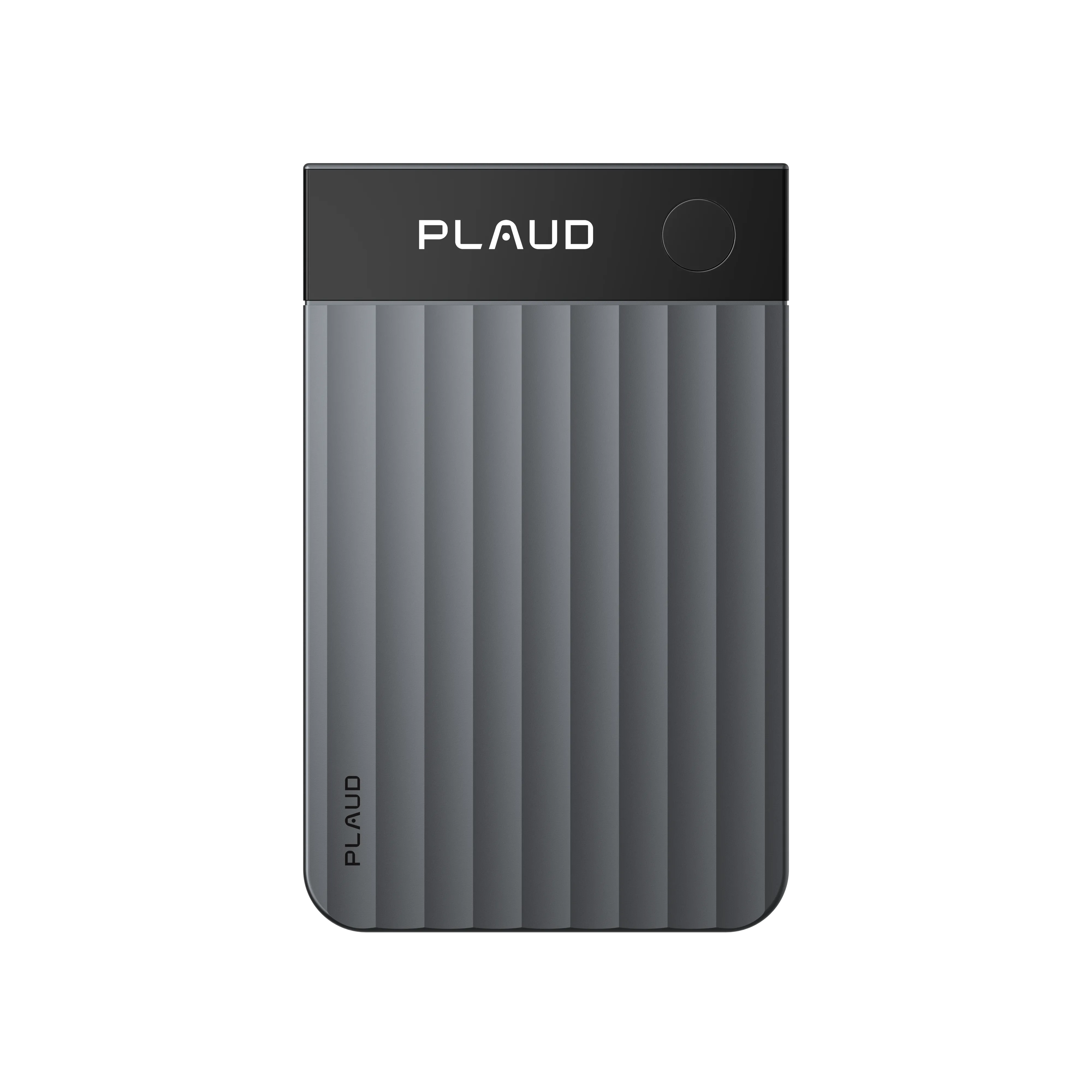
The Plaud Note is a credit-card-sized device that records both phone calls (by placing it against or near your smartphone) and in-person conversations (by setting it on a table or keeping it in a pocket). This dual-mode capability means one device covers the full range of CSM client interactions, from the scheduled Zoom QBR you planned a week ago to the unplanned client phone call that came in while you were walking to your car.
The AI layer is where the Note becomes particularly useful for CSM workflows. After each recording, Plaud transcribes in 100+ languages with speaker identification, then generates structured summaries using your choice of multiple professional templates. The action item extraction template is the one I used most frequently; it cleanly separates client requests from your own commitments, with each item linked to a timestamp in the original audio. When a client says "Can you get back to me by Thursday on the SSO configuration?" that specific request appears as a discrete, trackable action item in the summary, not buried in paragraph four of a text wall.
The Ask Plaud feature is what transforms the Note from a call recorder into a client history tool. You can query across all recordings associated with a client: "What did Sarah at Acme mention about their Q2 budget?" or "When did the Globex team first raise the reporting dashboard issue?" Each answer references the exact audio moment, which means you can verify context before a renewal conversation. For a CSM managing 20+ accounts, the ability to reconstruct a client's complete conversation history in under a minute is the difference between walking into a QBR prepared and walking in guessing.
Where It Is Not the Best Choice
The Plaud Note does not offer native integration with CS platforms like Gainsight or Totango. The structured summaries and action items can be exported (TXT, DOCX, PDF, Markdown) and routed into your workflow via Zapier or email, but there is no one-click push that auto-populates a client health record. For CSMs whose primary pain point is getting data into their CS platform without manual steps, a tool with direct integration to that platform will address the need more efficiently. The Note also does not provide the team-level analytics (talk-to-listen ratios, sentiment trending across accounts, churn signal detection) that enterprise CS operations teams may require.
Fireflies.ai
The virtual meeting assistant that auto-fills your CRM after every client QBR.
Why it works
For CSMs who conduct 80% or more of their client interactions through Zoom, Google Meet, or Microsoft Teams, Fireflies.ai provides the most direct path from "call ended" to "CRM updated." The bot joins scheduled client calls automatically, records and transcribes in over 100 languages, and then pushes structured data into Salesforce, HubSpot, and other CRM systems.
The CRM integration is the standout feature for CS workflows. After a QBR, Fireflies can create or update a CRM activity record with the call summary, action items, topics discussed, and key moments. For CSMs who have historically spent 15 to 20 minutes after each call manually logging notes, this automation reclaims meaningful time across a week of client meetings.
The keyword tracking feature is useful for monitoring client sentiment at scale. You can set up trackers for terms like "cancel," "competitor," "frustrated," "renewal," or "escalate," and Fireflies will flag every instance across your client calls. For a CSM managing 20+ accounts, this provides an early warning system: if a client who previously used positive language starts mentioning competitors or expressing frustration, the tracker surfaces that shift before it becomes a formal escalation.
Pro pricing starts at $10 per month per seat (billed annually), with Business at $19 per month for expanded integrations and storage. The AI Apps feature allows custom post-call automations, such as generating a client-facing recap email from the call summary, which saves additional time in the follow-up workflow.
Where It Is Not the Best Choice
Fireflies cannot record phone calls made from a cell phone or in-person meetings. If a client calls your personal number for an urgent issue, or if you meet a client at their office for a quarterly review, those conversations fall outside Fireflies' capture range. Fireflies tracks talk-time and topics but does not offer the depth of sentiment analysis, churn signal detection, or cross-account trend identification that dedicated CS intelligence platforms deliver. For CS teams that need predictive analytics alongside recording, Fireflies may feel like a partial solution.
Gong
The conversation intelligence platform that turns client calls into churn prediction signals and coaching data.
Why it works
Gong brings the same conversation intelligence capabilities it offers sales teams to the CS function, with analysis models tuned for post-sale interactions. The platform records calls on Zoom, Teams, and other virtual platforms, then applies AI analysis to surface patterns that correlate with renewal risk or expansion opportunity.
For CS leaders managing a team of CSMs, the cross-account analytics are the primary value driver. Gong can identify when a client's language patterns shift between calls (declining enthusiasm, increasing mentions of alternatives, shorter responses to open-ended questions) and flag those accounts as at-risk before the CSM notices the change. The competitive mention tracker shows when clients start referencing alternatives, which often signals evaluation activity that the CSM should address proactively.
The coaching features help CS managers standardize quality across their team. Side-by-side call comparisons reveal how top-performing CSMs handle difficult renewal conversations versus how newer team members approach the same scenarios. Talk-to-listen ratio analysis highlights whether CSMs are doing too much talking and not enough listening during client feedback sessions.
CRM integration is comprehensive, with Gong pushing call data, risk signals, and action items directly into Salesforce records. For CS operations teams that build health scores and renewal playbooks, this data feeds directly into the models.
Where It Is Not the Best Choice
Gong's enterprise pricing (typically $100 to $150 per user per month on annual contracts with seat minimums) makes it impractical for individual CSMs, small CS teams, or early-stage companies. The platform also cannot capture phone calls, in-person client meetings, or any interaction that does not happen on a supported virtual meeting platform. For CSMs who handle a meaningful volume of ad-hoc phone calls and on-site visits, Gong leaves those touchpoints unrecorded. The depth of analytics, while powerful for larger teams, can also feel excessive for a solo CSM who simply needs reliable notes and searchable history.

Plaud NotePin S
The wearable recorder for CSMs who build relationships face-to-face at client offices.
Why it works
Some of the most valuable CSM interactions happen outside of a screen. Annual business reviews at a client's headquarters, onboarding kickoffs conducted on-site, executive sponsor dinners, and conference hallway conversations all contain information that shapes the client relationship.
The social dynamics of client-facing interactions make the NotePin S particularly well suited for CS scenarios. Pulling out a phone to record during a casual dinner with a client's VP changes the tone of the conversation. Placing a device on the table during a sensitive renewal discussion can feel clinical. The NotePin S, clipped discreetly to your clothing, removes that friction entirely. The client speaks naturally, shares honest feedback about their experience, mentions internal politics affecting the renewal decision, and all of that gets captured without the self-consciousness that visible recording devices create.
The AI processing is identical to the Plaud ecosystem: 100+-language transcription, speaker separation, multiple summary templates, action item extraction, and Ask Plaud cross-recording search. After a client dinner where your executive sponsor casually mentioned a budget freeze, a potential org restructuring, and a feature request for Q3, you have all three items captured and searchable by the time you reach your hotel room.
For CSMs who combine virtual QBRs with periodic on-site visits, the NotePin S pairs naturally with a Zoom-integrated tool. Fireflies or Gong handles the virtual calls; the NotePin S handles everything that happens in the physical world. Together, they create a complete record across both channels.
Where It Is Not the Best Choice
The NotePin S does not integrate natively with CRM or CS platforms. The structured output can be exported and routed via Zapier, but there is no direct push into Gainsight, Salesforce, or similar tools. For CSMs whose workflow centers on keeping a CS platform updated after every interaction, the manual export step adds friction. The device is also less useful for CSMs who work entirely remotely and never meet clients in person; if every client interaction happens on Zoom, the wearable form factor does not add value beyond what a software-based meeting recorder provides.
Otter.ai
Affordable call notes for individual CSMs who need reliable Zoom transcription on a budget.
Why it works
Otter.ai offers the lowest-cost entry point for a CSM who wants AI-generated notes from virtual client calls. The Otter.ai free tier includes 300 monthly transcription minutes, while the Pro plan at about $8.33 per month (annual billing) increases transcription to 1,200 minutes per month.
The bot joins Zoom and Google Meet calls automatically, produces real-time transcription with speaker labels, and generates a summary when the call ends. The search function lets you find specific moments across your call history, which helps when you need to recall what a client said about their renewal timeline three months ago. For an individual CSM at a startup or early-stage company that has not invested in a team-wide CS intelligence platform, Otter provides functional call documentation at a fraction of the cost.
The AI chat feature allows you to ask questions about past meetings ("What action items came out of the Q3 QBR with DataCorp?"), which mimics some of the cross-call search capability that more expensive tools offer. While the answers are less structured than what Plaud's Ask feature or Gong's analytics produce, they provide a workable baseline for CSMs who need to recall client context quickly.
Where It Is Not the Best Choice
Otter supports only 4 transcription languages, which limits its usefulness for CSMs serving global client bases. It cannot record phone calls or in-person meetings, so every conversation that happens off of Zoom or Google Meet goes undocumented. The tool offers no CRM integration for auto-populating client records, no sentiment analysis or churn signal detection, and no team-level analytics. The AI summary is also more general-purpose than CS-specific; it does not automatically separate client requests from CSM commitments the way tools with dedicated action item templates do. For CSMs who need more than basic transcription and search, Otter typically serves as a starting point rather than a long-term solution.
So which AI note taker should you pick?

The right tool depends on how you interact with your clients and what gap in your current workflow causes the most pain. Here is a practical framework:
If you mix phone calls and in-person meetings with scheduled video QBRs: Plaud Note covers the widest range of CSM interaction types in a single device. The Ask Plaud cross-call search means you can walk into any client meeting with their full conversation history at your fingertips, regardless of whether those conversations happened on Zoom, on the phone, or across a conference table.
If your client calls happen primarily on Zoom/Teams and CRM auto-fill is your biggest need: Fireflies.ai offers the most direct path from "call ended" to "CRM updated." The keyword tracking also provides a lightweight early warning system for client sentiment shifts across your book of business.
If your CS team needs churn prediction, coaching analytics, and enterprise-grade conversation intelligence: Gong delivers the deepest analysis layer, with the trade-off of enterprise pricing and a requirement that all calls happen on virtual platforms.
If you regularly visit client offices and need to capture in-person conversations discreetly: Plaud NotePin S fills the gap that every software-only tool leaves open. Clip it on, press once, and let the dinner conversation, the on-site review, and the hallway sidebar all become part of your searchable client record.
If you are an individual CSM on a tight budget and need basic Zoom call notes: Otter.ai provides functional transcription and search at the lowest cost, giving you a foundation