Writing therapy notes from memory after a session is a clinical compromise every therapist knows well. You cannot take detailed notes during the session without breaking eye contact, disrupting the therapeutic alliance, and signaling to the client that your attention is divided. So you wait until the session ends, then spend 20 to 30 minutes reconstructing what was said, what themes emerged, and what interventions were used. However, the documentation burden often adds unnecessary strain on therapists’ time, which is crucial to manage in a busy practice.
This guide evaluates five AI note-taking tools that are designed to address this challenge while preserving the client-therapist relationship, ensuring client privacy, and improving clinical documentation quality.
How we chose the best AI note takers for therapy sessions in 2026
Choosing an AI note taker for clinical work is not the same as picking one for a business meeting. The stakes are different: a missed action item in a business meeting is annoying, but a missed symptom or disclosure in a therapy session can affect a patient's outcome. Therefore, the evaluation criteria here focus on the most essential factors for therapy: client privacy, therapeutic alliance preservation, and clinical documentation quality.
Why therapy notes are the most sensitive use case
Every professional context has privacy considerations, but therapy occupies the extreme end of the sensitivity spectrum. The content of a therapy session may include disclosures of trauma, suicidal ideation, abuse, substance use, legal issues, and deeply personal emotional material that the client has never shared with anyone else. The recording and processing of this content carries ethical and legal obligations that go beyond standard business confidentiality.
Three factors make therapy the most demanding use case for AI note takers. First, informed consent is non-negotiable: the client must understand and explicitly agree to being recorded, how the recording will be processed, where it will be stored, and who (or what AI system) will have access. This consent process is more rigorous than in any business context and must be documented as part of the clinical record. Second, data breach consequences are severe: a leaked therapy recording does not just violate privacy; it can cause direct psychological harm to the client. The stakes of a security failure are categorically higher than in a business or sales context. Third, regulatory requirements are strict: in the US, therapy recordings are protected health information under HIPAA. Many states have additional psychotherapist-patient privilege protections that impose even stricter handling requirements than standard medical records.
Any AI tool used in this context must clear all three bars. A tool that is excellent for sales calls but stores audio on servers without HIPAA compliance is not just suboptimal for therapy; it is potentially illegal and ethically impermissible.
The 3 decision variables for therapy session note takers
- Privacy and security tier: Does the tool offer HIPAA compliance with a signed Business Associate Agreement (BAA)? Is data encrypted at rest and in transit? Can the therapist control data retention and deletion? Does the tool process audio on-device or send it to cloud servers, and if cloud-processed, where are the servers located? For therapists in private practice, this is the first filter: any tool that cannot satisfy privacy requirements is eliminated before features are even considered.
- Therapeutic alliance preservation: Does the tool's presence in the session disrupt the client's sense of safety and connection? A visible recording device on the table, a bot joining a video session, or a phone propped up to capture audio can all shift the client's willingness to disclose. The ideal tool is either invisible (the client forgets it is there after consenting) or so unobtrusive that it does not alter the relational dynamic. This is a consideration unique to therapy; in a sales call, the recording's visibility does not change what the prospect is willing to say.
- Clinical note template quality: Does the tool generate output in therapy-specific formats? A generic "meeting summary with action items" is not a therapy note. Therapists need progress notes (often in DAP or SOAP format), treatment plan updates, session summaries that capture themes and interventions used, and documentation that supports insurance billing (CPT codes, time stamps, treatment modality). The tool's output needs to match the documentation standards of the therapist's practice, licensing board, and insurance requirements.
Quick Comparison
|
Tool |
HIPAA / BAA |
Alliance impact |
Clinical templates |
Best for |
|
SOC 2 Type II, AES-256, HIPAA |
Minimal (sits on desk quietly) |
Customizable (including DAP/SOAP) |
Privacy-first therapists who want physical data control |
|
|
SOC 2 Type II, AES-256, HIPAA |
Very low (lapel clip, often unnoticed) |
Customizable templates |
Therapists wanting invisible capture with client consent |
|
|
Mentalyc |
Full HIPAA, BAA available |
None (processes post-session audio) |
DAP, SOAP, BIRP, therapy-specific |
Private practice therapists wanting therapy-native documentation |
|
Upheal |
Full HIPAA, BAA available |
None (ambient during session) |
Progress notes, session summaries, CPT |
Therapists wanting session insights alongside notes |
|
Lyssn |
Full HIPAA, BAA available |
Designed for clinical settings |
Session quality metrics, supervision tools |
Therapists in supervision or quality improvement programs |
5 best AI note takers for therapy sessions

Plaud Note Pro
Physical data custody and professional-grade audio for therapists who want full control over client recordings.
Why it works
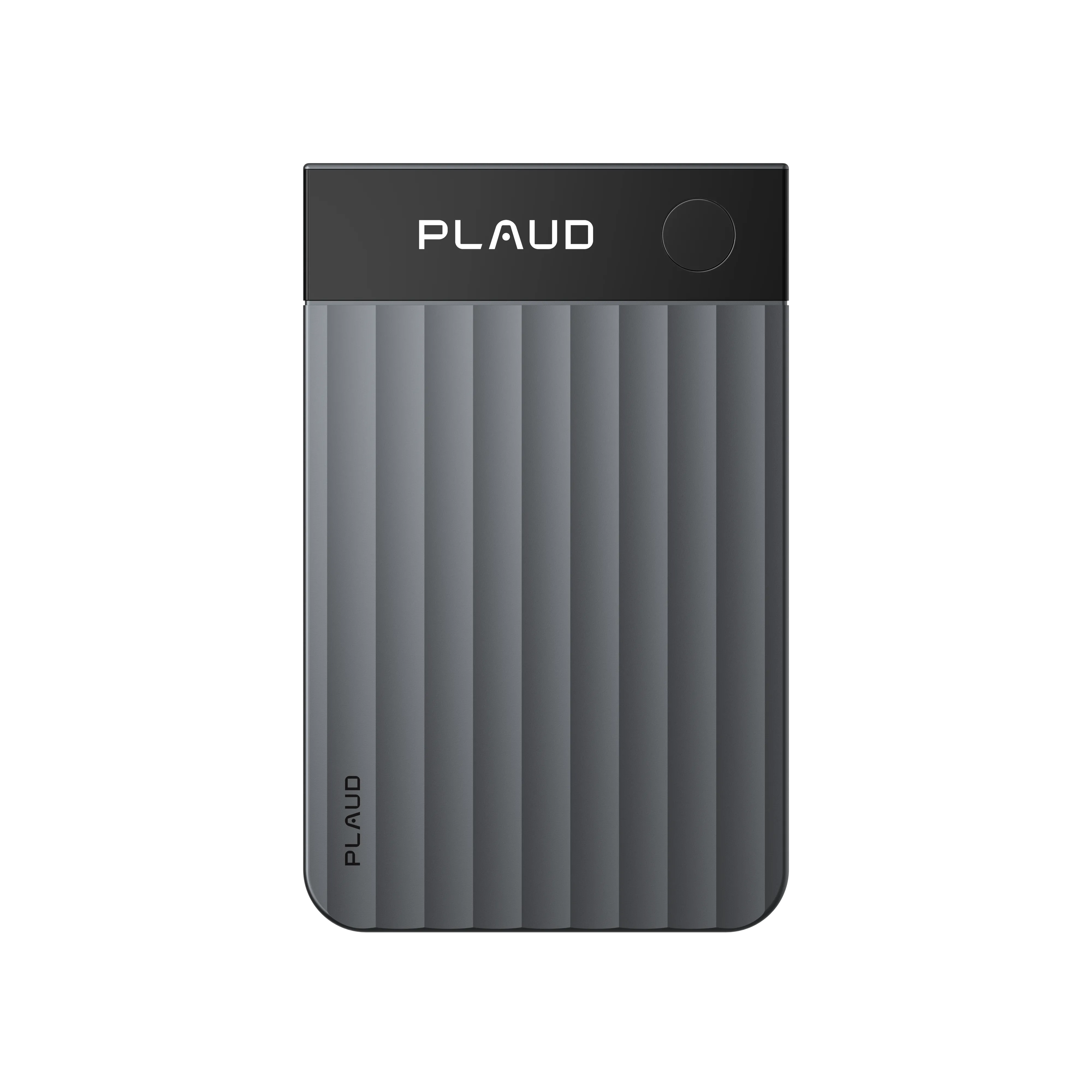
The Plaud Note Pro addresses the concern that many therapists raise before any feature discussion: I do not want my client's most vulnerable disclosures sitting on someone else's server. The Note Pro's hardware-first architecture means audio is captured and stored on the physical device itself. The recording exists on a device that sits on your desk, in your locked office, under your direct control. Cloud-based transcription and AI processing happen only when you actively initiate the upload, which gives you a deliberate checkpoint between the raw recording and any cloud interaction.
This matters in therapy more than in any other professional context. The content of a session, a client's disclosure of childhood abuse, suicidal planning, or marital infidelity, carries a level of sensitivity where the therapist's comfort with data handling directly affects their willingness to use the tool at all. Several therapists I spoke with during evaluation described this as the "sleep test": Can I go home at night knowing where that recording is? With the Note Pro, the answer is on a device locked in my office drawer.
The security infrastructure supports clinical use: Plaud holds SOC 2 Type II certification, uses AES-256 encryption, and includes HIPAA in its compliance framework. The 5-meter pickup range captures a therapy room clearly (most private practice offices are well within this range), and the 50-hour battery means you can run a full week of sessions without charging.
For documentation output, the AI layer (GPT-4o and Claude series) generates structured summaries using customizable templates. Therapists can configure templates to approximate DAP (Data, Assessment, Plan) or SOAP format, extracting the client's reported content, the therapist's clinical observations, and the treatment plan discussed. The output requires clinical review and will need refinement to match your specific documentation style, but it provides a structured draft that is significantly faster than writing from memory. Many therapists report cutting post-session note time from 25 to 30 minutes down to 8 to 12 minutes with AI-assisted drafting (based on informal feedback from therapists during product evaluation).
The Ask Plaud cross-recording search adds clinical value across a treatment trajectory. Querying "When did the client first mention the conflict with their mother?" or "What coping strategies have we discussed across sessions?" retrieves timestamped answers from the full recording history, which supports treatment planning and supervision preparation.
Where it is not the best choice
The Plaud Note Pro does not integrate with therapy-specific EHR/practice management systems (SimplePractice, TherapyNotes, Jane App). The generated notes must be copied or exported into your system manually, which adds a step. Therapists whose primary pain point is getting notes directly into their practice management platform without manual transfer will find therapy-specific tools more efficient for that particular workflow. The AI-generated clinical drafts also lack the therapy-domain-specific training that purpose-built mental health documentation tools offer; the Note Pro may produce output that uses clinical language imprecisely or categorizes therapeutic content in ways that require more editing than a therapy-trained model would.

Plaud NotePin S
The recording device that disappears into your professional appearance while capturing every session.
Why it works
The therapeutic alliance depends on the client feeling safe, seen, and not observed. Even after giving informed consent to recording, many clients are sensitive to visible recording equipment. A phone face-up on the table, a device with a blinking light, or any object that reads as "I am being monitored" can subtly shift a client's openness. The Plaud NotePin S addresses this by being, in practical terms, invisible during the session.
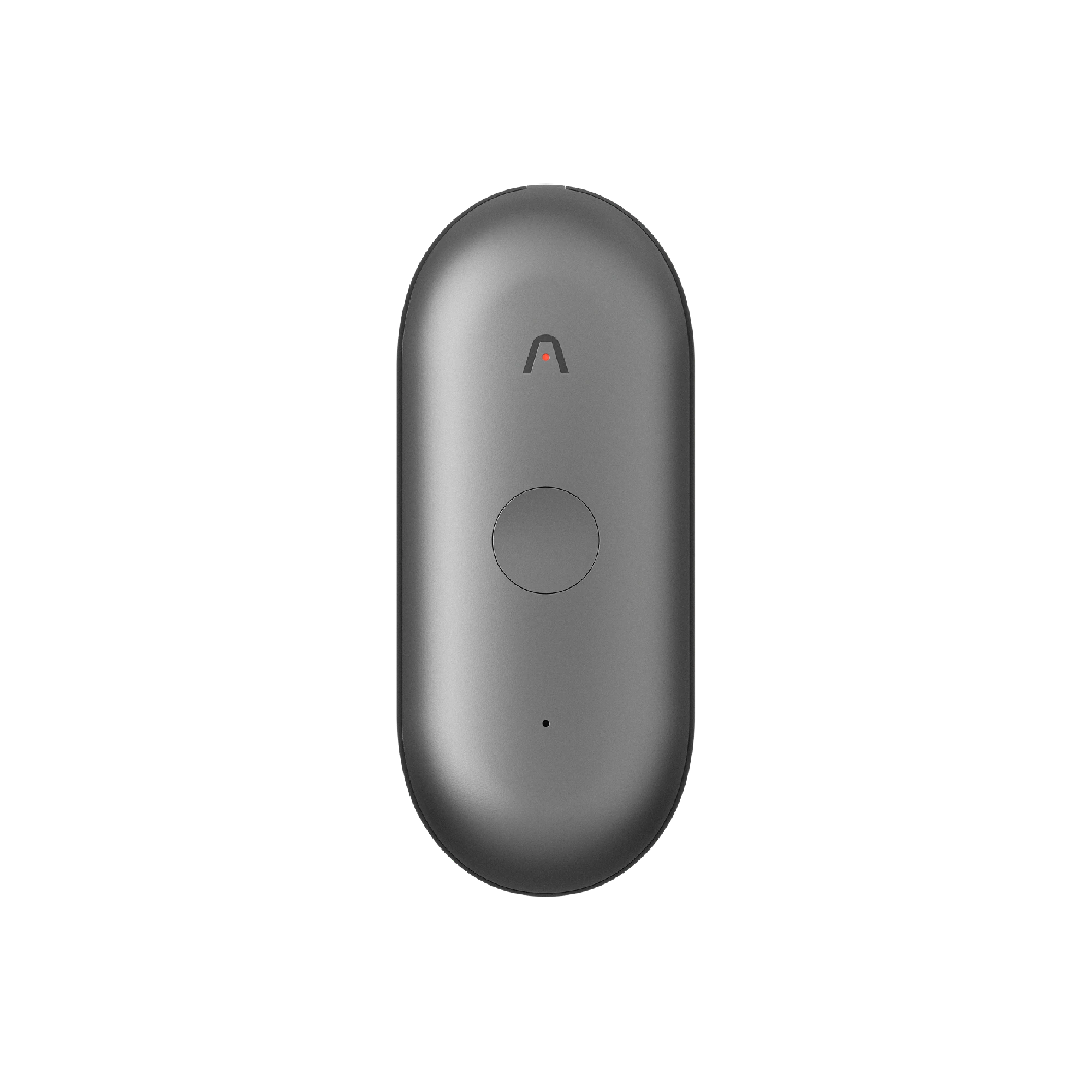
The device clips to a lapel, collar, or cardigan like a small piece of jewelry. After the initial consent conversation ("I use an AI tool to help with my session notes; here is what it does, here is how the data is handled, and I need your explicit consent to proceed"), the client's awareness of the device fades within minutes. The recording captures the session's audio clearly from its position on your clothing, and the single-press activation means there is no fumbling with devices when the session begins.
The AI processing, templates, and Ask Plaud search are identical to the Plaud ecosystem. For therapists who value the wearable convenience and want the least visible recording solution, the NotePin S preserves the relational quality of the session more effectively than any device that sits on a table or desk.
Where it is not the best choice
The NotePin S captures audio from its position on your body, which means the audio quality for the client's speech depends on room acoustics and distance. In a small therapy office (the typical setting), this works well. In a larger room, or if the client speaks softly (which is common during emotionally intense disclosures), the transcription may miss or misinterpret quiet passages. The Note Pro's table-positioned placement can capture soft speech more reliably in these scenarios. The NotePin S also shares the same limitations regarding EHR integration and therapy-specific NLP as the Note Pro.
Mentalyc
Therapy-native AI documentation built specifically for mental health progress notes.
Why it works
Mentalyc was designed exclusively for therapists, and that focus shows in every aspect of the tool. The platform generates therapy-specific progress notes in DAP, SOAP, BIRP (Behavior, Intervention, Response, Plan), and other clinical formats that therapists and insurance companies expect. The AI models are trained on mental health documentation patterns, which means they understand the difference between a client's reported content (Data/Subjective) and the therapist's clinical observations (Assessment), and they categorize information accordingly.
The workflow is designed around how therapists actually work. You record the session (via the Mentalyc app on your phone, or by uploading audio after the session), and the platform generates a draft progress note within minutes. The note includes the appropriate clinical terminology, treatment modality references (CBT, DBT, EMDR, psychodynamic), and the structure your practice management system expects. For therapists who bill insurance, the generated notes include CPT code suggestions and session duration documentation.
HIPAA compliance with BAA is standard. Mentalyc processes audio through HIPAA-compliant servers and offers data deletion controls that let therapists manage retention according to their state's record-keeping requirements.
For private practice therapists who spend 2+ hours per day on documentation, Mentalyc directly addresses the core bottleneck with output that requires minimal editing before being entered into the clinical record.
Where it is not the best choice
Mentalyc is a documentation tool, not a recording hardware solution. It does not provide a physical recording device, which means you need to use your phone or another microphone to capture session audio. In an in-person therapy session, having your phone as the recording device (even with the screen off) can be more visible and potentially more alliance-disrupting than a dedicated, purpose-designed recorder. The platform also does not offer the cross-session search capability that Plaud's Ask feature provides; notes are generated per session rather than forming a searchable longitudinal archive. Pricing varies by plan, but typically runs $30 to $60 per month for individual practitioners, which is higher than general-purpose tools though justified by the therapy-specific output quality.
Upheal
AI therapy assistant that generates clinical notes and session insights from the conversation.
Why it works
Upheal positions itself as more than a note generator: it is a clinical insights platform that analyzes therapy sessions to surface patterns the therapist can use in treatment planning. The platform runs during or after a session (via integration with telehealth platforms or audio upload), generates progress notes in standard clinical formats, and additionally produces session analytics: talk-time balance, emotional tone tracking, topic analysis, and session-over-session trend visualization.
For therapists who want to track treatment progress quantitatively (How has the client's affect shifted over the past 8 sessions? Are we spending more time on coping strategies and less on crisis management?), Upheal provides data points that pure documentation tools do not. The progress notes include CPT code recommendations and are formatted for insurance documentation.
HIPAA compliance with BAA is standard. The platform integrates with select telehealth systems (Zoom, Google Meet) for automatic capture during video sessions, and accepts audio uploads for in-person sessions.
Upheal's analytics are also useful for supervision. A therapist preparing for clinical supervision can pull up session trend data rather than relying on memory or reading through weeks of progress notes. The visual dashboards show treatment trajectory in a way that supports reflective practice.
Where it is not the best choice
Upheal's session analytics add a layer of quantification to therapy that some clinicians find reductive. Tracking "emotional tone" through AI analysis of speech patterns is a different kind of clinical observation than what a trained therapist perceives in the room, and there is reasonable debate about whether these metrics support or oversimplify the therapeutic process. The platform also works best with telehealth sessions (where it integrates directly) and is less seamless for in-person encounters that require separate audio recording and upload. Pricing is typically in the range of $50 to $100 per month for individual practitioners, depending on session volume.
Lyssn
Clinical quality measurement and supervision-focused AI for therapists who want to improve their practice.
Why it works
Lyssn occupies a unique position in the therapy AI space: it was developed from academic research on therapy quality measurement (specifically, the Motivational Interviewing Treatment Integrity coding system) and is designed to help therapists improve their clinical skills through data-driven feedback.
The platform records and transcribes therapy sessions, generates clinical notes, and additionally produces session quality metrics: empathy scores, reflection-to-question ratios, open versus closed question usage, and adherence to evidence-based therapy techniques. For therapists in training, therapists working toward licensure, or experienced clinicians who want structured feedback on their practice, these metrics provide an objective mirror that complements subjective self-assessment and supervision.
The supervision workflow is the standout feature. A supervisee can share session recordings and quality metrics with their clinical supervisor through the platform, which streamlines the supervision process. Instead of the supervisee narrating what happened in a session (which is subject to recall bias), the supervisor can review the AI-generated metrics, listen to flagged segments, and provide targeted feedback.
HIPAA compliance with BAA is standard. The platform is used by several training programs and university clinics, which speaks to its compliance posture and clinical credibility.
Where it is not the best choice
Lyssn is oriented toward clinical skill development and supervision rather than efficient documentation for private practice billing. The documentation features exist but are not as polished or customizable as Mentalyc's therapy-specific templates. For a private practice therapist whose primary need is faster progress notes for insurance billing, Lyssn's clinical quality features may feel like overhead rather than value. The platform's pricing and availability can also be more oriented toward institutional accounts (training programs, group practices) than individual practitioners, which may limit accessibility for solo therapists. The quality measurement framework is also most developed for specific modalities (motivational interviewing, CBT); therapists practicing psychodynamic, somatic, or other approaches may find the metrics less applicable.
So which AI note taker should you pick?
The decision starts with one question: What is your non-negotiable priority?
- If physical data control and in-person session capture are paramount: Plaud Note Pro gives you a device that stores recordings locally, sits quietly on your desk, and lets you decide when (and whether) to send audio to the cloud. The customizable templates approximate clinical formats, and the cross-session search builds a longitudinal view of each client's treatment. Best for therapists who prioritize data custody above all else.
- If the recording device must be truly invisible to preserve the therapeutic space: Plaud NotePin Sdisappears into your professional attire. After the consent conversation, clients forget it exists. Best for therapists who find that any visible recording device, however small, shifts the session dynamic.
- If therapy-specific progress notes in DAP/SOAP/BIRP format with minimal editing are the primary need: Mentalyc generates documentation that matches what insurance companies and licensing boards expect, using AI trained specifically on mental health content. Best for private practice therapists whose bottleneck is the 2+ hours of daily documentation.
- If you want session analytics and treatment trend tracking alongside documentation: Upheal adds a quantitative layer to clinical observation, with progress visualization that supports both treatment planning and supervision.
- If clinical skill development and evidence-based supervision are priorities: Lyssn provides quality metrics and supervision workflows grounded in academic research on therapy effectiveness. Best for therapists in training, working toward licensure, or committed to continuous practice improvement.
Conclusion
The single non-negotiable principle for choosing an AI note taker in therapy is this: client privacy must be resolved completely before efficiency enters the conversation. A tool that saves you 2 hours of documentation per day but introduces any ambiguity about how client disclosures are stored, processed, or accessible is not a time saver; it is a liability. The sequence is always the same: confirm HIPAA compliance and BAA availability, verify encryption and data handling policies, establish the informed consent process with clients, and only then evaluate features, templates, and workflow integration.
The practical next step is a two-part audit. First, clarify your compliance requirements: What does your state licensing board require for electronic recording of therapy sessions? Does your malpractice insurance have specific provisions? What are your informed consent obligations? Second, once those boundaries are clear, count your documentation hours this week and identify whether the bottleneck is recording (you cannot capture what is said during the session) or formatting (you can recall the content but structuring it into a proper note takes too long). That distinction points you to either a capture-first tool (Plaud devices) or a documentation-first tool (Mentalyc, Upheal) as the starting point.