Recruitment consultants do not have the luxury of processing one call before the next one starts. A typical day involves handling 8 to 12 candidate screenings and client briefs, stacked with 5-minute gaps, barely enough time to glance at the next caller's resume. By call number six, the details start to blur: Was it the product manager candidate who wanted $185K, or the one before her? Did the client say the role reports to the VP of Engineering or the CTO? A study from Bullhorn found that a significant number of recruiters cite mixing up candidate details between calls as one of their most frequent data entry errors. The cost is not just embarrassment; it’s lost placements. This guide evaluates five AI note takers through the one metric that matters most for back-to-back callers: how fast and how cleanly does each call become a separate, searchable, accurate record?
How we chose the best AI note takers for back-to-back calls in 2026
Most AI note-taker reviews test tools on a single 45-minute meeting. That tells you nothing about how the tool performs when you need it to process 10 calls in rapid succession, each one involving a different person, a different context, and a different set of details that must not cross-contaminate.
Why speed between calls matters more than accuracy
This sounds counterintuitive, but for back-to-back callers, summary speed outweighs transcription perfection. A transcript that is 98% accurate but takes 10 minutes to process is useless to a recruiter who has 4 minutes before the next call. What matters is whether you can glance at a structured summary (candidate name, role discussed, salary expectation, availability, key concerns) within 60 seconds of hanging up, confirm it looks right, and move on.
The reason speed matters more than raw accuracy in this context is that you are not using the transcript as a legal record. You are using it as a memory bridge between calls. The summary needs to be accurate enough to prevent the specific failure mode that plagues back-to-back callers: detail contamination, where information from Call 3 gets mentally attached to Call 5. A fast, structured summary that separates each call into a discrete record solves that problem even if the underlying transcript occasionally misses a filler word.
The 3 decision variables for back-to-back call note takers
After testing tools across weeks of simulated high-volume calling (8 to 12 calls per day, 5-minute gaps), I focused on three variables:
Summary immediacy: How quickly after the call ends does a usable, structured summary appear? The benchmark is 60 seconds. Anything longer than 2 minutes breaks the rhythm of a back-to-back schedule because the next call has already started before you see the notes from the previous one.
Automatic per-call segmentation: Does the tool automatically separate each call into its own record, or does it produce one continuous recording that you have to manually split later? This is a dealbreaker for high-volume callers. If you record 10 calls in a day and the tool produces a single 4-hour file, you have created more work than you have saved.
Search and tagging: After a day of 10+ calls, can you find a specific detail from a specific call without scrolling through every transcript? The ability to search across all calls by keyword ("salary," "notice period," "available immediately") or to tag calls by category (candidate screening, client brief, offer negotiation) determines whether the notes are actually usable at scale.
Quick Comparison
|
Tool |
Works well when |
Falls short when |
Best for |
|
Phone-based back-to-back calls |
Pure VoIP meetings; large rooms |
Recruiters making rapid-fire phone calls |
|
|
All-day mixed calls (phone + in-person) |
Needs line-level phone capture; CRM auto-push |
Recruiters who also meet candidates face-to-face |
|
|
Fireflies.ai |
VoIP back-to-back calls + CRM sync |
Phone calls; offline scenarios |
Recruiters running calls through Zoom/Teams/Dialpad |
|
Otter.ai |
Budget-friendly Zoom call batches |
Phone calls; multilingual candidates |
Solo recruiters on virtual platforms |
|
Notta.ai |
Multilingual candidate screenings |
Consistent phone capture; enterprise compliance |
Recruiters screening international candidates |
5 best AI note takers for back-to-back calls

Plaud Note
The phone call recorder that gives you a clean summary before your next call starts.
Why it works
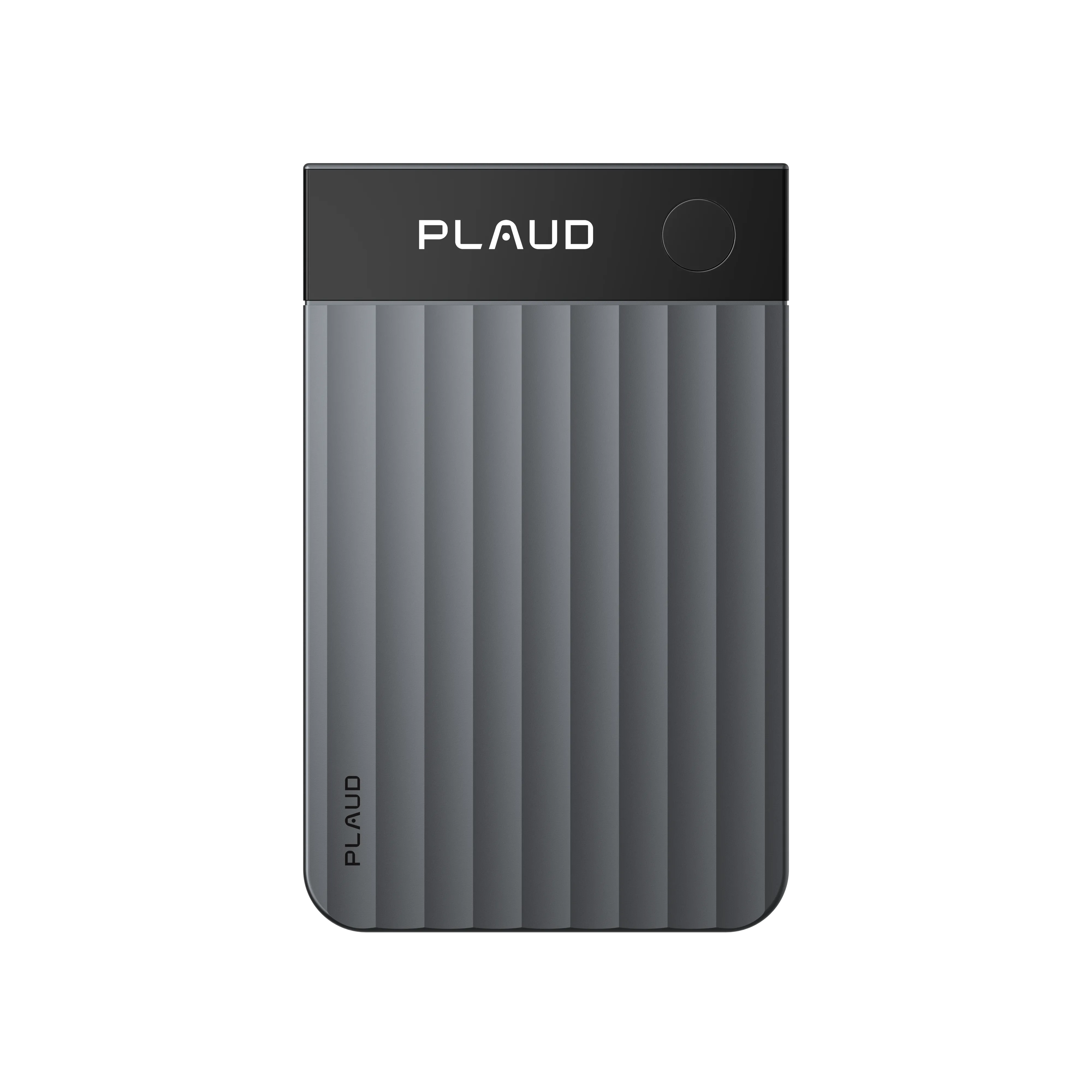
The Plaud Note addresses the two core requirements of back-to-back phone calling: per-call segmentation and speed-to-summary. Each time you start a new recording (one press to begin, one press to end), the Note creates a separate, timestamped record. There is no continuous-file problem. Call 1 is Call 1, Call 7 is Call 7, and they never bleed into each other in your recording library.
The AI summary pipeline, powered by GPT-4o and Claude series, processes each recording independently and typically delivers structured output within 60 seconds of the call ending. For a recruiter, the most useful summary template is the action item and key details format: it extracts the candidate's stated salary expectation, availability, current notice period, key concerns, and any commitments you made during the call. That structured output appears in the Plaud app while you are pulling up the resume for your next call.
The Ask Plaud cross-recording search is where the tool pays for itself across a full day. At 4 PM, when a client asks, "Did any of the candidates you screened today have enterprise SaaS experience?" you can query across all recordings rather than opening each one individually. The answer comes back with the specific candidate, the specific quote, and the audio timestamp. For recruiters managing multiple open roles simultaneously, this cross-call search eliminates the mental overhead of tracking which detail belongs to which candidate.
Where it is not the best choice
The Plaud Note records phone calls by capturing audio from the phone's speaker output, which means it works with your smartphone but does not integrate with VoIP platforms (Zoom Phone, RingCentral, Dialpad) at the software level. Recruiters who run all calls through a cloud phone system will get cleaner integration from a platform-native tool. The Note also does not push data directly into ATS or CRM systems like Bullhorn or Greenhouse; the structured summaries can be exported or routed via Zapier, but there is no one-click ATS sync.

Plaud NotePin S
Clip it on at 8 AM, record every call and every walk-in interview without thinking about it.
Why it works
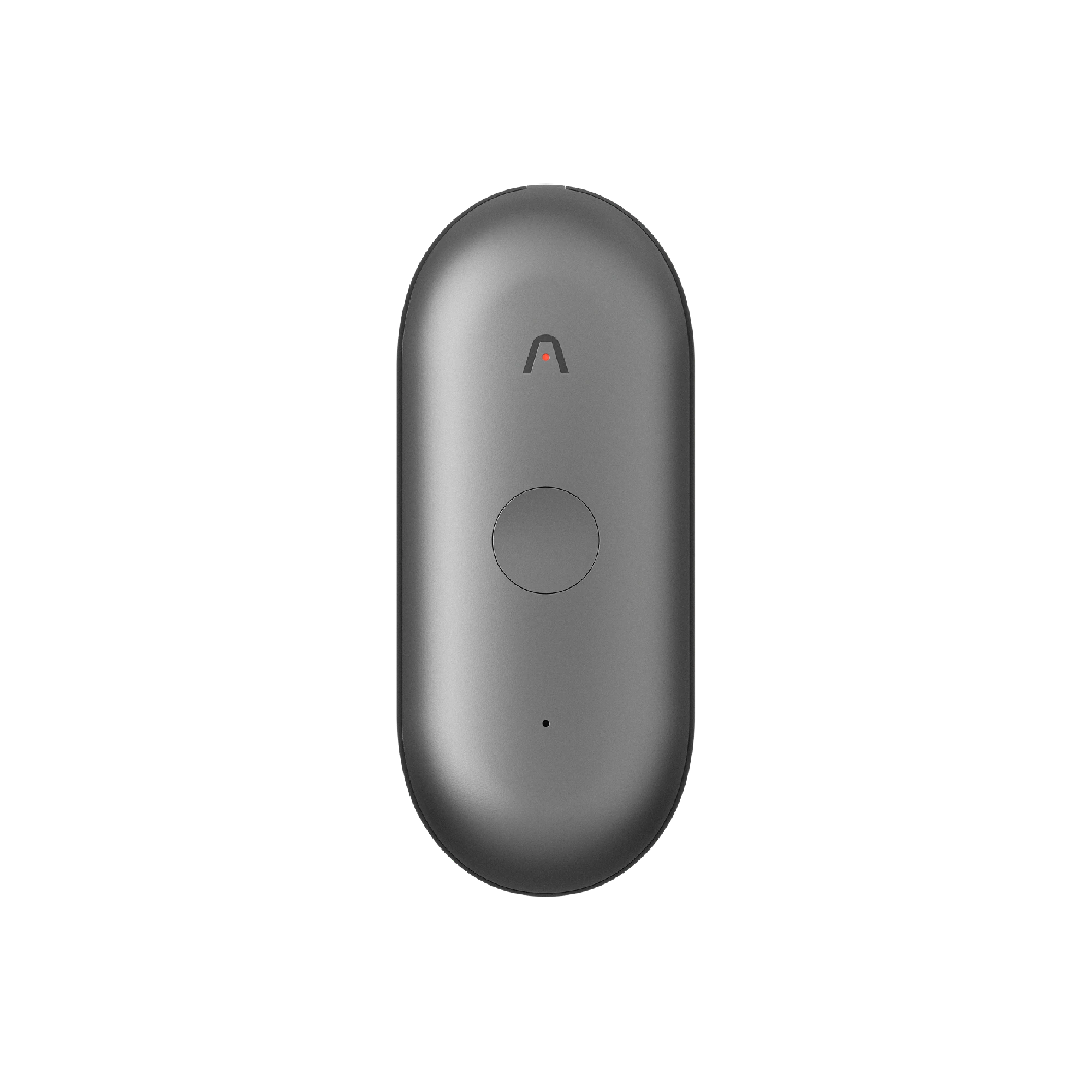
The Plaud NotePin S solves a specific friction point for recruiters whose day mixes phone calls with in-person candidate meeting. When any conversation worth recording starts, whether it is a phone call on speaker, a face-to-face candidate chat, or a quick sync with the hiring manager who stops by your desk, you press once. That is the entire setup.
For back-to-back workflows, the value is in eliminating per-call device management. With the Plaud Note, you position the device against your phone for each call. With the NotePin S, the device is already on your person. The transition from "call ended" to "next call starting" requires zero physical action beyond pressing the button again. Over a day of 10+ calls, that cumulative reduction in setup steps preserves focus and prevents the "forgot to record that one" problem that haunts high-volume callers.
The AI processing, summary templates, and Ask Plaud search work identically to the rest of the Plaud ecosystem. Each recording becomes a separate, searchable record with structured summaries that appear within roughly 60 seconds. The 100+-language transcription with speaker separation means candidate calls in multiple languages all receive the same treatment.
Where it is not the best choice
Because the NotePin S captures audio from its position on your collar rather than directly from the phone's speaker output, phone call audio quality depends on your environment. In a quiet office, the phone's speaker audio reaches the device clearly. In a noisy open-plan floor or a busy coffee shop, background sound can compete with the call audio and reduce transcription accuracy. Recruiters who make most calls from a quiet desk may prefer the Plaud Note's closer-to-phone positioning for consistently cleaner phone capture. The NotePin S also lacks direct ATS/CRM integration, same as the Note.
Fireflies.ai
Batch processing for back-to-back virtual calls with automatic CRM updates after each one.
Why it works
For recruitment teams that run candidate screenings and client calls through VoIP platforms (Zoom, Google Meet, Teams, Dialpad), Fireflies.ai offers a zero-touch recording workflow. The bot joins each scheduled call automatically, records, transcribes in over 100 languages, and generates a summary. When calls are booked back-to-back in your calendar, Fireflies handles the transitions automatically: it leaves one call when it ends and joins the next when it begins, producing separate records for each.
The CRM and ATS integration is the strongest differentiator for agency recruiters. Fireflies can push call summaries, candidate details, and action items directly into Salesforce, HubSpot, and (via Zapier) into tools like Bullhorn. After a day of 10 candidate screenings, each call's summary is already sitting in the corresponding candidate record. The keyword tracker lets you set alerts for terms recruiters care about: "counter-offer," "notice period," "competing offers," "salary expectation." Fireflies flags every instance across all calls, which helps when debriefing with a client about the day's candidate pool.
Pro pricing starts at $10 per month per seat billed annually, with the Business tier at $19 per month for expanded storage and integrations.
Where it is not the best choice
Fireflies cannot record phone calls or in-person meetings. Recruiters who screen candidates primarily by calling their mobile or desk line (rather than sending a Zoom link) will find Fireflies irrelevant for those conversations. The tool also introduces a visible "Fireflies Notetaker" bot into calls, which some candidates may find unexpected or off-putting during a screening. The analytics layer provides talk-time metrics and topic detection but does not offer the per-candidate detail extraction (salary, notice period, availability) as a structured field the way dedicated recruiting intelligence tools do.
Otter.ai
Affordable virtual call transcription for solo recruiters on Zoom and Google Meet.
Why it works
Otter.ai provides the lowest-cost path to AI-generated call notes for recruiters who conduct screenings via video platforms. The free tier covers 300 minutes per month (roughly 10 half-hour calls), and the Pro plan at $8.33 per month billed annually bumps that to 1,200 minutes. The bot joins Zoom and Google Meet calls automatically, produces real-time transcription with speaker labels, and generates a summary when each call ends.
For a solo recruiter or a small boutique agency that does not need CRM automation or advanced analytics, Otter delivers functional call documentation at minimal cost. The search function lets you find specific candidate details across past calls, and the custom vocabulary feature helps with accurately transcribing industry-specific terms, company names, and technical role titles that appear frequently in recruitment conversations.
The real-time transcription can also serve as a live reference during calls. When a candidate mentions a salary figure early in the conversation and you want to circle back to it 20 minutes later, the live transcript lets you scroll up and confirm the exact number without asking them to repeat it.
Where it is not the best choice
Otter supports only 4 transcription languages, which limits its usefulness for recruiters screening international candidates. It cannot record phone calls or in-person interviews, so every conversation that happens outside of Zoom or Google Meet goes undocumented. The tool also does not integrate with ATS platforms, and the AI summary is general-purpose rather than recruitment-specific; it does not automatically extract structured fields like salary expectation, notice period, or availability into discrete data points. For recruiters who need more than basic transcription and search, Otter is typically a starting point.
Notta.ai
Multilingual candidate screening with real-time translation for international recruitment.
Why it works
Recruiters at international firms or those filling roles across borders often conduct screenings where the candidate speaks one language and the recruiter speaks another, sometimes with both parties switching mid-conversation. Notta.ai differentiates itself with a real-time bilingual transcription feature: during a call where you speak English and the candidate responds in Japanese (or Mandarin, Spanish, French, German, and 50+ other pairs), Notta produces a live bilingual transcript showing both languages side by side.
This is useful not just for record-keeping but for real-time comprehension during the call. If a candidate's response about compensation expectations is nuanced in their native language, the live translation provides an additional reference layer. Notta supports 61 transcription languages and offers a mobile app that can capture speakerphone audio, giving it a partial phone call recording capability that purely platform-based tools lack. Pro pricing starts at $8.17 per month billed annually with 1,800 minutes of monthly transcription.
Where it is not the best choice
Notta's phone call capture through the mobile app (recording speakerphone output via the phone's microphone) is less consistent than a dedicated hardware device in terms of audio clarity and consistency. Background noise and speakerphone echo can reduce accuracy, particularly during rapid back-to-back calls where you may not have time to optimize device positioning. The free tier's 3-minute recording limit makes it impractical for real candidate screenings. Notta also lacks the enterprise-grade compliance certifications (SOC 2, HIPAA) that some recruitment firms require when handling candidate data, and the bilingual transcription accuracy can vary when speakers switch languages rapidly within single sentences.
So which AI note taker should you pick?
The decision maps to one question: how do you actually connect with candidates and clients?
If most calls happen on your phone: Plaud Note gives you automatic per-call segmentation, 60-second summaries, and cross-call search. Each phone conversation becomes a separate, clean record without any post-call processing.
If your day mixes phone calls with walk-in candidate meetings and hiring manager check-ins: Plaud NotePin Scovers everything from your collar. One device, one press per conversation, zero setup overhead between calls.
If your calls run through Zoom, Teams, or a cloud phone system and you need ATS/CRM sync: Fireflies.ai handles the recording, summarization, and data push automatically across back-to-back virtual calls.
If you screen candidates internationally and need real-time translation: Notta.ai's bilingual transcription fills a specific gap for cross-border recruitment, though you may want a hardware backup for consistent phone capture.
If you are a solo recruiter on a budget and use Zoom for screenings: Otter.ai provides basic call documentation at the lowest cost.
Conclusion
The defining failure mode of back-to-back calling is not forgetting an entire conversation; it is mixing up the details between conversations. When candidate A's salary expectation ends up in candidate B's ATS record, or when a client's must-have requirement gets attributed to the wrong role, the error is subtle enough to survive for days before someone catches it. By then, trust has eroded.
The right tool for back-to-back calls solves this with two capabilities: per-call segmentation that creates a clean boundary between every conversation, and summary speed that gives you a structured reference before the next call begins. Whatever tool you choose, the test is simple: after your busiest day this week, open any call from the morning and check whether the candidate's name, salary expectation, and key concern are captured accurately and separately from every other call. If they are, the tool is working. If they are not, the tool is creating a different kind of problem.
Was this article helpful?
Write For Us
Have expertise to share? Join our community of writers and reach thousands of readers.
- Competitive compensation
- Editorial support
- Build your personal brand