Daniel runs LIVID Magazine, which means much of his work happens before anything is actually published. His days are filled with interviews, editorial meetings, content planning, and quick conversations with his team about what should become the next story. On paper, that sounds like a content workflow. In reality, it is a constant process of listening, filtering, and deciding which moments are worth carrying forward.
For Daniel, a good interview rarely follows a straight line. There may be a prepared topic or a list of questions, but the best parts often appear somewhere else entirely. A guest might answer one question and then casually add something more revealing. A discussion might drift away from the planned angle and become more interesting because of it. Sometimes the sentence that ends up shaping the story is not the one anyone expected at the beginning.
That unpredictability is part of what makes the work valuable. It is also what makes it hard to capture. Daniel’s team was never starting from nothing. They had notes, recordings, and memory, like most editorial teams do. The issue was that the most useful parts of an interview were often not obvious until later, when someone was actually shaping the piece. By then, the exact wording could be hard to recover.
“We used to jot things down or trust we’d remember them later,” Daniel says. “In reality, good moments just slipped away.”
What disappeared was not usually the entire conversation. Daniel could remember the guest, the topic, and the general direction of the interview. The problem was more specific: the phrasing. A guest would say something casually, and everyone would recognize that it was good. A few hours later, or a few days later, the team would try to use it and realize that the line was not there in the same way anymore.
“We lost exact quotes,” he says. “And for interviews and content, that’s a big deal.”
That point is practical, not philosophical. In media work, remembering the meaning of something is not always enough. A story often depends on the actual words someone used, especially when the words carry personality, tension, or clarity. You can paraphrase an idea, but sometimes the quote itself is what makes the piece work.
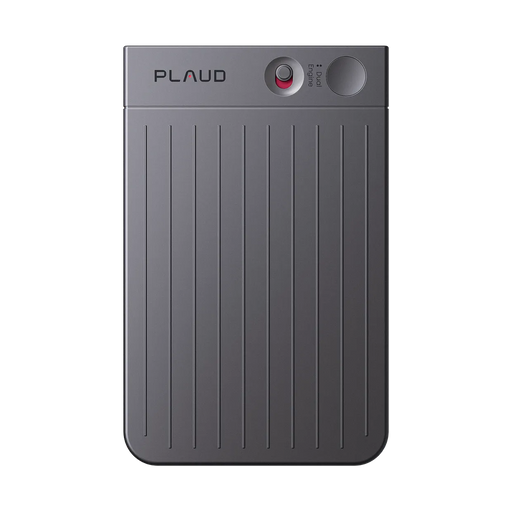
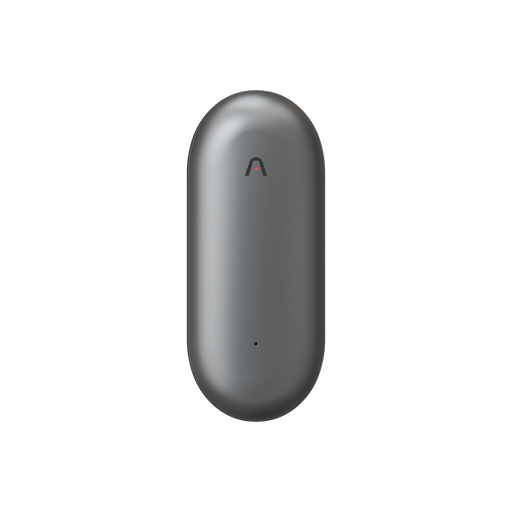
Daniel’s use of Plaud began from that very specific problem. He was not looking for a dramatic overhaul of the way his team worked. He wanted a way to stay focused during interviews without constantly interrupting himself to take notes. The more he tried to capture things manually, the more he felt part of his attention leaving the conversation. That trade-off was familiar: listen closely and risk forgetting something, or document aggressively and lose some of the natural flow.
“I wanted to focus on the interview or discussion, not on writing things down,” he says.
The feature that changed his habit most was simple: highlighting. When someone says something strong, Daniel can mark the moment and keep the conversation moving. He does not need to pause the guest, switch tools, or decide in the moment whether a sentence is worth writing down. He can simply flag it and return to the person in front of him.
“If someone says something strong, I tap it and keep the conversation going,” he says.
That small behavior change matters because interviews depend on rhythm. A good conversation has its own pace, and breaking that pace can change what people say next. For Daniel, the value is not just that Plaud helps him capture more. It is that he can remain more available to the person he is speaking with, while still giving the team a better way to revisit the material afterward.
The impact also shows up after the interview. Once the conversation is over, Daniel and his team can go back to the same source material instead of piecing things together from separate notes and partial memory. That does not mean the editorial judgment disappears. The team still has to decide what the story is, what angle matters, and what deserves to be published. But they are making those decisions from a clearer starting point.
“Everyone starts from the same raw material,” Daniel says.
That line captures a subtle but important shift. In a media company, different people can hear the same conversation and notice different things. One person may focus on the quote, another on the broader theme, another on the headline potential. Plaud does not replace that judgment. It gives the team a shared record to return to, so the discussion can be about what to make of the material rather than what was actually said.
Over time, Daniel’s workflow became less about trying to preserve everything in his head and more about trusting that the important moments would still be there when he needed them. After an interview, Plaud helps surface the quotes and themes the team can actually use for content. That distinction matters. He does not need another place where information piles up. He needs a way back to the parts of the conversation that may become the story.
“The quotes we actually needed,” he says, describing what Plaud helped pull out after a recent interview.
What stands out in Daniel’s story is how ordinary the problem is. There is no dramatic failure, no single meeting that went wrong, no huge operational crisis. The pain is smaller and more familiar: a good line that disappears, a theme that is harder to reconstruct later, a moment that felt important but was not captured cleanly enough to use. For a media team, those small losses add up.
Daniel does not describe Plaud as something that writes content for him. The ideas still come from the interview. The editorial decisions still come from the team. The story still has to be shaped by people who understand what matters. What Plaud changes is the space around that work. It reduces the pressure to catch everything in real time, so Daniel can spend more of the conversation doing the part that actually requires him: listening.
“Plaud doesn’t write content for us,” he says. “It makes sure we don’t miss the good stuff.”
For Daniel, that is the point. The best material in an interview does not always announce itself. Sometimes it appears casually, in the middle of a fast-moving conversation, and only becomes obviously important later. His work is to recognize those moments and turn them into stories. Plaud helps make sure they are still there when he does.
Be Present — Because Every Conversation Matters.