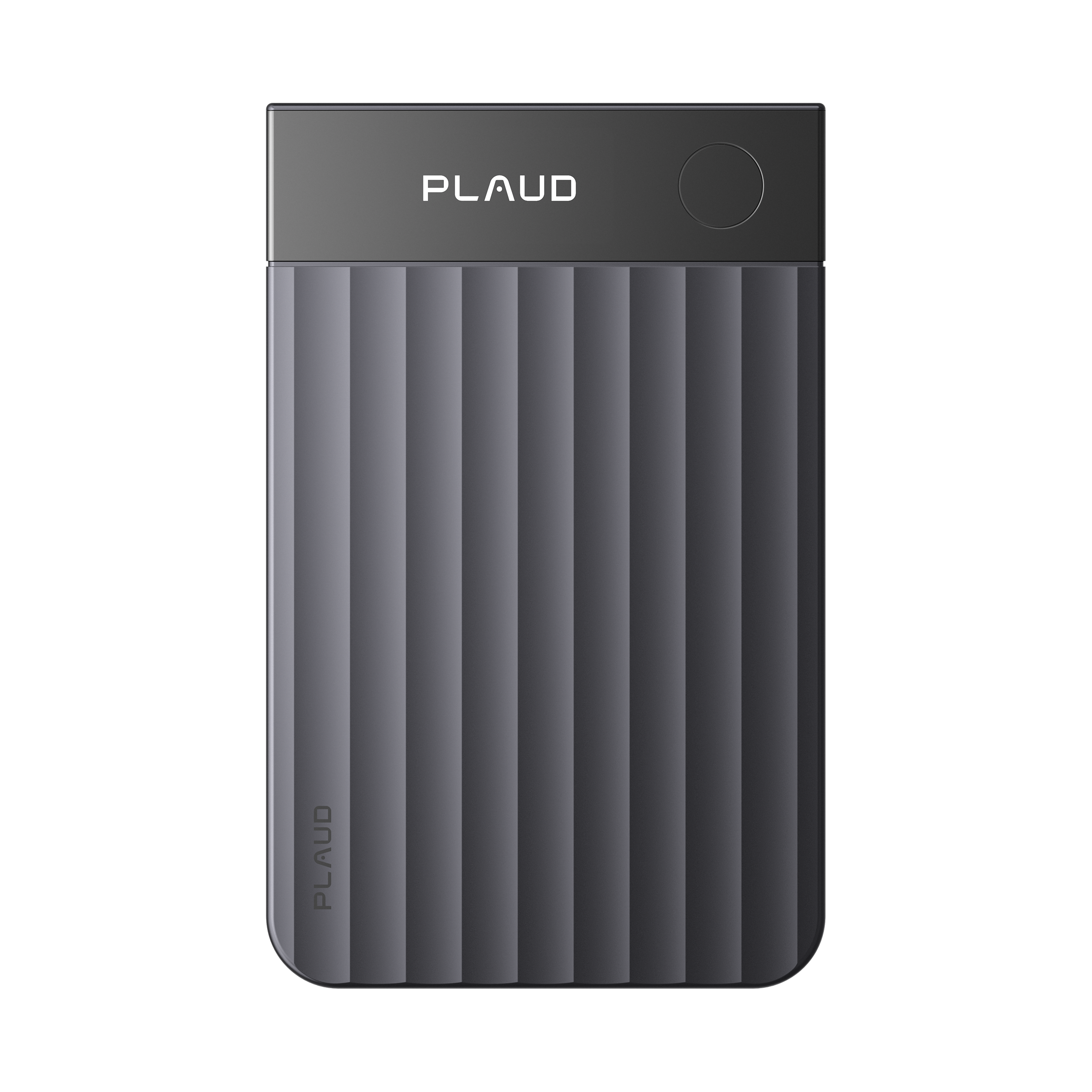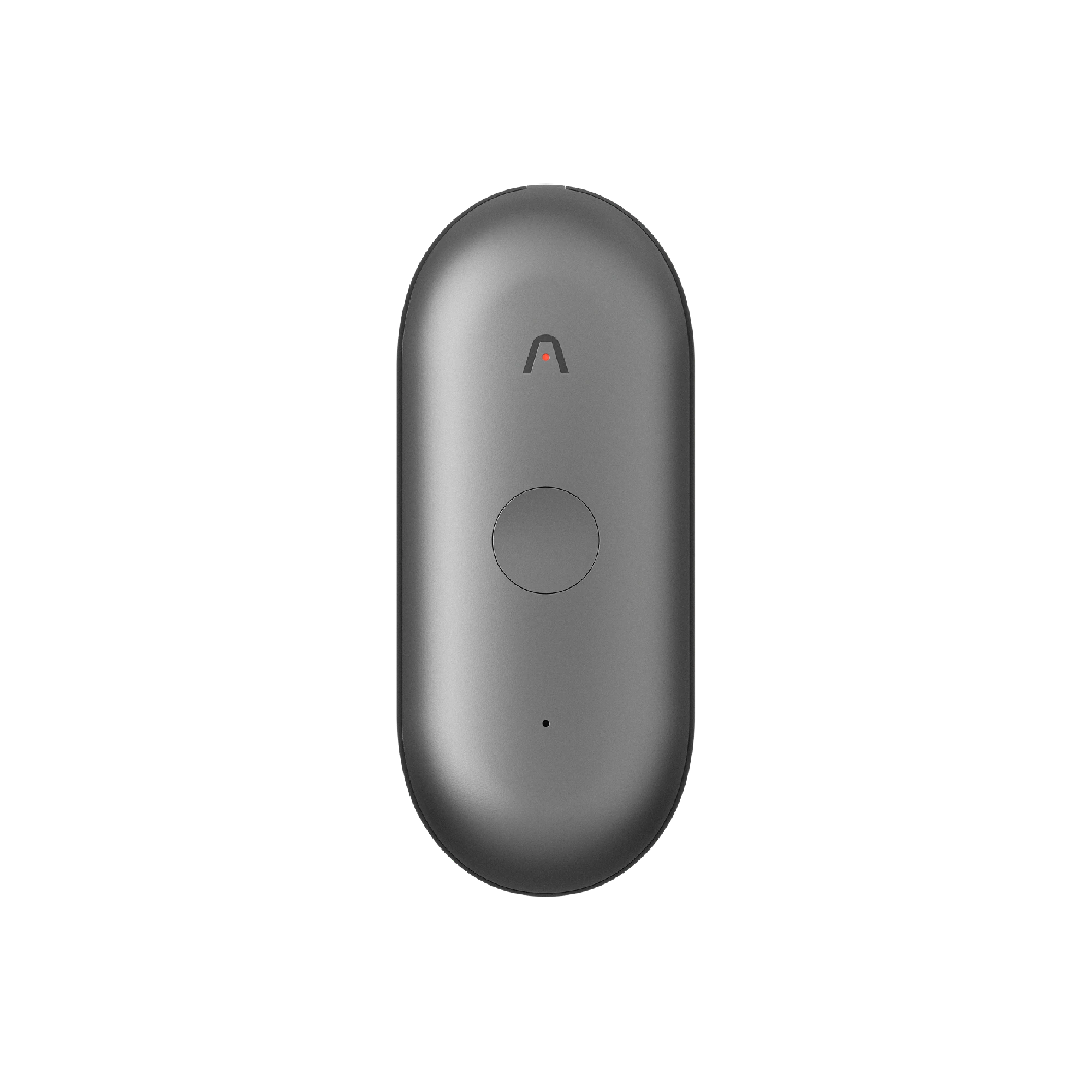

Here's something that surprised us when we measured it: audio that sounds cleaner to your ears often produces worse AI transcription. It turns out that making audio sound good and making audio transcribe accurately are two different problems. This post explains why, and how Plaud is built to handle both.
The Problem We Measured
Most people assume that cleaner audio means better transcription. Remove the background noise, and the AI will have an easier job. We tested that assumption, and found the opposite is often true.
When we fed noise-suppressed audio directly into our speech recognition engine, transcription errors went up, not down. In noisy environments, noise reduction made transcription accuracy worse by up to 4% to 5%.
The reason is straightforward. Noise suppression works by smoothing the audio signal to make it sound pleasant to your ears. But AI transcription reads audio differently. It relies on the fine details within speech sounds to distinguish words, and smoothing those details out makes its job harder. Clean to you, confusing to the AI.

Two Paths, Each Built for a Different Job
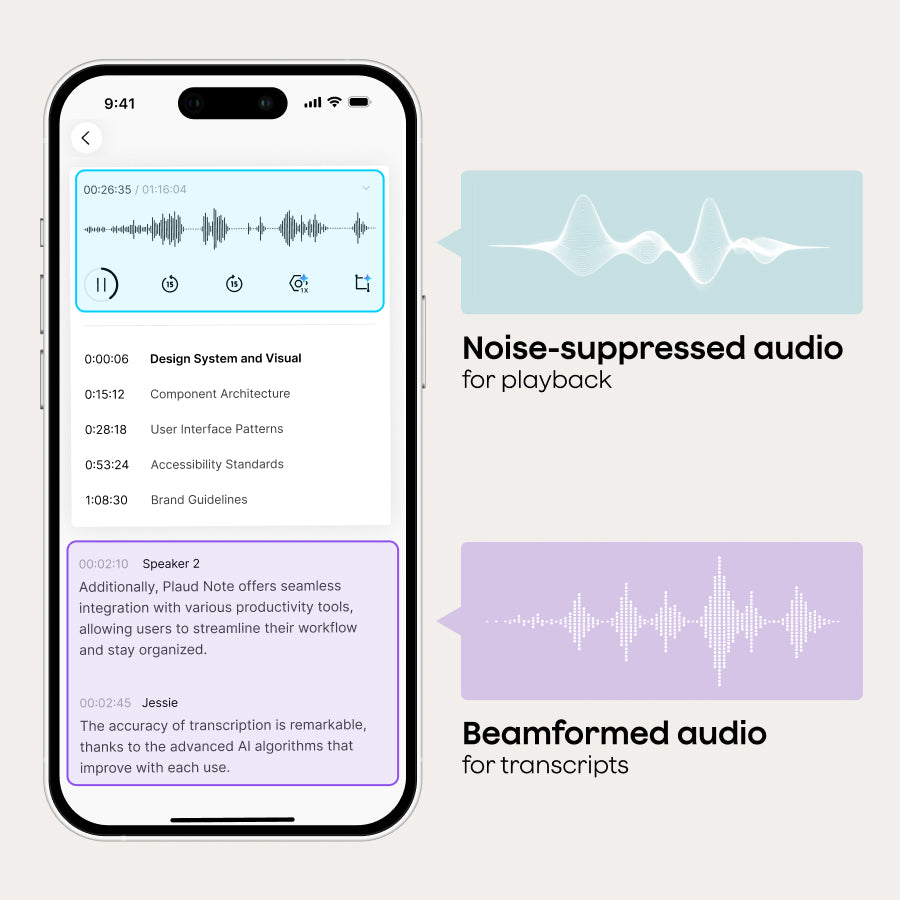
The solution was to stop treating audio as a single output. Plaud's four microphones capture everything, then route the audio differently depending on what it's being used for.
Playback gets the noise-suppressed signal. It sounds clean and clear for listening back.
Transcription gets a different signal, processed to focus on the direction voices are coming from rather than smoothing them out. This preserves the speech detail the AI needs. In our testing, this approach improved both audio quality and transcription accuracy at the same time.
What the Numbers Show
The trade-off becomes visible when you compare devices. In controlled testing, Plaud Note Pro scored lower on perceived audio quality than the iPhone. Put simply, the iPhone recording sounds better to your ears.
But in a noisy room at close range, Note Pro's transcription error rate was 23.4%, compared to 30.3% on iPhone. The recording that sounds rougher produces more accurate notes.
That gap reflects the design working as intended. The audio your AI receives is not the same signal your ears hear, and Plaud is built to optimize the one that affects your notes, summaries, and action items.
Disclaimer: The performance metrics and transcription error rates cited in this article were derived from controlled testing in a simulated noisy room at close range. Real-world transcription accuracy and audio quality may vary depending on environmental noise, speaker distance, accents, and the specific third-party AI speech recognition engine utilized. The stated reduction in accuracy associated with noise-suppressed audio is based on Plaud's internal testing parameters. iPhone is a registered trademark of Apple Inc. This independent comparative analysis does not imply any affiliation with, or endorsement by, Apple Inc.