

Looking for an in-depth guide on how to write progress notes for therapy or for medical purposes?
In this guide, the team at Plaud will explain everything you need to know about writing mental health progress notes that improve patient outcomes, reduce your workload, and streamline billing.
We’ll even provide tried and tested templates and examples, as well as show you how new and exciting artificial intelligence tools (like AI voice recorders) can cut the time you spend writing clinical documentation in half (or more).
A study from HETT Insights, a leading healthcare technology event, shows that therapists and doctors spend an average of 13.5 hours per week on clinical documents. That just shows how tedious it is to document a patient’s progress. People say progress notes are easy, but writing them in a detailed, effective (and compliant!) way is the difficult part.
Ready to learn how to write accurate notes faster? Let’s begin.
What Are Therapy Progress Notes?

Progress notes are written records that track a client's treatment over time. Progress notes are tied to a treatment plan and typically follow formats like SOAP (Subjective, Objective, Assessment, Plan), BIRP (Behavior, Intervention, Response, Plan), or DAP (Data, Assessment, Plan).
Think of them like a journal that healthcare providers use to document what happens during each session with a patient.
The reason that they’re so useful for treatment providers is that they create a paper trail of a patient’s care. If a therapist sees a patient on Monday, the progress note captures what they talked about, how the patient seemed, and what steps come next. If that same patient shows up to a different provider on Friday, that new person can read the note and get up to speed fast.
Progress notes typically include:
- Date and length of the session
- The client's current symptoms or concernsInterventions or treatments used
- The client's response to treatment
- Goals for future sessions
- The treatment provider's signature and credentials
Pro Tip: Therapy progress notes DO NOT need to include every little thing the client said during their session. Only include what pertains to their treatment. If they ramble about their day or a problem at work for the first 10 minutes of a session, don’t include those in your notes.
What to Include in Progress Notes?
Good progress notes should document what happened during the session, how the client is doing, and what comes next. Your goal here is to create a record that both you and other providers can quickly read and understand. We recommend short, punchy, and clear language that’s easily skimmable. Don’t worry about all of the little details or ramblings about their day at work.
As the treatment provider, your goal is to paint a clear picture of the client's current state and treatment without writing a Game of Thrones sequel.
Here's what to include:
- Date, time, and session length: This creates a timeline of care and helps track frequency of treatment.
- The client's concerns: Document what the client says is bothering them right now, using their own words when possible.
- Observable behaviors and symptoms: Focus only on objective observations. That's only what you see, like body language, mood, and appearance. Don’t rely on just what they tell you.
- Interventions or techniques used: Record which therapeutic approaches or strategies you applied during the session.
- The client's response to treatment: This is where you note how effective treatments have been. Keep it concrete. Did they engage with the interventions? Did their symptoms improve or worsen?
- Progress toward goals: Reference specific treatment goals and note whether the client is moving forward, backward, or staying the same.
- Risk assessment (when relevant): Document any concerns about safety, self-harm, or harm to others.
- Plan for next steps: Include homework assignments, follow-up appointments, referrals, or changes to the treatment approach.
We hope that’s all making sense. Let’s move on to some examples and note templates. Feel free to steal these for your own notes. We won’t mind!
Good Clinical Progress Notes Examples
The most common types of clinical progress notes are SOAP, BIRP, and DAP. If you’ve ever written progress notes before, you’ve almost certainly used one of these 3 methods. In the following section, our team will explain what each method is, who they’re best for, and give you a template for writing notes for your patients.
SOAP Progress Notes

SOAP is one of the most common formats you'll see in healthcare settings. Doctors, therapists, and nurses have been using it for decades because it organizes information in a simple, easy-to-follow way.
If you’re not sure where to start, just start with SOAP.
The main reason they’re so popular is that any healthcare provider can quickly look at SOAP notes and immediately determine a patient’s status.
Here’s what each letter of SOAP notes stands for:
- Subjective: The subjective aspect is what the client tells you in their own words. Maybe they say, "I've been feeling anxious all week" or "My back pain is getting worse." It's their experience, complaints, and story.
- Objective: Objective notes are what you observe as the provider. We recommend that you look only at measurable data and visible behaviors. Did they make eye contact? What was their heart rate? Could they complete certain movements? Note the patient's symptoms and move on to the assessment phase.
- Assessment: Assessment is when you use your professional judgement. Here, you need to “connect the dots” between the subjective and objective aspects. Does what you see match what they’ve said?
- Plan: Now, it’s time to plan the next steps. Maybe it’s a follow-up appointment next week, or maybe you need to prescribe medication. Whatever the plan is, document it here.
Simple enough, right? Let's move on to our SOAP note template and an easy example for you to follow.
Soap Progress Notes Example And Template
Here's an example of what a SOAP note might look like:
Date: 12/5/2025
Client: Jane Smith
Session Length: 60 minutes
Subjective: The client reports feeling "overwhelmed" by work deadlines. She's been having trouble sleeping (averaging 4-5 hours per night) and has been avoiding social plans. She also mentioned using breathing exercises from our last session "a few times”, but she’s not convinced of their efficacy.
Objective: The client appeared fatigued with dark circles under her eyes. She spoke quickly and fidgeted throughout the session. Affect was anxious. The client maintained appropriate eye contact.
Assessment: The client has made progress, but continues to show symptoms of generalized anxiety disorder. Particularly, client’s sleep disturbance has worsened since the last session. Positive sign that client attempted coping strategies, though implementation remains inconsistent. Progressing slowly toward Goal 1 (reduce anxiety symptoms).
Plan: Moving forward, we plan to continue weekly therapy sessions as it’s clear that the client is progressing. In following sessions, we will explore sources of client’s sleep disturbances and provide further education in sleep hygiene. Assigned daily mood/sleep log for next week. Reviewed sleep hygiene techniques. Will reassess the need for psychiatric consultation if sleep doesn't improve. Next session 12/12/2025.
BIRP Progress Notes

BIRP progress notes focus on client behavior and how they respond to treatment. Unlike SOAP (which separates the subjective and objective), BIRP lumps them together in the Behavior section. It does this in order to put more emphasis on how well your interventions are working.
You’ll typically find this style of note in substance abuse settings where there’s a focus on triggers, reactions, and the therapy method used in response to the event (interventions).
Here's a quick breakdown of BIRP notes:
- Behavior: What did the client do or say during your time together? Did they show up on time? Did they speak about triggers? Observe your client's emotional state and make detailed, objective notes.
- Intervention: This covers what techniques or strategies you used as the provider. Maybe you taught them a coping skill, used cognitive restructuring, or just provided active listening. It's your professional response to their behavior.
- Response: Here's where you note the patient's response to your interventions. Did the breathing exercise calm them down? Were they receptive to feedback?
- Plan: Planning is where you discuss what comes next, such as follow-up appointments or new goals.
BIRP Progress Notes Example And Template
Here's an example of BIRP progress notes:
Date: 12/5/2025
Client: Marcus Johnson
Session Length: 45 minutes
Behavior: Client appeared agitated and restless throughout session. Reported racing heart and avoidance of social outings due to fear of judgment from coworkers. Mentioned ongoing sleep issues and rumination about work performance.
Intervention: Provided psychoeducation on anxiety and the fight-or-flight response, including cognitive behavioral strategies and other methods. Taught deep breathing exercises and grounding techniques (name 5 things you see, 4 you can touch, 3 you hear, 2 you smell, 1 you taste). Used active listening to validate client's concerns about workplace interactions.
Response: Client engaged with breathing techniques during session. Reported anxiety level decreased from 7/10 to 4/10 after our grounding exercise. Felt noticeably calmer by end of session and expressed willingness to try techniques at home.
Plan: Client will practice grounding exercise daily, particularly before bed. Track anxiety levels in a journal throughout the week. Next session scheduled for 12/12/2025. Therapist to send email with additional resources for managing social anxiety in workplace settings.
DAP Progress Notes

DAP is a form of therapy progress notes for mental health providers that includes three sections: Data, Assessment, and Plan.
It's popular for more experienced counselors and social workers who want to quickly document sessions. We don’t recommend it for new counselors, because they benefit more from structure than more experienced ones. We assume that, if you’re reading this article, DAP is not ideal for you.
The main difference between DAP and SOAP notes is in how they handle subjective and objective information: SOAP splits the subjective and objective sections into two, while DAP combines them into one.
Here's what the letters in DAP stand for:
- Data: Data includes both facts and observations. In this section, you mix what the client tells you with what you notice about them. It's a combined view of the session that saves you from having to separate everything.
- Assessment: Assessment is (once again) your professional analysis of what the data means. You're interpreting the information and tracking progress toward treatment goals. Is the client improving? Staying the same? Getting worse?
- Plan: This is the same as always: What are the next steps? Follow-ups? Medications? Referrals?
Further Reading: Check out our complete guide on writing DAP notes for an in-depth look at how to write this style of notes in a clinical setting.
DAP Progress Notes Example And Template
Here’s an example of DAP progress notes you can use for inspiration in your practice:
Data: Client reported feeling "a bit better" this week. Got out of bed before 10 AM four out of seven days and completed two job applications. Still experiencing low energy and described mood as "flat." Affect appeared slightly brighter than last week. Declined friend's dinner invitation.
Assessment: Mild improvement in depressive symptoms, particularly sleep/wake cycle and motivation. Still experiencing anhedonia and social withdrawal. PHQ-9 score decreased from 18 to 15 (moderately severe to moderate depression). Progressing on Goal 2 (increase daily activities), but Goal 3 (rebuild social connections) remains unaddressed.
Plan: Continue weekly sessions. Client will set 9 AM alarm daily and plan one small social interaction this week. Assigned behavioral activation worksheet. Discussed medication consultation. Client wants to wait two more weeks.
Still with us? We hope those templates and examples were helpful. Let’s move on to some tips for writing better notes.
3 Tips for Writing Better Progress Notes
Here are some of our best tips for writing progress notes. Don't worry, most of them are straightforward. We've worked with countless healthcare providers, and most of them follow the same best practices.
Here they are:
Use Objective Language
Our number one tip is to write what you see, not what you think it means. When you write "client seemed manipulative," you're making a judgment call that another provider might not agree with (or might not even understand due to context). But when you write "client arrived 30 minutes late without calling and blamed traffic", you're stating a fact.
The main difference here is that objective language sticks to what you can see, hear, or measure. Instead of "client was very depressed", try "client reported feeling sad most of the day, spoke in a monotone voice, and made minimal eye contact".
Here are some key points to remember:
- Avoid jargon (overly professional language) and avoid taking subjective notes.
- Focus on objective observations, such as the patient's appearance.Don't be afraid to take thorough notes.
- Write down as many things as you can that pertain to the patient's situation.
Write Soon After the Session
You should write your notes within 24 hours while the session is still fresh in your mind, preferably within 30 minutes. The sooner the better. In fact, most clinical advice recommends writing your notes immediately after a session. The longer you wait, the foggier your memory will be, and you’ll most likely have multiple notes to write in a day, so chances are things will pile up.
Pro Tip: Set aside 10-15 minutes right after your session ends to finish your notes. Your future self will thank you when you're not scrambling to remember details. This is another reason AI-powered note-taking devices have become so popular. Most therapists put off writing their notes because they require so much work. But with AI, they can be done in 15 minutes. There’s nothing to dread anymore.
Focus on What Matters for Treatment
Your notes should focus on only clinically relevant information that tracks the client's progress and informs future treatment decisions. So, please skip the small talk about weekend plans unless it directly relates to their treatment goals.
What you want to capture is anything that shows progress, setbacks, or changes in symptoms. For example, if a client with social anxiety successfully attended a party, that's worth noting. If they spent five minutes talking about their favorite TV show, then it’s not relevant.
How to Write Therapy Progress Notes With AI
AI has become extremely popular with therapists, nurses, and doctors for taking clinical notes because it saves time and reduces their workload. Some providers report cutting their note-writing time in half by using AI tools to generate draft notes and help with formatting and structure.
The main benefit of using AI for healthcare is that AI tools can help you write notes faster by automatically transcribing audio or turning pictures into digitally editable documents.
It’s important to note that you cannot just use any AI tool to copy/paste your notes. This could be a violation of privacy and result in penalties. It's also against legal and ethical standards.
You must use HIPAA-compliant AI tools only. Never paste identifiable client information into public tools like ChatGPT or Claude. Look for AI platforms specifically designed for healthcare that have proper security measures in place.
We recommend using certified AI tools, such as (you guessed it!) Plaud AI. With our AI notetaker, you upload your audio, choose a template, and artificial intelligence formats it into structured clinical notes that are easy to skim, search, and edit. This could save you hours and hours of manual work.
But remember, even with the right tools, you should only use AI to create drafts that you review and edit for accuracy. AI might generate a solid structure, but you're the one who adds clinical judgment and ensures everything is correct. AI is just your writing assistant. It is NOT a licensed clinical therapist.
How to automate therapy progress notes writing with AI
You can automate your therapy notes by following the process our other clinical customers are currently using:
- Upload your audio notes
- Access the recording
- Choose and customize a template
- Generate and review a draft
- Document everything
- Finalize and archive
It sounds complicated, but it’s actually quite easy. And a lot of the process is automated and done within seconds by our note-taking tool.

Here’s more on each step in the process:
Step 1: Capture the session with Plaud Note or Plaud NotePin
Start by recording audio from your therapy session.
You need informed consent before recording anything. That means you need to get written permission that shows your client agreed to be recorded. We recommend having a specific consent form just for session recordings, and make sure to go over it thoroughly with every client.
The conversation will usually go something like this: "I use an AI tool to help with my note-taking, which involves recording our sessions. This helps me focus more on you during our time together instead of scribbling notes. The recording is encrypted, automatically deleted after processing, and never shared with anyone".
For the actual recording, we recommend using the Plaud NotePin, which is a tiny device that clips onto your shirt. Our clients say that it’s less intrusive than having a phone or tablet sitting on the table between you and your client.
From experience, it’s best to position it higher up on your body for clearer recording, closer to your collar. Too low and the sound will be muffled.
Step 2: Access the recording
Once the session ends, the Plaud App syncs automatically, and within a few minutes, you have a full transcription waiting for you.
We will be 100% upfront here: The recording isn’t perfectly accurate. It sometimes struggles with clinical terminology or proper names. But it's gotten way better over the past year, and we are continuing to improve it daily.
The program detects important themes, emotional patterns, and even prospective risk factors. It's like having a research assistant who listened to your session and underlined the most significant points.
All you have to do is review the transcription while it's fresh in your memory, and make quick corrections for any major errors. This whole step takes maybe 5-10 minutes max (it may take longer if you’re new to writing notes).
Step 3: Choose and customize a template
Perhaps the greatest advantage of AI is its ability to automatically transcribe clinical notes from your photographs or audio. All you have to do is use a template, upload a photo or audio recording of your notes, and it automatically turns them into an editable digital document in a neat template. It’s actually incredible if you think about it.
Here are your two options:
Option 1 - Custom Templates

Plaud AI gives you an editable template in minutes flat. You can choose from a standard template (covered below) or select a custom template. If you're someone who's particular about your documentation format (and let's be honest, most of us are), this feature will save you at least 30-60 minutes of manual labor.
Option 2 - Pre-Templates
 Our Plaud pre-templates are pre-designed, customizable AI formats for structuring audio recordings for your meetings, conversations, or notes. All you have to do is select a template, record your audio, and let your AI tool do the rest. If you're not attached to a specific format, the app offers several standard templates. They have SOAP notes, DAP notes, BIRP notes, and even some specialized formats for different therapy modalities.
If you're someone who's particular about your documentation format (and let's be honest, most of us are), this feature is a game-changer. You don't have to adapt to some generic template. The AI adapts to your preferred style.
Step 4: Generate and review the draft
Next up, our AI note-taking tool takes your transcription, runs it through the template, and generates a draft progress note. This is the first “Aha!” moment for most of our customers. It’s an incredible feature! Our AI can recognize when a client mentions specific symptoms, measure mood ratings, and even detect linguistic trends. However, it is important to note that this is only the beginning. You cannot skip manual review. As we mentioned before, Plaud is just your helpful AI note-taking assistant. It cannot replace you. Sometimes, AI misses nuance or context. Like, it might note that a client laughed during the session without capturing that it was nervous laughter when discussing trauma. That's where your expertise and clinical judgment are still needed.
Step 5: Finalize and archive
After you’re satisfied with the note, make sure to finalize it in the app and then transfer it to your main EHR system. This is where HIPAA compliance comes in. You need secure transfer and storage protocols, or you could violate the law. Keep the finished notes in your secured EHR system, and configure the app to destroy the original recordings after 30 days. Some therapists preserve them for extended periods for quality assurance, but we advise you to keep data retention to a minimum for privacy reasons.
The entire procedure should take around 20-30 minutes. Compared to the hour or more it usually takes, it's clear why so many mental health professionals are switching to AI for documentation.
Are progress notes the same thing as psychotherapy notes?
Progress notes and psychotherapy notes are not the same thing, even though people often use the terms interchangeably. It might not sound like a big deal, but it matters for privacy protections and who can access your documentation.
We’ll break down the difference for you here…
Progress notes are part of the designated record set. They document treatment progress, interventions used, and clinical status. These can be requested by insurance companies, other healthcare providers, and even patients themselves.
Psychotherapy notes, on the other hand, are your personal observations and analysis that go beyond what's necessary for treatment documentation. These have special privacy protections under HIPAA.
Here's a good rule of thumb: if someone else needed to take over this client's care, what would they need to know? That goes in the progress note. Everything else goes in the psychotherapy notes.
How to Write Nursing Progress Notes
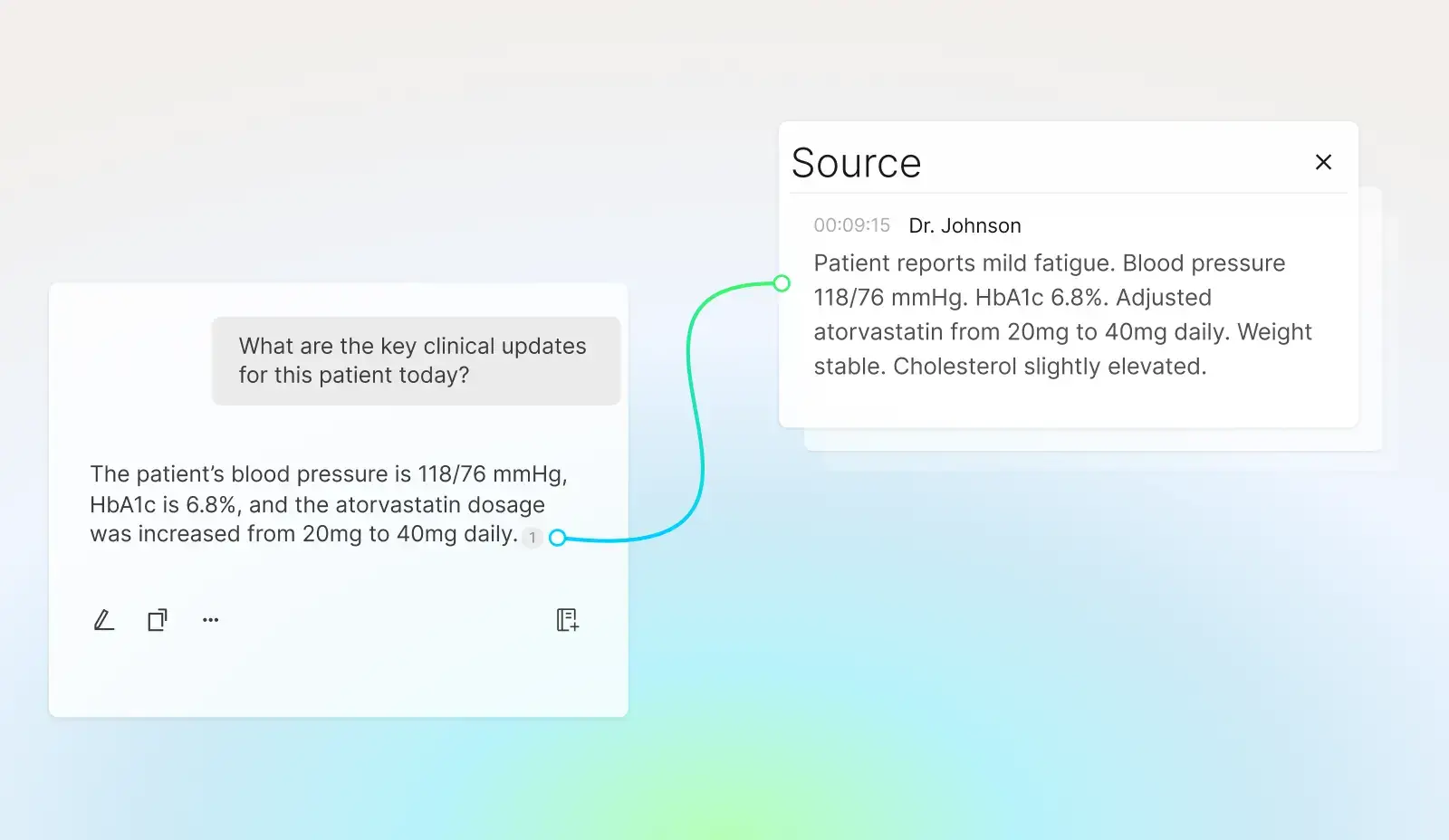 Just in case you were looking for nursing progress notes instead of notes for therapy, we’ve included this extra section.
Nursing notes are a bit different than the ones used in therapeutic sessions.
Nursing progress notes document a patient's condition, care provided, and response to treatment during a hospital stay or clinical visit. They're written by nurses to track changes in vital signs, symptoms, medications administered, and overall patient status.
To write them, record the patient's current condition using objective measurements (blood pressure, temperature, pain level) along with their reported symptoms. Document any interventions you performed, including medication administration, wound care, and patient education. And remember to always note how the patient responded. Most facilities use formats like SOAP or DAR (Data, Action, Response) to keep notes organized.
Note: Plaud AI note taker is a HIPAA-compliant tool that helps healthcare professionals record, transcribe, and summarize consultations securely. If you’re a doctor or a nurse who needs a wearable, compliant AI device for recording notes, we think you’d love it. Over 1.5 million professionals currently use Plaud globally.
Conclusion
Writing progress notes is not nearly as difficult as it used to be now that we have artificial intelligence. What used to take an hour or more can now be done in half the time or less.
All you need to do is record your conversation using Plaud, choose a template, and let our AI voice recorder do the work. Once your digital document is ready, give it a quick review and make sure everything is accurate.
That’s it, you’re done. You just saved a lot of valuable time!
The main thing we want you to take away from this article is that you should always use a pre-designed template, write clear and objective notes, and be sure to maintain client privacy. And, of course, give AI a try in your next session. It could save you hours of time, improve accuracy, and improve patient outcomes.
FAQ
How Do You Write a Simple Progress Note?
You write a simple progress note by choosing a template such as SOAP, and focusing on the fundamental session details: date, duration, and client presentation. Document what was addressed, the interventions employed, and how the client responded. Finish with your plan for the next steps. Keep it short yet detailed, emphasizing clinical relevance over superfluous information.
What Is an Example of a Progress Note?
Here’s a good example of a progress note using the SOAP method:
"The client reported a better mood (7/10 vs. 5/10 last week) and completed the anxiety tracking homework." We discussed CBT-based coping strategies for occupational stress. The client did deep breathing exercises and reported feeling more in control. ' Plan: Continue the CBT technique, assign gradual muscle relaxation, and schedule an appointment with the psychiatrist.”
How Do You Write a Progress Report Note?
A progress report note follows a standardized format that begins with client identification and session data, then documents present symptoms and functioning, describes interventions utilized, notes client reactions, and concludes with next steps. Use objective language, incorporate facts where possible, and maintain HIPAA compliance throughout the process.
What Are The Most Common Types of Progress Notes?
The most common types of progress notes are SOAP, DAP, and BIRP, but there are other formats. For example, Nursing notes may deviate from predefined templates. You can also make your own templates if you have the experience.
Are Progress Notes Necessary For Insurance Purposes?
Yes, progress notes are absolutely essential for insurance purposes. They are what prove the medical necessity for treatment. You will need them for insurance claims, audits, and even legal proceedings if the need arises. Make sure to take complete notes with all of the relevant details. Without comprehensive notes, insurers can deny claims.