
Granola and Tactiq both promise meeting notes without a bot joining your call, and both stop there. Granola is a desktop app that captures your computer's audio and merges it with notes you type during the call. Tactiq is a Chrome extension that produces a live transcript inside Google Meet, Zoom, and Microsoft Teams while the meeting runs.
The short version: pick Granola if you want a polished summary that reads like your own notes, pick Tactiq if you want the raw transcript in front of you while people are still talking. The comparison gets more interesting once you look at what each one costs after the free tier, and at the meetings neither one can reach.
The core difference: note-first or transcript-first
Granola gives you a scratchpad. You jot shorthand during the call, and afterward the AI merges those fragments with the full transcript into a structured summary. The output feels closer to notes you would have written with unlimited time, which is why people who already take notes tend to prefer it. 
Tactiq works the opposite way. The transcript appears live in the browser as people speak, with key moments highlighted. Summaries come afterward and cost an AI credit each. The value is immediacy: you can read back a sentence someone said thirty seconds ago without leaving the call.
That split predicts who each tool suits. A consultant writing a decision record wants Granola. A recruiter checking exactly how a candidate phrased something wants Tactiq.
One consequence of Granola's design deserves a flag. Granola does not retain audio or video of your meetings. If the transcript garbles a number or attributes a commitment to the wrong person, there is no recording to check it against. For casual internal meetings that is fine. For client commitments, pricing discussions, or anything you might need to defend later, an unverifiable transcript is a real limitation.
Where each one works
| Granola | Tactiq | |
|---|---|---|
| How it captures | Desktop app, system audio | Chrome extension, in-browser |
| Platforms | Mac, Windows, iOS. No Android, no web app | Chrome only, on Google Meet, Zoom, Microsoft Teams |
| Bot in the call | No | No |
| Live transcript | No | Yes |
| Audio retained | No | No |
| In-person meetings | Only if the laptop is present and running | No |
| Phone calls | No | No |
Both tools require a computer to be open, awake, and running the right software. Granola needs its desktop app on the machine playing the audio. Tactiq needs Chrome, which rules out the Zoom and Teams desktop clients that many companies standardize on.
The practical test: look at last week's calendar and count how many of those conversations happened with your laptop open in front of you. For a fully remote engineer that number is close to everything. For a salesperson, a clinician, a recruiter doing site visits, or anyone who takes calls on a phone, it is a fraction.
Pricing compared
| Granola | Tactiq | |
|---|---|---|
| Free | Basic: unlimited meetings, limited history | 10 transcripts/mo, 5 AI credits/mo |
| Entry paid | Business, $14/user/mo | Listed around $12/mo |
| Higher tier | Enterprise, $35/user/mo | Listed around $20/mo |
| Annual discount | Not published | Yes, cheaper per seat |
Granola restructured its pricing in 2026, dropping the older Individual and Pro plans. If you find a review quoting $18 per month, it is out of date, which is worth knowing because several comparison sites still list the retired tiers.
Granola's free plan is genuinely usable, with unlimited meetings, AI notes, AI chat, custom templates, and shared folders. The catch is history. Granola's own pricing page describes it only as limited meeting history, and third-party sources disagree about the real number, with some reporting a 25-note cap and others a 30-day window. Check inside the app before you rely on it, because your older notes disappearing is the most common reason people upgrade.
Tactiq's free plan is tighter in a different way. Ten transcripts a month is workable for light use, but five AI credits is not. Every summary and every question to the AI spends a credit, so a single busy meeting can exhaust the month. Even the entry paid tier keeps AI credits metered. Unlimited AI credits arrive only on the team tier, which changes the effective price for anyone who wants summaries on every call.
Read those two free plans carefully, because they fail in opposite directions. Granola lets you record everything and then hides your history. Tactiq lets you keep what you capture but rations the AI that makes it useful.
Accuracy and speaker identification
Both tools handle clean audio from a headset well. Both degrade in the same places.
Granola's speaker identification becomes unreliable in group calls beyond four or five participants, which matters when notes need to show who owns an action item. Because there is no audio to fall back on, a mislabeled speaker stays mislabeled.
Tactiq captures what the meeting platform produces in the browser, so its accuracy tracks the platform's own captioning quality. Crosstalk and strong accents cause the usual problems.
Neither tool is a good fit for a conference room with several people at a table, because both are capturing from one laptop microphone or one platform's audio stream rather than from a device built to hear a room.
Privacy, data training, and compliance
Granola trains its AI on your data by default. You can opt out in settings on any plan, including free, but the opt-out is per user, and only Enterprise lets an administrator enforce it across a team. For a manager rolling a tool out to a department, that distinction matters: every person has to remember to change the setting themselves.
Granola holds SOC 2 but does not offer HIPAA support, and org-level retention policies are limited. Tactiq's posture is lighter still, appropriate to a browser extension.
For regulated work, both tools ask you to accept gaps. If your organization runs a vendor security review, start there rather than with the feature list. Plaud publishes independently audited controls with SOC 2 Type II, security management aligned to ISO/IEC 27001, privacy management aligned to ISO/IEC 27701, GDPR-aligned privacy protections, healthcare-grade safeguards aligned with HIPAA expectations, and devices built to meet EN 18031 cybersecurity requirements. Data is protected in transit with TLS encryption and encrypted at rest with AWS server-side encryption, and your data is never used for AI training unless you explicitly opt in.
What neither tool covers
Both tools solve online meetings on a computer. Neither covers the other two places work conversations happen.
Phone calls are invisible to both. Take a client call on your mobile and there is no capture at all. In-person meetings only work for Granola if you bring a laptop, leave it open, and let it listen across a table it was not designed to hear. Tactiq cannot do it at all.
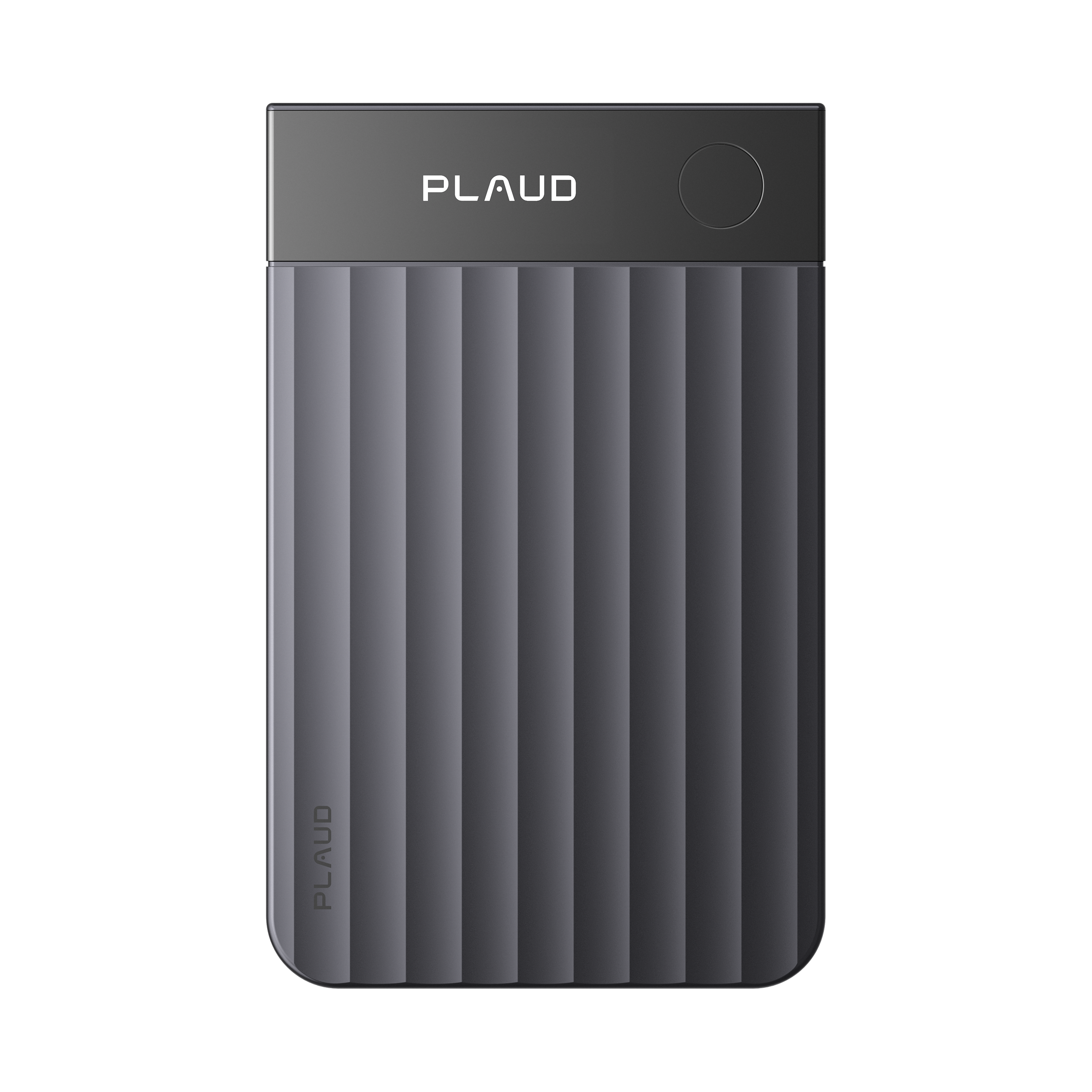
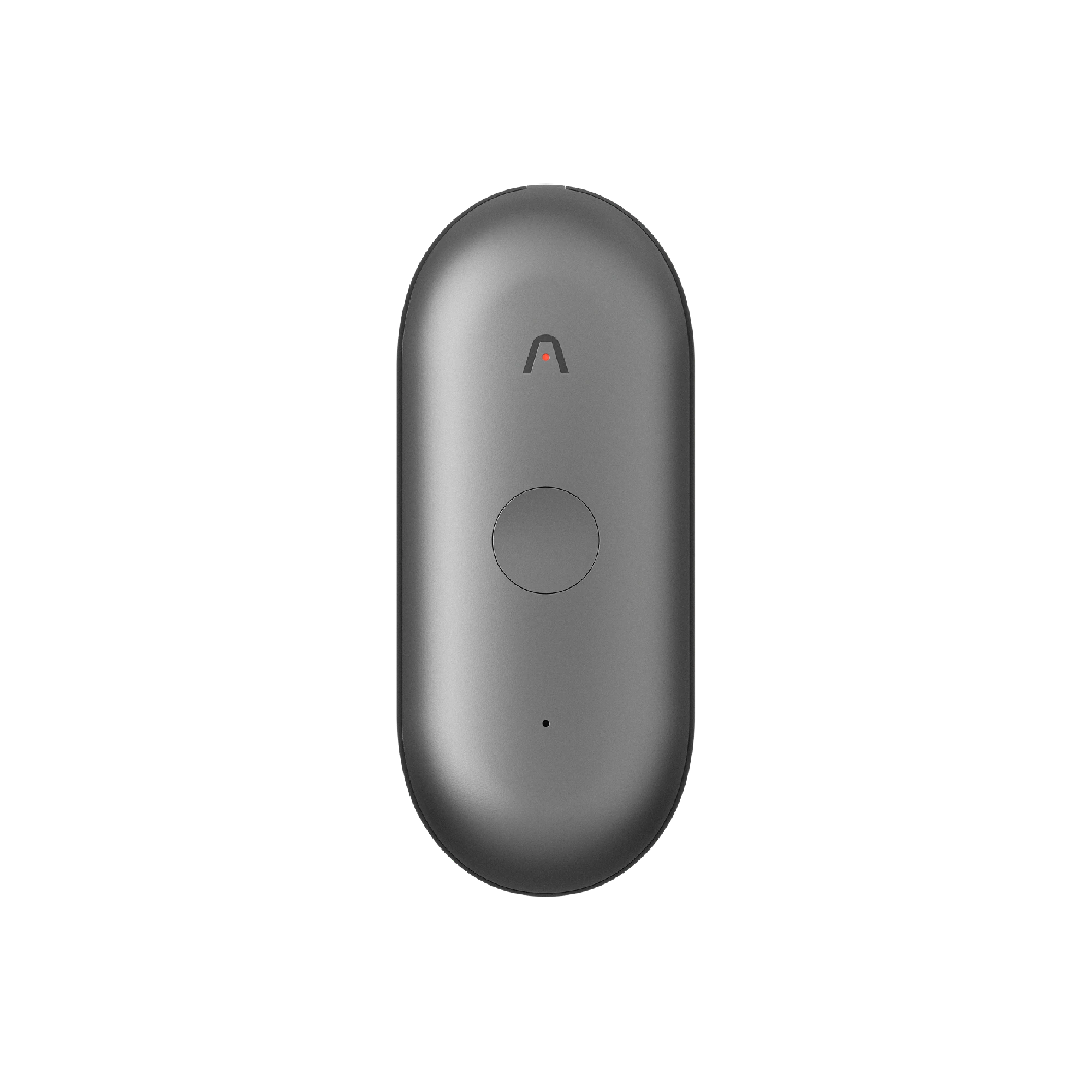
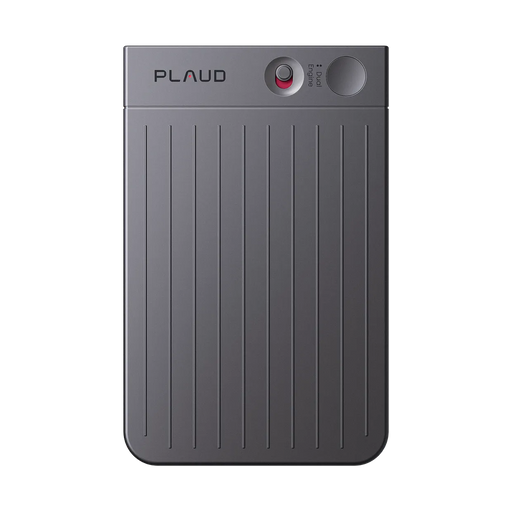
That gap is the reason hardware exists in this category. Plaud Note Pro captures the room directly at $189, with four MEMS microphones and AI beamforming rated for clear capture up to 16.4 feet, smart dual-mode recording that detects on its own whether it is handling a phone call or an in-person conversation, an InstantView AMOLED display confirming status at a glance, and up to 30 hours of continuous recording. It keeps the audio alongside the transcript, so a disputed number can be checked rather than guessed at.
Online meetings are covered from the same account through Plaud Desktop, which records natively from your computer without a bot joining the call, the same advantage Granola and Tactiq sell. The difference is that in-person conversations, phone calls, and video calls land in one library with one search, instead of a desktop tool for video calls and nothing for everything else.
For a fully remote worker whose meetings are all on a laptop, that coverage is unnecessary and either tool here will serve. For a week that mixes locations, it is the whole decision.
Before you record: consent and compliance
Before you record, take a moment to let others know and get their okay. Bot-free capture makes this more important rather than less, because nothing in the meeting signals to other participants that a tool is running. Most US states follow a one-party consent rule, while a smaller group requires everyone to agree, and conversations crossing state lines are safest handled under the stricter rule. The Justia 50-state survey is a solid starting reference.
Which one to choose
Choose Granola if your meetings are video calls on a Mac or Windows machine, you already take notes by hand, and you want a summary that reads like your own writing. Budget for Business at $14 per user monthly, since the free plan's history limit will find you.
Choose Tactiq if you live in Google Meet inside Chrome, want the transcript visible during the call, and mainly need searchable text rather than polished summaries. Treat the free tier as a trial and expect to pay for AI credits. Our full Tactiq review goes deeper on where the Chrome-only model breaks down.
Choose Plaud Note Pro if a meaningful share of your week happens away from a laptop, or if you need the audio behind the transcript. A $189 one-time device covers in-person conversations and phone calls that neither tool can reach, keeps the recording alongside the transcript so a disputed figure can be checked, and pairs with Plaud Desktop for video calls without a bot. It also comes with the free Plaud Starter Plan at 300 transcription minutes monthly, so there is no subscription required to start.
Those gaps in Granola and Tactiq are not oversights. They are the boundary of what a browser extension and a desktop app are built to do.
Count last week's meetings first
Before comparing feature lists, open last week's calendar and mark every conversation that mattered. If nearly all of them were video calls with your laptop open, this choice is straightforward and comes down to whether you want notes or transcripts. If a real share of them were phone calls, client visits, or conversations in a room, no browser extension or desktop app will cover them, and the right question shifts from Granola versus Tactiq to whether you need something that hears the room. Plaud Note Pro is built for that half of the week.