Dragon Copilot is Microsoft's unified clinical AI assistant, combining ambient documentation, voice dictation, and generative AI into one product built on decades of Nuance speech technology. It is now used by more than 100,000 clinicians across nine countries, with named deployments at Mount Sinai Health System and Tampa General Hospital. This review covers what Dragon Copilot does, what changed with its May 2026 pricing overhaul, where it holds up, and where it falls short.
What is Dragon Copilot
 Dragon Copilot traces back to Nuance Communications, the speech-recognition company behind Dragon Medical, which Microsoft acquired for roughly $19.7 billion in March 2022, one of the largest acquisitions in Microsoft's history. Nuance had already built Dragon Ambient eXperience (DAX) Copilot, an ambient documentation product, and Dragon Medical One, a dictation product used by more than 550,000 physicians. In March 2025, Microsoft unified both into a single product called Dragon Copilot, combining ambient listening, natural-language dictation, and generative AI built on Azure OpenAI Service.
If you've researched "Nuance DAX," "DAX Copilot," or "Dragon Medical One" recently, all three now point to the same underlying product line under the Dragon Copilot name. The unification means a health system evaluating Dragon Copilot today is really evaluating the combined successor to both older products, not a separate new entrant.
How Dragon Copilot works
Dragon Copilot listens to a patient encounter and generates a structured clinical note, and also supports direct voice dictation for documentation outside of a recorded visit. The platform integrates with Epic and Oracle Health (formerly Cerner), including full Epic EHR integration developed jointly by Nuance, Microsoft, and Epic. Physicians access Dragon Copilot through a dedicated app on mobile (iOS and Android), web, and desktop, though ambient recording specifically through the PowerMic Mobile companion app has historically been iOS-only, so confirm current Android ambient-capture support for your specific deployment.
Microsoft has expanded the product well past physician documentation. At HIMSS 2026, the company announced role-specific workflows for nurses, automating structured flowsheet entries for tasks like med-surg documentation and line insertions, and for radiologists, paired with PowerScribe One to summarize prior reports. Dragon Copilot now supports ambient conversation capture in 58 languages and is available in nine countries, including the US, Canada, the UK, Ireland, France, Germany, Austria, Belgium, and the Netherlands.
A newer capability, Work IQ, connects Dragon Copilot to Microsoft 365 Copilot, surfacing a clinician's emails, Teams messages, and calendar context alongside patient data inside the same workflow. Microsoft has also opened a marketplace model, letting health systems add partner-built AI apps and agents, from companies including Regard, Canary Speech, and Optum, directly inside the Dragon Copilot interface for tasks like revenue cycle management and diagnostic support.
Dragon Copilot pricing
Pricing is where Dragon Copilot gets genuinely confusing, and it changed again recently enough that older reviews and reseller listings you find online may already be out of date.
Microsoft does not publish a self-serve price. Historically, DAX Copilot pricing through resellers ran anywhere from roughly $369 to over $1,000 per provider per month depending on contract size, implementation scope, and minimum term. In February 2026, Microsoft briefly introduced a lower-cost "Physician Practice" per-user license aimed at smaller practices, with reseller listings around $150 to $160 per user per month. That offer did not last long: effective May 1, 2026, Microsoft discontinued the Physician Practice license entirely and moved all customers to a single, reduced-price standard per-user license that now includes the full enterprise feature set by default, alongside a simplified consumption fee for ambient and generative AI features billed per encounter rather than per action.
The practical takeaway: expect to go through a Microsoft account representative or an authorized Cloud Solution Provider for an actual quote, since list prices, discounts, and consumption fees vary by geography, contract length, and existing Dragon Medical One licensing. Microsoft has also introduced a 60 percent discount for eligible rural hospitals through a partnership with Pivot Point Consulting, specifically aimed at organizations that have been priced out of enterprise ambient AI. If you see a specific dollar figure for Dragon Copilot online, especially one that predates May 2026, treat it as historical rather than current.
Is Dragon Copilot HIPAA compliant and secure
Yes. Dragon Copilot runs on Microsoft's Azure cloud infrastructure and carries HITRUST CSF certification, SOC 2 Type II controls, and Business Associate Agreement availability for covered entities, consistent with Microsoft's broader healthcare compliance program. Data residency and redundancy are managed regionally on Azure, and Dragon Medical components support FIPS requirements for organizations with federal security needs.
As with any enterprise vendor, confirm the current BAA terms, data retention policy, and consumption-based billing scope for AI features directly with your Microsoft account team, since these details have changed more than once in the past year alongside the pricing restructure.
As with any tool that touches protected health information, get the patient's awareness and consent before recording a visit, in line with your organization's policies. Before you record, take a moment to let others know and get their okay.
What Dragon Copilot does well
- Decades of clinical speech recognition behind it. Dragon Medical's vocabulary and accuracy advantages predate the generative AI wave by years, and that head start still shows in specialty-specific dictation accuracy.
- Genuinely deep EHR integration. Full Epic integration was built jointly by Nuance, Microsoft, and Epic, not bolted on through a browser extension, and Oracle Health integration extends that reach further than most competitors attempt.
- Real scale, not pilot-stage numbers. More than 100,000 clinicians across nine countries, with named health systems like Mount Sinai and Tampa General, is a meaningfully larger deployment base than most competitors in this category can claim.
- Expanding past physicians. Purpose-built workflows for nurses and radiologists, not just adapted physician templates, show a level of role-specific investment most ambient AI vendors haven't reached yet.
- A path for smaller and rural organizations. The 60 percent rural hospital discount, paired with the May 2026 price reduction, is a real acknowledgment that enterprise pricing had priced out a meaningful share of the market.
Where Dragon Copilot falls short
- Pricing history is genuinely hard to pin down. Between legacy DAX Copilot rates, the short-lived February 2026 Physician Practice tier, and the May 2026 restructure, published numbers online span a wide range and much of it is already stale. Getting a real number still requires a sales conversation.
- Ambient capture and dictation are not identical across mobile platforms. The core Dragon Copilot app is available on iOS and Android, but ambient recording capability has historically shipped through the PowerMic Mobile companion app, which has been iOS-only. Confirm current Android ambient-capture parity before assuming full feature equivalence across your organization's device mix.
- A tier that launched and was discontinued within three months. The Physician Practice license, introduced in February 2026 specifically for smaller practices, was pulled by May 1. That pace of change makes it hard for a smaller organization to plan around Dragon Copilot's pricing with confidence.
- Enterprise sales cycle throughout. There is no self-serve signup at any tier. Evaluation, procurement, and implementation happen at the organizational level, closer to Ambience Healthcare's model than to a self-serve tool.
- Integration depth outside Epic and Oracle Health is less clear. Microsoft's marketing and case studies center heavily on those two EHRs. Organizations on other systems should confirm integration scope carefully before assuming parity.
Who Dragon Copilot is best for
Dragon Copilot fits large health systems and hospital networks already running Epic or Oracle Health, particularly organizations already invested in the broader Microsoft 365 and Azure ecosystem who can take advantage of Work IQ's cross-context features. It's a strong fit for multi-specialty systems that want to extend AI beyond physicians into nursing and radiology workflows under one vendor relationship, and for organizations with the internal IT and procurement capacity to manage an enterprise Microsoft contract.
It's a weaker fit for solo clinicians, small independent practices, or any organization that wants predictable, self-serve pricing rather than a quote-based enterprise relationship. Given how recently and significantly pricing has changed, it's also a harder platform to budget for confidently on a multi-year basis compared to competitors with stable, published pricing.
Dragon Copilot alternatives to consider
Dragon Copilot competes most directly with other enterprise-scale ambient AI platforms, and less directly with the self-serve tools built for individual clinicians and small practices.
- For a comparable enterprise platform with a stronger coding-integrity focus: Ambience Healthcare targets a similar large-health-system buyer, with AutoCDI as its main point-of-care coding differentiator rather than Dragon Copilot's broader Microsoft ecosystem integration.
- For enterprise voice-command features without the Microsoft dependency: Suki AI offers deep EHR write-back and a voice-controlled assistant for ordering and chart navigation, also through an enterprise sales process, but without requiring investment in the Microsoft stack specifically.
- For a solo clinician or small practice priced out of any enterprise platform: self-serve tools like Freed AI or Heidi AI scribe offer transparent monthly pricing without a sales cycle, though neither matches Dragon Copilot's native EHR write-back depth.
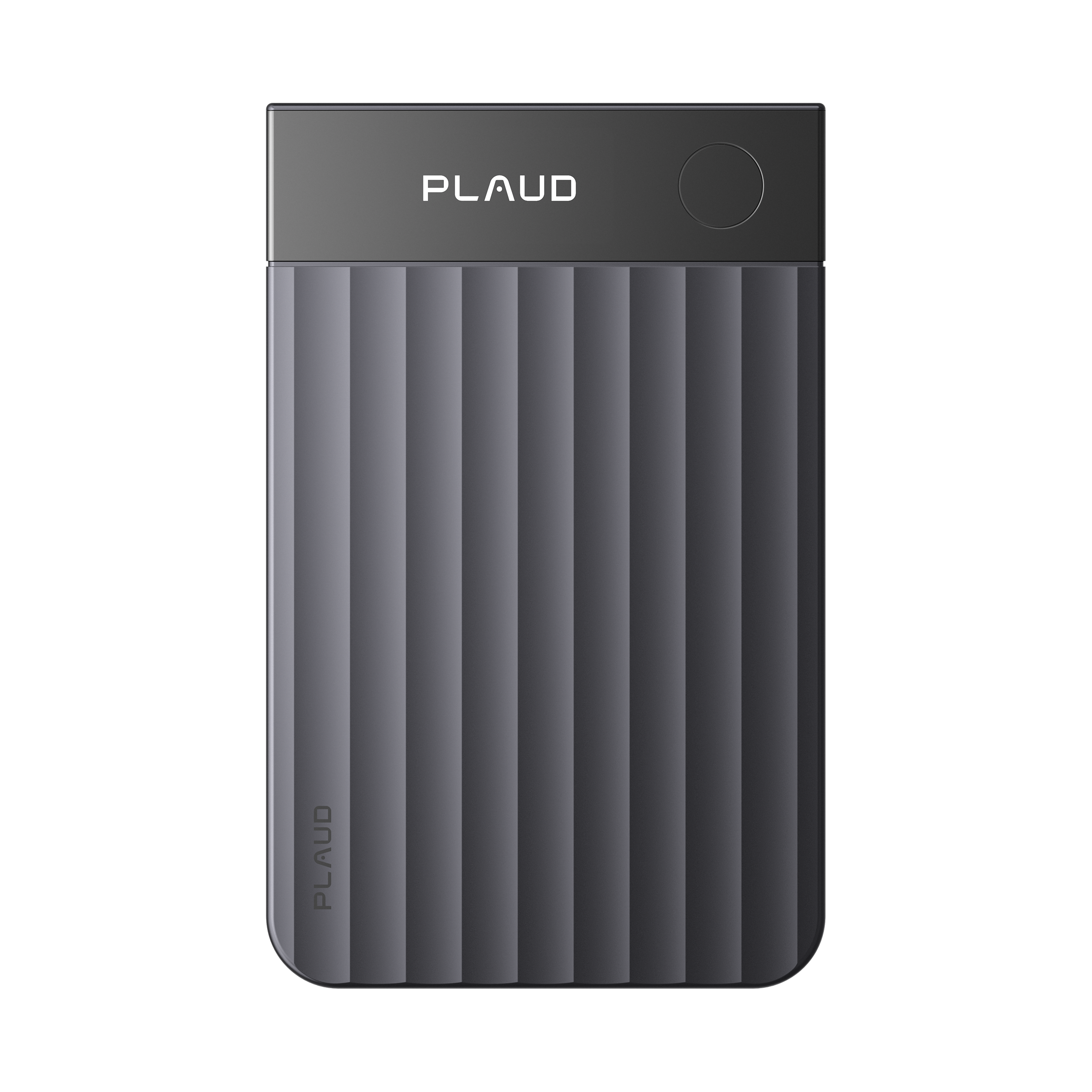
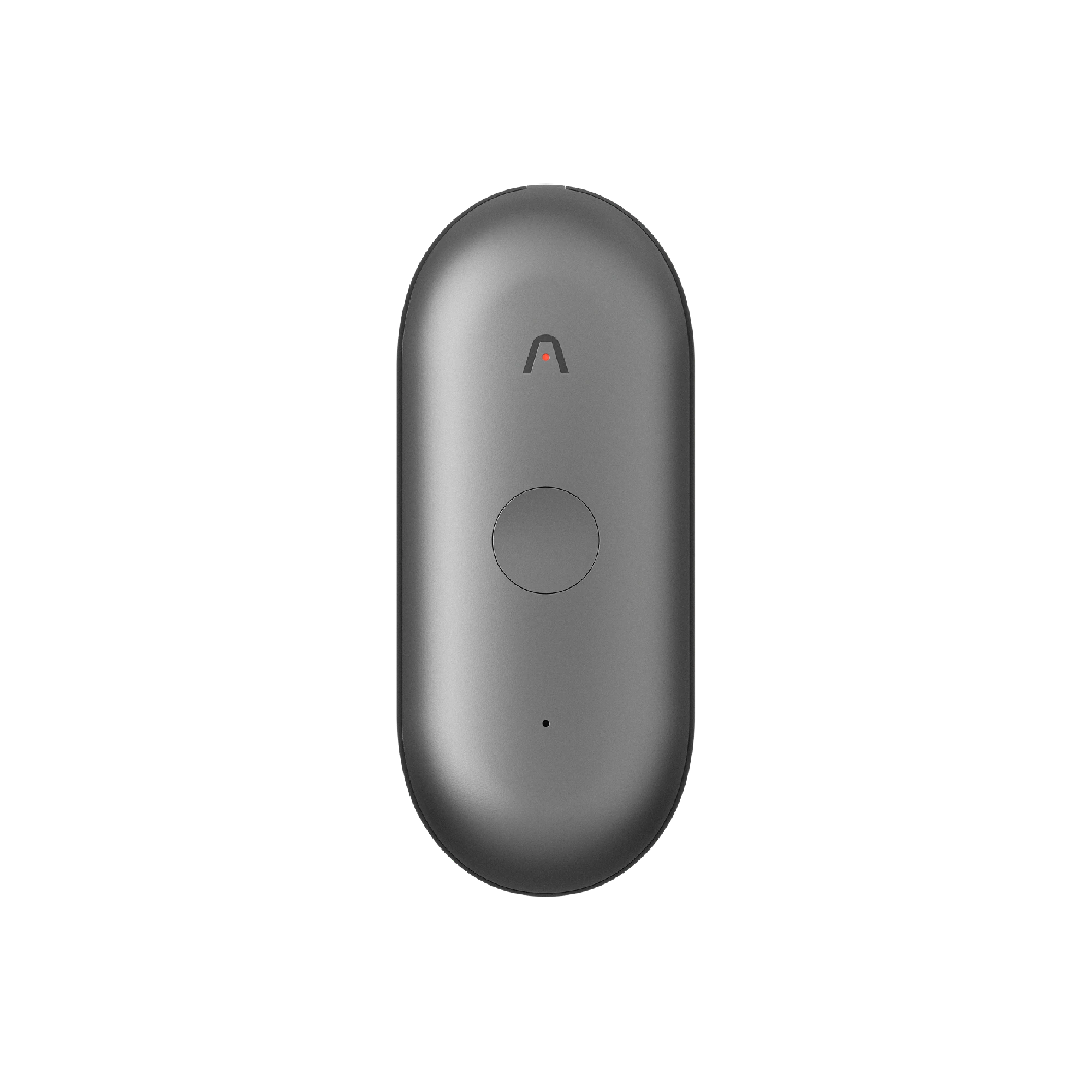
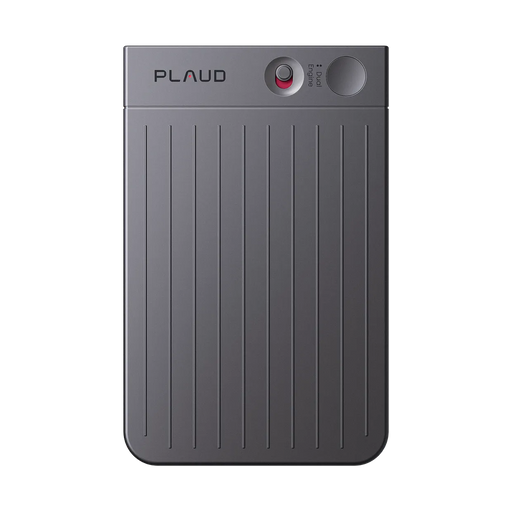
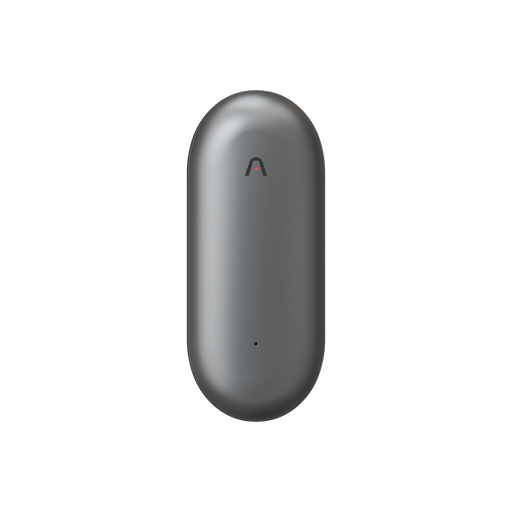
 For that last case, and for practices that want to skip the enterprise-vs-self-serve software decision entirely, Plaud NotePin S offers a fundamentally different starting point. It's hardware, not a per-user software license tied to Microsoft's evolving commercial terms: press the tactile record button, and Plaud Intelligence generates a structured note afterward, including SOAP and psychotherapy templates, for the clinician to move into the chart manually. For a small practice or department that wants several clinicians sharing one setup, Plaud Team adds centralized billing and device management for up to 50 seats without a sales call. Plaud does not attempt Dragon Copilot's native EHR write-back, multi-role workflows, or Microsoft 365 integration, but it carries HIPAA-aligned safeguards, SOC 2 Type II, ISO 27001 and ISO 27701, GDPR, and EN 18031 for the device's wireless communication, the same compliance set Plaud publishes, and will sign a BAA on request through its support team rather than gating it to a specific tier. The honest comparison is scale and dependency. Dragon Copilot is built for organizations ready to commit to Microsoft's ecosystem and enterprise procurement process in exchange for the deepest EHR integration and broadest role coverage available. Plaud is built for the clinician or small team that the procurement process was never designed to serve quickly.
Get a current quote before you plan around an old number
Given how much Dragon Copilot's pricing has shifted within a single year, from legacy DAX Copilot rates, to a short-lived Physician Practice tier, to the May 2026 restructure, the single most useful step before evaluating it seriously is requesting a current quote rather than budgeting off anything published more than a few months ago.
This review is based on publicly available information as of August 2026. Pricing, features, and compliance details can change, so confirm current terms directly with Microsoft before entering a contract.