As a user researcher running four to six interviews a week, my actual problem was never the recording part. My phone records fine. The problem was what happened after I pressed stop.
I'd finish a 45-minute participant interview, then spend another hour and a half cleaning up a transcript, tagging themes, and pulling quotes. Multiply that by five sessions a week, and I was losing an entire workday just on post-interview processing. When synthesis deadlines hit, I'd end up skimming transcripts instead of reading them closely, and my insights got shallower.
If your interviews mostly happen on Zoom or Teams, a software transcriber like Otter or Grain will handle this. This article is for researchers who do in-person sessions: contextual inquiries, field visits, café interviews, usability labs, guerrilla testing. The kind of work where pulling out a laptop feels wrong and a phone on the table changes how people talk.
How i picked these devices
What I actually look for
After testing five different recorders over the past year, three things determine whether a device actually improves my research workflow or just adds another gadget to charge.
Recording clarity. If the transcript is full of [inaudible] tags, the device is useless to me. I need clear audio even when participants speak softly, trail off, or when we're sitting in a noisy café. The microphone quality and noise processing matter more than any other feature.
Post-processing speed. This is the real time sink. A device that just records is a commodity. I need automatic transcription with speaker labels that I can trust enough to start coding from, without re-listening to the entire session. Every minute I save on transcript cleanup is a minute I spend on actual analysis.
How invisible it is. In user research, the recorder can't become part of the conversation. If a participant keeps glancing at it, or if I'm fiddling with it to start recording, it's affecting my data. The device needs to disappear once I set it up.
When wearable beats phone apps
I used my phone as a recorder for years. It works. But three things pushed me toward dedicated hardware.
First, phone recordings pick up every notification buzz. I'd be reviewing a transcript and find a chunk garbled because a Slack notification vibrated the table mid-sentence. Dedicated recorders don't have this problem.
Second, my phone needs to be available during sessions. I pull up the discussion guide, check the participant's profile, take quick photos of their setup during contextual inquiry. If my phone is also my recorder, I'm constantly worried about accidentally stopping the recording when I switch apps.
Third, and this is the one that finally convinced me: participant behavior changes when they see a phone face-up on the table with a red recording dot. A small device they barely notice? They relax faster.
Trade-offs you should expect
No device in this category is perfect. Here's what you're signing up for regardless of which one you pick.
Subscriptions. Almost every AI recorder charges monthly for transcription and summaries. The hardware is the entry fee; the software is the ongoing cost. Budget for both.
Accuracy gaps. AI transcription in 2026 is good, maybe 90-95% in clean conditions. It's not 100%. You'll still need to spot-check quotes before putting them in a research report, especially names, jargon, and mumbled responses.
Privacy logistics. You already get consent for recording. But a wearable device adds a layer: some participants ask about where audio is stored, whether it goes to the cloud, who has access. Having clear answers ready is part of the job now.
Here's a quick comparison of how the five devices I tested stack up:
| Device | Works well when | Falls when | Best for |
|---|---|---|---|
| Plaud NotePin S | Contextual inquiry, field visits, guerrilla testing | Large rooms, 8+ people at distance | On-the-go in-person research |
| Soundcore Work | Quick intercepts, short interviews, budget setups | Long session days, power users | Occasional research or secondary recorder |
| Omi | Researchers who code and want custom pipelines | Anyone wanting polish out of the box | Tech-savvy teams building custom workflows |
| Comulytic Note Pro | Long field days, researchers avoiding subscriptions | Wanting the most advanced AI summaries | Budget-conscious teams doing high-volume sessions |
4 best wearable AI recording devices for user researchers
Plaud NotePin S
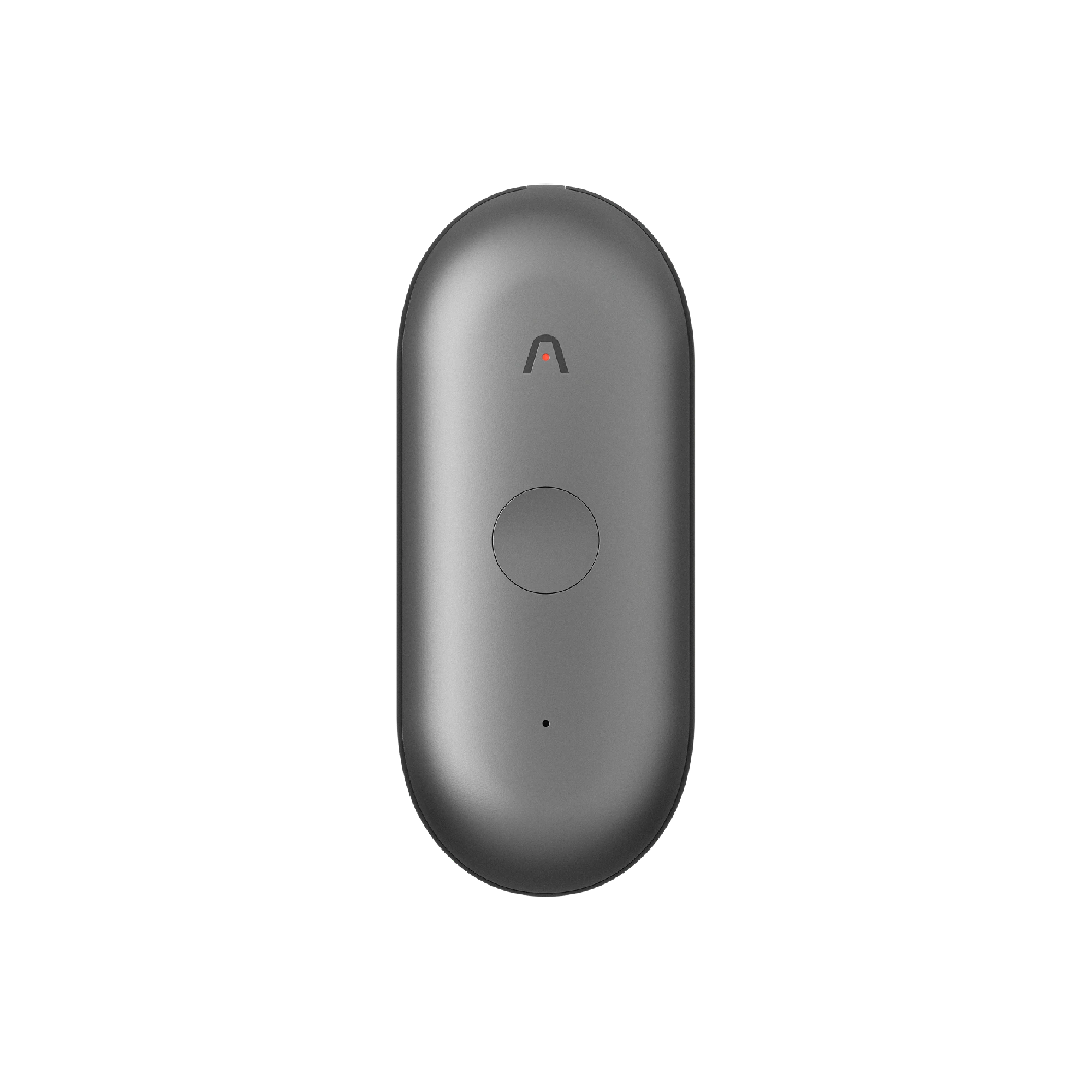
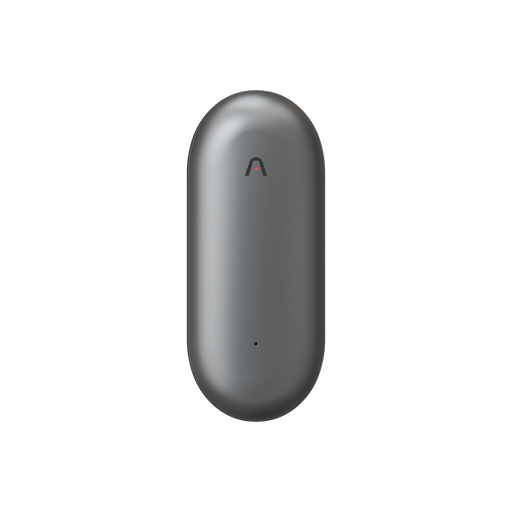
Think of this as the Note Pro's smaller sibling that actually clips to your body, built for the days when you can't just set a recorder on a table.

Why it works for user research
Contextual inquiry is where the NotePin S earns its place. I clip it to my collar, start recording with one press, and then I'm free to follow a participant through their workspace, their kitchen, their morning routine. My hands are free to take photos, point at things, or just be a normal human having a conversation.
The highlight button works the same way as on the Note Pro. When something important happens, I tap it. This is especially useful during field visits where I'm observing behavior and can't write notes simultaneously. I end up with a transcript that has little flags at all the moments I thought were significant, which makes coding the session much faster afterward.
It supports over a hundred languages, and the speaker labeling works well enough in a two-person conversation that I can tell my questions apart from the participant's responses without re-listening.
Where it comes up short
The pickup range is more limited than the Note Pro. In a one-on-one conversation or a small group of three to four people, it's fine. But in a larger usability session where stakeholders are observing from across the room and chiming in, or in a noisy outdoor setting, the audio quality drops noticeably.
I've also had sessions where the NotePin S was clipped to my collar and the participant was across a wide table. Their voice came through, but quieter, and the transcript had more errors on their side of the conversation. For sit-down interviews where you can control the environment, the Note Pro sitting on the table between you is simply better audio.
The NotePin S costs $179 for the hardware, same subscription tiers as the Note Pro. If you're buying both (one for the table, one for the field), the subscription covers both devices, which is a nice touch.
Soundcore work
Soundcore Work is a coin the size of a large button that you clip to your shirt, and for quick, casual research moments, it does the job without the price tag of a full research setup.
Why it works for user research
The simplicity is the selling point. Press the button, it records. Double-tap to mark a moment. That's it. For a 15-minute intercept interview at a retail store, or a quick guerrilla usability test in a public space, I don't need a sophisticated device. I need something tiny that captures clear audio and transcribes it afterward.
At $159.99, it's the most affordable branded option. The hardware feels solid (Anker makes it, and they know how to build small electronics), and the coin form factor is genuinely discreet. Participants barely notice it.
The transcription is powered by GPT and handles English well. Speaker separation works for two to three people in a quiet room. Summaries are basic but functional.
Where it comes up short
The 300 free minutes per month is tight. That's about five 60-minute sessions, and if your transcription runs even slightly over, you're paying $15.99/month for the Pro plan. For a researcher doing this daily, the total annual cost approaches what Plaud charges for a more capable device.
The battery on the pin (without the charging case) lasts about eight hours. I ran into trouble during a full-day field study: by the afternoon session, I was scrambling to charge it in the case between interviews. The Plaud Note Pro's multi-week battery life handles this scenario without thinking.
The app is functional but thin. No mind maps, no "ask your recordings" feature, no multi-session synthesis. You get a transcript and a basic summary. For a researcher who wants to query across multiple interviews ("What did participants say about onboarding?"), this falls short.
Omi
If you're a researcher who also writes Python scripts to analyze your data, Omi might be the most interesting device on this list. For everyone else, it's a curiosity.
Why it works for user research
Omi is open-source, both the hardware and the software. At $89, it's the cheapest option here. The research angle is interesting because the open platform lets you build custom integrations. One team I know built a pipeline that sends Omi transcripts directly into Dovetail for tagging. Another created a custom summary template specifically for usability test sessions.
It offers HIPAA compliance and SOC 2 certification, which matters for researchers doing healthcare or clinical studies. You can also store data locally on your phone instead of the cloud, which some IRBs (institutional review boards) require.
The community around it is active and growing, especially after many Limitless Pendant users migrated over when Meta acquired that company in late 2025.
Where it comes up short
The reliability issues are real. During my testing, the Bluetooth connection dropped multiple times mid-session. For a casual conversation, that's annoying. For a research interview where I've scheduled a participant, traveled to their location, and have exactly one shot to capture the data, it's unacceptable. I lost about four minutes of audio from one session because the connection silently failed.
There's no onboard storage. Everything streams to your phone over Bluetooth. If your phone's battery dies, the app crashes, or Bluetooth hiccups, the audio is gone. After the connection drops I mentioned, I switched to using Omi as a backup recorder alongside my Plaud, not as my primary device.
The transcript quality is noticeably lower than Plaud or Soundcore. Speaker diarization (labeling who said what) was inconsistent, which means more manual cleanup before I could start coding themes.
Comulytic note pro
This one is for researchers who've done the math on subscription costs and don't like the answer. Comulytic's pitch is simple: buy the device, get unlimited basic transcription, no monthly fees.
Why it works for user research
The no-subscription model is the headline feature, and for high-volume research teams, the savings add up fast. You pay $159 for the hardware and get unlimited transcription included. If you're a freelance researcher or a small team running 20+ sessions a month, that's significant compared to paying $240/year on top of hardware costs.
Battery life is genuinely impressive. The company claims 45 hours of continuous recording and over 100 days of standby, and in my testing, it held up. During a week-long field study with multiple sessions per day, I charged it once. For marathon research sprints, that matters.
The device is physically larger than the Plaud NotePin S but smaller than a traditional recorder. It sits comfortably on a table and picks up two-person conversations clearly.
Where it comes up short
The AI features on the free tier are basic. You get transcription and some level of summarization, but the more advanced features (instant AI summaries, unlimited templates, chat with AI) require a $15/month plan. So the "no subscription" claim applies to transcription specifically, not to the full AI suite.
The app and ecosystem feel a generation behind Plaud's. Transcript editing is clunky, there's no multi-session query feature, and the summary templates are limited. For a researcher who relies heavily on AI-generated summaries to speed up synthesis, this feels like a step back.
It's also a newer company with a smaller user base, which means fewer community resources, fewer integrations, and more uncertainty about long-term support. After watching both Humane and Limitless disappear in 2025, company stability is something I think about.
Traditional recorders vs. phone apps vs. wearable AI: how they compare
Here's the honest breakdown of the three approaches most user researchers are choosing between right now.
| Dimension | Traditional recorder (e.g., Sony ICD-TX660) | Phone app (e.g., Otter, built-in recorder) | Wearable AI (e.g., Plaud, Soundcore) |
|---|---|---|---|
| Audio clarity | Excellent (purpose-built mics) | Good (varies by phone model) | Very good (dedicated mics + noise processing) |
| Noise handling | Minimal processing, clean raw audio | Depends on phone hardware | Active noise reduction via AI |
| Transcription | Manual (you do it yourself or upload) | Built-in, real-time for some apps | Built-in, auto after recording |
| Post-processing time | High (hours per session) | Low to medium | Low (minutes per session) |
| Portability | Pocketable, not wearable | Always with you | Clip-on or pocket, very discreet |
| Discretion in sessions | Small but visible | Phone on table changes dynamics | Often invisible to participants |
| Cost (year 1) | $50-150, no ongoing cost | Free to $20/month | $89-$179 hardware + $0-$240/year subscription |
Where wearable AI wins: the gap between "raw audio file" and "usable transcript with themes" shrinks from hours to minutes. For researchers doing multiple sessions per week, that time savings compounds fast.
Where wearable AI doesn't help: if your sessions are primarily remote (Zoom, Teams), a software tool with bot integration is more seamless. And if you need studio-quality audio for archival or publication purposes, a traditional recorder like the Zoom H5 still produces cleaner raw audio than any wearable.
The sweet spot I've landed on: wearable AI for everyday research sessions where speed matters, and a traditional recorder as backup for high-stakes sessions where audio quality is critical.

So which one should you pick?
After a year of testing, here's the decision framework I'd give to any user researcher:
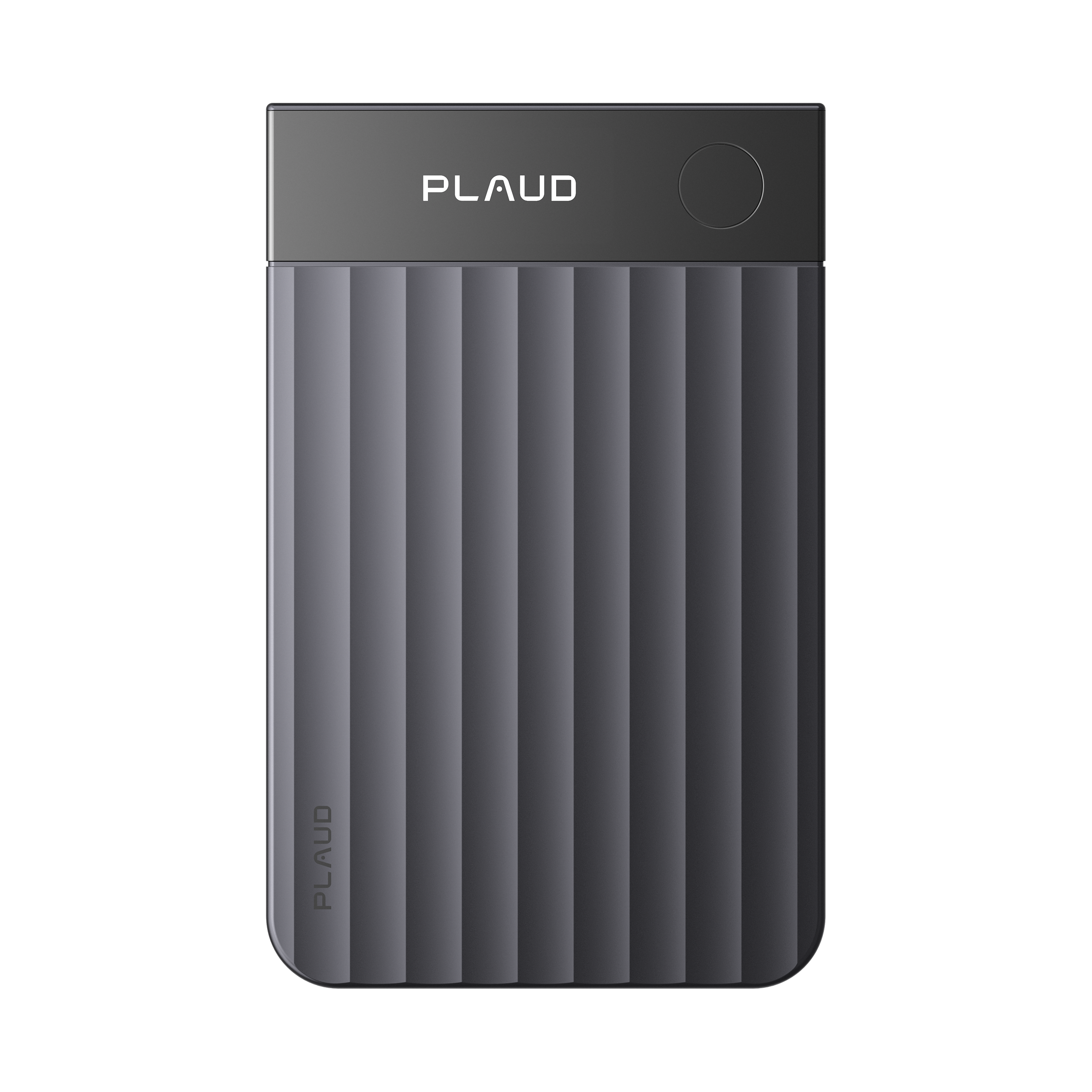
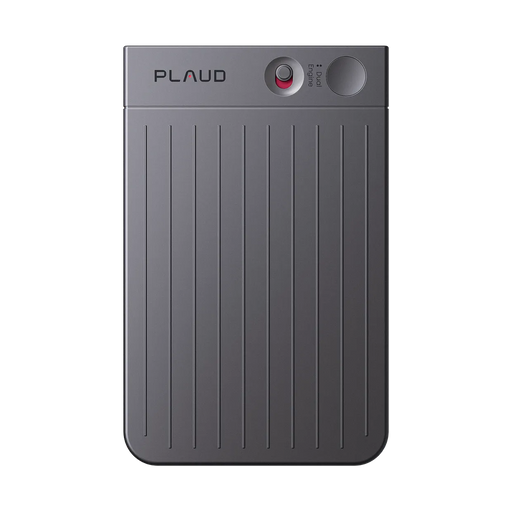
If you run formal, sit-down interviews and want the best overall experience: the Plaud Note Pro. Place it on the table, forget about it, get a polished transcript with speaker labels. The highlight button, multimodal notes, and "Ask Plaud" feature make it the most complete tool for research workflows.
If you do contextual inquiry, field research, or guerrilla testing: the Plaud NotePin S. Clip it to your collar, stay hands-free, and capture conversations as you move. Pair it with the Note Pro if you do both field and lab research (one subscription covers both).
If you're budget-constrained and your sessions are short or occasional: the Soundcore Work at $160, or the Comulytic Note Pro at $159 if you want to avoid monthly subscriptions for basic transcription.
If you're a researcher who wants full control of your data pipeline: Omi. But use it as a secondary recorder until the reliability improves. Don't risk primary research data on unstable Bluetooth.
If most of your research is remote: skip the hardware. A software tool like Otter, Grain, or Dovetail's built-in recorder will serve you better.
Conclusion
The wearable AI recording category in 2026 has matured enough that user researchers can genuinely save hours per week on post-interview processing. But the gains are uneven across devices. The best experiences come from products that nail the basics (clear audio, reliable transcription, speaker labels) rather than ones that promise to do everything.
My recommendation for most user researchers: start with what matches your most common session type. If you're mostly in interview rooms, the Plaud Note Pro is the strongest choice. If you're mostly in the field, the Plaud NotePin S earns its place.
Here's a practical next step: track your sessions for one week. Write down three things for each interview: where it happened, how noisy it was, and how long you spent cleaning the transcript afterward. That data will tell you exactly which device fits your workflow and whether the subscription cost pays for itself in saved hours. For most active researchers, the math works out in the device's favor within the first month.