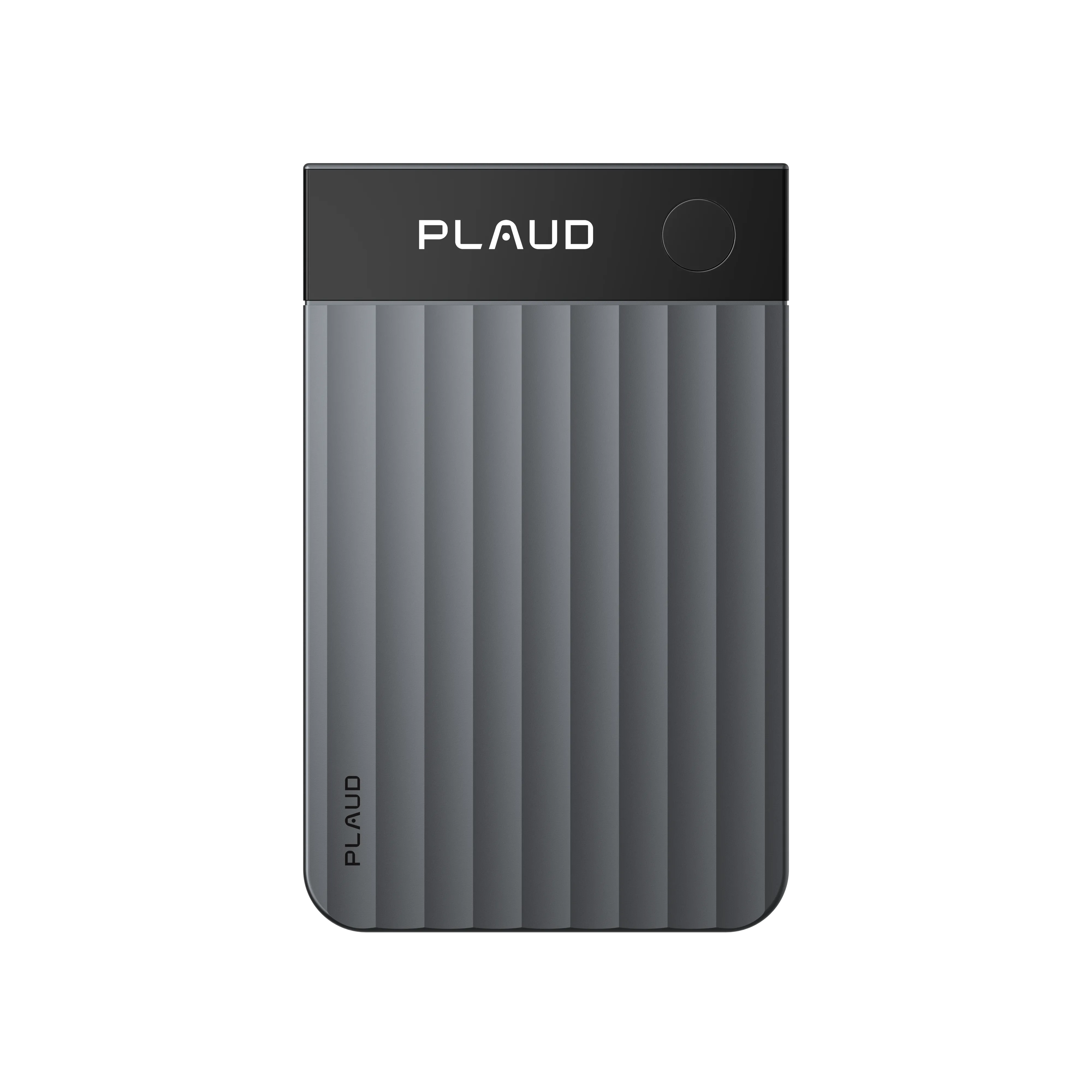
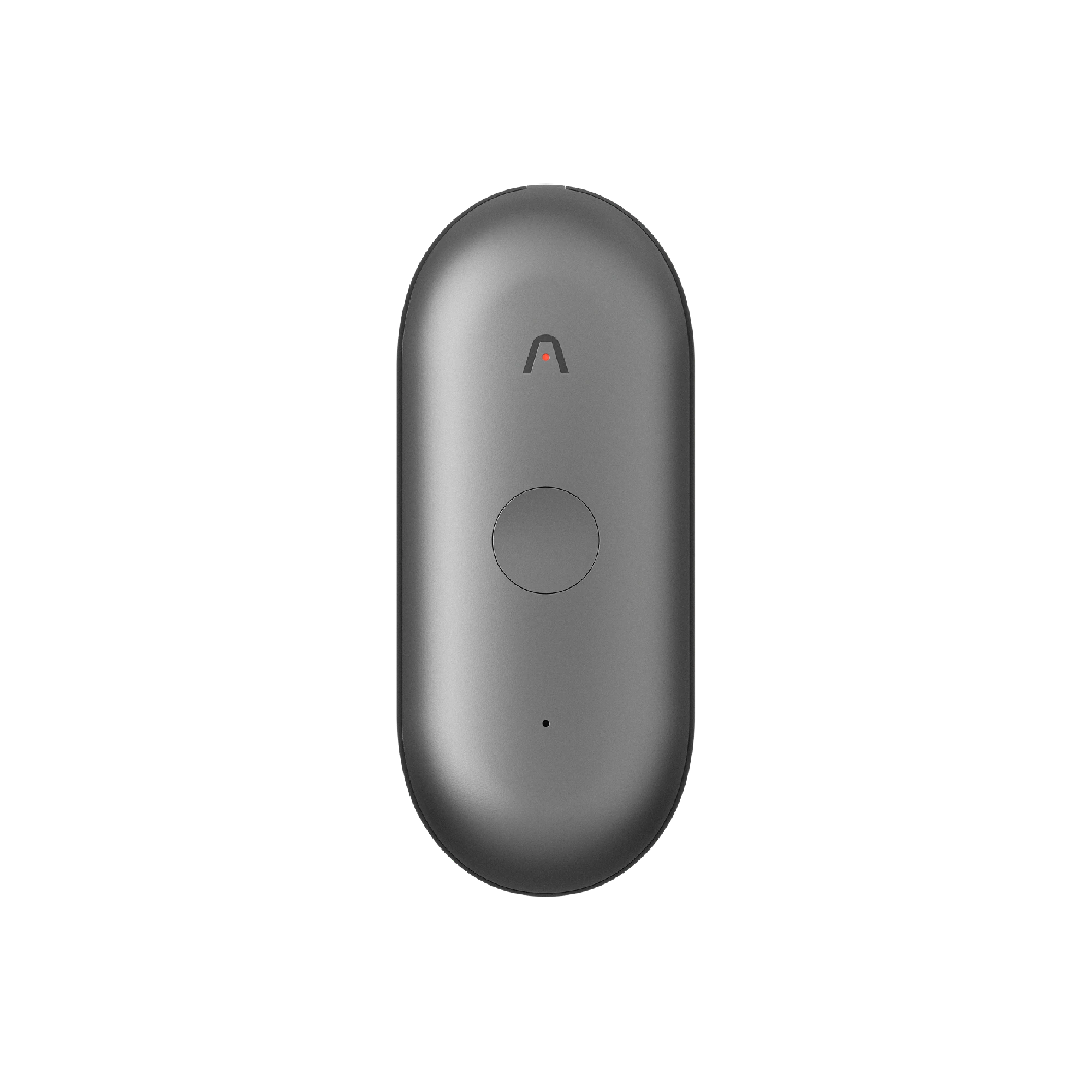
As a journalist, most of my workday doesn't happen at a desk. I'm in a café across from a nervous source. I'm at a press conference elbowing past other reporters. I'm on a sidewalk outside city hall chasing a council member who just walked out of a closed-door session.
And the moment I pull out my phone to record, people stiffen up. The source who was about to say something real switches to their media-trained voice. If I'm scribbling notes instead, I miss half of what they said. Then I'm emailing back to "confirm a quote," getting a watered-down version (if I get a reply at all), and my editor sends the draft back: "This is all paraphrase. Where's the voice?"
I've spent the past year testing wearable AI note takers to see which ones keep up with field work. Quick note: if most of your interviews happen on Zoom or Teams, a software transcription tool will do the job. This is for reporters who work face-to-face, in the field, or over the phone.
How I chose the best wearable AI note takers in 2026
Why "wearable" matters for journalists
For me, a wearable isn't a nice-to-have. It's a workflow requirement.
Most AI note-taking tools are software. They join your Zoom call as a bot, or they run on your laptop. That's great if your interviews happen on a screen. Mine don't. I'm standing on a street corner. I'm sitting across from someone at a diner. I'm walking through a factory floor. I need something physically on me that records without me having to fumble with an app.
A wearable also keeps things low-key. When I clip a tiny device to my jacket, most people don't even notice it. That matters. A relaxed interview subject gives better quotes.
What I actually look for
After testing a bunch of these, I've narrowed it down to three things that actually matter for field journalism:
How invisible is it? If the device draws attention, it defeats the purpose. I want something small, quiet, and unobtrusive. No blinking lights, no buzzing notifications.
How fast can I start recording? I don't always know an interview is about to happen. Someone might pull me aside at an event and start talking. I need to go from "not recording" to "recording" in under two seconds, ideally with one hand.
How useful is the output afterward? Raw audio is almost worthless to me. I need a transcript I can search, a summary I can scan, and ideally the ability to jump to the moment I care about without replaying forty minutes of small talk.
Here's a quick snapshot of how each tool stacks up:
| Tool | Works well when | Falls when | Best for |
|---|---|---|---|
| Plaud NotePin S | Sit-down interviews, press events, phone calls | Extremely loud environments (construction sites, protests) | Journalists who want one device that covers most scenarios |
| Plaud NotePin | Quick street interviews, daily beats | You need to flag key moments in real time | Budget-conscious reporters who want simplicity |
| Limitless Pendant | All-day passive recording, desktop meeting capture | You're outside the US (service restricted post-acquisition) | No longer recommended (see note below) |
| Phone interviews, on-the-go idea capture | Multi-person roundtable discussions | Journalists who do a lot of phone-based reporting | |
| Soundcore Work | Short sit-downs, Apple-heavy workflows | Long field days, multi-hour recordings | Apple ecosystem reporters who want something coin-sized |
5 best wearable AI note takers for journalists
1. Plaud NotePin S
The NotePin S is basically a tiny clip-on recorder with a physical highlight button that lets me flag key quotes as they happen.
Why it works for journalists
The NotePin S is the device I've settled into for most of my interview work. It clips to my collar, and it's light enough that I genuinely forget it's there by mid-morning. I press the button once to start recording, and that's it. I'm covered.
What sold me is the highlight button. During an interview, when a source says something I know I'll want to quote, I give the button a quick tap. Later, when I'm reviewing the transcript in the Plaud app, those highlighted moments show up first. For a journalist on deadline, that's a big deal. I don't have to scrub through a forty-minute recording to find the one sentence I need.
The transcription handles accents well and works in a lot of languages, which matters when I'm covering immigrant communities or international business stories. And the battery gives me about 20 hours of recording time, which lasts me a full work week on most weeks, which is one less thing to manage.
I also like the multimodal input. I can snap a photo of a document or whiteboard during a briefing and the app ties it to the relevant part of the recording. That's come in handy more than once at press conferences where someone's showing slides.
Where it's not the best choice
I ran into trouble at a noisy outdoor rally. The microphones are good, but they aren't magic. When there's a crowd chanting and a PA system blaring, the person standing two feet away from me still gets muddled in the transcript. I've learned to move somewhere quieter for the actual interview if I can.
The other thing that bothered me: the free plan gives me 300 minutes a month of transcription. That sounds like a lot until you realize a single long interview day can eat through half of it. I ended up paying for the Pro plan, which is fine, but I wish I'd known that upfront. The hardware cost isn't the whole picture.
One more thing: I once tapped the highlight button and thought I'd flagged a moment, but I hadn't pressed hard enough. Missed a great quote. You learn the feel of it pretty quickly, but those first few days I was second-guessing myself.
2. Plaud NotePin
Think of this as the stripped-down, more affordable version that still gets the core job done.
Why it works for journalists
The original NotePin is lighter on features but also lighter on the wallet. If I'm recommending a wearable to a colleague who's never used one, I usually point them here first.
It records, it transcribes, it gives me a summary. For a daily beat reporter doing two or three short interviews a day, that's really all you need. The form factor is the same pill shape, and it comes with a magnetic pin and clip. I like the clip for jacket pockets. (Fewer accessory options is one more reason the NotePin S might be worth the upgrade — it bundles all four wearing styles.)
The transcription quality is the same as the NotePin S since they use the same app and AI backend. So for pure recording and note-taking, there's no real downgrade.
Where it's not the best choice
No highlight button. That's the big one. I didn't realize how much I relied on it until I went back to the original NotePin for a week. Without the ability to flag moments on the fly, I was back to scrubbing through full recordings after the fact. For short interviews it's fine. For a ninety-minute sit-down with a CEO, it's painful.
The squeeze-to-record gesture on the original NotePin also took me a while to get comfortable with. I had to really pinch the device to start recording. One time I thought it was recording during a quick hallway chat and it wasn't. That was frustrating. The NotePin S fixed this with an actual button, and honestly, that alone might be worth the price difference.
3. Limitless pendant
Limitless was the always-on "memory necklace." Interesting idea, but the rug got pulled.
Why it was interesting
I'll be upfront: I can't recommend buying this right now. But it deserves a spot on the list because the concept was genuinely compelling for journalists, and it might come back in some form.
The Limitless Pendant was a small clip-on or necklace device that recorded everything, all day, automatically. No button press needed. It paired with a desktop app that also captured your computer audio, so your Zoom interviews and in-person conversations all ended up in one searchable database.
For a journalist, that's appealing. I can't count the number of times someone said something useful to me in an "off-the-record" hallway conversation that I later wished I could reference (with their permission, of course). The idea of having a searchable log of my professional day was genuinely exciting.
Current limitations
Meta acquired Limitless in December 2025 and immediately stopped selling the pendant to new customers. Existing users get about a year of continued service, but the writing is on the wall. The device is being folded into Meta's broader AI wearables strategy, probably Ray-Ban smart glasses.
If you're outside the US, it's even worse. Service was cut off entirely in the EU, UK, and several other regions on the day of the acquisition. Privacy regulations like GDPR made it too complicated for Meta to maintain.
I had one for a few months before the acquisition. The always-on recording was genuinely useful, but it also made some interview subjects uncomfortable when I explained how it worked. "So it's recording everything, all the time?" is not a question that puts people at ease.
The transcription quality was solid for one-on-one conversations, but it couldn't tell the difference between me talking to a source and the TV playing in the background at a café. I'd get transcripts full of random news broadcasts mixed in with my interviews.
If Meta brings this technology back inside Ray-Ban glasses or some other device, I'd try it again. But right now, buying a used Limitless Pendant on eBay doesn't make sense. The software support has an expiration date.
4. Pocket
Pocket is a $79 recorder that sticks to the back of your phone, and it shines at phone interviews.
Why it works for journalists
Pocket is different from the other devices on this list because it's designed to live on your phone, not on your body. It magnetically attaches to the back of your smartphone (like a MagSafe accessory), and it has a contact microphone that picks up audio through the phone chassis. That means it can cleanly record phone calls, something most wearable recorders struggle with.
For me, about a third of my interviews happen over the phone. I used to hold my phone on speaker and point a separate recorder at it, which was clumsy and sounded terrible. With Pocket, I just take the call normally and the device captures both sides clearly. That alone made it worth trying.
The one-click recording is fast, the battery lasts a few days, and the transcription is decent. The summaries pick out key points and organize them into something I can scan quickly.
At $99, it's the cheapest device on this list. There are 200 free minutes per month included, and then you buy credits for more. For reporters doing mostly phone work, the math works out.
Where it's not the best choice
It's not really a wearable in the traditional sense. It sits on your phone. If I'm at a press conference or doing a sit-down interview, I'd rather have something clipped to my collar than something stuck to the back of my phone sitting on the table. The microphone range isn't as good for picking up a room full of people.
I also found the app a little bare-bones compared to what Plaud offers. No multimodal input, no mind maps, fewer template options. The transcripts are accurate, but the post-processing tools are basic. If I just need a clean transcript and a quick summary, it's fine. If I need to organize a complex, multi-source investigation, I need something more.
And the magnetic attachment? I knocked the device off the back of my phone twice in the first week. Once in a taxi, once while pulling my phone out of my pocket. It's not a dealbreaker, but it's annoying when you're rushing.
5. Soundcore work
Soundcore Work is a coin-sized recorder for Apple users who want something impossibly small.
Why it works for journalists
The Soundcore Work is tiny, about the size of a large coin and lighter than most of the devices here. It clips to a collar, jacket, or lanyard, and it's so small that I've had colleagues literally not see it when I pointed to it.
For short, targeted interviews (a fifteen-minute sit-down, a quick quote grab after a presser), it's great. The transcription uses its own app, and if you're deep in the Apple ecosystem (iPhone, Mac), the integration is smooth. It has Apple Find My support, which is useful because something this small is easy to lose. I'm speaking from experience.
The sound quality surprised me for something so small. In a quiet office or café, it picks up voices clearly. The AI summaries are functional, not as polished as Plaud's, but they get the main points across.
Where it's not the best choice
The battery life isn't great for long field days. If I'm out from 8 AM to 6 PM doing multiple interviews, I need to be mindful of charge. For a reporter with a more predictable schedule, maybe office-based with one or two meetings a day, it's fine. For my kind of work, I've had it die on me mid-afternoon.
The subscription model is steep. The device costs about $160, and then the Pro plan is $15.99 a month after the six-month trial runs out. That's about $256 in the first year with the trial, or roughly $352 without it. For a freelancer watching every dollar, that math is hard to justify unless you're using it constantly.
I also found the setup finicky. I couldn't get Apple Find My to work on the first try, and the device occasionally disconnected from my iPhone during recordings. It always reconnected, and I didn't lose any audio, but the notification popping up mid-interview was distracting. Soundcore might iron this out with software updates, but as of now, it's a minor but real annoyance.
So which one should you pick?
After using all of these, here's how I'd break it down:
If you do a mix of sit-down interviews, press events, and phone calls, and you want one device that handles most of it, get the Plaud NotePin S. The highlight button alone saves me maybe twenty minutes a day on deadline, and the recording quality covers the vast majority of my work scenarios. It's what I reach for every morning.
If you're a beat reporter on a tight budget and your interviews are mostly short and straightforward, start with the Plaud NotePin. It does the essential job well, and you can always upgrade later if you want the highlight feature.
If most of your reporting happens over the phone, Pocket makes a lot of sense. The contact microphone for phone call recording is something the other devices don't match. Just don't expect it to replace a purpose-built wearable for in-person work.
If you're deep in Apple, do short interviews, and want something borderline invisible, Soundcore Work is worth a look. Keep the battery limitations in mind though.
Skip limitless for now. The technology was promising, but with Meta's acquisition and the product sunset in progress, buying in doesn't make sense in early 2026.
Conclusion
For journalists, the right wearable AI note taker comes down to one thing: can I use it without changing how I do my job? The device needs to disappear, both physically and socially. It can't make sources uncomfortable, it can't slow me down, and it can't make me babysit it when I should be listening.
That's what I look for now: something I clip on in the morning and forget about until I need it. On my best days, I finish an interview, open the app, and the transcript with highlighted quotes is waiting for me before I've even sat down to write.
Here's what I'd suggest: spend a week tracking your interviews. How many are in person versus on the phone? How long do they run? Are you in quiet spaces or noisy ones? That's way more useful than comparing feature lists. Your answer will point you to the right device.