As a customer success manager, I spend most of my day in short calls. Onboarding check-ins, QBR prep syncs, escalation follow-ups, internal handoffs, Slack huddles that become 20-minute deep dives. On a busy day I'll have eight to ten of these, each covering a different account.
My problem isn't any single meeting. It's that the information blurs together. Last month a client asked about a feature request they'd raised three calls ago. I knew we'd discussed it, but I couldn't find it in my notes or the CRM. I ended up saying "let me check on that." The client didn't push back, but I could feel the trust dip. That kind of moment, where you can't recall what was promised to whom, is how accounts drift toward churn.
If you manage a handful of accounts and have time to write thorough notes after each call, you probably don't need this. This is for CSMs whose call volume is high enough that information falls through the cracks.
How we chose the best AI note takers for high-frequency meetings in 2026
The hidden cost of high-frequency meetings
The obvious cost is the time spent in meetings. But the sneaky one is what happens between them: the re-asking, the re-confirming, the "sorry, can you remind me what we agreed on?" loop.
Every time I have to ask a client to repeat something they already told me, it signals that I wasn't paying attention (even if I was). Every time I have to ping a colleague to verify what happened on their last call with a shared account, that's five minutes for both of us. Multiply that by ten accounts a week and you've got a real problem. Not a productivity problem. A trust problem.
What actually matters (and what doesn't)
I've tried maybe six or seven AI note takers over the past year. Here's what I've learned about what separates useful from useless for high-frequency meeting workflows:
1. How automatic is the whole cycle? I don't want to remember to start recording, invite a bot, or trigger a summary. The tool should join my meetings on its own, record, summarize, and tag without me doing anything. If I have to babysit it, I won't use it past week one.
2. Can I actually find things later? This is the big one. When a client mentions something from a previous call, I need to pull it up in seconds. That means searchable transcripts, but also tagging by account name, topic, objection, or next step. A wall of text I can Ctrl+F through isn't good enough.
3. Does it connect to where I already work? My day lives in the CRM, Slack, and email. If meeting notes stay trapped inside a separate app, I'll stop checking them within a week. The tool needs to push notes into the systems I already have open.
Quick comparison
6 best AI note takers for high-frequency meetings
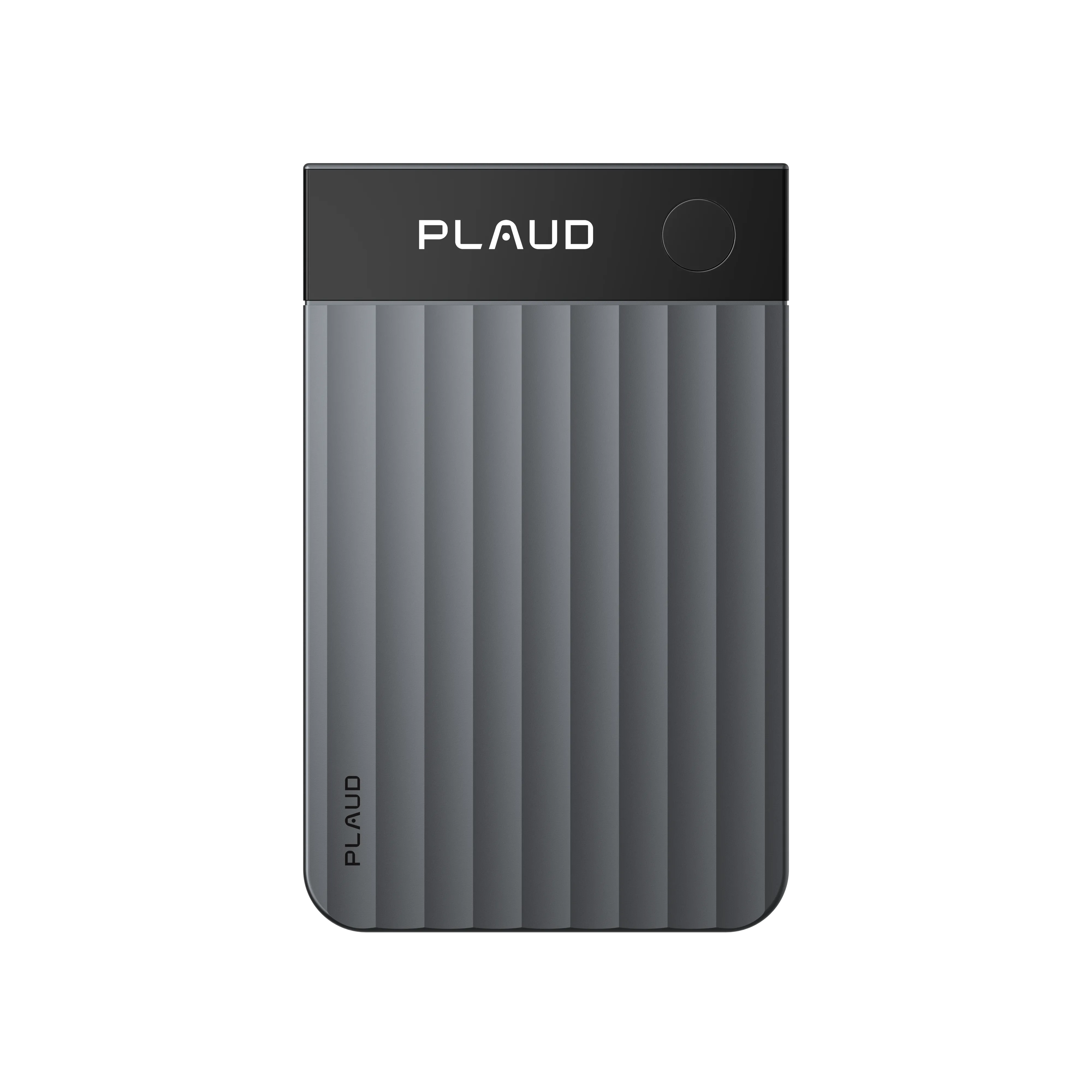
Plaud NotePin S
This is a clip-on wearable recorder that covers both in-person client visits and online meetings, which makes it the only tool on this list that doesn't force me to choose between two separate workflows.

Why it works for high-frequency meeting schedules
The biggest win for me is continuity. I clip the NotePin S on in the morning and it's ready to capture whatever happens, whether that's a quick hallway chat with a colleague about an account, a formal QBR over Zoom (captured through Plaud Desktop), or an on-site meeting at a client's office. Everything ends up in the same place: the Plaud app.
For a CSM running eight-plus meetings a day, the summary templates are a real time saver. I set different templates for different meeting types, so my onboarding call notes look different from my escalation notes. Plaud Intelligence pulls out the key points and structures them based on the template I chose. And the highlight button is surprisingly useful. During a call, when a client drops a complaint or a specific feature request, I tap the button and the AI gives that moment extra weight in the summary.
The battery lasts me a full work week without charging. I've gone five or six days of heavy meeting use before needing the dock.
Where It's not the best choice
The NotePin S doesn't auto-push summaries into my CRM. I have to export or copy the notes over, which is a manual step that adds up when you're doing it ten times a day. For CSMs who live and die by Salesforce field updates, that friction matters. Also, Plaud’s Starter Plan includes 300 transcription minutes per month for users with a bound Plaud device. I hit the cap by Wednesday of my first week and had to upgrade. And while the device handles in-person audio really well, the Plaud Desktop app for online meetings is still relatively new, so occasional hiccups do happen.
Fireflies.ai
Fireflies is the tool I'd recommend if your biggest headache is searching through old conversations to find what a client said three weeks ago.
Why it works for high-frequency meeting schedules
The searchable archive is where Fireflies earns its keep. After a few months of use, I've got hundreds of recorded meetings in there, and I can search by keyword, speaker, topic, or even sentiment. When a client brings up something from a previous call, I type a few words into the search bar and pull up the exact moment. That's a different level of preparation compared to scrolling through my own messy notes.
The auto-distribution to Slack is also a huge deal for CS teams. After each call, Fireflies posts a summary with action items to whichever channel I've configured. My manager can see what's happening across accounts without asking me for updates. It also connects to HubSpot, Salesforce, Notion, and Asana, so the notes can flow into whatever system your team uses.
Fireflies supports over 100+ languages, which is useful if you're managing accounts across different regions.
Where it's not the best choice
Fireflies sends a bot into every meeting. It shows up as "Fred" in the participant list, and I've had a few clients ask about it. For most check-in calls it's fine, but for sensitive conversations (think: churn risk discussions or executive escalations) the bot can feel off. The AI features also run on a credit system that's separate from the transcription. I ran through my AI credits in about two weeks on the Pro plan, and additional credits cost extra. That hidden cost caught me off guard. Accuracy can also struggle on calls with cross-talk or when multiple people jump in at once, which is pretty common in internal syncs.
Fathom
If you're a solo CSM or on a small team and don't want to pay for another tool, Fathom's free tier is hard to beat.
Why it works for high-frequency meeting schedules
Fathom gives you unlimited recording and transcription for free. No monthly cap. No trial period that quietly expires. After each call, you get a summary with action items in your inbox within about 30 seconds, which is fast enough to glance at before your next meeting. The "Ask Fathom" feature lets me query across all my past meetings in natural language. I can type "What did Acme Corp say about their renewal timeline?" and get an answer pulled from the right call.
The HubSpot and Salesforce integration is solid. Fathom auto-matches meeting participants to CRM contacts and logs the notes, which saves me the manual copy-paste routine. For a free tool, that's a lot of value.
Where it's not the best choice
Like Fireflies, Fathom uses a visible bot. It joins as "Fathom Notetaker" and all participants can see it. I've gotten used to it for internal calls, but it does shift the vibe on external client calls, especially the first time. The advanced AI summaries (custom templates, detailed action item extraction) are limited to five per month on the free plan. After that, you need the paid tier at around $19/month per user. Fathom is still primarily built for online meetings with a meeting link. According to Fathom’s official documentation, it currently supports Zoom, Google Meet, and Microsoft Teams on Mac and Windows, but not mobile devices, phone calls, or in-person meetings natively. That gap matters for CSMs who don't spend 100% of their time on Zoom.
Avoma
Avoma is built for customer-facing teams, and you can feel that in how it structures everything around CRM workflows and call analysis.
Why it works for high-frequency meeting schedules
What sets Avoma apart for CS is the automatic CRM field updates. After each call, it detects key topics (pain points, objections, next steps, feature requests) and populates the relevant fields in HubSpot or Salesforce. If your team uses a framework like MEDDIC or SPICED, Avoma tracks those fields automatically. That alone saves me a good chunk of time per day in CRM data entry.
The "Smart Chapters" feature breaks each call into topic-based segments, so instead of scrubbing through a full transcript, I can jump directly to the part where we discussed pricing or the part where the client raised a concern. For reviewing calls quickly when you've got ten in a day, that's genuinely helpful. Avoma also generates follow-up email drafts after each meeting, which is another time saver that compounds.
Where it's not the best choice
Avoma is not lightweight. The interface has a lot going on, and the learning curve took me a solid week before I felt comfortable navigating it. If you just want a simple "record and summarize" tool, Avoma will feel like overkill. Pricing starts around $19/user/month for the basic plan, but the conversation intelligence and revenue intelligence features (which are the most useful CS pieces) require add-ons that push the cost higher. Also, transcript processing can take several minutes after the call ends. On a packed meeting day, I've had situations where my next call starts before the previous summary is ready. That delay is noticeable when you're used to Fathom's near-instant delivery.
Granola
Granola captures meeting audio directly from your computer without putting a bot in the call. Nobody in the meeting knows you're recording unless you tell them.
Why it works for high-frequency meeting schedules
For CS calls with enterprise clients or executives, the bot-free approach matters. I've been on calls where a C-suite sponsor visibly tensed up when a recording bot joined. Granola avoids that entirely. It runs in the background, captures audio from your system, and gives you enhanced notes afterward.
The scratchpad feature is surprisingly useful for high-frequency schedules. During a call, I jot quick notes like "wants API docs" or "unhappy with onboarding timeline." After the meeting, Granola takes those rough notes and enriches them with context from the full transcript. So my shorthand becomes a proper, detailed summary without me doing extra work. And I can ask Granola's AI chatbot questions about any past meeting, which helps when I'm prepping for a follow-up and can't remember the specifics.
Where it's not the best choice
Granola only captures online meetings on your computer. If I'm at a client site or on a phone call, it doesn't help. Speaker identification is unreliable in group calls with more than four or five people. I've gotten notes that don't clearly show who said what, which is a problem when I need to assign action items. The free plan only covers 25 meetings total (not per month, total), so you'll need the $18/month Individual plan almost immediately. And the integration options are limited. There's Slack and Notion export, but no native CRM sync. For a CS team that needs meeting notes to flow automatically into Salesforce, that's a dealbreaker.
Otter.ai
Otter takes a collaborative approach: instead of just giving you a summary after the call, it shows a live transcript that everyone on the call can see and interact with.
Why it works for high-frequency meeting schedules
The live transcript is particularly useful for internal CS syncs where multiple team members are coordinating on an account. Everyone can see what's being captured in real time, highlight key moments, and add comments. After the call, Otter generates a summary and action items, and the whole thing sits in a shared workspace where the team can reference it later.
Otter's speaker identification is more consistent than most tools I've tried. It labels who said what with decent accuracy, which matters when you're assigning follow-ups across a team. The search across past meetings is solid too. I can find conversations by keyword, speaker, or date without much effort.
Where it's not the best choice
Otter's free plan has gotten restrictive. You get 300 minutes per month and each conversation is capped at 30 minutes, which is tight when client calls regularly run 45 minutes or longer. The post-meeting summary quality is decent but not as sharp as Fathom or Avoma. I've found the action item extraction tends to catch explicit commitments but misses the softer ones (like "I'll loop back with the team on this"), which are often the ones that slip through. The CRM integration is weak compared to Avoma or Fathom. Otter can push notes to some tools, but it doesn't auto-map to CRM fields or contact records. For a CS team that needs structured CRM updates after every call, that's a gap.
So which one should you pick?
After testing all six, here's how I'd narrow it down:
-
If you need meeting notes to automatically fill CRM fields: go with Avoma. It's the only tool here that maps call content to specific CRM fields (think: pain points, next steps, methodology scores) without you touching the CRM. For CS teams running structured playbooks on HubSpot or Salesforce, that automation pays for itself.
-
If your top priority is finding things from old calls fast: go with Fireflies.ai. The searchable archive, topic tagging, and cross-meeting search make it the strongest tool for retrieval. When a client says "we talked about this," you can pull up the exact moment in seconds.
-
If you need something free or lightweight to start: go with Fathom for online-only meetings or Plaud NotePin S if you also meet clients in person. Fathom's unlimited free tier is real and generous. Plaud's one-time hardware purchase means no per-seat subscription eating into your team's budget every month.
Conclusion
For CSMs juggling a high volume of calls, the question isn't "which tool records best?" They all record fine. The real question is: can I turn two months of meeting recordings into a searchable, structured knowledge base that helps me prep for every call in under two minutes?
Here's a concrete next step: pick 20 of your recent client calls and write down the three types of information you most often need to look up afterward. Is it feature requests? Renewal timelines? Who owns which action item? Once you know what you search for, match that to the tool that makes those searches easiest. That's a more reliable way to choose than comparing feature lists.