As a BD manager, most of my important conversations happen across borders. A partnership pitch in Tokyo on Tuesday, a vendor negotiation in São Paulo on Thursday, and a distributor review on Zoom somewhere in between. If your meetings are mostly internal team standups or all in one language, this article probably isn't what you need. This is for people who run business meetings where languages switch, time zones overlap, and the output needs to look professional enough to forward to a C-suite.
Here's the problem I kept running into: I'd finish a bilingual meeting with a potential partner, and my handwritten notes were half-English, half-Mandarin, missing the exact phrasing the other side used when they pushed back on terms. Two days later, I'm drafting a partnership proposal and I can't reconstruct what they actually committed to versus what I assumed they meant. That's how deals stall. Not because the terms were wrong, but because nobody had a clean record of what was said in which language.
How we chose the best AI note takers for business meetings
What Makes Business Meetings Different
Internal meetings are forgiving. Someone can say "let's circle back on that" and nobody loses sleep over it. Business meetings with external partners, clients, or vendors are different. Every sentence carries weight. A distributor mentioning "we might consider exclusive terms" needs to be captured word-for-word, in the language it was spoken, because that exact phrasing matters when I bring it back to my team.
Three things separate business meeting note-takers from generic ones. First, language coverage. Not just "supports 50 languages" on a marketing page, but actual transcription accuracy when someone switches from English to Japanese mid-sentence. Second, output quality. I can't send a messy transcript to a partner's head of operations. I need structured meeting minutes with action items, decision points, and clear attribution. Third, professional appearance. Whether it's a hardware device on the table or a software bot joining the call, it needs to feel appropriate in a business context, not like I'm secretly recording someone.
What I actually look for
When I test these tools, three variables drive my decision.
Where the meeting happens. If I'm flying to meet a distributor, I need something physical that works without Wi-Fi. If the meeting is on Teams or Zoom, software is fine. Most BD managers I know do both, which makes coverage across online and offline the first filter.
How many languages are in play. A tool that's great in English but falls apart in Korean or Portuguese is useless for cross-border BD. I need accurate transcription in the languages my counterparts actually speak, plus clean translation for internal sharing.
What the output looks like. Raw transcripts are a starting point, not a deliverable. I need meeting summaries I can drop into a partnership brief or forward to my VP without heavy editing.
Here's how the five tools compare:
| Tool | Language coverage | Output quality | Best for |
|---|---|---|---|
| Plaud Note Pro | 112 languages | Structured summaries, mind maps, action items | BD managers doing both in-person and online meetings across languages |
| Microsoft Teams Transcription | 30+ caption languages, 9 for AI interpreter | Meeting recap integrated into Teams | Teams-native organizations with mostly online meetings |
| Otter.ai | Strongest in English | Real-time collaborative notes, CRM sync | English-primary remote BD teams |
| Notta | 58 languages, 42 for translation | AI summaries, bilingual transcripts | Cross-border teams needing bilingual meeting records on a budget |
| Fireflies.ai | 100+ languages | Searchable transcript library, CRM integration | BD teams running high volumes of online meetings across platforms |
5 best AI note takers for business meetings
Plaud Note Pro
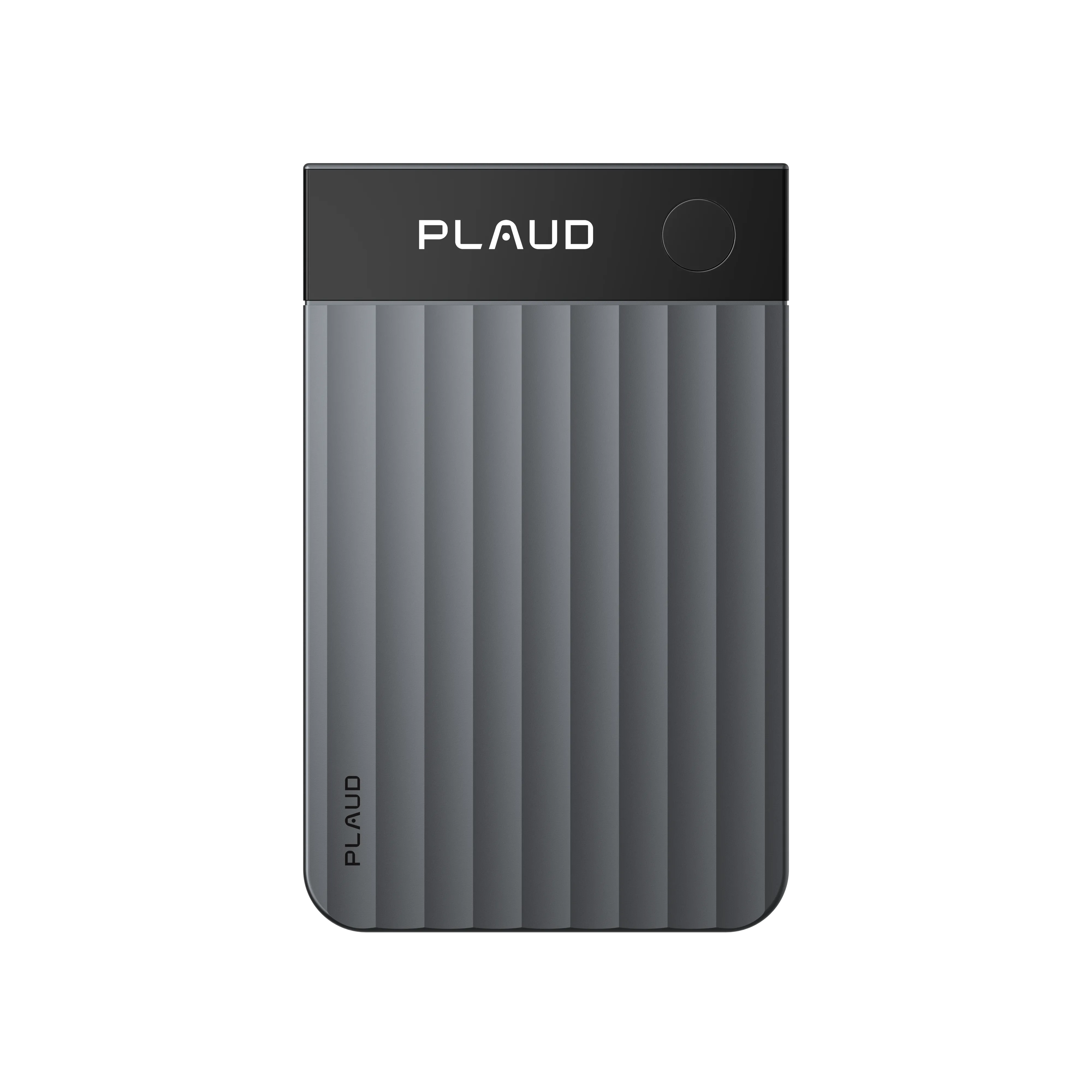
The Plaud Note Pro is the device I reach for when I need one setup that works everywhere: a client dinner in Shanghai, a phone call with a European distributor, and a follow-up Zoom the next morning.

Why It works for BD managers
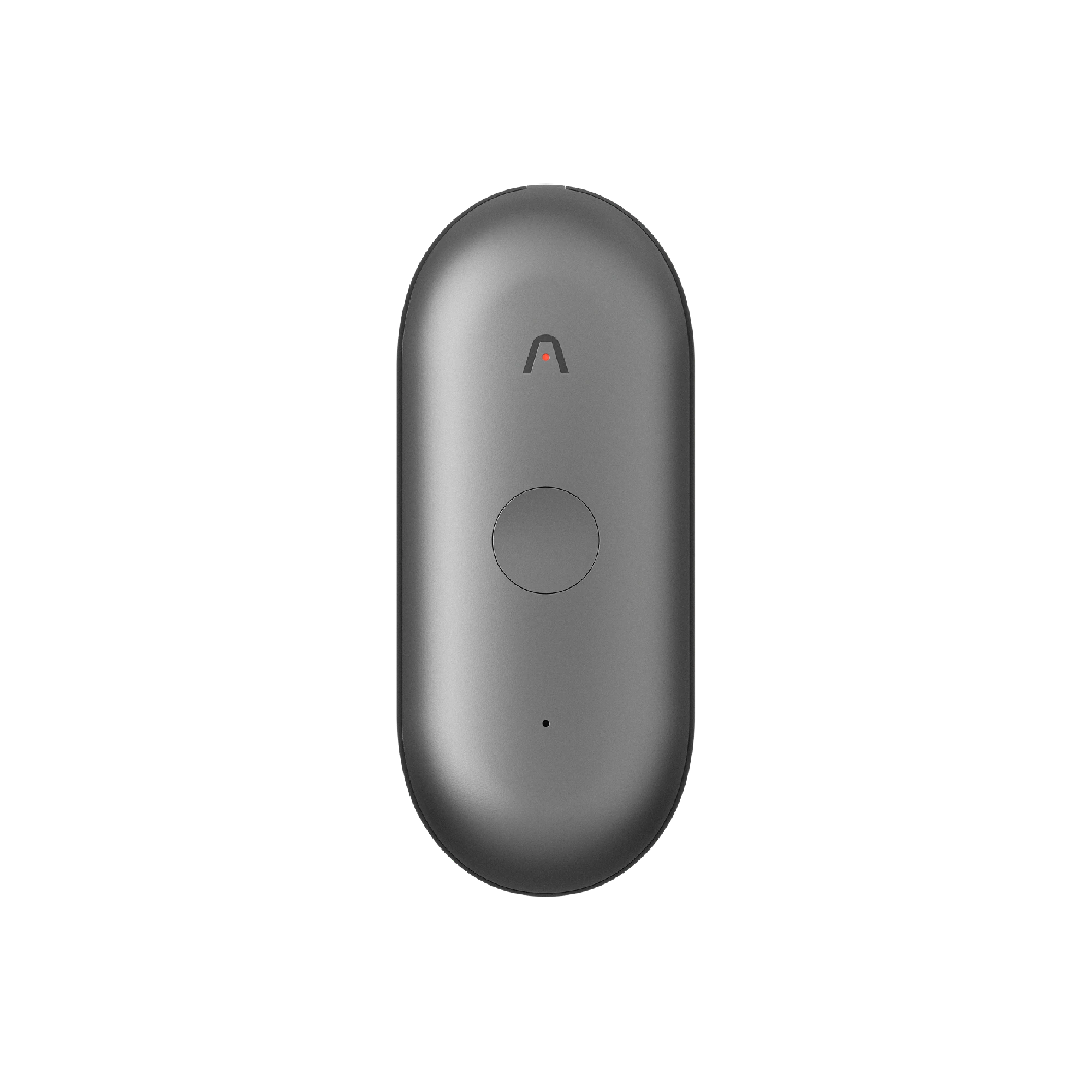
The hardware itself looks like a business card. I've set it on conference tables in front of senior executives without anyone raising an eyebrow. Four microphones pick up voices clearly across a full conference table, and the device automatically switches between phone call and in-person recording modes, so I don't fumble with settings between a call and a face-to-face meeting.
What makes this setup stand out for cross-border BD is the Plaud Intelligence layer. It transcribes in 112 languages, which covers every market I work in. After a meeting, I get structured summaries that separate decisions from discussion points, pull out action items with clear ownership, and can generate different summary formats depending on whether I'm sending it to my internal team or to the partner's side. I've used the multi-dimensional summary feature to create one version in English for my VP and a separate version in the partner's language for their team. That kind of output makes me look more organized than I actually am.
The device records for up to 30 hours on a single charge in endurance mode. I've taken it on three-day business trips without packing a charger. It stores recordings on 64GB of onboard memory, so nothing depends on a cloud connection during the meeting.
Where it's not the best choice
If all of your meetings happen on Teams or Zoom and you never meet partners in person, the hardware itself doesn't add much. While Plaud's ecosystem includes a solid Desktop feature to easily capture these online meetings, you're essentially paying $179 for a physical device when a standalone software tool could do the job. I also found that Plaud Intelligence's free tier (300 transcription minutes per month) runs out fast when you're doing multiple meetings a day. The subscription upgrade is essentially required for heavy BD use. And while the AI summaries are excellent in major business languages, I noticed slightly less polished output when transcribing in some less common languages. For major BD markets (English, Chinese, Japanese, Korean, Spanish, French, German, Portuguese), it's very strong.
Microsoft teams transcription
If your company already runs on Microsoft 365 and most of your business meetings happen on Teams, the built-in transcription is the path of least resistance. No extra software, no bot joining the call, no new subscription to expense.
Why it works for BD managers
The biggest advantage is that it's already there. Start a Teams meeting, turn on transcription, and you get a real-time transcript with speaker attribution stored right in the meeting chat. For a BD manager who needs to share meeting records with internal stakeholders, everything lives inside the ecosystem your team already uses. No exporting, no formatting, no extra steps.
With a Teams Premium or Copilot license, the multilingual features get more useful. The Interpreter agent can handle real-time speech-to-speech translation in nine languages, including English, Chinese, Japanese, Korean, and Spanish. Live translated captions let each participant read the meeting in their preferred language. After the meeting, Copilot generates an Intelligent Meeting Recap with key discussion points, follow-ups, and decisions pulled directly from the transcript.
For BD managers working within large organizations, the compliance and security features matter. Everything is stored within your company's Microsoft 365 environment, governed by your IT admin's policies. When dealing with partners who are cautious about data handling (and in my experience, Japanese and German partners almost always are), being able to say "it's within our enterprise Microsoft environment" carries weight.
Where It's not the best choice
Teams transcription only works inside Teams meetings. If I'm at a partner dinner, a trade show, or on a regular phone call, it can't help. That's a significant gap for BD work where relationship-building conversations happen off-platform constantly.
The multilingual features also come with layers of licensing complexity. Basic transcription works on standard business plans, but translated captions need Teams Premium. The AI Interpreter agent requires a Copilot license. And the Interpreter currently supports only nine languages for speech-to-speech, which is fine for major business languages but limiting if you're working across Southeast Asia or the Middle East. I also found that when people switch languages mid-meeting without updating the spoken language setting, the transcript quality drops noticeably. For genuinely bilingual meetings where speakers mix languages naturally (which is every meeting I have in Asia), that's a real limitation.
Otter.ai
Otter built its reputation on real-time English transcription, and for BD teams that operate primarily in English, it's still one of the smoothest options for getting meeting records done without thinking about it.
Why it works for BD managers
The live collaboration feature is where Otter earns its spot. During a partner call, my colleague on the legal side can watch the live transcript and highlight specific clauses or commitments as they're spoken, without interrupting the conversation. After the call, we both have the same annotated record. That cuts our internal alignment time significantly.
Otter's search across past meetings is genuinely useful for BD work. I can search "exclusive distribution" and pull up every instance where any partner mentioned those words across months of meetings. When I'm preparing for a contract renewal or a new negotiation, that historical search is worth the subscription alone.
The CRM integration pushes meeting notes and key details into Salesforce, and the AI chat lets me ask questions across my meeting history. For high-volume BD managers who manage dozens of partner relationships, having a searchable archive of every conversation is a real advantage.
Where it's not the best choice
Otter is primarily an English-first tool. It supports a handful of other languages, but the transcription accuracy drops when meetings aren't in English. For my Mandarin or Japanese meetings, Otter just doesn't perform well enough to trust. If multilingual coverage is a requirement, this isn't the right tool.
Like most software note-takers, Otter only works for virtual meetings and some in-person recording through its mobile app. I tested the mobile app at a partner lunch and the background noise made the transcript unreliable. The pricing can also escalate quickly for teams. The free plan gives 300 minutes per month, which sounds generous, but the Business plan at $30 per user per month is where you get the CRM sync and team features that BD work actually demands. Multiply that across a team of five or six, and it's a meaningful monthly expense.
Notta
Notta is the tool I recommend to BD colleagues who need solid multilingual support without enterprise pricing. It transcribes in 58 languages and translates into 42, with a bilingual transcription mode that handles meetings where two languages are spoken simultaneously.
Why it works for BD managers
The bilingual transcription is Notta's standout feature for cross-border BD. In a meeting where I'm speaking English and my counterpart is responding in Japanese, Notta creates a single transcript with both languages accurately captured and labeled. I don't have to pick one language and hope the other comes through. That alone puts it ahead of most competitors for genuinely multilingual business conversations.
At $8.17 per user per month on the annual Pro plan, Notta is one of the most affordable options that still delivers reliable business-quality output. The AI summaries pull out action items and key decisions, and transcripts export cleanly to PDF, Word, or SRT formats. Integration with Salesforce, Notion, and Slack means meeting records can flow into existing workflows without manual copying.
Notta also supports SOC 2 Type II and ISO 27001 certification, which matters when BD managers need to demonstrate data security standards to enterprise partners. In regulated industries or when working with partners who require compliance documentation, those certifications carry real weight.
Where it's not the best choice
Notta's free plan is essentially a trial. You get 120 minutes per month with a 3-minute limit per recording, which is impractical for any real meeting. You'll need the paid plan from day one. The bilingual transcription, while impressive, is an add-on feature that costs extra on top of the base subscription.
I also noticed that Notta's transcription accuracy, while strong for major languages, varies for regional accents and dialects. In one meeting with a partner from southern India speaking English, the transcript needed more cleanup than I expected. The meeting bot that joins virtual calls is also a consideration. Some partners have reacted to seeing "Notta Bot" pop into a call, and for BD conversations where first impressions matter, that can feel a bit off. Notta doesn't work offline either. There's a mobile app for in-person recording, but it requires an internet connection for transcription, which can be a problem when meeting at a factory or a partner's remote office.
Fireflies.ai
Fireflies takes the broadest approach: 100+ languages, integrations with virtually every video conferencing platform, and a searchable library that turns every meeting into a reusable asset.
Why it works for BD managers
The language auto-detection is genuinely helpful. In a meeting where participants switch between languages, Fireflies identifies the shift and transcribes accordingly. For a BD manager working across APAC, EMEA, and the Americas in the same week, not having to manually set the language before each meeting saves real friction.
The meeting library becomes more valuable over time. Every partner conversation is indexed, searchable, and filterable by keyword, speaker, or date. When preparing for a quarterly business review with a distributor, I can pull up every meeting from the past six months and search for specific topics like pricing discussions or territory concerns. The CRM integration with Salesforce and HubSpot automatically logs meeting notes, which keeps partner records current without manual data entry.
Fireflies also has conversation intelligence features, like sentiment tracking and talk-time analysis, that can surface patterns across your partner relationships. I noticed that one distributor's engagement started declining over three consecutive meetings before they formally raised concerns. That kind of signal is hard to catch in the moment but obvious in the data.
Where it's not the best choice
Fireflies is online-only. No phone call recording, no in-person support beyond the mobile app. For BD managers who do significant face-to-face relationship building (especially in markets like Japan, Korea, or the Middle East where in-person meetings are expected), this is a significant blind spot.
The bot that joins meetings can be a friction point. I've had partners ask who "Fireflies" is when it appears in the participant list, and for sensitive negotiations, that extra presence changes the dynamic. Some partners in financial services and government have outright rejected having a recording bot in the meeting.
Pricing starts reasonable at $10 per user per month for Pro, but the AI credit system for advanced features isn't transparent. I ran through my monthly AI credits faster than expected because every smart summary and every AskFred query consumes credits. The Business plan at $19 per user per month adds conversation intelligence, but even there, credits can run out if you're a heavy user across multiple daily meetings.

So which one should you pick?
Here's the decision framework I'd use:
If your BD work spans in-person and online meetings across multiple languages, the Plaud Note Pro + Plaud Intelligence combination covers the most ground. One device, 112 languages, works offline and online, and the output looks professional. It's the most versatile option for BD managers who travel.
If your organization is standardized on Microsoft Teams and most meetings are virtual, Teams Transcription is the least disruptive choice. The Copilot-powered features are strong, but factor in the licensing costs and the offline gap.
If your meetings are primarily in English and you value real-time collaboration, Otter.ai gives you the cleanest experience for working with internal stakeholders during and after partner calls.
If you need solid multilingual support on a tight budget, Notta delivers bilingual transcription and broad language coverage at a fraction of what enterprise tools cost. Best value for smaller BD teams working across language barriers.
If you run high volumes of online meetings across multiple platforms and languages, Fireflies.ai offers the broadest coverage with the most automation. The searchable meeting library is especially valuable for managing many parallel partner relationships.
Conclusion
For BD managers working across borders, the right note-taker needs to do three things well: handle multiple languages accurately, produce output clean enough for external sharing, and work across the mix of in-person and virtual meetings that define business development. No single tool does everything perfectly, but matching your tool to your meeting patterns gets you most of the way there.
Here's my suggested next step: track one week of your meetings. Note the language mix (how many are single-language versus bilingual or multilingual), the format (in-person, phone, or video call), and what you do with the notes afterward (internal only, or shared with partners). That breakdown will point you to the right tool from this list. If the answer is "multiple languages, mixed formats, and I need to share notes externally," the Plaud Note Pro + Plaud Intelligence combination is the most practical starting point.