
Before anything else, one clarification matters more than any feature or price point: AWS HealthScribe is not an app a clinician opens to record a patient visit. It's a single API that healthcare software vendors build into their own products. Ian Shakil, founder of ambient documentation company Augmedix, described it precisely at launch: HealthScribe is "lego bricks for others to build an end product in this space... there is no end product here to offer a functional ambient documentation solution for a provider." This review covers what HealthScribe does, what it costs, where it holds up, and who should be evaluating it.
What is AWS HealthScribe
 AWS announced HealthScribe at AWS Summit New York in July 2023 and made it generally available in November 2023. It's a HIPAA-eligible machine learning service, built on Amazon Bedrock, that analyzes patient-clinician conversation audio and returns a rich transcript plus a structured, AI-generated clinical note draft, all through a single API call. AWS built it so healthcare software vendors don't have to train their own healthcare-specific large language models or manage the underlying ML infrastructure themselves.
Several companies have used HealthScribe to power their own end-user products, including ScribeEMR, one of the launch partners AWS named when announcing the service. If you've used a scribe product and wondered what's happening under the hood, there's a real chance HealthScribe or a similar AWS service is doing some of that work, even though you never see the AWS branding.
How AWS HealthScribe works
A developer submits an audio recording of a patient-clinician conversation to the API. HealthScribe returns several layers of output: a turn-by-turn transcript with word-level timestamps, speaker role identification (distinguishing clinician from patient), dialogue segmentation (small talk versus subjective versus objective sections, for example), extracted medical terms and medications, and a summarized clinical note draft covering sections like history of present illness and treatment plan.
The feature most worth understanding is evidence mapping: every sentence in the AI-generated note links back to the specific dialogue in the original transcript that supports it. That traceability is a meaningful safeguard against the kind of unverifiable AI-generated claims that have become a real liability concern for ambient scribes elsewhere in this category, since a reviewer can check any line of the note against what was said. HealthScribe launched supporting general medicine and orthopedics, and is available exclusively in the US East (N. Virginia) region, which means any AWS resources used alongside it, like S3 buckets for audio storage, need to live in that same region.
AWS HealthScribe pricing
Unlike every subscription-based scribe covered elsewhere on this site, HealthScribe is pure usage-based pricing: $0.001667 per second of audio processed, which works out to $0.10 per minute, with a 15-second minimum charge per request. AWS offers 300 free minutes per month for the first two months to new users.
To put that in concrete terms, processing 1,000 consultation transcripts a month at an average of 15 minutes each equals 15,000 minutes of audio, which comes out to $1,500 a month at the standard rate. That per-minute model is genuinely different from a flat monthly subscription: costs scale directly with usage, which is efficient for unpredictable or seasonal volume but means a busy month costs proportionally more, with no flat ceiling the way a subscription tier provides.
Is AWS HealthScribe HIPAA compliant?
AWS describes HealthScribe as HIPAA-eligible, and AWS will sign a Business Associate Agreement covering it. That is not the same thing as your finished application being HIPAA compliant. Under AWS's shared responsibility model, AWS secures the underlying infrastructure, but you remain responsible for configuring encryption at rest and in transit, access controls, audit logging, and everything else that makes a complete system compliant. A HIPAA-eligible service is a necessary starting point, not a finished compliance posture on its own. The compliance of the product built on top of HealthScribe depends on how the vendor configures everything around it.
If you're a healthcare software vendor building on HealthScribe, budget real engineering time for this layer rather than assuming HIPAA-eligible status alone covers you.
As with any tool that touches protected health information, get the patient's awareness and consent before recording a visit, in line with your organization's policies. Before you record, take a moment to let others know and get their okay.
What AWS HealthScribe does well
- Evidence mapping as a real accuracy safeguard. Linking every generated sentence back to the source dialogue gives reviewers a genuine way to verify AI output, addressing a concern that's become a real liability issue for ambient scribes more broadly.
- No need to train a healthcare-specific LLM from scratch. A software vendor can integrate ambient documentation capability through one API rather than building and maintaining their own speech and clinical-language models.
- Pricing that scales with usage. For a vendor with unpredictable or seasonal transcription volume, paying per minute processed can be more efficient than committing to a flat subscription sized for peak demand.
- Built on established AWS infrastructure and compliance groundwork. HIPAA-eligible status, encryption support, and the broader AWS compliance ecosystem give vendors a documented starting point rather than having to build security infrastructure from zero.
- A generous evaluation window. 300 free minutes per month for two months is enough to genuinely test integration and output quality before committing budget.
Where AWS HealthScribe falls short
- It's not a product a clinician can use directly. There's no interface, no app, and no way for a practice to sign up and start recording visits. If you're a clinician or practice manager researching ambient scribes to use yourself, HealthScribe is the wrong layer to be evaluating.
- Single-region availability. Being limited to US East (N. Virginia) constrains architecture choices and may matter for organizations with data residency requirements outside that region.
- HIPAA-eligible isn't a finish line. As covered above, a vendor still needs to do real compliance engineering work around the API, which is a genuine cost and responsibility beyond the per-minute pricing.
- Limited initial specialty scope. HealthScribe launched supporting general medicine and orthopedics specifically, so vendors building for other specialties should confirm current coverage before assuming broad applicability.
- No bundled coding, EHR write-back, or review workflow. Everything beyond transcription and note drafting, coding suggestions, EHR integration, a clinician review interface, has to be built by whoever integrates the API. It's a component, not a workflow.
- AWS itself now points toward a more complete option. Amazon Connect Health, a newer AWS offering, expands from HealthScribe's note-generation focus into integrated task execution at $99 per user per month, suggesting AWS sees HealthScribe as one building block within a larger, evolving ambient AI strategy rather than its final answer in this space.
Who should build on AWS HealthScribe
HealthScribe fits healthcare software vendors, EHR companies, and product teams that want to add ambient documentation capability to an existing platform without building speech recognition and clinical language models from scratch. It's a reasonable foundation for a startup or established software company that already has the clinician-facing product, the review workflow, and the EHR integration, and just needs the underlying transcription-to-note engine.
It's the wrong evaluation target for a solo clinician, a small practice, or anyone who wants a ready-to-use scribe today. If that's your situation, you want one of the finished, clinician-facing products this site has reviewed, several of which may themselves be built partly on AWS infrastructure without advertising it.
AWS HealthScribe alternatives to consider
 Within the "build it yourself" category, the alternative worth knowing about is Amazon Connect Health, AWS's own newer, more complete offering that layers ambient documentation and patient verification capabilities into a per-user subscription model closer to a finished product than HealthScribe's raw API.
For the reader who came here looking for something to use directly rather than build on, every other review on this site is the more relevant starting point, since they cover finished, clinician-facing products rather than developer infrastructure.
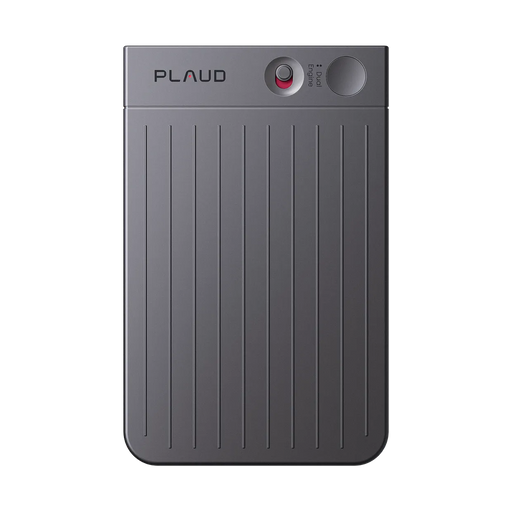
If you're a clinician evaluating documentation tools rather than a developer evaluating infrastructure, Plaud NotePin S is worth a direct look instead. It's a finished, wearable product, not an API: press the tactile record button, and Plaud Intelligence generates a structured note afterward, including SOAP and psychotherapy templates, for you to move into the chart manually. For a small practice or department that wants several clinicians sharing one setup, Plaud Team adds centralized billing and device management for up to 50 seats without a sales call. Plaud and HealthScribe aren't really competitors, since one is a consumer device and the other is developer infrastructure, but Plaud carries HIPAA-aligned safeguards, SOC 2 Type II, ISO 27001 and ISO 27701, GDPR, and EN 18031 for the device's wireless communication, the same compliance set Plaud publishes, and will sign a BAA on request through its support team, which is the kind of finished compliance posture a HealthScribe integration would still need to build.
Match your evaluation to your role
The single most useful filter for this review is whether you're building healthcare software or trying to use it. If you're a developer or product team, HealthScribe's per-minute pricing and evidence-mapping feature are worth real evaluation against alternatives like building directly on Amazon Transcribe Medical or a competing foundation model. If you're a clinician or practice manager, this isn't the product to evaluate at all. Look instead at the finished tools built for your workflow.