AI summary
The problem: In 2026, documentation is ruining the patient encounter. Doctors are spending more time typing than making eye contact.
The solution: Ambient AI tools that "disappear".
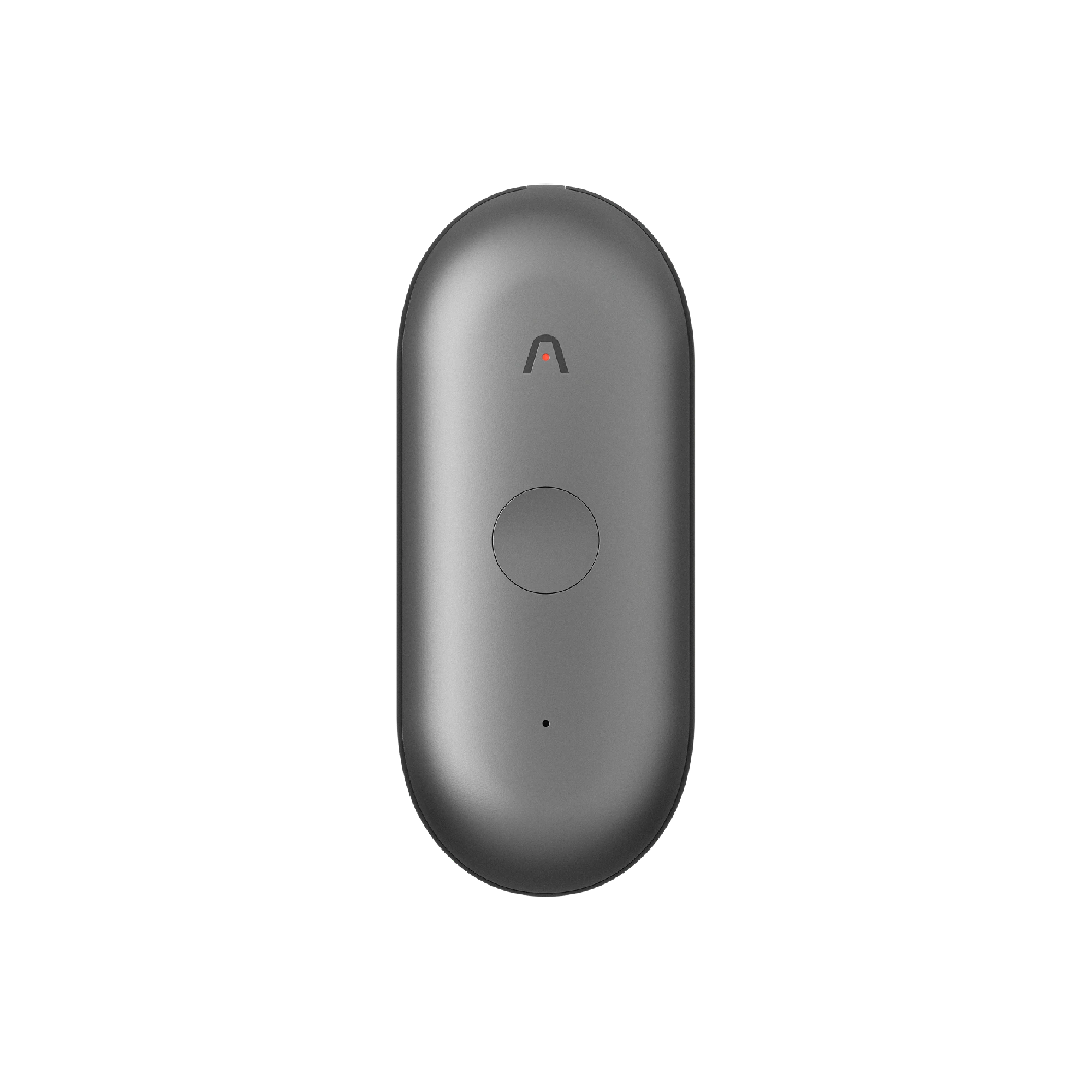
- Plaud NotePin ($159): Best for high-volume clinics. It is wearable and hands-free, making it the only real choice for doctors who perform physical exams (Orthopedics, Rheum).
- Plaud NotePin S ($179): Best for sensitive consultations. Its "invisible" design is perfect for psychiatry and neurology where patient trust is fragile.
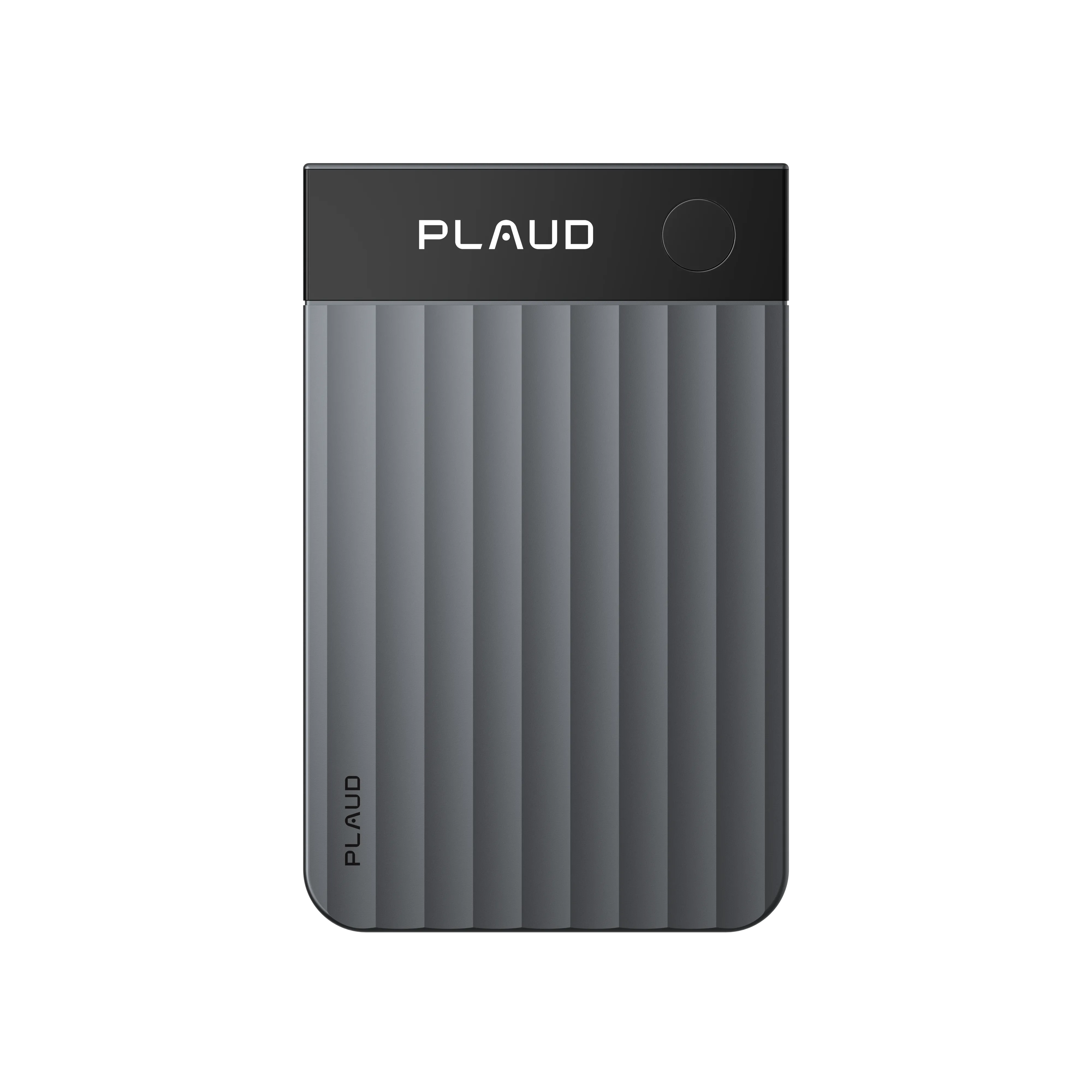
- Plaud Note Pro ($189): Best for MDT meetings. It sits on the desk with a 5-meter range to capture discussions with families or teams.
- Nuance DAX / Abridge: Best for large health systems. They integrate directly into Epic/Cerner but cost more (~$200+/provider/month) and require a phone/tablet.
- DeepScribe: Best for specialty-specific templates. It uses a human-AI hybrid to ensure perfect note structure for 40+ specialties.
The bottom line: Choose Plaud NotePin for flexibility and hands-on exams, or Nuance/Abridge if you need direct EHR syncing. The goal is to cut charting time by 50% and look back at your patients.
Last Tuesday, I watched a neurologist try to maintain eye contact with a tremor patient while simultaneously pecking at an EHR keyboard. The patient paused mid-sentence, glanced at the screen, and said: "Should I wait until you're done typing?" That moment captures the core tension every physician faces in 2026: the documentation demands of modern medicine are actively interfering with the patient encounter itself.
As someone who has spent the past year testing AI recording tools across clinic settings (from a busy rheumatology practice averaging 18 patients per day to multi-disciplinary tumor board meetings), I want to break down which tools actually solve this problem and which ones just move it around. This guide is written for physicians and clinicians who need a documentation tool that disappears into the consultation, not one that competes with it.
How we chose the best AI note takers for patient consultations in 2026
Why patient trust comes before technology
Here is something most "best AI tools" roundups skip entirely: the moment a patient notices you are recording them, the conversation changes. Studies from the Journal of General Internal Medicine have shown that perceived physician attentiveness correlates directly with patient satisfaction scores and, more importantly, with disclosure rates. Patients who feel their doctor is distracted share fewer symptoms. They minimize pain. They skip the "one more thing" at the end of the visit that often turns out to be the most important thing.
So the first filter for any AI note taker in a clinical setting is not "how good is the transcription." It is "does this device make my patient feel less heard?"
The 3 decision variables
Unobtrusiveness. Can the device record without drawing attention? Does it sit quietly, or does it announce itself with blinking LEDs and visible microphone arrays? In a 15-minute consultation, even a brief moment of patient self-consciousness can derail rapport.
Clinical documentation automation. Raw transcription is table stakes. What matters is whether the tool transforms a free-flowing conversation into structured clinical content — chief complaint, history of present illness, review of systems, assessment, and plan — in a format compatible with your SOAP note documentation workflow. This includes fully automated EHR write-in tools (like Nuance DAX) and physician-reviewed structured output tools (like Plaud), depending on whether your priority is speed of EHR entry or physician control over what enters the patient record.
Patient trust preservation. This is the compound variable. It includes consent workflow, device appearance, data security posture (HIPAA compliance, encryption standards), and the overall impression the device makes in the room. A tool that saves 20 minutes of charting but costs you patient trust is a net negative.
Quick comparison table
|
Tool |
Starting price |
Works well when |
Falls when |
Best for |
|
Plaud NotePin |
$159 device + from $17.99/mo |
Full-day clinic and rounds; high-volume outpatient |
Very noisy environments; needs direct EHR integration |
Physicians who want hands-free documentation throughout the full clinical day |
|
Plaud NotePin S |
$179 device + from $17.99/mo |
Discreet recording is priority; 1-on-1 consultations |
Very noisy environments; needs direct EHR integration |
Specialists who want invisible documentation |
|
Plaud Note Pro |
$189 device + from $17.99/mo |
Formal consultations; multi-person meetings; long sessions |
Extreme discretion needed; tight budgets |
Physicians running MDT meetings or pre-op discussions |
|
Nuance DAX Copilot |
~$200+/provider/month |
Deep EHR integration required; Epic/Cerner workflows |
Offline environments; hardware-free preference |
Health systems already on Microsoft/Nuance stack |
|
Abridge |
Institutional pricing |
Real-time note generation; patient-facing transparency |
Non-English consultations; small independent practices |
Academic medical centers and large group practices |
|
DeepScribe |
$300+/provider/month |
High-volume outpatient clinics; specialty-specific templates |
Budget-constrained solo practitioners; telehealth-only |
Specialists needing customized note structures |
6 best AI note takers for patient consultations

1. Plaud NotePin: The wearable AI note taker built for the full clinical day
One-line positioning: The hands-free AI recorder for physicians who see patients all day.
Why it works
The Plaud NotePin clips magnetically to a white coat lapel or shirt collar — and once it is on, most physicians forget it is there. That is the point. For doctors in high-volume outpatient settings, family medicine, internal medicine, or any specialty where the day runs from morning rounds to late afternoon clinic, the NotePin is designed to keep up without requiring you to manage it.
The workflow requires no screen interaction mid-encounter. Press once to start, press once to stop. No app to open, no phone to position, no interface to navigate while a patient is describing symptoms. In a 15-minute consultation, removing even that small friction changes the quality of attention you bring to the room.
Plaud NotePin solves the physical exam problem that phone-based AI scribes cannot: you need both hands, and neither of them is free to manage a recording app. The NotePin continues recording through percussion, auscultation, range-of-motion assessment, or neurological testing without requiring any interaction. For physicians in physical medicine, rheumatology, orthopedics, or any hands-on examination specialty, this is not a marginal workflow improvement. It changes what ambient documentation actually means in practice.
Clinical documentation output: After each consultation, Plaud's AI generates structured summaries using 30+ professional templates, including SOAP note format. The output is designed for physician review before it enters the patient record — a deliberate step that preserves clinical oversight over documentation accuracy.
Data security and HIPAA considerations: Plaud operates with SOC 2 Type II certification and AES-256 end-to-end encryption. Audio recordings are processed with access controls that prevent unauthorized third-party access to patient data. For practices navigating HIPAA compliance requirements, Plaud's data security architecture provides a defensible foundation. Physicians deploying Plaud in covered entity environments should confirm Business Associate Agreement (BAA) availability with Plaud's enterprise support team before clinical use.
Transcription: 112 languages supported — practical for linguistically diverse urban practices and international clinical settings.
Pricing: $159 for the device. AI plans start from $8.33/month (billed annually at $99.99/year).
Where it is not the best choice
The NotePin is optimized for close-range conversational recording. In high-noise environments — a busy emergency department, a shared clinic space with competing conversations — audio quality can degrade. It does not offer direct EHR write-in, so a review-and-paste step exists between the Plaud app and your documentation system. For physicians whose primary bottleneck is EHR interface friction rather than audio capture, a natively integrated solution may be more efficient. For specialists who require the absolute maximum in recording discretion and want a full accessory kit included, the Plaud NotePin S offers additional configuration options.

2. Plaud NotePin S: The invisible recording assistant in your clinic
One-line positioning: The AI recorder your patients never notice.
Why it works
It clips magnetically to a white coat lapel or shirt collar, and once positioned, it essentially disappears. In my testing across multiple consultation settings, not a single patient asked about it unprompted. The workflow is deliberately simple: press once to start recording, press again to stop. There is no screen to check, no app to open mid-conversation, no visual indicator that draws patient attention. This matters enormously in specialties where eye contact and body language are diagnostic tools in themselves (neurology, psychiatry, rheumatology, pediatrics).
Once the consultation ends, Plaud.AI's transcription engine processes the recording with speaker differentiation, meaning it can distinguish your voice from the patient's. The AI summary system offers 30+ professional templates, and while it does not generate SOAP notes natively mapped to EHR fields, it produces structured summaries that significantly reduce the documentation gap. Transcription supports 100+ languages, which is particularly valuable in diverse urban practices.
From a compliance standpoint, Plaud operates with SOC 2 Type II certification and AES-256 encryption. For practices navigating HIPAA requirements, the data security architecture provides a defensible foundation. For practices requiring a formal BAA, contact Plaud's enterprise support team to confirm availability before deployment. The real value proposition for specialists seeing 15 to 20 patients daily is this: you maintain full eye contact, the patient feels heard, and when you sit down after clinic, you have a structured transcript waiting rather than fragmented memory and hastily typed phrases.
Where it is not the best choice
The NotePin S is designed for close-range, conversational recording. In extremely noisy environments (a busy ER, a shared clinic space with thin walls and competing conversations), the audio quality can degrade. It also does not currently offer direct EHR integration, so there is a copy-paste step between the Plaud app and your documentation system. For physicians whose primary pain point is the EHR interface itself rather than the capture step, a natively integrated solution may be more efficient.

3. Plaud Note Pro: The professional recording device for your desk
One-line positioning: Clinic-grade recording for formal consultations and team meetings.
Why it works
The Plaud Note Pro takes a different approach. Rather than hiding, it sits confidently on your desk as a professional-looking device. Its 5-meter (16.4 feet) pickup range means it can capture a full multi-disciplinary team meeting or a pre-operative discussion with the patient, family members, and consulting specialists all in the same room.
The AMOLED display provides visual confirmation of recording status, which in a clinical context can actually be a feature rather than a drawback: it signals transparency. Some physicians prefer to briefly acknowledge the recording ("I'm using this to make sure I capture everything accurately for your record"), which can paradoxically increase patient trust rather than diminish it.
Battery life extends to 50 hours of recording, which in practical terms means you can run it for an entire week of clinic sessions without charging. The end-to-end encryption and the same AI-powered transcription and summarization engine (supporting 100+ languages, speaker differentiation, and customizable templates) make it a reliable documentation companion.
For specialists who run combined clinic and meeting schedules, the Note Pro often works as a dual-purpose device: capturing patient encounters during morning clinic, then recording the afternoon tumor board or case conference.
The Pro subscription plan at $8.33 per month (billed annually) provides 1,200 minutes of transcription monthly, which comfortably covers most specialist workflows.
Where it is not the best choice
The Note Pro is larger than the NotePin S, and it sits visibly on the desk. For physicians who find that any visible recording device changes their patient interactions, the NotePin S's invisible form factor is preferable.
4. Nuance DAX Copilot: The EHR-native clinical documentation engine
One-line positioning: Ambient AI that writes directly into your Epic or Cerner chart.
Why it works
Nuance DAX Copilot (now fully integrated into the Microsoft health technology ecosystem) is the most established ambient clinical documentation tool in the market. Its core advantage is deep, bidirectional integration with major EHR platforms, particularly Epic and Cerner. The AI listens to the patient encounter through a smartphone or tablet microphone, processes the conversation, and generates a draft clinical note that appears directly in the relevant EHR fields.
For specialists working within large health systems that have already invested in Nuance/Microsoft infrastructure, DAX Copilot often requires the least workflow disruption. The notes it generates tend to follow standard clinical documentation structures (HPI, ROS, Assessment, Plan), and the system improves over time as it learns specialty-specific terminology and your documentation patterns.
A 2024 study published by the AMA found that physicians using ambient AI documentation tools reported saving an average of 7 minutes per patient encounter on charting, which for a specialist seeing 18 patients daily translates to roughly two hours reclaimed.
Where it is not the best choice
DAX Copilot is a software solution that relies on a phone or tablet microphone, which means the recording device is visible and recognizable. The subscription cost is also substantially higher than hardware-based alternatives (typically priced at an institutional level, often $200+ per provider per month), making it less accessible for solo practitioners or small groups. It also requires consistent internet connectivity and performs best within specific EHR ecosystems; practices on smaller or legacy EHR systems may find limited compatibility.
5. Abridge: Real-time AI scribe with patient-facing transparency
One-line positioning: The AI scribe that shows patients what it is writing.
Why it works
Abridge has carved out a distinctive position by emphasizing transparency. The platform can display a real-time summary of the conversation on a screen visible to the patient, which fundamentally changes the trust dynamic. Instead of patients wondering "what did the computer write down about me," they can see the documentation forming in real time.
Abridge's clinical note generation is strong, particularly for primary care and common specialist workflows. It has secured partnerships with several major academic medical centers and health systems, and its integration capabilities with Epic (through an official App Market listing) make deployment relatively straightforward for organizations already in that ecosystem.
The AI model is specifically trained on clinical conversations, which gives it an edge in understanding medical terminology, abbreviations, and the natural flow of a patient encounter compared to general-purpose transcription tools.
Where it is not the best choice
Abridge is primarily a software platform without dedicated hardware, so audio capture quality depends on the device used. In multi-speaker environments or rooms with poor acoustics, this can be a limitation. Its language support is currently more limited than tools like Plaud's 100+-language coverage, which may be a factor in linguistically diverse practices. Pricing is typically negotiated at the institutional level, making it less accessible for independent practitioners.
6. DeepScribe: Specialty-tuned ambient AI for high-volume clinics
One-line positioning: Custom clinical note templates built for your specific specialty.
Why it works
DeepScribe distinguishes itself through specialty customization. The platform offers pre-built documentation templates for over 40 medical specialties, which means the AI is not just transcribing your words; it is organizing them into a note structure that matches how your specific specialty documents. A dermatology encounter generates a different note structure than a cardiology consultation, and DeepScribe handles this without manual configuration.
For high-volume outpatient specialists, this specialty awareness translates to less post-encounter editing. DeepScribe also emphasizes a quality assurance layer, with clinical documentation specialists reviewing AI-generated notes before they are finalized, adding a human verification step that some physicians find reassuring.
Where it is not the best choice
The hybrid AI-plus-human model means there is a time delay before notes are finalized. The pricing structure (often $300+ per provider per month at the individual level) places it at the higher end of the market, and it may not be cost-effective for solo practitioners or small groups. Like other software-only solutions, it depends on ambient microphone quality and does not offer the hardware-level audio optimization that dedicated recording devices provide.
So which one should you pick?
The right tool depends on which problem is most acute in your specific practice:
If you are a physician seeing patients in clinic, especially in high-volume outpatient practice, the Plaud NotePin is the most practical starting point. It records hands-free throughout the full clinical day, generates SOAP note-compatible summaries for physician review, and requires no IT procurement or institutional contract. At $159 for the device and $8.33/month for an AI plan, it is the most accessible entry point to wearable ambient documentation available in 2026.
If discretion and patient trust are your top priorities, the Plaud NotePin S is the strongest choice. You record without anyone noticing, and the AI handles the rest.
If you need professional-grade recording for both consultations and team meetings, the Plaud Note Pro covers both scenarios with a single device. The 5-meter pickup range handles MDT meetings and pre-operative discussions, while the desk-based form factor signals professionalism during 1-on-1 encounters.
If your health system runs on Epic or Cerner and you need notes written directly into the chart, Nuance DAX Copilot or Abridge offer the tightest EHR integration. The trade-off is higher cost, institutional procurement processes, and dependence on software microphones rather than optimized hardware.
If specialty-specific note templates are your primary requirement, DeepScribe's 40+ specialty customizations reduce post-encounter editing time, though at a premium price point.
Conclusion
The central question for any physician choosing an AI note taker in 2026 is not "which tool has the best transcription accuracy." Accuracy across the top tools has converged to the point where differences are marginal. The question that actually matters is: "Does this tool let me be fully present with my patient while still producing complete, accurate documentation?"
The answer depends on three factors specific to your practice: how important is device invisibility to your patient population, how deeply do you need the tool integrated into your EHR workflow, and what is your realistic budget (both financial and in terms of workflow change).
A practical next step: track your documentation time for one week. Count the minutes between your last patient leaving and your last note being signed. That number is your baseline. Any tool on this list should reduce it by 40% to 60%, but the one that does so while keeping your patients engaged and trusting is the one worth investing in.