Fifteen to twenty-five patients a day. Ten minutes per encounter if you are efficient. Then five to seven minutes of SOAP documentation per visit, squeezed between patients or stacked into an hour of charting after the clinic closes. For a family doctor seeing 20 patients daily, that adds up to nearly two hours of writing, often exceeding the time spent on direct patient care.
I have tested five AI note-taking tools over the past year with one narrow question: which ones turn a recorded patient encounter into a usable SOAP note fast enough to eliminate the after-hours charting pile? Not a transcript. Not a meeting summary. A structured Subjective, Objective, Assessment, and Plan note that requires minimal editing before you sign it. The tools that succeed here are the ones that understand clinical documentation structure and produce output a physician can actually use.
How we chose the best AI note takers for SOAP notes in 2026
Choosing an AI tool for SOAP documentation is more specific than choosing a general clinical scribe. The output format is fixed (four defined sections), the content requirements are precise (each section has distinct documentation standards), and the accuracy threshold is non-negotiable. Here is the framework I used to evaluate each tool.
What makes a good SOAP notes tool (Not just transcription)
Transcription and SOAP note generation are fundamentally different tasks. A good transcription tool captures every word spoken during an encounter. A good SOAP tool listens to a ten-minute conversation about knee pain and produces something like this:
S: Patient reports persistent left knee pain for three weeks, worse when climbing stairs, rated 6/10. Denies swelling, locking, or instability. Has tried ibuprofen 400mg PRN with partial relief. No history of trauma.
O: Left knee: no effusion, no erythema. ROM slightly decreased in flexion. Mild tenderness over medial joint line. McMurray test negative. Ligaments stable.
A: Left knee pain, likely early medial compartment osteoarthritis vs. meniscal pathology. Low suspicion for ligamentous injury given negative exam.
P: X-ray left knee (weight-bearing AP and lateral). Continue ibuprofen 400mg TID with food for 2 weeks. Physical therapy referral for quadriceps strengthening. Follow up in 3 weeks or sooner if symptoms worsen.
The gap between raw transcription and that structured output is where most tools fail. A tool that gives you a 2,000-word transcript of the encounter and expects you to extract the SOAP components yourself is not saving time; it is changing the type of work from memory-based writing to editing-based writing. The tools worth considering are the ones that do the structural work for you.
Medical terminology accuracy is the second critical factor. The AI needs to correctly identify medication names, dosages, anatomical terms, procedure names, and clinical abbreviations. A tool that transcribes "lisinopril 10 milligrams" as "listen a pril ten milligrams" creates editing work that erodes the time savings.
The 3 Decision Variables
After testing across different practice volumes and encounter types, three variables consistently separated useful tools from impressive demos:
SOAP template auto-generation. Does the AI produce a complete, four-section SOAP note from the encounter recording, or does it produce a general summary that you then need to restructure? The best tools map conversational content to the correct SOAP section automatically: patient-reported symptoms go to Subjective, your examination findings go to Objective, your clinical reasoning goes to Assessment, and your stated plan goes to Plan. Partial automation (generating only S and P but leaving O and A blank) saves less time than you might expect.
Medical terminology accuracy. How reliably does the tool handle drug names, dosages, anatomical terms, lab values, and clinical abbreviations? In a ten-minute encounter, a family doctor might mention 3 to 5 medications, 2 to 3 anatomical structures, and several clinical findings. If the AI gets even one medication name wrong, you have to proofread the entire note carefully, which can take nearly as long as writing it from scratch.
EHR compatibility. How does the generated SOAP note get into your electronic health record? Direct integration (the note populates your EHR template automatically) saves the most time. Copy-paste from an external app is functional but adds a step. Export via API or webhook falls somewhere in between. For high-volume clinics, the difference between one-click EHR import and manual copy-paste across 20 encounters is significant.
Here is a quick-reference table based on these three variables:
|
Tool |
Works well when |
Falls short when |
Best for |
|
Plaud Note Pro + Plaud Intelligence |
You need high-quality exam room recording with customizable SOAP output |
You need one-click EHR integration or multi-provider team management |
Family doctors who want full control over SOAP formatting and recording quality |
|
Plaud NotePin S |
You want invisible, wearable recording that does not distract patients |
Your clinic is very noisy or you need highly complex SOAP templates |
GPs who prioritize unobtrusive recording and fast post-encounter notes |
|
Nuance DAX Copilot |
You want ambient SOAP generation written directly into your EHR |
Budget is limited or you use an EHR outside the supported list |
Large practices on Epic, Cerner, or supported EHR platforms |
|
DeepScribe |
You want AI-generated SOAP notes with strong medical vocabulary and EHR integration |
You need offline recording or work in highly multilingual settings |
Mid-size family medicine practices that want clinical-grade automation |
|
Nabla |
You want fast, affordable SOAP drafts for telehealth and straightforward encounters |
Complex multi-problem encounters need detailed SOAP formatting |
Solo practitioners and small clinics with moderate documentation complexity |
5 best AI note takers for SOAP notes

1. Plaud Note Pro + Plaud Intelligence: From exam room recording to structured SOAP in minutes
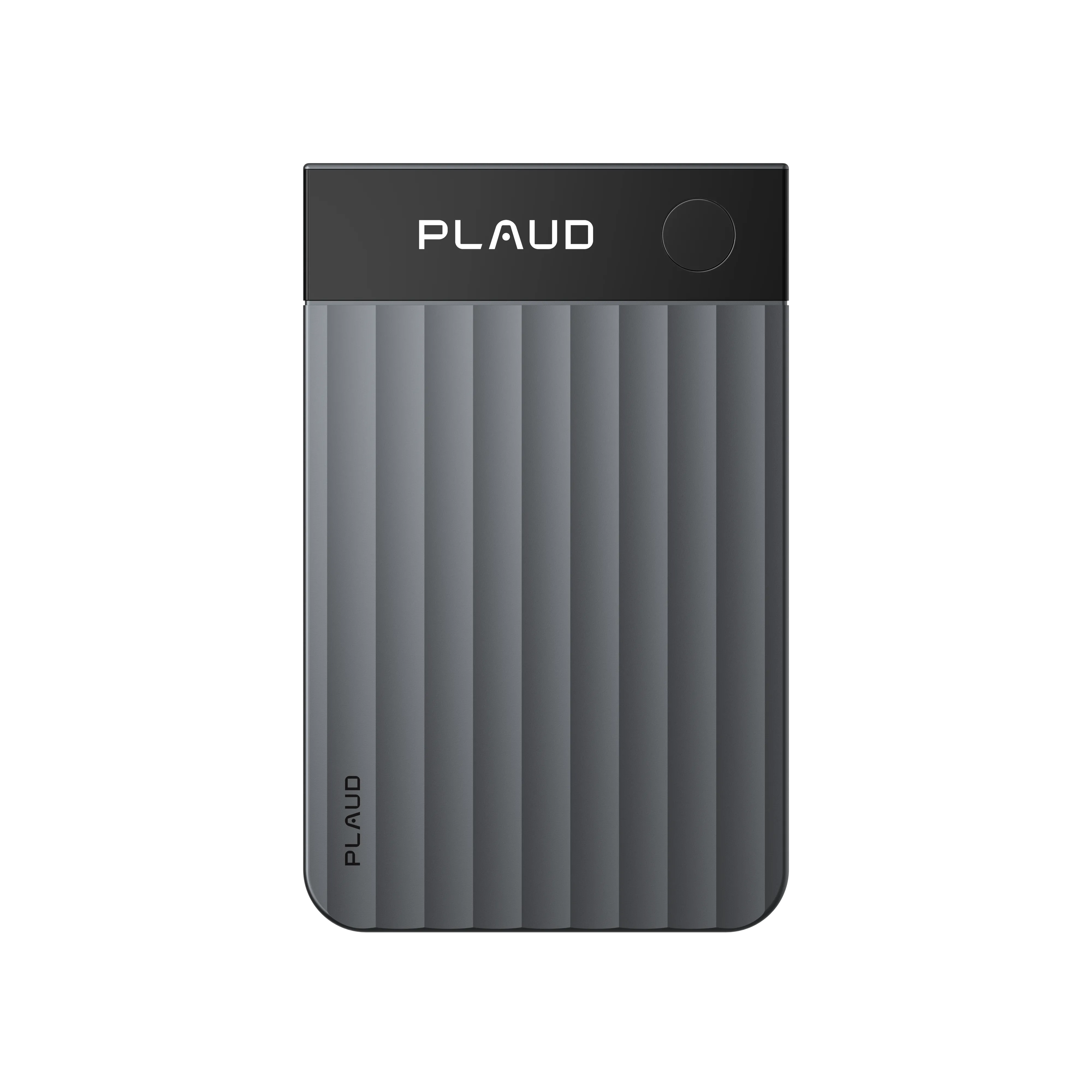
For family doctors who want full control over both the recording quality and the SOAP output format, Plaud Note Pro paired with Plaud Intelligence offers an end-to-end solution: professional-grade audio capture in the exam room, followed by AI-powered SOAP note generation using customizable clinical templates.
Why it works for SOAP documentation
The recording quality is where everything starts, and in a clinical setting, it matters more than most physicians initially expect. Plaud Note Pro's 5-meter (16.4 ft) pickup range means you can place the device on your desk and still capture clear audio when the patient is on the exam table across the room, when you are dictating physical exam findings while washing your hands at the sink, or when a family member in the corner asks a question. In a ten-minute encounter where you move between the desk, the patient, and the examination area, a recorder that only picks up audio within arm's reach misses critical portions of the conversation.
The 50-hour battery life eliminates a daily friction point. In a clinic running from 8 AM to 5 PM with 20 to 25 encounters, the last thing you need is a device that requires midday charging. Plaud Note Pro runs for approximately two full clinic weeks on a single charge, making it a set-and-forget tool.
After the encounter, Plaud Intelligence processes the recording through its AI engine. The transcription supports 100+ languages with speaker identification, which correctly separates your voice from the patient's and from any family members or interpreters present. This speaker separation is essential for SOAP accuracy because the AI needs to know which statements are patient-reported (Subjective) and which are clinician-stated (Objective, Assessment, Plan).
The custom template feature is what makes this a SOAP-specific tool rather than a general recorder. You can build a template that maps directly to your practice's SOAP format, specifying which types of content populate each section. The 30+ built-in professional templates provide starting points, and you can refine them to match the exact fields your EHR uses. If your clinic documents Review of Systems as part of Subjective, you can configure the template to include it. If you prefer a separate ROS section, you can structure the output accordingly.
The Ask Plaud cross-encounter search feature adds value during charting for follow-up visits. Querying "What medications did this patient report taking at the last visit?" or "When did we first discuss the blood pressure readings?" saves the chart-review time that typically precedes a follow-up encounter.
Security includes AES-256 encryption and SOC2 Type II certification, documented at the Plaud Trust Center. For practices that need to demonstrate data handling compliance during audits, this provides a clear reference.
The AI membership Pro plan at $8.33/month (billed annually) provides 1,200 transcription minutes per user. For a GP averaging 10-minute encounters, that covers roughly 120 patient visits per month. The Unlimited plan at $19.99/month (annual) provides 6,000 minutes, covering even the busiest practice volumes.
Where Plaud Note Pro is not the best choice
Plaud Note Pro does not currently offer direct bidirectional EHR integration. Notes are generated within the Plaud app and need to be transferred (copy-paste or export) into your EHR system. For departments where the EHR workflow is the primary bottleneck (rather than the capture and structuring step), a natively integrated solution like Nuance DAX Copilot may reduce friction more effectively. Additionally, team-level management features (assigning recordings, shared templates across a department) are more limited compared to enterprise-focused platforms.

2. Plaud NotePin S: Invisible wearable recording for distraction-Free SOAP documentation
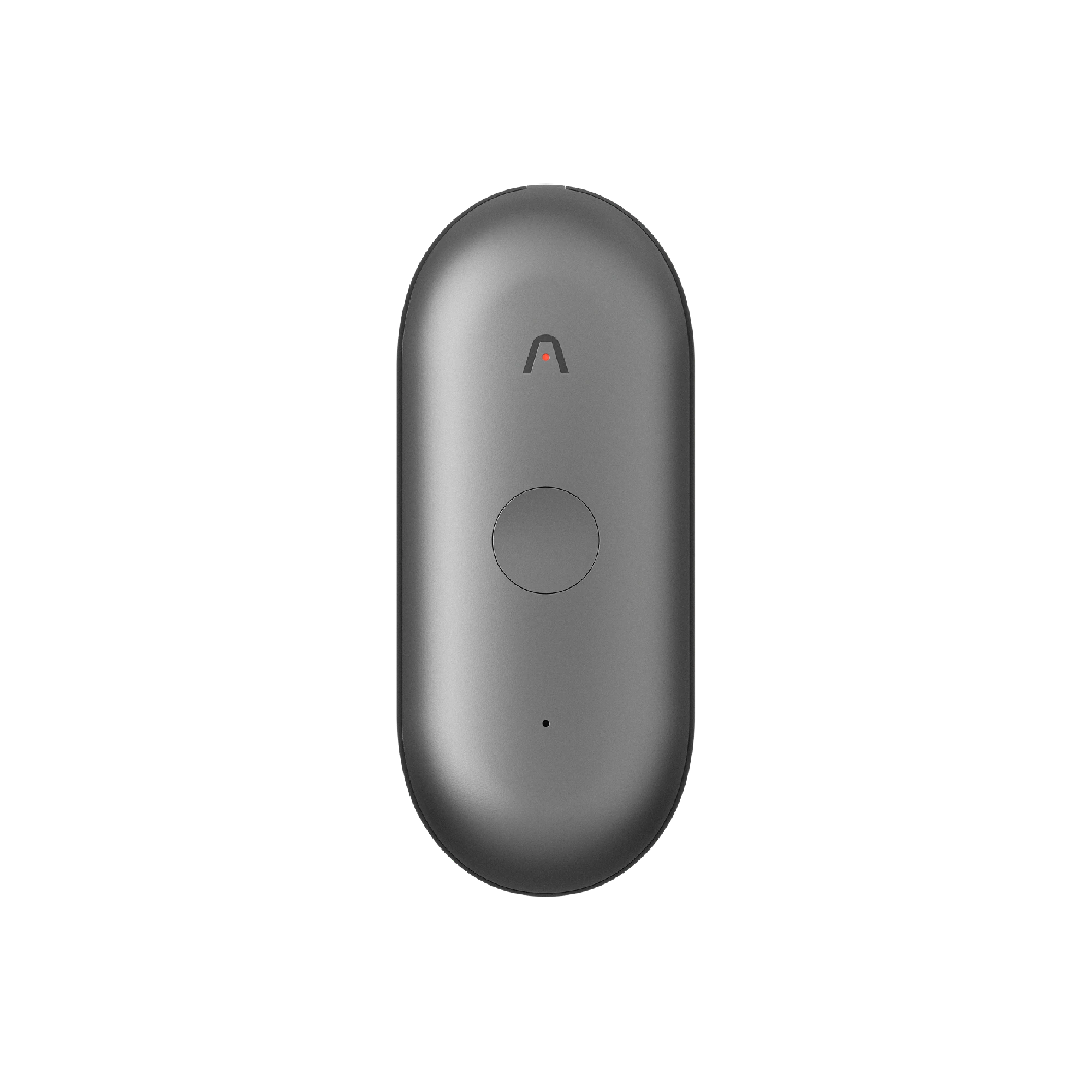
In a ten-minute patient encounter, every element that diverts attention, whether a visible recording device, a laptop screen, or even a notepad, can disrupt the clinical interaction. Plaud NotePin S approaches this problem differently: a wearable device that clips to your lab coat or lanyard and records the entire encounter without any visible technology between you and the patient.
Why it works for SOAP documentation
The invisibility factor is Plaud NotePin S's defining advantage for clinical use. Patients who feel self-conscious around visible recording devices tend to provide less detailed histories. A wearable device that looks like a small pin on your coat lapel removes that barrier entirely. You press once to start recording at the beginning of the encounter, and the device captures the conversation while you focus entirely on the patient.
The NotePin S is light enough to wear all day without noticing it. For a GP who moves between exam rooms, steps out to check lab results, and returns for the plan discussion, the device stays with you throughout. There is no moment where you think, "Did I leave the recorder in Room 3?"
After the encounter, the same Plaud Intelligence AI engine generates transcripts with speaker identification and structured summaries. You can apply SOAP-formatted templates to produce clinical notes from the recording. The one-button operation (press to start, press to stop) means the recording workflow adds zero cognitive load to the encounter itself.
For family doctors who have resisted ambient recording because they did not want a visible device on the desk or a smartphone propped up between them and the patient, the NotePin S offers a recording method that genuinely disappears into the clinical workflow.
Where Plaud NotePin S is not the best choice
The NotePin S is optimized for close-range conversational recording, which works well in a standard exam room where you and the patient are within a few meters of each other. In particularly noisy clinic environments (shared exam areas, high foot traffic outside thin walls), the audio quality may not match Plaud Note Pro's professional-grade pickup. For physicians who need highly complex or detailed SOAP templates with multiple sub-sections, the Note Pro's more powerful processing and longer recording capacity per session may be the better fit. Additionally, like all Plaud hardware, NotePin S does not integrate directly with EHR systems; the note generation happens in the Plaud app before transfer to your chart.
3. Nuance DAX Copilot: Ambient SOAP notes written directly into your EHR
Nuance DAX Copilot represents the deepest integration between ambient clinical recording and EHR documentation currently available. For practices running on supported EHR platforms, DAX Copilot generates SOAP notes and populates them directly in the chart, eliminating the copy-paste step entirely.
Why it works for SOAP documentation
The end-to-end automation is DAX Copilot's primary advantage. The AI listens to your patient encounter through a smartphone microphone or dedicated device, processes the conversation through its clinical language model, generates a structured SOAP note, and drafts it directly inside your EHR (supported platforms include Epic, Cerner, and several others). You review the draft, make any necessary edits, and sign. For a physician seeing 20 patients a day, eliminating the intermediate step of copying notes from an external tool into the EHR saves roughly 30 seconds per encounter, which adds up to 10 minutes daily.
The clinical AI behind DAX Copilot is trained specifically on physician-patient conversations in primary care, specialty, and surgical contexts. This means the model understands common clinical workflows: a history of present illness flows into Subjective, physical exam findings dictated aloud map to Objective, and your stated diagnosis and rationale populate Assessment. The medical vocabulary accuracy is generally strong for common primary care terminology, including medication names, dosages, and standard clinical abbreviations.
For large group practices and health systems, DAX Copilot offers multi-provider deployment, usage analytics, and IT management tools. The Microsoft/Nuance enterprise infrastructure supports compliance certifications that satisfy most healthcare regulatory frameworks.
Where Nuance DAX copilot is not the best choice
Pricing is the most significant barrier for smaller practices. DAX Copilot's per-provider cost is substantially higher than consumer or prosumer recording tools, and contracts are typically structured at the organizational level rather than individual subscriptions. For a solo family doctor or a two-physician practice, the annual cost may be difficult to justify unless the charting time savings translate directly into additional patient slots.
EHR dependency is the second limitation. If your practice runs on an EHR platform that DAX Copilot does not yet support, the core value proposition (direct chart integration) disappears. The tool also requires internet connectivity for processing, which means offline recording (during home visits, for example) is not available. Language support, while expanding, remains more limited than multilingual tools; practices serving linguistically diverse patient populations should confirm coverage.
Conclusion
For family doctors, the SOAP documentation problem comes down to one number: how many minutes pass between the encounter ending and the note being signed? If you currently spend five to seven minutes writing each SOAP note across 20 daily encounters, that is roughly two hours of documentation per day. A tool that reduces the per-note time to two minutes, even accounting for review and editing, recovers over an hour of your workday. Across a five-day clinic week, that is five or more hours returned to patient care, professional development, or personal time.
Here is a concrete next step: calculate your current SOAP documentation time. For one clinic day, track the minutes you spend writing notes (not seeing patients, not reviewing charts; just writing). Divide by the number of encounters. That per-note average is your baseline. Then test your top candidate tool with 10 encounters. If the AI-generated draft plus your review and editing time comes in under three minutes per note, the tool is working. If it still takes five minutes because you are rewriting most of the output, the tool is adding a step rather than removing one.
The goal is simple: spend more time with patients and less time describing what happened after they leave. The right AI SOAP tool makes that math work in your favor.