Between four and six online sessions a day, a remote therapist's real work often starts after the last client logs off. That is when the documentation begins: writing session notes from memory, updating treatment plans, preparing for tomorrow's follow-ups, and pulling together material for supervision. The problem most clinicians describe is painfully simple. Taking notes during a session breaks therapeutic presence. But waiting until afterward means relying on a memory that is already fading by the time you open your EHR.
I have spent the past year testing AI note-taking tools specifically through the lens of remote clinical work. Not every tool that excels at capturing a product meeting translates well to a therapy session, where privacy is non-negotiable, clinical formatting matters, and the relationship between practitioner and client cannot be interrupted by visible note-taking. Here is what I found, ranked by how well each tool addresses the unique demands of remote session documentation.
How we chose the best AI note takers for remote sessions in 2026
Selecting an AI note taker for clinical work is fundamentally different from choosing one for business meetings. The stakes are higher, the content is more sensitive, and the output needs to fit into a clinical documentation workflow rather than a project management tool. Before reviewing specific products, it helps to understand why standard meeting-note criteria fall short.
Why session notes are different from meeting notes
A sales call summary and a therapy session note serve entirely different purposes. Meeting notes capture decisions, action items, and who said what. Session notes, on the other hand, need to document presenting concerns, clinical observations, therapeutic interventions used, client responses, risk assessments, and treatment plan progress. The structure follows clinical frameworks (SOAP, DAP, BIRP, or narrative formats) rather than the "key takeaways and next steps" template that most AI note takers default to.
There is also a fundamental difference in how the recording happens. In a business meeting, a visible AI bot joining the call is mildly annoying at worst. In a therapy session, a third-party bot entering the video call can undermine the sense of safety that is essential to the therapeutic relationship. Many clients will not speak freely if they see "Otter Bot" or "Fireflies Notetaker" appear in the participant list. This means the recording method itself, not just the output, needs to be considered.
Finally, regulatory requirements add a layer that most business tools were not designed to address. Depending on your jurisdiction and practice type, you may need HIPAA-compliant storage, end-to-end encryption, clear data retention policies, and audit trails. A tool that stores recordings on servers without a Business Associate Agreement (BAA) is a liability, regardless of how good its transcription is.
The 3 decision variables
After testing multiple configurations across different practice setups, I narrowed the evaluation to three variables that matter most for remote session documentation:
Privacy and Compliance. Does the tool offer encryption, HIPAA-compatible storage, a BAA, and clear data handling policies? For clinical work, this is not a "nice to have"; it is the baseline requirement. Tools that process audio through third-party servers without adequate safeguards create risk that no amount of convenience can justify.
Post-Session Output Speed. How quickly after the session ends can you access a usable note? Clinicians with back-to-back sessions often have 10 to 15 minutes between clients. A tool that delivers a structured summary within 5 minutes of the session ending fits into that workflow. One that takes 30 minutes or requires manual editing does not.
Clinical Template Support. Can the tool output notes in SOAP, DAP, or other clinical formats, or does it only produce generic meeting summaries? The difference between "here are the key points from your call" and "here is a SOAP-formatted note with subjective observations, objective data, assessment, and plan" is the difference between a useful tool and extra work.
Here is a quick-reference table based on these three variables:
|
Tool |
Works well when |
Falls short when |
Best for |
|
Plaud Note Pro |
You need encrypted, high-quality session recording with clinical-ready output |
Your sessions are 100% virtual and you want auto-join functionality |
Clinicians who prioritize privacy and need flexible recording across formats |
|
Plaud Note |
You want simple one-tap recording with AI summaries at an accessible price |
You need HIPAA-grade compliance or work in large group settings |
Solo practitioners and trainees on a budget |
|
Mentalyc |
You need purpose-built clinical notes in SOAP/DAP/BIRP formats |
You also need to record phone calls or in-person sessions |
Therapists who want fully automated clinical documentation |
|
Otter.ai |
You want real-time transcription visible during virtual sessions |
Client comfort with visible AI bots is a concern; HIPAA compliance is required |
Clinicians comfortable with visible transcription in supervised or training contexts |
|
Fireflies.ai |
You want automatic recording across all virtual platforms with searchable archives |
Deep clinical formatting or privacy-first workflows are priorities |
Practitioners in non-clinical or low-sensitivity remote session contexts |
5 best AI note takers for remote sessions

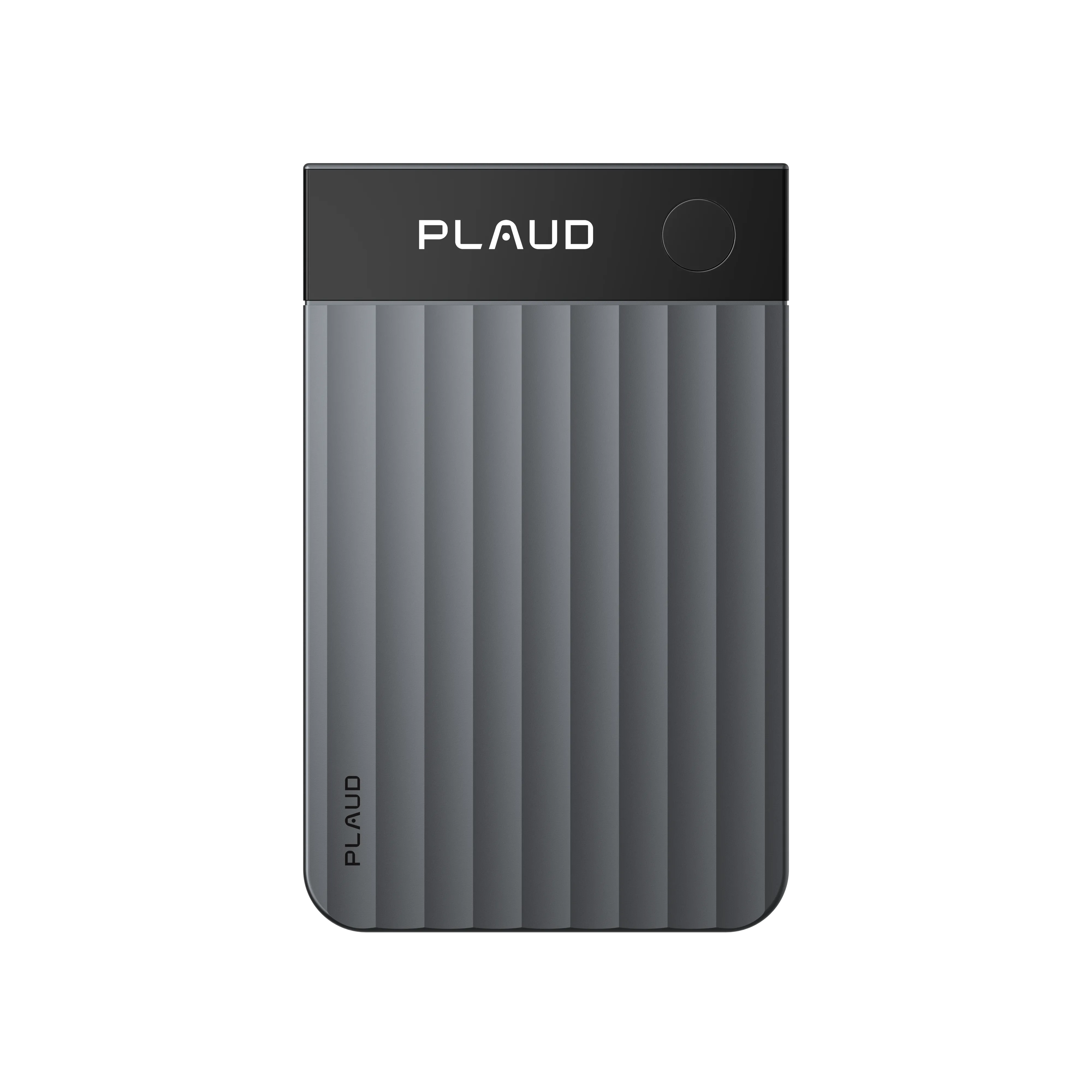
1. Plaud Note Pro: the privacy-first session recording solution
For remote clinicians whose top concern is keeping session content secure while still getting useful AI-generated notes, Plaud Note Pro offers a combination that software-only tools struggle to match: professional-grade recording hardware paired with encrypted AI processing.
Why it works for remote sessions
The most immediate advantage is how the recording happens. Rather than introducing a visible AI bot into a Zoom or Teams call (which many clients find intrusive), Plaud Note Pro captures audio locally through a dedicated device. For phone-based sessions, it records the call directly. For video sessions, it captures the audio from your computer or the room. The result is the same high-quality transcript without the "someone else is in the room" dynamic that can undermine therapeutic rapport.
The 5-meter (16.4 feet) pickup range means Plaud Note Pro captures clear audio whether you are sitting at your desk for a video call or conducting a phone session from across the room. The 50-hour battery life is particularly relevant for clinicians running full days of sessions; you can record an entire week of 5-session days without recharging.
What happens after the recording is where Plaud.AI delivers the most value for clinical users. The transcription engine supports 100+ languages with speaker identification, which is essential for sessions conducted in languages other than English or with bilingual clients who switch between languages mid-conversation. The AI summary engine offers 30+ professional templates, and the custom template feature lets you build output formats that align with your specific documentation requirements (SOAP, DAP, narrative, or your practice's proprietary format).
The Ask Plaud feature allows you to query across multiple session recordings: "What coping strategies did this client mention working well?" or "When did we first discuss the workplace conflict?" This kind of cross-session searchability turns your recordings into a clinical reference library rather than a pile of audio files.
Security is built into the architecture. Plaud.AI holds SOC2 Type II certification and uses AES-256 encryption. For clinicians who need to demonstrate compliance during audits or insurance reviews, this documentation matters.
The AI membership Pro plan provides 1,200 minutes of transcription per month at $8.33/month (billed annually), which covers roughly 20 one-hour sessions. For practitioners with heavier caseloads, the Unlimited plan at $19.99/month (annual) offers 6,000 minutes.
Where Plaud Note Pro Is NOT the Best Choice
If you want a tool that automatically joins your Zoom calls and records without any hardware involvement, Plaud Note Pro requires a separate device. For practitioners whose workflow is entirely screen-based and who want zero additional steps, a software-only solution may feel more integrated.

2. Plaud Note: The budget-friendly session recorder for solo practitioners
Plaud Note offers many of the same AI capabilities as its Pro sibling in a more compact, more affordable package. It provides a practical entry point for clinicians who want to start recording sessions with AI-powered summaries without a larger investment.
Why it works for remote sessions
The one-tap recording design means you press a single button at the start of a session and forget about it. There are no apps to open, no settings to adjust, and no visible indicators on the client's screen. The card-sized form factor sits unobtrusively on your desk, and for phone sessions, it can record calls directly.
After the session, the same AI engine that powers Plaud Note Pro generates transcripts and summaries. You get speaker identification, multiple summary templates, and the ability to create custom output formats. For a solo practitioner who sees 4 to 5 clients a day and needs basic session documentation, this covers the core workflow: record, transcribe, summarize, review, and finalize.
The price point makes Plaud Note particularly attractive for graduate students in clinical training, early-career therapists building a private practice, or practitioners who want to test whether AI-assisted documentation improves their workflow before committing to a higher-end solution.
Where Plaud Note Is NOT the Best Choice
The pickup range is more limited than Plaud Note Pro's, which means it works best when placed close to your audio source (on your desk during a video call, or attached to your phone during a phone session). For clinicians who move around their office or occasionally see clients in person at a distance, the Pro model's 5-meter range is a meaningful upgrade. Plaud Note also does not carry the same level of enterprise security certifications as Plaud Note Pro, so practitioners with strict HIPAA requirements should evaluate whether the compliance documentation meets their needs.
3. Mentalyc: Purpose-built clinical notes for therapists
Mentalyc positions itself as an AI note-taking tool designed specifically for mental health professionals. Unlike general-purpose recorders that require you to adapt meeting-note output into clinical format, Mentalyc generates notes in standard clinical documentation frameworks from the start.
Why it works for remote sessions
The core value proposition is clinical specificity. Mentalyc can generate notes in SOAP, DAP, BIRP, and narrative formats without manual reformatting. The AI is trained to distinguish between clinical observations and conversational content, which means the output reads more like a note a clinician would write than a meeting transcript summary.
The tool integrates with common teletherapy platforms and can record virtual sessions. For therapists who use a consistent session structure, the AI learns patterns over time and produces increasingly accurate notes that align with your documentation style.
Mentalyc also includes treatment plan tracking, which connects session notes to ongoing therapeutic goals. This is a feature that general-purpose note takers simply do not offer, and it saves time during treatment plan reviews and supervision preparation.
Where Mentalyc is NOT the best choice
Mentalyc is designed for virtual therapy sessions. If you conduct phone-based sessions, hybrid in-person and virtual work, or need to record conversations outside a scheduled video call, the tool's coverage is limited to its supported platforms. The clinical specialization also means it is less versatile than broader tools if you need note-taking for non-clinical meetings such as team calls, supervision groups, or administrative discussions. Pricing tends to be higher than general-purpose alternatives, reflecting the clinical-grade output and compliance features.
4. Otter.ai: Real-time transcription for supervised and training contexts
Otter.ai is one of the most widely recognized AI transcription tools, and its real-time transcription feature makes it an interesting option for specific clinical use cases, particularly supervision, training, and contexts where live note visibility is appropriate.
Why it works for remote sessions
Otter's real-time transcription appears on screen as the conversation happens. In supervision sessions, case consultations, or peer review meetings, this creates a live record that all participants can reference. The ability to highlight, comment on, and tag specific moments during a live session is useful for training contexts where the transcript itself becomes a teaching tool.
The platform integrates with Zoom, Google Meet, and Microsoft Teams, and the automated meeting summary provides a structured overview after the call ends. For non-clinical remote sessions (team meetings, administrative calls, consultation groups), Otter's combination of live transcription and post-call summary is efficient and reliable.
Otter's free tier offers 300 minutes of transcription per month, and the Pro plan at $8.33/month (billed annually) provides 1,200 minutes, which makes it an accessible option for practitioners who want to test AI transcription without a hardware purchase.
Where Otter Is NOT the Best Choice
The most significant limitation for clinical use is the visible bot. Otter joins calls as a named participant, and many therapy clients find this uncomfortable or disruptive. In individual therapy sessions where the therapeutic alliance depends on a sense of private, two-person intimacy, an AI bot in the participant list can be a barrier.
Otter's transcription supports only 4 languages, which limits its usefulness for multilingual practitioners or clients. The output formats are general-purpose (meeting summary, action items) rather than clinical (SOAP, DAP), which means you will need to reformat notes manually for clinical documentation. Otter also does not currently offer HIPAA-compliant plans with a BAA for its standard tiers, making it unsuitable for practitioners with strict regulatory requirements.
5. Fireflies.ai: Searchable session archives for low-sensitivity remote work
Fireflies.ai offers automatic meeting recording, transcription, and a searchable conversation database. Its strength is breadth: it connects to virtually every major video conferencing platform and stores every conversation in a searchable, filterable library.
Why it works for remote sessions
For clinicians who also manage administrative meetings, supervision groups, consultation calls, and training sessions, Fireflies provides a single platform to capture and organize everything. The automatic join feature means every scheduled meeting is recorded without manual intervention, and the AI generates summaries with topic detection, action items, and speaker breakdowns.
The search functionality is particularly useful for supervision preparation. You can search across all recorded sessions by keyword or topic to find specific conversations or patterns. The CRM and productivity tool integrations (Zapier, Notion, Slack) make it easy to route summaries to the tools you already use.
Fireflies' Pro plan starts at $10/month per seat (billed annually), making it one of the most affordable options for practitioners who want comprehensive meeting capture.
Where Fireflies Is NOT the Best Choice
For direct clinical sessions with clients, Fireflies shares the same visibility issue as Otter: the bot joins the call as a visible participant. In therapeutic contexts, this can disrupt the session dynamic. The output formats are business-oriented (meeting summary, action items, key topics) rather than clinical, requiring manual conversion to SOAP or DAP formats.
Fireflies does not offer HIPAA-compliant storage on its standard plans. For practitioners recording therapy sessions that contain protected health information, this is a significant limitation. The tool is better suited to the administrative and supervisory side of clinical practice than to direct client sessions.
So which one should you pick?

The right tool depends on which of the three decision variables matters most in your specific practice setup. Here is a decision framework:
If privacy compliance is your top requirement, Plaud Note Pro offers the strongest combination of local recording, encrypted processing, and security certifications (SOC2 Type II, AES-256). The hardware-based approach avoids the visible-bot problem entirely, and the custom template feature lets you build clinical output formats that match your documentation needs. For practitioners who handle sensitive clinical content and need to demonstrate compliance, this is the most robust option on the list.
If you want effective session recording on a limited budget, Plaud Note provides the same AI transcription and summary engine at a lower price point. It is well-suited for solo practitioners, trainees, and early-career clinicians who want to build better documentation habits without a large upfront investment.
If you need purpose-built clinical notes in standard formats, Mentalyc is the most specialized option. Its SOAP, DAP, and BIRP output eliminates the reformatting step that general-purpose tools require. The tradeoff is less flexibility for non-clinical use cases and higher pricing.
If you primarily need note-taking for supervision, training, and administrative sessions (rather than direct client work), Otter.ai and Fireflies.ai are both capable and affordable options. Their visible-bot approach is less problematic in group and non-clinical contexts, and their search and summary features make supervision preparation more efficient.
Many clinicians I have spoken with use a two-tool approach: Plaud Note Pro or Plaud Note for direct client sessions (where privacy and invisibility matter most), and a software tool like Otter or Fireflies for supervision, team meetings, and administrative calls. This combination keeps clinical recording secure while capturing the full range of professional conversations.
Conclusion
For remote clinicians, the priority order when selecting an AI note taker should be clear: privacy compliance first, then post-session output speed, then template and formatting support. A tool that produces beautiful SOAP notes but stores unencrypted audio on third-party servers creates more risk than value. Conversely, a perfectly secure tool that takes 45 minutes to deliver a summary does not fit into a back-to-back session schedule.
Here is a practical next step. Identify your compliance requirements first: does your practice need HIPAA-compliant storage, a BAA, end-to-end encryption, or specific data retention policies? Once you know your privacy floor, test your top candidate with 3 to 5 real sessions (with appropriate client consent). Evaluate whether the AI output is close enough to a finished session note that you can review and finalize it in under 5 minutes. If it saves you 15 to 20 minutes of documentation per session across a 5-session day, that is over an hour of clinical time recovered daily, time you can reinvest in client care, professional development, or simply ending the workday at a reasonable hour.
The goal is not to automate clinical judgment. It is to automate the transcription and formatting work that sits between a good session and a good note, so you can stay fully present with your clients and still produce thorough documentation.