A remote medical session demands something no other professional call does: you must simultaneously listen to a patient describe symptoms, observe visual cues on a video feed, recall clinical context from prior visits, and produce a structured medical record that meets documentation standards. Doing all four at once is where information falls through the cracks. Research and industry observations suggest that clinical documentation work in telehealth environments is substantial, often requiring a significant portion of the time in relation to patient encounters. Furthermore, some clinically relevant details may be absent from the final note due to transcription gaps. For telehealth physicians handling 8 to 10 remote sessions per day, the right AI note taker is not a productivity tool; it is a clinical safety layer. This guide evaluates five options through the criteria that matter most: regulatory compliance, clinical documentation standards, and EHR workflow integration.
How we chose the best AI note takers for remote medical sessions in 2026
Evaluating note takers for clinical use requires a fundamentally different framework than evaluating tools for sales calls or business meetings. The consequences of error, the regulatory environment, and the output format are all distinct.
Medical documentation is not meeting notes
A meeting note summarizes what was discussed. A clinical note is a legal medical record that drives treatment decisions, supports insurance reimbursement, and may be reviewed during malpractice proceedings years after the encounter. The difference is not just formality; it is structural.
Clinical documentation follows specific formats (SOAP notes, H&P, progress notes, discharge summaries) that organize information into categories a general-purpose AI summary cannot reliably produce. A SOAP note requires the AI to distinguish between Subjective information (what the patient reports), Objective data (what the physician observes or measures), Assessment (the clinical interpretation), and Plan (the treatment decisions). Getting the category wrong, placing a patient-reported symptom in the Objective section or omitting an assessment finding, creates a documentation error with potential clinical and legal consequences.
Telehealth adds a specific challenge: the AI must work within or alongside the video consultation platform without disrupting the patient interaction. A recording bot that joins a telehealth call as a visible participant, the way meeting bots work in Zoom, raises immediate patient consent and trust concerns that do not exist in a sales meeting context.
The 3 decision variables for medical session note takers
HIPAA compliance and data security: This is not a "nice to have"; it is a legal requirement for any tool that processes protected health information (PHI) in the United States. The tool must offer HIPAA-compliant data handling, which includes encryption at rest and in transit, a signed Business Associate Agreement (BAA), access controls, and audit logging. Tools that are not willing to sign a BAA are not options for clinical use, regardless of their feature set.
Clinical documentation templates: Can the tool produce output in SOAP, H&P, progress note, or other standard clinical formats? General-purpose summaries (key topics, action items, next steps) are not usable in a clinical workflow. The tool needs to understand medical terminology, correctly categorize clinical information, and generate notes that a physician can review and sign without substantial restructuring.
EHR integration: Does the tool push completed notes directly into Epic, Cerner (now Oracle Health), Athenahealth, or your EHR system? Clinical notes that live in a separate app create a dangerous workflow gap: the physician must manually transfer information into the EHR, which reintroduces the transcription errors the tool was supposed to eliminate. Direct EHR integration is the feature that determines whether the tool saves time or merely shifts the documentation burden.
Quick Comparison
|
Tool |
HIPAA / BAA |
Clinical templates |
EHR integration |
Best for |
|
SOC 2 Type II, AES-256, HIPAA |
Customizable (including SOAP) |
Export-based (no native EHR push) |
Privacy-first physicians who need local storage and flexible capture |
|
|
Nuance DAX Copilot |
Full HIPAA, BAA available |
SOAP, H&P, specialty-specific |
Epic, Cerner, Athenahealth (native) |
Health systems wanting deep EHR-integrated ambient documentation |
|
Abridge |
Full HIPAA, BAA available |
SOAP, structured clinical notes |
Epic, Cerner, Athenahealth (native) |
Clinicians wanting real-time ambient capture with EHR push |
|
Suki AI |
Full HIPAA, BAA available |
SOAP, progress notes, specialty-tuned |
Epic, Cerner, Athenahealth, eClinicalWorks |
Voice-first physicians who dictate rather than type |
|
Nabla |
Full HIPAA, BAA available |
SOAP, consultation summaries |
Limited EHR integration |
Telehealth-focused physicians wanting lightweight AI assist |
5 best AI note takers for remote medical sessions

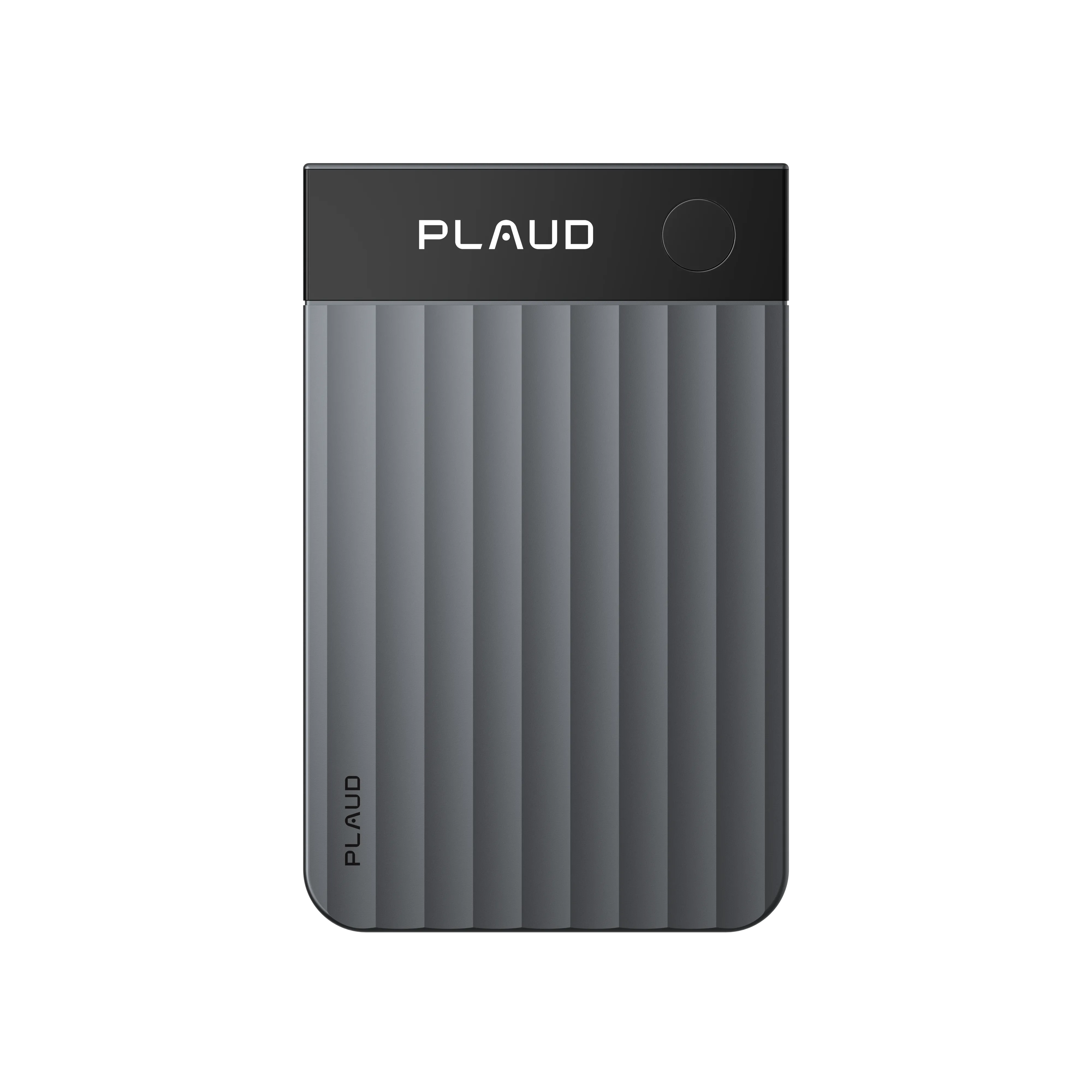
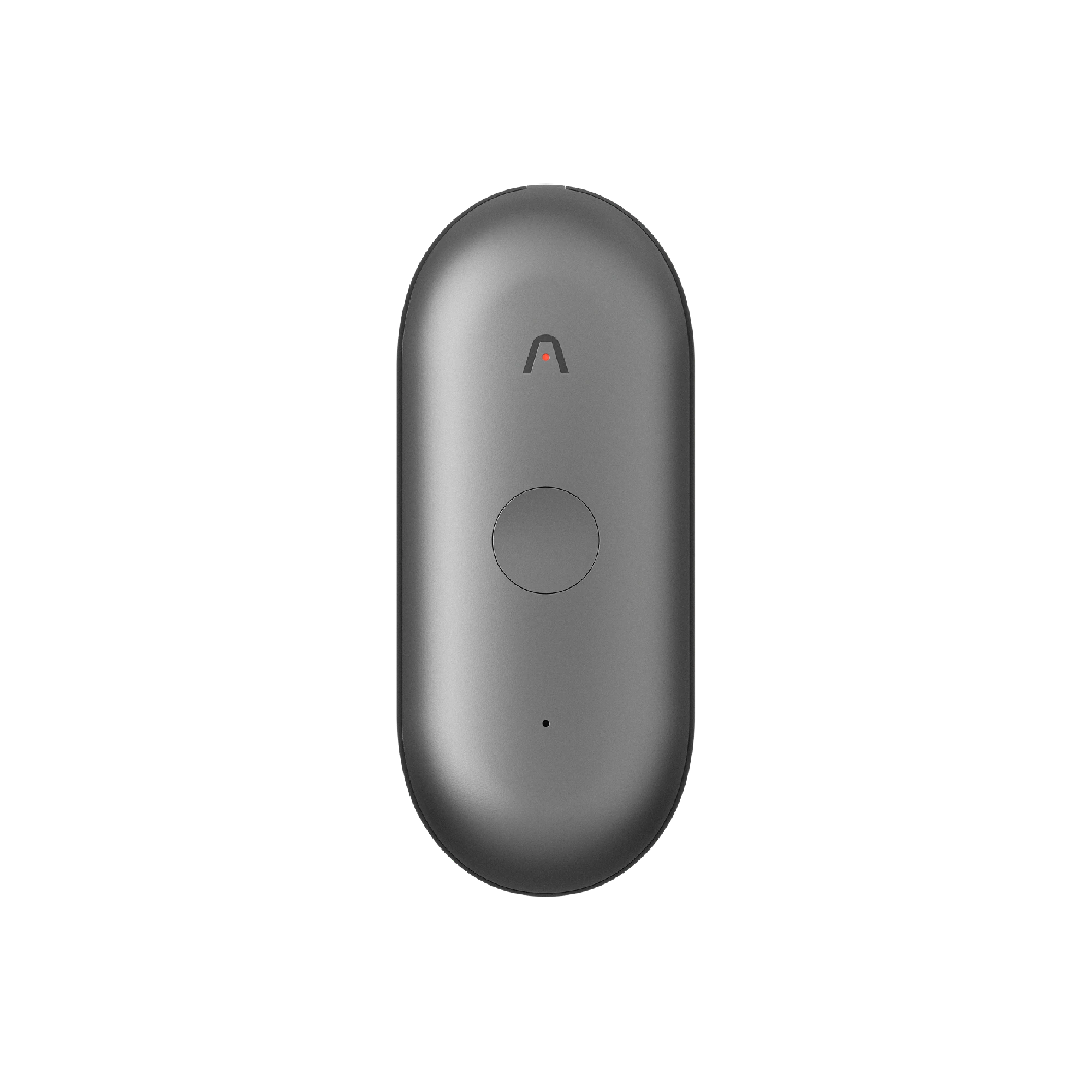
Plaud Note Pro
Local-storage-first recording with medical-grade encryption for physicians who want full control over patient data.
Why it works
The Plaud Note Pro addresses a concern that many physicians raise before any feature discussion: Where does the recording go? For clinicians who are uncomfortable routing patient audio through cloud servers, even HIPAA-compliant ones, the Note Pro's hardware-first architecture offers a different model. Audio is captured and stored on the physical device itself before any cloud processing occurs. This means the physician retains physical custody of the recording at all times, and cloud-based transcription and summarization happen only when the physician actively initiates the process.
The security infrastructure supports clinical use: Plaud holds SOC 2 Type II certification, uses AES-256 encryption, and lists HIPAA in its compliance framework. The 5-meter (16.4-foot) pickup range captures both sides of a conversation clearly in a home office or clinic setting, and the 50-hour battery eliminates charging concerns across a full week of telehealth sessions.
For documentation output, the AI layer (powered by GPT-4o and Claude series) generates structured summaries using customizable templates. While the Note Pro is not a clinical-specific platform, its template system can be configured to approximate SOAP format: the physician creates a custom template that prompts the AI to separate patient-reported symptoms (Subjective), observable findings discussed during the call (Objective), the physician's stated assessment (Assessment), and the agreed treatment plan (Plan). The output requires physician review and may need clinical refinement, but it provides a structured starting point that is significantly faster than writing the note from scratch.
The Ask Plaud cross-recording search adds value for longitudinal patient care. A physician can query "What did Mrs. Johnson say about her medication side effects across all our sessions?" and get timestamped answers from multiple telehealth encounters, which helps reconstruct a patient's clinical narrative during complex or ongoing treatment.
Where it is not the best choice
The Plaud Note Pro is not a clinical documentation system. It does not integrate natively with Epic, Cerner, or other EHR platforms, which means the generated notes must be manually copied or exported into the medical record. For physicians in health systems where EHR integration is mandatory (and where IT controls the approved tool list), this gap is a significant workflow limitation. The AI-generated SOAP approximation also lacks the clinical NLP training that purpose-built medical AI scribes offer; it may misclassify clinical information or use imprecise medical terminology, requiring more physician editing than a dedicated clinical tool would. Physicians should treat the output as a draft that requires clinical review, not as a finished medical note.
Nuance DAX Copilot
The enterprise ambient clinical documentation standard, backed by Microsoft and deeply integrated with major EHR systems.
Why it works
Nuance Dragon Ambient eXperience (DAX) Copilot is the most widely deployed ambient clinical documentation platform in the US health system landscape. The tool listens to the physician-patient conversation during a telehealth encounter (or in-person visit), then generates a structured clinical note in the appropriate format (SOAP, H&P, progress note) based on the specialty, encounter type, and the physician's documentation preferences.
The clinical NLP models are the core differentiator. DAX Copilot is trained on millions of clinical encounters across dozens of specialties, which means it understands that "the patient reports intermittent chest pain radiating to the left arm" belongs in the Subjective section and that "lungs clear to auscultation bilaterally" belongs in the Objective section. This specialty-aware categorization reduces the physician's editing burden compared to general-purpose AI tools that do not understand clinical note structure.
EHR integration is native and deep. DAX Copilot writes directly into Epic, Cerner (Oracle Health), and Athenahealth workflows. The physician reviews the draft note within the EHR, makes edits, and signs it, all without leaving the clinical system. For health systems that have standardized on one of these EHR platforms, this eliminates the copy-paste step that introduces errors and adds time.
HIPAA compliance is comprehensive: Nuance (now part of Microsoft) provides BAAs, enterprise-grade security, and the compliance documentation that health system IT departments require during vendor evaluation.
Where it is not the best choice
DAX Copilot is an enterprise product with enterprise pricing. Exact costs vary by contract, but the platform typically requires organizational-level agreements with per-provider monthly fees that can range from $200 to $400+ per provider per month depending on the deployment model. Solo practitioners and small telehealth groups often cannot justify the cost without institutional support. The deployment timeline is also significant: EHR integration, SSO configuration, specialty template customization, and provider training typically take 4 to 12 weeks. For a physician who needs documentation help starting tomorrow, DAX Copilot is not an immediate solution.
Abridge
Real-time ambient AI scribe that generates clinical notes during the conversation and pushes them into the EHR.
Why it works
Abridge has emerged as one of the fastest-growing clinical AI documentation platforms, with partnerships across major health systems including UPMC, UCI Health, and Emory Healthcare. The platform runs as an ambient listener during telehealth or in-person encounters, capturing the physician-patient conversation and generating structured clinical notes in near real-time.
The real-time generation is the key workflow advantage. While the physician is still speaking with the patient, Abridge is assembling the SOAP note in the background. By the time the encounter ends, a draft note is typically available for review within 15 to 30 seconds. For a telehealth physician with 8 to 10 sessions per day, this means the note is ready before the next patient joins the video call, eliminating the documentation backlog that accumulates across a full clinic day.
Abridge's clinical models are trained specifically on medical conversations and produce notes that use appropriate clinical terminology, ICD-10 references, and specialty-specific formatting. The platform supports multiple encounter types (new patient, follow-up, procedure note) and adjusts documentation structure accordingly.
EHR integration includes native connections to Epic and Cerner, with the note populating directly in the encounter record. The physician reviews, edits where necessary, and signs within the EHR. HIPAA compliance with BAA availability is standard.
Where it is not the best choice
Abridge's pricing is not publicly listed and varies by health system contract size, but it generally falls in the enterprise or mid-market tier, making it more accessible than DAX Copilot but still a significant line item for solo practitioners. The platform's ambient capture requires a stable audio feed from the telehealth platform or a microphone in the exam room; in scenarios where audio quality is poor (low-bandwidth telehealth connections, patient on speakerphone in a noisy environment), note quality degrades. Abridge also does not cover phone-only encounters (without a connected platform) or offline patient interactions that happen outside the clinical system.
Suki AI
Voice-first clinical AI assistant that lets physicians dictate, edit, and sign notes by voice within the EHR.
Why it works
Suki AI takes a different approach from ambient listeners: it is primarily a voice-driven documentation assistant. The physician speaks to Suki during or after the encounter ("Suki, create a progress note: patient presents with..."), and the AI generates the structured note based on the dictation combined with contextual understanding of clinical documentation patterns.
For physicians who are already comfortable with dictation workflows (many transitioned from Dragon Medical One or similar dictation tools), Suki feels natural. The AI goes beyond simple speech-to-text by understanding clinical context: it structures the dictation into proper SOAP or progress note format, suggests appropriate medical terminology, and auto-populates common elements based on the encounter type and specialty.
EHR integration is broad, covering Epic, Cerner, Athenahealth, and eClinicalWorks. Suki operates within the EHR interface, so the physician does not need to switch between applications. The voice command system also enables EHR navigation (pulling up labs, reviewing medication lists) during the encounter, which reduces the time spent clicking through screens during a telehealth session.
HIPAA compliance with BAA availability is standard. Pricing is typically in the range of $150 to $300 per provider per month depending on the plan and deployment size, positioning it below DAX Copilot but above general-purpose tools.
Where it is not the best choice
Suki's dictation-first model works well for physicians who prefer to narrate their notes, but less well for those who want a fully ambient experience where the AI captures the natural conversation without any directed speech. The distinction matters: with Suki, you need to speak to the tool ("Suki, note that the patient..."), while ambient tools like DAX Copilot and Abridge simply listen to the physician-patient dialogue and extract the note independently. For telehealth physicians who want zero documentation workflow during the encounter, an ambient tool may feel less intrusive. Suki also requires a learning period for the voice command system, and accuracy can vary with accented speech or in noisy environments.
Nabla
Lightweight AI clinical assistant designed specifically for telehealth consultations.
Why it works
Nabla positions itself as a clinician-friendly AI copilot that integrates into video consultation workflows with minimal setup. The platform runs alongside the telehealth session (through a browser extension or integration with select telehealth platforms), listens to the conversation, and generates a SOAP-formatted consultation summary when the encounter ends.
The lightweight deployment model is Nabla's strongest advantage for independent physicians and small telehealth practices. There is no multi-week enterprise implementation, no EHR integration project, and no IT department involvement required. A physician can activate Nabla, run a telehealth session, and receive a structured clinical note within minutes. This makes it accessible for the growing number of physicians operating direct-to-consumer telehealth practices or working as independent contractors on telehealth platforms.
Nabla's AI models are trained on clinical conversations and produce notes with appropriate medical terminology and SOAP structure. The platform also offers a clinical copilot feature that can suggest differential diagnoses and relevant clinical guidelines based on the conversation content, though physicians should treat these as decision-support prompts rather than diagnostic conclusions.
HIPAA compliance with BAA availability is standard. Pricing is more accessible than enterprise platforms, with plans that individual physicians can subscribe to without organizational procurement.
Where it is not the best choice
Nabla's EHR integration is limited compared to DAX Copilot, Abridge, or Suki. The platform generates notes that typically need to be manually transferred into the EHR via copy-paste, which reintroduces the workflow gap that fully integrated tools eliminate. For physicians in health systems where direct EHR integration is required, this limitation may disqualify Nabla from consideration. The platform's specialty coverage is also narrower than the major enterprise tools; physicians in highly specialized fields (oncology, cardiology, complex surgical specialties) may find the clinical templates less precisely tuned to their documentation patterns.
Conclusion

The priority hierarchy for choosing an AI note taker for remote medical sessions is different from every other use case in this category. Compliance comes first: any tool that handles patient conversation data must meet HIPAA requirements and provide a signed BAA. Clinical documentation format comes second: the tool must produce output that conforms to medical record standards (SOAP, H&P, progress notes), not generic meeting summaries. EHR integration comes third: notes that flow directly into the medical record eliminate transcription errors and save the 10 to 15 minutes of post-encounter documentation time that accumulates across a full clinic day.
The practical next step is to identify your constraints before evaluating features. Which EHR system does your practice use? Does your organization require a BAA before any tool can process patient data? Do you need ambient capture (the AI listens to the natural conversation) or directed documentation (you dictate the note)? Those three answers narrow the field to one or two options. Start a two-week trial with your highest-volume encounter type, measure the time from encounter end to signed note, and compare it to your current workflow. The tool that consistently reduces that interval without introducing clinical documentation errors is the right choice.