As a customer success manager, my job lives and dies by what happens during client calls. Renewal conversations, QBRs, escalation calls, onboarding check-ins. If you're someone whose client interactions are mostly email or Slack, this probably isn't for you. This is for CSMs who spend real hours on the phone or sitting across the table from clients.
Here's what keeps tripping me up: a client mentions during a casual check-in that they're frustrated with a specific feature. I nod, I engage, I promise to follow up. Two days later, I'm writing my QBR prep and I can't remember exactly what they said. Was it the reporting dashboard or the export function? I write a vague internal note, the product team asks for specifics, and now I'm the CSM who "doesn't listen." Worse, the client brings it up again next month and I've got nothing to show for it. That's how accounts go from green to yellow.
How we picked these tools
What CSMs actually need to capture
Client meetings aren't like internal standups. There's no shared agenda everyone sticks to. A renewal call might start with pricing and end with a feature request that could save the account. An onboarding session might surface a workflow problem nobody anticipated.
What I need from a note-taker is pretty specific: I need it to catch client objections word-for-word, pull out action items with enough context that I can hand them off to my team, and work across the mix of calls and face-to-face meetings that fill my calendar. I don't need sales coaching or pipeline analytics. I need a reliable record of what my client actually said.
How I actually decided
Three things matter when I'm picking a tool for client meetings.
First, where do your meetings happen? If most of your client work is phone calls mixed with the occasional lunch meeting, you need something physical. If it's all Zoom, software works fine. If it's both (which is most CSMs I know), you need to think about coverage.
Second, what do you do with the notes after? If you just need a transcript and action items, a simple recorder will do. If your team needs conversation analytics, sentiment tracking, or CRM-synced insights, that's a different category entirely.
Third, what's realistic for your budget? Some of these tools are $159 one-time. Others start at $5,000 a year before you add a single seat.
Here's the quick version:
| Tool | Works well when | Falls when | Best for |
|---|---|---|---|
| Plaud Note | Phone calls + small in-person meetings | Large conference rooms | CSMs who split time between phone and face-to-face |
| Plaud Note Pro | High-stakes client meetings, bigger rooms | You only do online meetings | CSMs with important on-site accounts |
| Gong | Deep analysis of online sales/CS conversations | Offline meetings, tight budgets | Teams that need conversation intelligence at scale |
| Fireflies.ai | Zoom/Teams/Meet auto-recording | Anything offline | CSMs who live in virtual meetings |
| Otter.ai | Collaborative live transcription | Phone recordings, offline meetings | CSMs who share notes with cross-functional teams |
5 best AI note takers for client meetings
Plaud Note

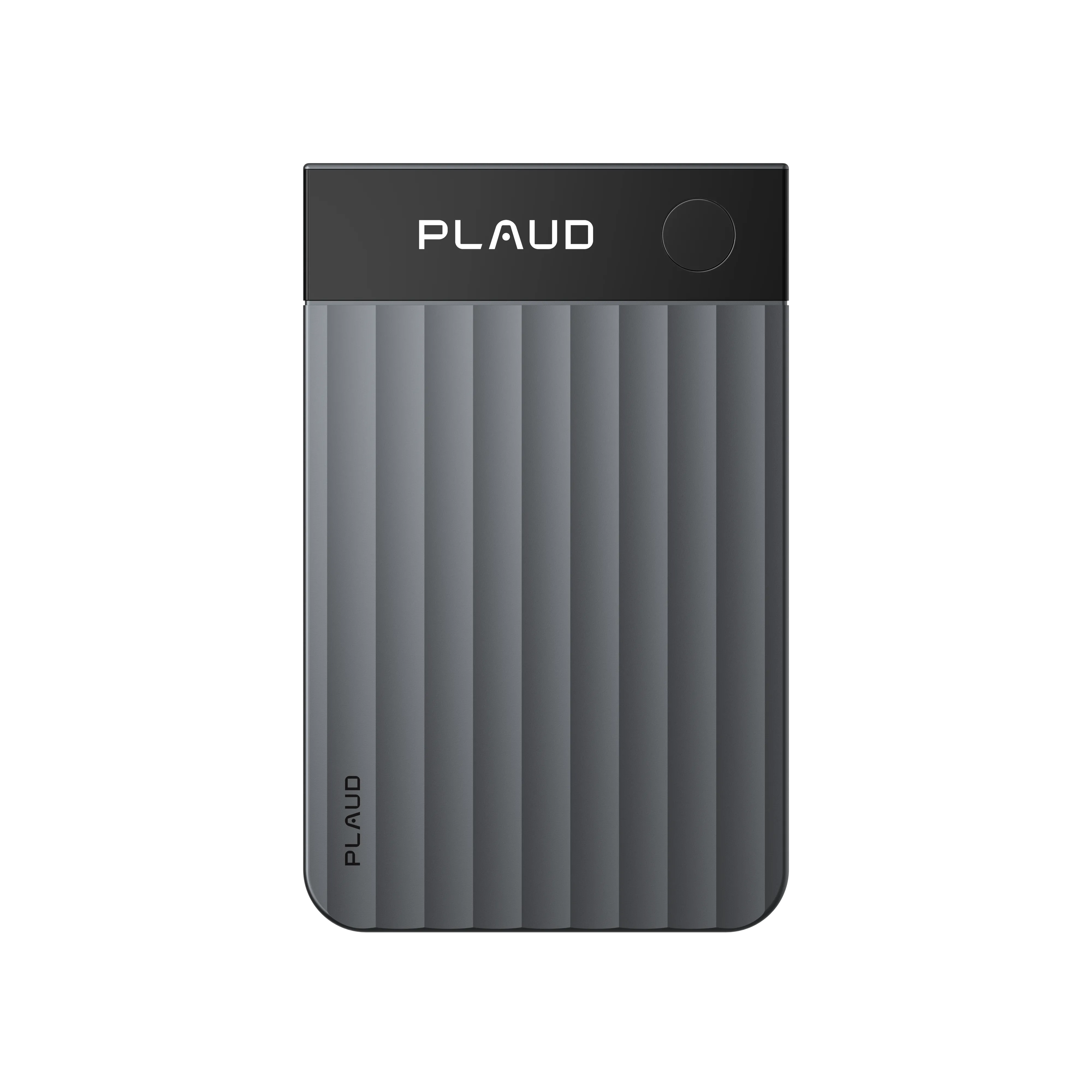
Plaud Note is a credit-card-sized recorder that sticks to the back of your phone and quietly captures everything, whether you're on a call or sitting across from a client at a coffee shop.
Why It works for CSMs
The dual-mode setup is what sold me. Slide the switch one way and it records phone calls. Slide it the other and it picks up in-person conversations. As a CSM, I'm constantly bouncing between a phone call with one client and a lunch meeting with another. Having one device that covers both without any app juggling is a relief.
After the meeting, the Plaud app generates a transcript, summary, and action items. I've used the action item output directly in my follow-up emails, which saves me maybe 20 minutes per client meeting. The AI also pulls out key topics and organizes them, so when I'm prepping for a QBR two months later, I can search back through past conversations instead of digging through my own messy notes.
The thing is small enough that I genuinely forget it's on my phone. I charge it maybe once every couple of weeks. For a CSM who moves fast between meetings, that kind of low-maintenance setup matters.
Where it's not the best choice
I brought it to a client's office once for a meeting with about eight people in a mid-sized conference room. The two microphones picked up the people nearest to me fine, but the folks at the far end of the table came through muddy. For one-on-ones and small groups, it's great. For bigger rooms, I needed something with more reach. I also had to remember to manually switch between phone and meeting mode on the original Note, which I forgot more than once. That means the first few minutes of a recording were sometimes in the wrong mode and the transcript suffered.
Plaud Note Pro
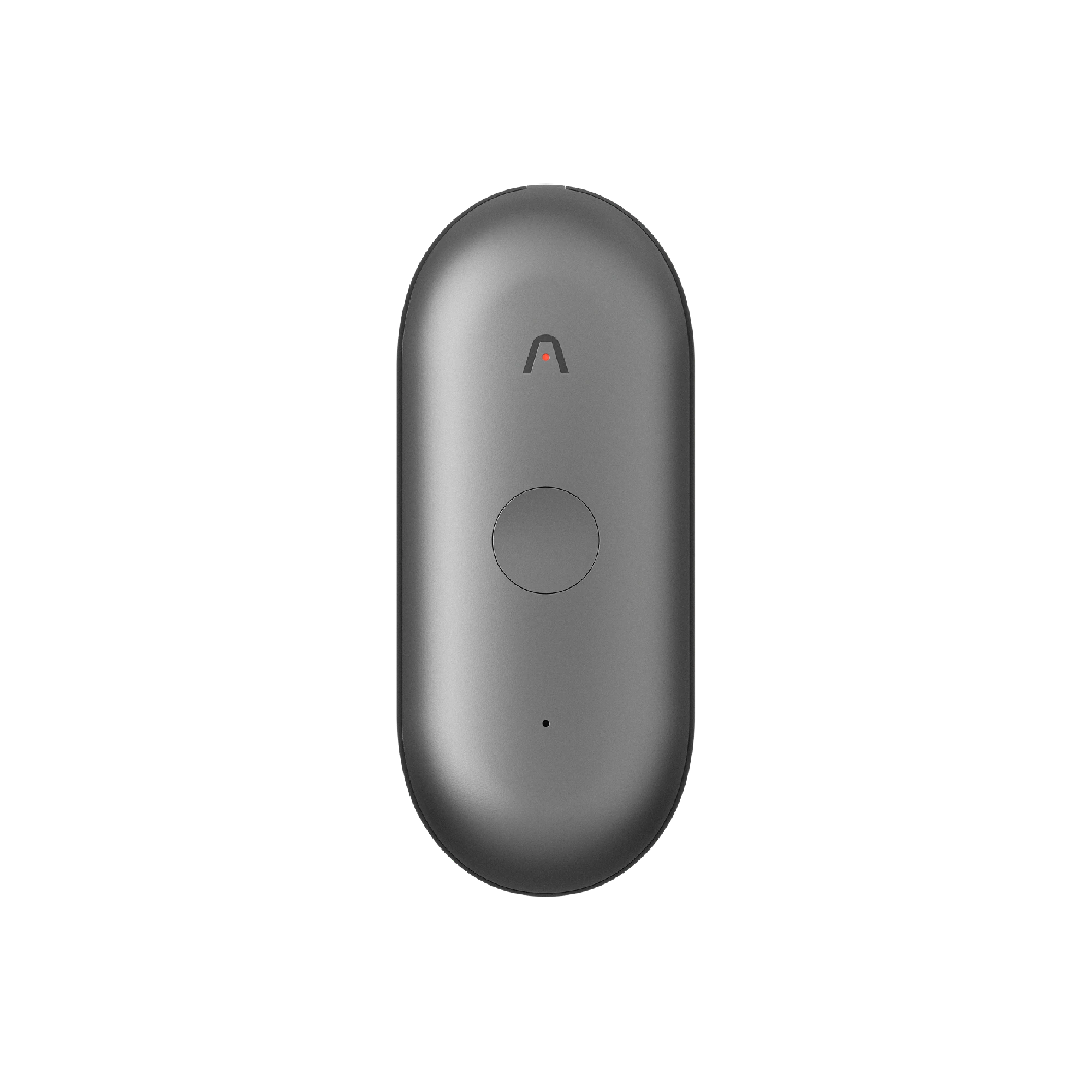
If Plaud Note is your everyday carry, the Plaud Note Pro is what you bring to the meetings that really count. Four microphones, voice pickup that reaches across a conference table, and automatic switching between call and meeting modes.

Why It works for CSMs
I put the Note Pro in the center of a ten-person conference table during a client executive review, and the transcript captured everyone clearly. That kind of range matters when you're running a QBR with your client's VP of Operations and their whole team. You can't exactly ask a VP to speak up because your recorder didn't catch them.
The battery easily lasts through a full day of back-to-back client meetings. I've taken it to two-day client workshops and never worried about charging mid-event. It also switches between phone and meeting recording modes automatically, which fixes my biggest complaint about the original Note. The structured notes feature pulls out decisions, action items, and key discussion points, so I can send a polished follow-up email within an hour of the meeting ending.
The small screen on the device shows recording status, which is actually useful for transparency. When I set it on the table, clients can see it's recording, and that openness builds trust rather than making things awkward.
Where It's not the best choice
At $179, it's more than the original Note, and if your client meetings are almost exclusively on Zoom or Teams, you're paying for hardware capabilities you won't use. I also found that while the app generates great summaries, there's a learning curve with the template system. I spent a good half hour setting up a custom QBR summary template before it started saving me time. And the 300 free transcription minutes per month run out fast if you're doing four or five client calls a day. The subscription upgrade is pretty much required for heavy users.
Gong
Gong isn't a note-taker. It's a full conversation intelligence platform that happens to take very good notes. If your CS team needs to analyze how client conversations go, not just what was said, Gong is in a different league.
Why It works for CSMs
The real value for customer success is the pattern recognition. Gong can surface when clients mention competitors, flag accounts where sentiment is shifting negative, and track whether you're actually asking the right discovery questions during renewal calls. I've seen it catch churn signals that I missed in the moment, like a client saying "we're evaluating options" in a tone that didn't register as alarming during the live call.
The CRM integration is deep. Call summaries, key topics, and follow-up items push directly into Salesforce. For a CSM managing 40+ accounts, not having to manually log call notes is a genuine time-saver. The coaching features are useful too. My manager can review my renewal calls and give specific feedback on how I handled objections, which has made me better at those conversations over time.
Where It's not the best choice
Gong only works for online meetings. If I'm at a client dinner or taking a phone call from my car, Gong can't help. That's a big gap for CSMs who do a lot of in-person work.
Then there's cost. Gong's pricing isn't public, but from what I've seen, you're looking at a platform fee starting around $5,000 a year plus $1,200-$1,600 per user annually. For a large CS team, that adds up fast. And honestly, a lot of the platform's power (deal intelligence, forecast features, sales coaching at scale) is built for sales teams. As a CSM, I use maybe 40% of what I'm paying for. I've heard similar feedback from other CS teams: Gong is powerful, but you're paying enterprise prices for features that don't all translate to customer success workflows.
Fireflies.ai
Fireflies is the tool that joins your Zoom calls so you don't have to think about recording. It shows up as a participant, records everything, and sends you a transcript with AI-generated notes afterward.
Why It works for CSMs
The setup is almost zero effort. Connect your calendar, and Fireflies automatically joins every meeting. For a CSM with eight to ten client calls a day, that automation matters. I don't have to remember to hit record or invite a bot manually.
The search function across past meetings is surprisingly useful. I can search "client X feature request" and pull up every time that client mentioned a specific need across months of calls. That's gold when prepping for renewals or escalation meetings. The CRM integration pushes notes into Salesforce and HubSpot, and the action item extraction is decent. Not perfect, but it catches about 80% of follow-ups I'd want to track.
Fireflies also has a "Talk to Fireflies" feature powered by Perplexity that lets you ask questions about your meetings. I've used it to quickly pull together a summary of everything a specific client discussed over the last quarter.
Where It's not the best choice
Fireflies only works for virtual meetings. No phone call recording, no in-person support. For a CSM who does on-site visits or takes client calls on a personal phone, that's a significant blind spot.
The bot joining meetings can feel intrusive. I've had clients ask "who's Fireflies?" when it pops into a call, and for sensitive conversations (contract negotiations, escalation calls), that extra participant can change the tone. Some clients in regulated industries have pushed back on having a recording bot in the meeting entirely.
Pricing can also sneak up on you. The Pro plan is $10 per user per month, which sounds reasonable, but once you need CRM integrations and conversation intelligence features, you're on the Business plan at $19 per user per month. And the AI credit system for advanced features (like the AI assistant and smart summaries) isn't unlimited on any plan. I ran out of credits mid-month once and had to buy more, which was annoying.
Otter.ai
Otter takes a different approach from the other tools here. It's a live transcription tool that lets you and your team follow along with meeting notes in real time, comment on them, and collaborate on action items during the call.
Why It works for CSMs
The live collaboration feature is Otter's standout for customer success work. During a client call, my solutions engineer can watch the live transcript and flag technical points I should follow up on, without interrupting the conversation. After the call, we both have the same set of notes with comments and highlights already in place. That cuts our post-meeting debrief from 15 minutes down to almost nothing.
Otter's Enterprise plan includes CRM integration that pushes deal details into Salesforce, and the meeting history is organized by account. The AI chat feature lets me ask questions across all my past meetings, similar to Fireflies, but with a cleaner interface for pulling together account-level summaries.
The speaker identification is solid. In multi-stakeholder client calls, knowing exactly who said what matters. When a client's CFO asks about pricing and their Head of Product asks about roadmap, I need those attributed correctly in my notes.
Where It's not the best choice
Like Fireflies, Otter is built for online meetings. It has a mobile app for in-person recording, but the quality and accuracy drop noticeably compared to a dedicated hardware recorder. I tried using it for a client lunch meeting once and the background noise at the restaurant made the transcript borderline useless.
Otter's free plan gives you 300 minutes per month (capped at 30 minutes per conversation), which sounds generous until you realize that's about 10 hours of meetings. Most CSMs burn through that in two or three days. The Pro plan ($16.99 per month) gets you more minutes, but the Business plan ($30 per month) is where you get the CRM sync and team features that make it truly useful for CS work.
I've also noticed that Otter's summaries can be hit or miss with technical conversations. When a client is talking about API integrations or specific product configurations, the AI summary sometimes oversimplifies or misses the technical nuance that I actually need to capture.

So which one should you pick?
After testing all of these, here's my simple decision framework:
If your client meetings are a mix of phone calls and face-to-face, start with Plaud Note. It covers both scenarios in one device, and the price is a one-time purchase. For most CSMs, this handles 80% of the job.
If you have high-value clients and a lot of on-site meetings, the Plaud Note Pro is worth the upgrade. The conference room range and automatic mode switching matter when you're in front of a client's executive team and can't afford to miss anything.
If your team needs deep conversation analysis and your company has the budget, Gong is the most powerful option. But be honest about whether your CS team will actually use the sales-focused features, or if you're paying enterprise prices for a note-taker.
If your client meetings are almost all on Zoom or Teams, Fireflies.ai gives you the best automation for virtual meetings. Calendar integration, auto-join, and searchable history across all your calls.
If cross-team collaboration on meeting notes is your priority, Otter.ai's real-time collaboration makes it easy to loop in solutions engineers, product managers, and other stakeholders without extra work.
Conclusion
The best note-taker for client meetings isn't the one with the most features. It's the one that catches what your client said, turns it into clear action items, and works across the types of meetings you actually have. For most CSMs, that means covering phone calls, virtual meetings, and the occasional in-person session.
Here's what I'd suggest as a next step: track your client meetings for one week. Count how many are phone calls, how many are virtual, how many are in-person. That breakdown will point you directly to the right tool. If the answer is "a little of everything," a hardware recorder like Plaud Note paired with your existing video conferencing tools is probably the most practical starting point.