As a project manager, my job lives and dies by what gets written down after a meeting. Not during. After. The conversation is just the raw material. The real output is the decision log entry, the action item with an owner and a deadline, and the change request that someone agreed to verbally but no one documented.
If your projects run mostly through async tools like Slack threads and Notion docs, you probably don't need this. This is for PMs who spend real hours in kickoffs, milestone reviews, risk sessions, and change control meetings where spoken agreements become (or fail to become) the project record.
The problem I kept hitting: someone says "let's push the API integration to Phase 2" in a review meeting, everyone nods, and I scribble a half-note. Three weeks later, the dev lead says that was never agreed. I dig through my notes, find nothing specific, and now I'm in a he-said-she-said loop that eats half a sprint to untangle. That's not a minor annoyance. That's scope ambiguity turning into rework, missed deadlines, and a PM who looks like they weren't paying attention.
How we chose best AI note takers for project meetings
What project notes actually need to capture
Most note-taking advice treats meeting notes like a summary. For project management, that's not enough. My notes feed three things that keep a project from drifting:
-
A decision log. Who decided what, when, and why. Not "the team agreed to descope," but "VP of Engineering approved descoping the reporting module on March 12 due to resource constraints on the data team." That level of specificity is what saves me when someone revisits a closed decision two months later.
-
An action log. Every action item needs an owner, a deadline, and enough context that the owner doesn't come back asking "what did you mean by this?" I've seen projects stall because an action item said "follow up on infrastructure" with no name attached.
-
A change log. Any scope, timeline, or resource change that gets discussed verbally needs to land in writing the same day. If it doesn't, it becomes invisible, and invisible changes are where projects blow up.
If a note-taking tool can't help me extract those three things quickly, it's not solving my actual problem.
What I actually look for
After running several tools across different project types, three factors separate the useful ones from the noise:
-
Decision-point extraction. Can the tool identify moments where someone made a call? Not just "key topics discussed," but the actual decision, who made it, and the reasoning. Most AI summarizers are bad at this. They'll tell me the meeting covered "timeline adjustments" without telling me what was decided.
-
Action item tracking. Does it pull out tasks with owners and deadlines, or does it just list vague bullets like "team to review design"? I need names and dates. Bonus if it can distinguish between a firm commitment and a tentative suggestion.
-
PM tool integration. My project lives in Jira (or Asana, or Notion, depending on the client). If meeting outputs don't flow into those systems, I'm doing double entry. Every manual copy-paste is a chance for something to get lost or reworded.
Quick comparison
6 best AI note takers for project meetings
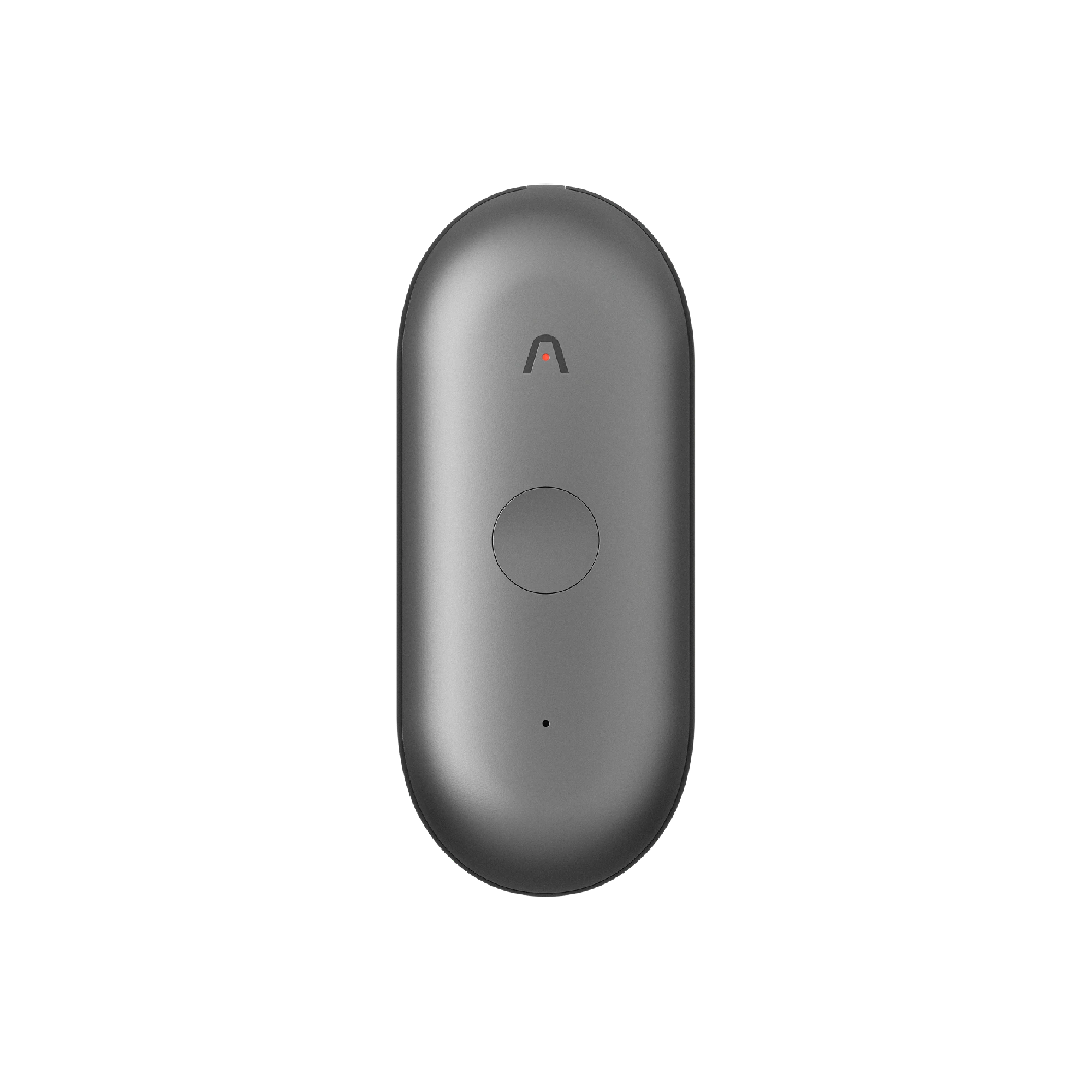
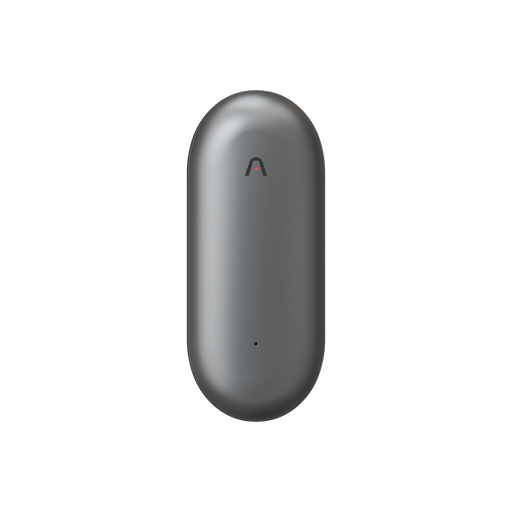
Plaud NotePin S
The NotePin S is a clip-on wearable recorder that captures everything locally, so I can focus on running the meeting instead of frantically typing.
Why It works for project managers
A lot of my most important project meetings happen in person. Kickoffs with new stakeholders, milestone reviews in a client's conference room, risk escalation sessions where body language matters as much as what people say. In those settings, I need to be fully present, not hunched over a laptop.
The NotePin S clips to my shirt or lanyard and records the entire session. After the meeting, I sync it to the Plaud app and get a structured summary. What I find useful for PM work specifically:
-
It pulls out key discussion points in a format that's close to a meeting minutes template. I can identify decisions and action items from the summary and drop them into my project tracker in maybe 15 to 20 minutes.
-
It works completely offline. I've had project meetings at construction sites, factory floors, and client offices where my phone barely had signal. The NotePin S doesn't care.
-
It's unobtrusive. Nobody in the room feels like they're being recorded by a surveillance device, which keeps the conversation natural.
Where It's not the best choice
The NotePin S doesn't auto-extract action items with owners and deadlines. I still need to read the summary and manually pull those out. For a 30-minute standup that generates two or three action items, that's fine. For a two-hour planning session with 15 action items across five workstreams, it adds post-meeting work. I also can't get a real-time transcript during the meeting, which means if someone asks "can you read back what we just agreed on," I'm relying on memory until the sync is done.
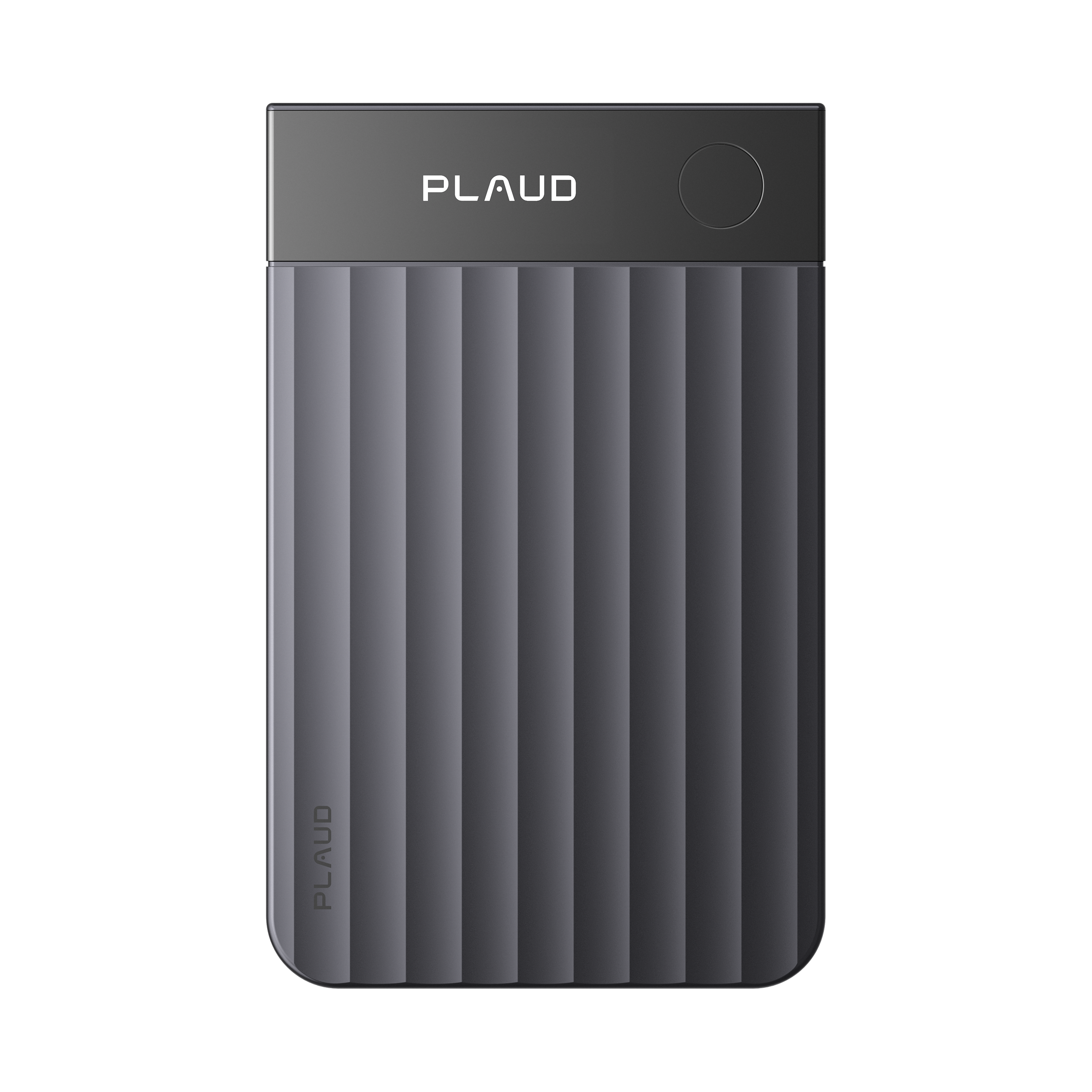
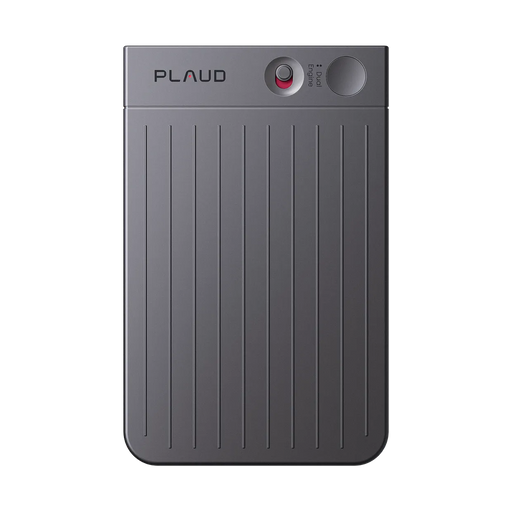
Plaud Note Pro
This one sits on the conference table and is built for rooms where there are many voices to pick up, not just mine.

Why It works for project managers
I use the Note Pro for the meetings that generate the most project risk: cross-functional reviews, change control boards, and large planning sessions. These are rooms with eight to fifteen people, multiple competing priorities, and decisions that get made in quick back-and-forth exchanges.
The Note Pro handles that environment well. I place it in the center of the table and it captures everyone clearly. The Plaud Intelligence AI layer then produces a summary organized by topics, which maps naturally to how I structure my project logs.
What matters for PM use:
-
In a large room, it catches cross-talk and side conversations that I'd normally miss entirely. Some of those side comments turn out to be critical ("I think the vendor timeline is slipping" said quietly between two engineers).
-
The structured output saves me time reorganizing. Instead of a wall of transcript, I get sections I can scan and extract from.
-
Like the NotePin S, it works offline. No dependency on the meeting room's Wi-Fi.
Where It's not the best choice
It's a tabletop device, which means I need to remember to bring it and set it up. On days when I'm running between five meetings in different rooms, I've left it behind once or twice. It's also not something I'd pull out for a casual hallway check-in with a stakeholder, where the NotePin S is better suited. And like the NotePin S, it doesn't push action items directly into Jira or Asana. That integration gap is real for PMs who want a fully automated pipeline.
Otter.ai
Otter is a cloud-based transcription tool that joins your virtual meetings, transcribes in real time, and generates a summary when the call ends.
Why It works for project managers
For remote projects, Otter is a solid workhorse. It connects to Zoom, Teams, and Google Meet, transcribes live, and lets me search the transcript during the meeting itself. That's useful when a stakeholder references something from earlier in the call and I need to confirm exactly what was said.
Some PM-specific strengths:
-
Real-time transcription means I can verify decisions on the spot. If someone says "so we're agreeing to move the deadline to April 15," I can see it in the transcript and confirm it verbally right then.
-
It handles recurring meetings well. I can look back at previous transcripts to track how a decision evolved over multiple sessions, which is useful for change log purposes.
-
The search function across all past meetings is helpful when I need to audit "when did we first discuss this scope change?"
Where It's not the best choice
Otter needs a stable internet connection, so it fails me in any offline or low-connectivity setting. I also ran into a problem with action item extraction. Otter identifies "action items" but they're often vague. It'll say "team to finalize requirements" without specifying who or by when. I end up editing every single one, which defeats the purpose. On the compliance side, audio goes to Otter's cloud, and on one project with a financial services client, that was a dealbreaker. Their InfoSec team wouldn't approve it.
Fireflies.ai
Fireflies records, transcribes, and pushes meeting data into the tools your project already uses, including Jira, Asana, Notion, Monday.com, and Slack.
Why it works for project managers
The integration story is where Fireflies stands out for PM work. If my project tracker lives in Jira, I want action items from a meeting to land in Jira without me copying and pasting. Fireflies can do that, and when it works, it genuinely reduces the gap between "discussed in a meeting" and "tracked in the system."
Things I found useful:
-
The CRM and PM tool integrations are the broadest I've seen. Jira, Asana, Notion, HubSpot, Salesforce, Slack, and more. For a PM managing multiple tools, this consolidation matters.
-
Speaker labels are reasonably accurate after training, so I can search "what did [stakeholder name] commit to" across meetings.
-
The AI summary categorizes content into topics, action items, and questions, which is a decent starting point for a decision log.
Where It's not the best choice
Fireflies is online-only, so in-person meetings are out unless I'm also running a virtual bridge (which feels clunky for a room full of people). I also had a friction point on one project where the Fireflies bot joined a client call and the client asked, "Who is this?" That caught me off guard and felt unprofessional. The bot can be configured to be less visible, but it still registers as a participant. On the action-item side, the auto-extracted items still needed editing. "Discuss timeline with engineering" isn't an actionable task in my book. It lacks the owner-deadline-context structure I need.
Fathom
Fathom is a Zoom-native AI note taker with a free tier that's generous enough to actually use day-to-day.
Why it works for project managers
For PMs whose projects run primarily on Zoom, Fathom is surprisingly capable for what it costs (which is nothing for the base plan). It records, transcribes, and generates a summary that's tighter and more readable than most competitors. The highlight feature lets me flag moments during a call, like when a stakeholder approves a scope change, so I can find them instantly afterward.
What stood out for PM use:
-
Summary quality is consistently good. It captures the "so what" of a meeting better than tools that just list topics.
-
Highlights are timestamped and searchable. I use them as anchors for my decision log entries.
-
Setup is minimal. It just works inside Zoom without configuration headaches.
Where It's not the best choice
Fathom is basically Zoom-only (with limited Teams support). If your project spans multiple platforms, or if your client insists on Webex or Google Meet, Fathom can't follow you there. It also has no integration with PM tools like Jira or Asana, so every action item gets manually transferred. For a PM running a small project with weekly Zoom check-ins, that's manageable. For a PM juggling five workstreams with daily meetings across platforms, it's too narrow.
Fellow.app
Fellow is less of a recorder and more of a meeting management layer. It combines agendas, note-taking, action items, and follow-ups into a single workflow that wraps around your calendar.
Why It works for project managers
Fellow approaches meeting capture differently from the other tools here. Instead of just recording and summarizing, it builds structure around the meeting itself. I set an agenda beforehand, take collaborative notes during, and assign action items that get tracked automatically. The AI then fills in gaps from the transcript.
For PM work specifically:
-
Recurring meeting templates are built in. My sprint review agenda, risk review format, and steering committee structure are all saved and reusable. That consistency matters when I'm running the same meeting type across multiple projects.
-
Action items have owners and due dates baked in, and they carry over to the next meeting if incomplete. That "carry forward" behavior is exactly how I track open items in practice.
-
It integrates with Asana, Jira, and Notion, so completed actions can sync back to the project tracker.
Where It's not the best choice
Fellow depends on your team actually using it. If I'm the only one with an account, the collaborative features don't work, and it becomes an expensive note-taking app. Getting a full project team to adopt a new tool mid-project is a tough sell. I also found it less useful for unstructured or ad-hoc meetings. It shines when there's an agenda and a predictable format. A spontaneous escalation call with a client? Fellow doesn't add much there. And it requires internet access, so offline sessions are a gap.
So which one should you pick?
The right tool depends on what causes the most pain in your current project workflow. Here's how I'd map it:
If your biggest risk is untracked decisions and scope changes, go with a device that captures everything and gives you a complete record to mine afterward. The Plaud NotePin S for in-person sessions or the Plaud Note Pro for large rooms. You'll do some manual extraction, but you'll never lose a decision because you were too busy facilitating to write it down.
If your bottleneck is getting meeting outputs into Jira, Asana, or Notion, Fireflies.ai or Fellow.app will close that gap fastest. Fireflies is better if your meetings are mostly virtual and you want passive capture. Fellow is better if you want to build structured meeting habits into your team's process.
If you're in back-to-back meetings all day and need the fastest path from "meeting ended" to "notes done,"Fathom (for Zoom) or Otter (for multi-platform virtual) will give you a usable summary within minutes. Pair either of them with a Plaud device for the in-person sessions, and you're covered across formats.
Conclusion
For project managers, the question that should drive your tool choice is simple: can this tool turn a spoken agreement into a traceable record? If the answer is yes, and it does it fast enough that I'll actually use it after every meeting, it's worth considering. Everything else (fancy dashboards, speaker analytics, sentiment detection) is secondary.
My suggestion for a next step: list the three types of meeting output you produce most often. Maybe it's decision logs, action trackers, and weekly status notes. Then check which of these tools gets you closest to those outputs with the least manual work. That's your shortlist. And if your projects mix in-person and virtual, accept that you'll probably need two tools, one for each setting, rather than forcing one tool to cover everything poorly.