As a workshop facilitator, my sessions don't fit neatly into 30-minute calendar blocks. I run two-hour design sprints, half-day strategy off-sites, and four-hour co-creation workshops where the room cycles through divergent brainstorming, small-group breakouts, and convergent decision-making. The output isn't a list of action items. It's a layered record of how the group got from raw ideas to commitments.
My problem with most note-taking tools is that they treat a long meeting like a short one, just longer. I get a single summary that compresses three hours into a paragraph, and the nuance disappears. Last month I ran a four-hour product strategy workshop. The AI summary said "the team discussed roadmap priorities." It didn't mention that the group spent 40 minutes debating whether to kill a feature, that the VP of Sales reversed her position halfway through, or that the final agreement had two conditions attached. I had to re-listen to the entire recording to reconstruct what actually happened. That's four hours of my evening gone.
If you mostly run short standups or status meetings, this article isn't for you. This is for facilitators who run sessions long enough that a flat summary isn't useful.
How we chose the best AI note takers for long-duration meetings
What makes long sessions different
Short meetings produce a summary. Long meetings produce a journey, and the journey matters as much as the destination. When I'm reviewing a three-hour workshop recording, I don't need to know "what was discussed." I need to know what was discussed in the first hour versus the third hour, because the group's thinking often shifts dramatically between those two points.
Three capabilities separate tools that handle long sessions from tools that just survive them:
-
Battery and stability. This sounds basic, but it's the first filter. If a device dies at the two-hour mark or a software tool crashes mid-session, I've lost the most important part of the workshop (the convergence phase is almost always at the end). I need a tool that runs for at least four hours continuously without interruption, lag, or storage warnings.
-
Automatic segmentation. A four-hour recording with no structure is almost as useless as no recording at all. I need the tool to break the session into chapters, ideally aligned with topic shifts or agenda stages. That way I can jump to "the breakout debrief at 2:15 PM" without scrubbing through a timeline.
-
Searchable, retrievable content. After a long workshop, I don't re-read the whole transcript. I search for specific moments: "when did they agree on the pricing model?" or "what were the three options the group generated?" If the tool can't let me search by keyword or browse by segment, I'm stuck with linear playback, and that's a time sink I can't afford.
Quick Comparison
5 best AI note takers for long-duration meetings
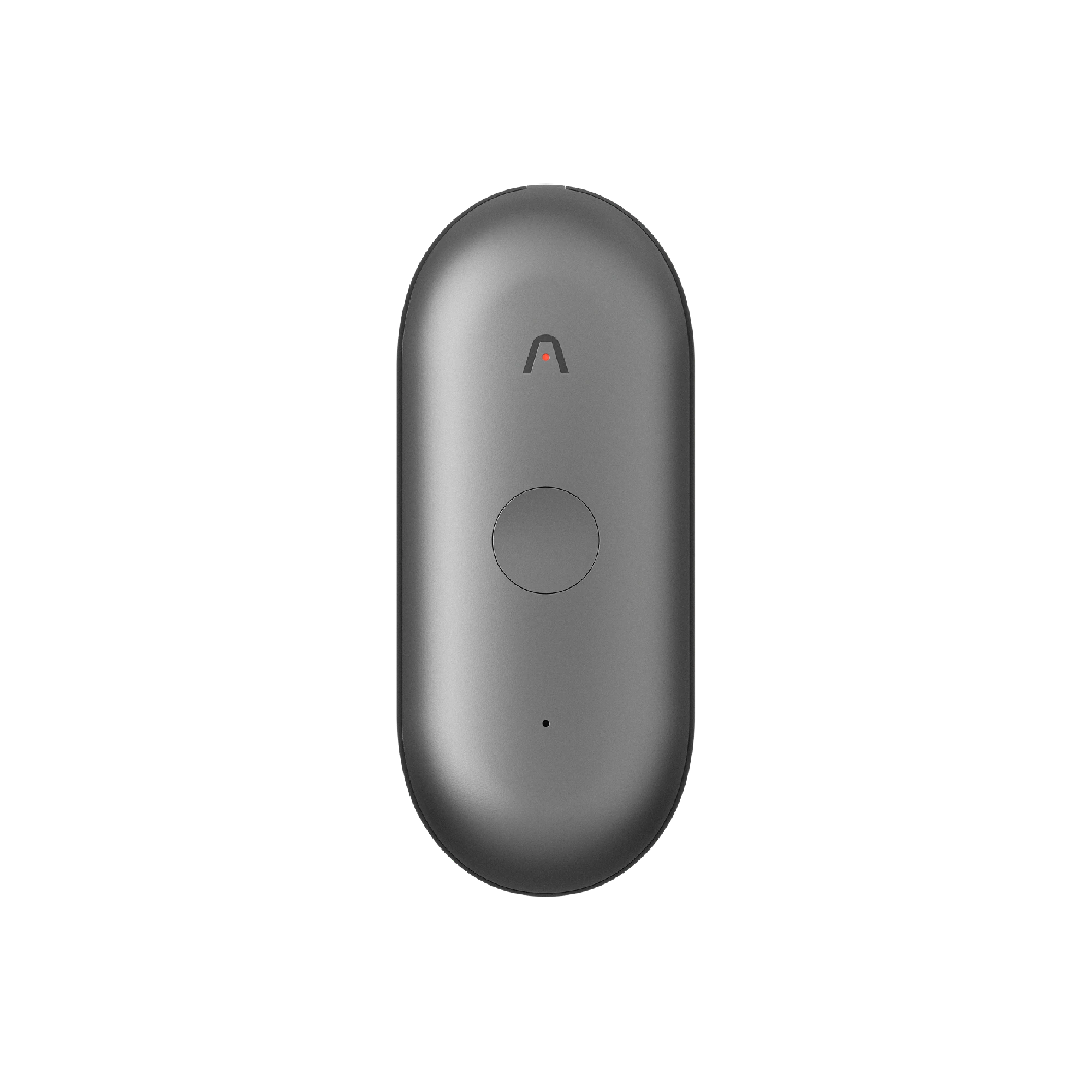
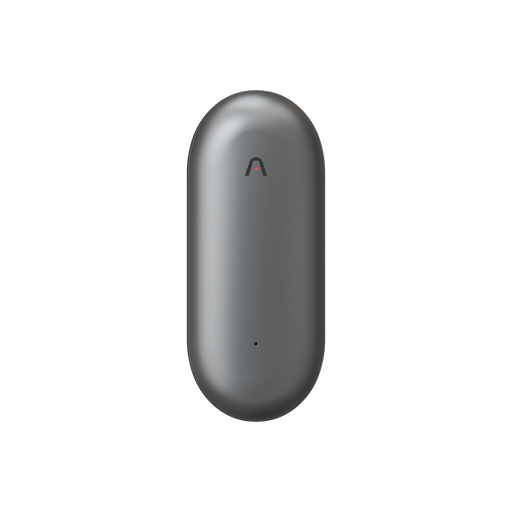
Plaud NotePin S
The NotePin S is the tool I trust to just keep going. I clip it on at the start of a four-hour workshop and don't touch it again until the session is over.

Why it works for long sessions
When I'm facilitating, I'm on my feet. I'm moving between groups, managing energy, redirecting conversations, and writing on whiteboards. I can't babysit a recording app or check if a device is still running. The NotePin S removes that worry entirely.
The battery comfortably handles a full-day session. I've run it through a six-hour off-site with breaks and still had charge left at the end. It records locally, so there's no dependency on the venue's Wi-Fi (and workshop venues, in my experience, have the worst Wi-Fi imaginable). After the session, I sync to the Plaud app, and Plaud Intelligencegenerates a structured summary broken into topic segments.
What I value for workshop facilitation specifically:
-
It's completely invisible to participants. Nobody in the room adjusts their behavior because of a tiny clip on my shirt. That matters in co-creation sessions where psychological safety drives the quality of ideas.
-
The topic-segmented output from Plaud Intelligence maps roughly to agenda phases. It's not perfect, but it gives me a starting structure I can refine into a proper workshop report in maybe 30 minutes instead of two hours.
-
The recording is stored locally until I choose to sync. For workshops with sensitive strategic content, I can explain the data handling clearly.
Where it's not the best choice
The NotePin S is a wearable, so it captures the room from where I'm standing. In a large workshop space where I'm at the front and a breakout group is having a crucial conversation in the far corner, their voices come through faint. I've learned to walk toward active discussions during key moments, but it's a workaround, not a fix. For large-room sessions with distributed groups, the Note Pro handles spatial audio better. I also can't search the transcript in real time during the session itself, which means if a participant asks me to recall something from the morning segment, I'm relying on memory until I sync later.
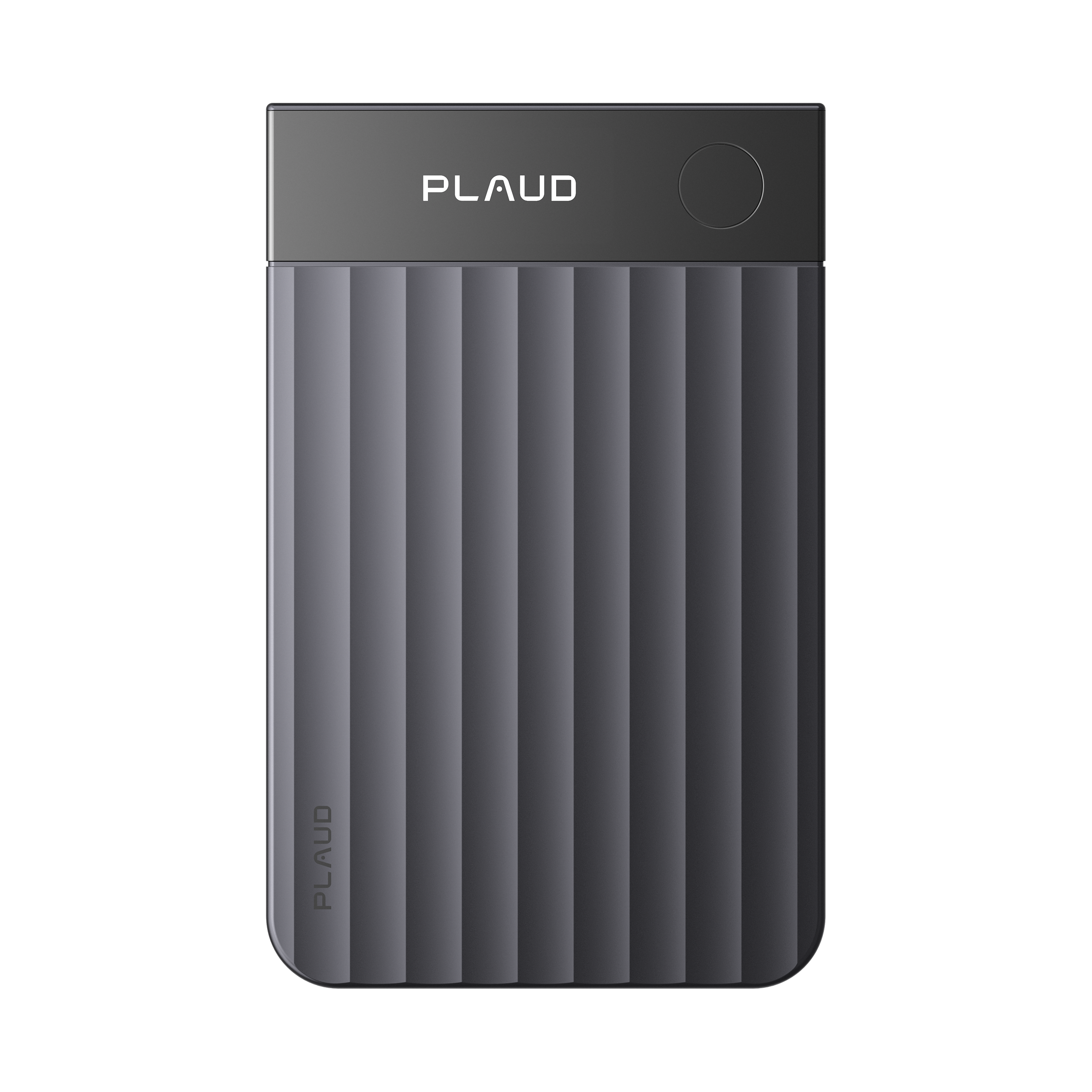
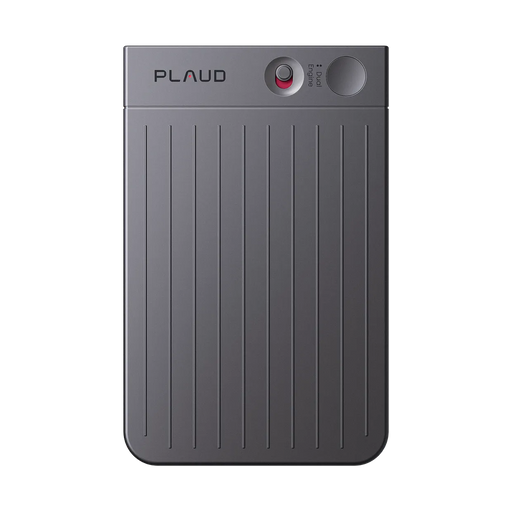
Plaud Note Pro
The Note Pro is what I set on the table when the room is big, the group is large, and missing a single voice would mean missing a key insight.

Why it works for long sessions
I use the Note Pro for the sessions that generate the most content: multi-hour workshops with 10 to 20 people, breakout debriefs where each group reports back, and design sprints where the conversation bounces rapidly between participants.
I place it in the center of the table (or move it to the reporting area during debriefs), and it captures everyone clearly. That matters in workshops because the quietest person in the room often surfaces the most important insight, and if the tool only picks up the loud voices near me, I lose that.
Specific advantages for long-duration work:
-
Battery runs through a full-day session without issues. I've used it for back-to-back three-hour morning and afternoon sessions with just a quick top-up during lunch.
-
The structured output from Plaud Intelligence segments the recording by topic clusters, which roughly maps to the phases of a long workshop. I can locate "the prioritization discussion" or "Group B's debrief" without scrubbing through hours of audio.
-
It works entirely offline. I've facilitated workshops at retreat centers, client offices with locked networks, and conference venues where the Wi-Fi crumbled under 200 attendees. The Note Pro doesn't care.
Where it's not the best choice
It's a tabletop device, so it captures what's happening in one physical area. If my workshop splits into three breakout groups in different corners of the room (or different rooms entirely), one device can't cover all of them. I've tried using the NotePin S on myself and the Note Pro at the main table to cover more ground, but that means managing two recordings and merging insights afterward. Not terrible, but not seamless. It also requires me to physically set it up and retrieve it, and on days where I'm running between spaces during a multi-room workshop, I've left it behind once.
Otter.ai
Otter joins virtual meetings, transcribes live, and lets me search the full transcript while the session is still running.
Why it works for long sessions
For virtual or hybrid workshops, Otter's real-time transcript is genuinely useful during a long session. If a participant says "going back to what Maya said earlier about the migration risk," I can search the live transcript and find Maya's exact comment in seconds. In a three-hour workshop with dozens of discussion threads, that ability to search mid-session prevents the "what did we say about that?" spiral.
What I find helpful for long-format facilitation:
-
The live transcript doubles as a running reference. I keep it open on a second monitor and scan it to make sure I'm not missing key points while managing group dynamics.
-
Otter timestamps everything, so I can bookmark moments during the session and jump back to them when writing my workshop report.
-
For recurring workshop series (like a three-session design sprint spread across weeks), Otter connects transcripts so I can search across all sessions at once. That cross-session search is useful when I need to trace how an idea evolved from Session 1 to Session 3.
Where it's not the best choice
Otter requires a stable internet connection, full stop. For in-person workshops at venues without reliable Wi-Fi (which describes about half my bookings), it's not an option. I also hit a practical limit with session length. On Otter’s free Basic plan, the 30-minute per-conversation cap makes it unsuitable for long workshops. Pro raises that to 90 minutes per meeting, while Business supports up to 4 hours per meeting.I had a four-hour workshop where the transcript started lagging noticeably after the three-hour mark, and parts of the last segment were garbled. The premium plan handles this better, but it's a cost factor. And the AI summary for a four-hour meeting? It's a compressed paragraph that strips out the texture I actually need. I end up ignoring the summary and working from the raw transcript, which partially defeats the purpose.
Fireflies.ai
Fireflies records, transcribes, and builds a searchable archive across all your meetings, which turns it into a long-term reference library, not just a single-session tool.
Why it works for long sessions
Where Fireflies stands out for long workshops isn't the live experience. It's what happens after. The cross-meeting search is the feature I use most. When I'm writing a workshop synthesis report days later, I can search "pricing model" or "risk threshold" across every session I've recorded and get timestamped results. For facilitators who run multi-session engagements (like a three-day strategy off-site or a monthly innovation sprint), that archival search becomes a genuine productivity tool.
Other things that help with long-format work:
-
It categorizes transcript content into topics, action items, and questions. The "questions" bucket is unexpectedly valuable after a long workshop, because unanswered questions are often the most important follow-ups.
-
Speaker labeling lets me filter by participant, which is useful when I need to pull out what a specific stakeholder said across a four-hour session.
-
It integrates with Notion, Confluence, Slack, and others. If my workshop outputs need to land in a shared workspace, Fireflies can push summaries there directly.
Where it's not the best choice
Fireflies is no longer online-only: its mobile app can record in-person and offline meetings. However, the workflow still depends on syncing data for cloud processing and storage, so weak connectivity can delay when transcripts and summaries become fully available.
And I've had a recurring frustration with how it handles very long transcripts. For sessions over two hours, the AI summary loses granularity. It'll accurately list the major themes but miss the conditional agreements, the "yes, but only if" moments that are the real substance of a workshop. I end up relying on the full transcript with keyword search rather than the summary. The Fireflies bot joining a call can also feel intrusive. In workshop settings where trust and openness matter, having an unannounced bot participant can shift the room's energy. I always disclose it upfront now, but it's an extra facilitation step I'd rather not need.
Fathom
Fathom lives inside Zoom and gives me one feature I haven't found done better anywhere else: real-time highlights that I can drop with a single click during a live session.
Why it works for long sessions
In a three-hour Zoom workshop, the hardest part of post-session work is finding the moments that mattered. Fathom solves that with highlights. During the session, whenever I hear a decision being made, a key insight surfacing, or a commitment being stated, I click to mark it. After the workshop, those highlights are timestamped and labeled, ready to become the backbone of my report.
What I appreciate for long-format facilitation:
-
Highlights turn a three-hour recording into a curated set of maybe 15 to 20 key moments. That's the difference between spending two hours reviewing and spending 20 minutes reviewing.
-
The AI summary is tighter than most competitors. For a long session, it captures the arc of the conversation better than tools that just list topics.
-
The free tier is generous enough to use regularly without budget approval. For freelance facilitators or small firms, that matters.
Where it's not the best choice
Fathom works across Zoom, Google Meet, and Microsoft Teams on Mac and Windows. But if a client insists on Webex, phone calls, mobile-only meetings, or an in-house platform outside Fathom’s supported stack, it won’t follow.
And for in-person workshops, it doesn't apply at all. I also found that in very long sessions with lots of participants, the highlight feature gets harder to manage. In a four-hour session, I've ended up with 30+ highlights, and reviewing them afterward takes longer than expected because not every moment I flagged in real time turned out to be significant. It needs discipline to use selectively. Speaker identification also degrades in large Zoom calls where people talk over each other or share screens frequently.
So which one should you pick?
If you run in-person workshops and the session can't be interrupted, the Plaud NotePin S is the safest bet. It runs all day, works offline, and stays out of the way so you can focus on facilitation. For large-room sessions with many speakers, add the Plaud Note Pro to capture the full room.
If you need to find specific moments after a long session, not just a summary, Fathom's highlights (for Zoom) or Fireflies' keyword search (for multi-platform) will get you to the right segment faster than scrubbing through a timeline. Fathom is better if you mark moments live. Fireflies is better if you prefer to search after the fact.
If your workshops are virtual and you need to reference the conversation while it's still happening, Otter's live transcript is the strongest option. Pair it with a Plaud device for any in-person components, and you're covered across formats.
Conclusion
For long-duration sessions, the tool selection question isn't "which one gives the best summary." It's "which one helps me get back to the right moment, in the right segment, without re-listening to everything?" Segmentation and retrieval matter more than summary quality, because any AI summary of a four-hour workshop will lose nuance. The real value is in finding the specific 90 seconds where the group made a decision or changed direction.
My suggestion: before picking a tool, look at your standard workshop agenda and break it into named segments (like "divergent brainstorm," "breakout debrief," "convergent prioritization"). Then decide what output you need from each segment. That structure becomes your template for post-session write-ups, and it tells you exactly what to look for in a note-taking tool: can it help me navigate by segment, or does it give me one flat block of text? Start there, and the right tool becomes obvious.