
What do a zoning consultant, a financial advisor, and a true crime author have in common?
They've built their careers on deep expertise, well-cultivated connections, and the willingness to pick up the phone at any hour. They're ambitious, independent entrepreneurs who like to run their business on their own terms. They're also exceptional conversationalists. Their days are back-to-back client calls, negotiations, consultations, and interviews.
And they really need an administrative assistant.
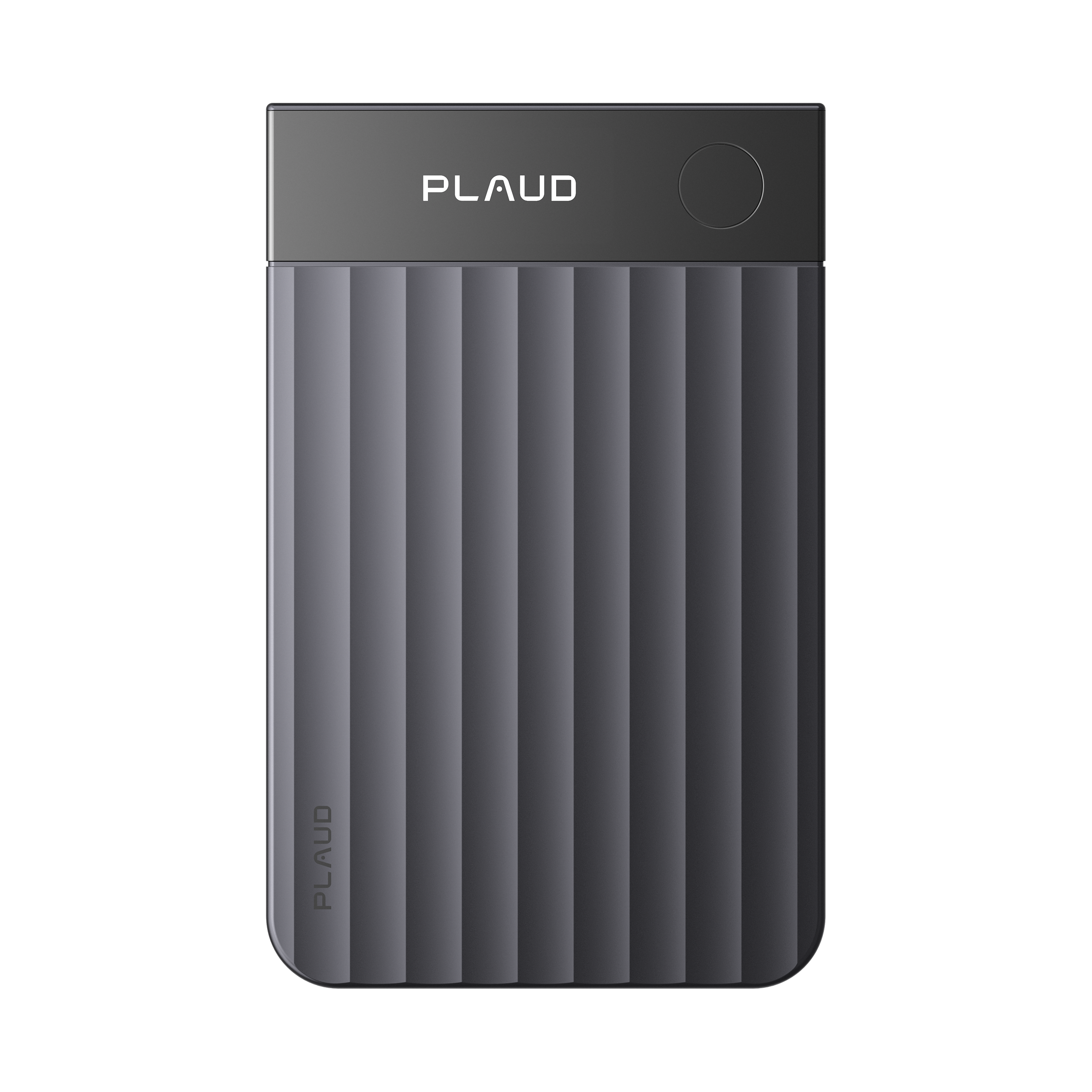
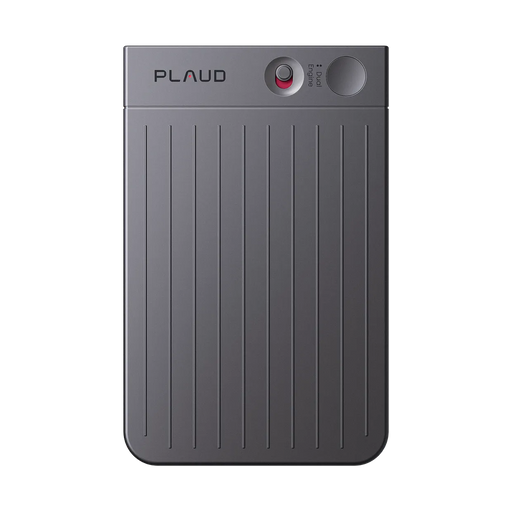
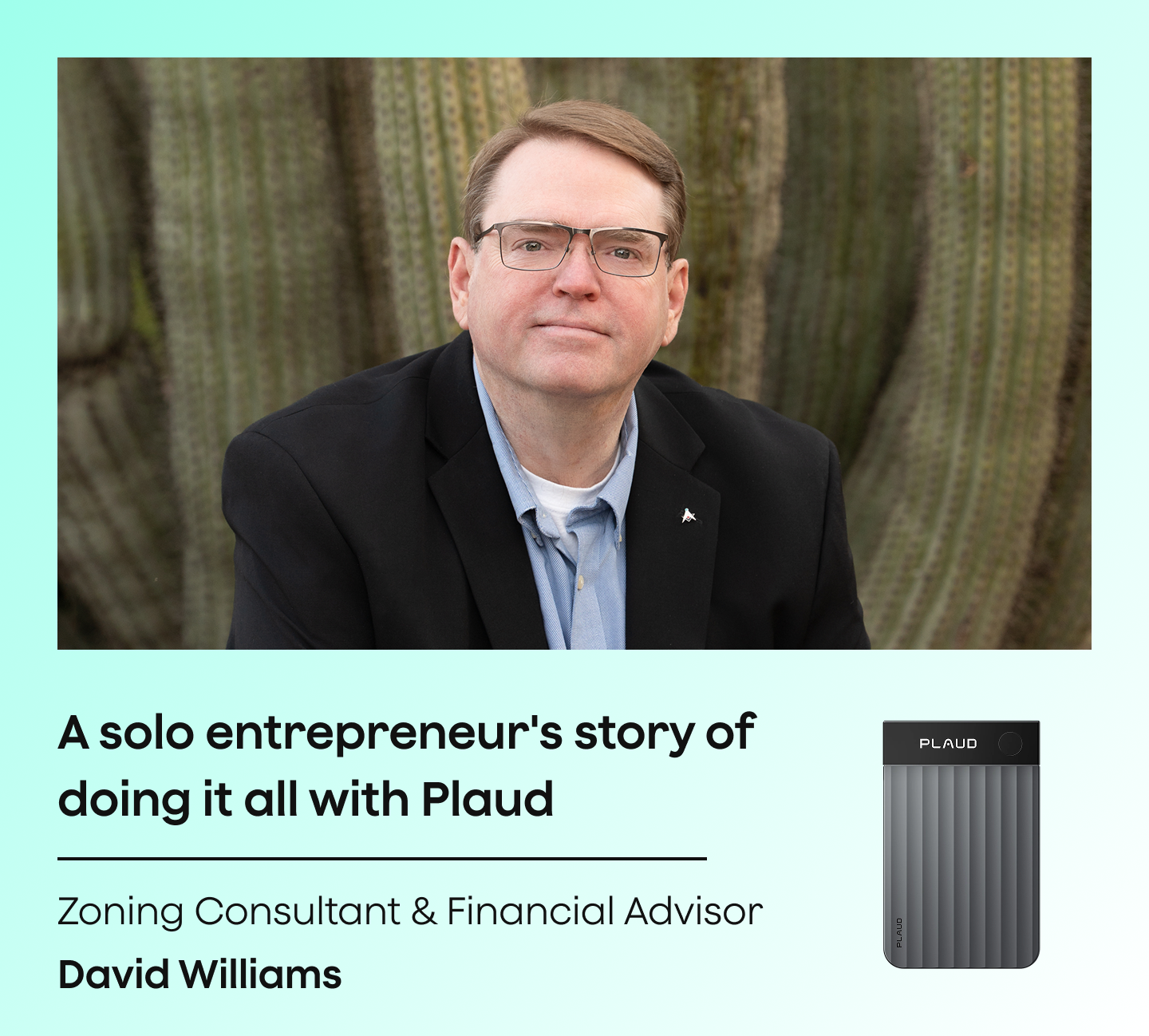
Dave Williams is all three. He found his assistant in a device the size of a credit card.
One man, two businesses, zero overhead
Based in Surprise, AZ, Dave has been running W3 Planning for over 10 years. It is a zoning due diligence business where he writes detailed legal reports for lenders evaluating apartment complexes, industrial sites, nursing homes, and other commercial shopping centers. It's meticulous, highly specialized work. A 2-inch-thick case file isn't unusual. Neither is a five-page checklist of jurisdictional requirements.
His second business is a financial wealth management advisory. Dave works as a licensed independent agent who leads with education, not a sales pitch. Every client session runs about an hour with no script. Dave understands that every client is different, and he wants to base his recommendations on each client’s individual needs.
Between the two businesses, Dave is constantly on. There's no 9 to 5. If a client wants to talk at 8 PM, he picks up. That's what sets him apart, and it's also what makes the administrative side relentless. Every call generates action items. Every meeting produces commitments. And for years, Dave was tracking all of it by hand.
"Hundreds and hundreds of notes," he said. “All handwritten.”
Dave’s search for a better system led him to Plaud. It gave Dave back what every solo entrepreneur is short on: time. Less admin, more billable hours. The busywork shrank. The business didn't.
From conversation to client file in minutes
Dave's work now runs like clockwork: the call ends, he hits generate, the summary drops, he moves it to the right project folder, and downloads a working copy to his client file. By the time his next call starts, the last one is fully documented.
"It's part of my workflow," He said with practiced certainty. It's not a step he remembers to do. It's a step he'd notice if he forgot.
To keep all his work organized, Dave saves his conversations into folders. Each project gets its own folder with recordings, summaries, and the documentation that backs every decision he's made. In wealth management, there's a compliance trail behind every decision: what was discussed, what was recommended, and why it was suitable for that person at that time. "It doesn't just end when I check the box," Dave said. "There's a lot more material that has to go behind the scenes." And Plaud generates that material in minutes, not hours.
For daily task management, Dave built a custom template that does something specific: it sorts his dictated notes into priority categories, assigns time estimates, and calculates total hours for the day. "I can say, 'we're going to meet with a client today to talk about financial–one hour,' and it filters it into the right column," he explained. The template gives him a categorized task list, time totals per category, and a full daily estimate, which he then drops into a Word doc to print out–some things are just better when it’s pen and paper, like checking off a to-do box.
For longer-term, complicated projects, Dave has built custom GPTs, using Plaud's output as the raw material to track where things stand and what's next. The recordings become the connective tissue across weeks or months of casework.
In the field: One of Dave's zoning clients ran into a regulatory dispute with an official. Dave made a single phone call, recorded it through Plaud, and had a transcription and summary in his client's hands within minutes to back them up. "Just having the ability to have something like that transcribed instantly that I can send out to protect my clients," he said, “That was great.” No waiting until he got back to his desk. No reconstructing the conversation from memory. No scrambling for a confirmation. The call itself became the record.
Writing a true crime book with Plaud
Then there's the book.
Dave is halfway through writing a true crime account of a murder he personally solved — a case from 1960s Scottsdale where Dave grew up. A young mother named Marion Robinson disappeared. Her body was eventually discovered in an empty canal. All the clues pointed to one person, but there was no hard evidence. The case gripped the community, haunted detectives, and went cold.
"Very Hannibal Lecter at the end of the day," is how he described the killing.
Years later, Dave was looped in through his work. What started as research became something more consuming: a deep investigation into details that had been buried, covered up, or simply forgotten. The original police reports were handwritten, decades old, and impossible to digitize through conventional means. So Dave read them aloud into Plaud, built a custom template for the output, and converted ink on paper from the 1960s into searchable, structured digital text.
"I tried to be as creative as I could with it," he said.
We didn’t create Plaud with cold case research in particular. But we did design Plaud to help people record, process, and document real-world context, and turn it into usable data that powers knowledge-based work.
The daily to-do list that writes itself in the car
Most people's best thinking doesn't happen at a desk. Dave's certainly doesn't. On his morning drive, he hits Record and talks through the day: priorities, time estimates, who to call, what to follow up on. Seven minutes, and it's all captured.
“I take the notes from Plaud, throw them into Word, adjust the formatting, and print it out,” He explained. From a voice note in the car to a categorized, time-estimated task list on his desk, every morning, before his first call.

"That's just how my mind works," he said. "It bounces all over the place." Plaud doesn't ask him to slow down or think linearly. It captures the way he actually works and gives it back to him in a form he can use.
Time and headspace: the simple ROI
When asked what Plaud has actually changed for him, Dave didn't hesitate: "It's time saved. It's the mental load. And it is truly being my AI assistant."
For someone running two client-facing businesses, the math is straightforward. Every minute Plaud saves on documentation is a minute he can spend on billable work. Every call he doesn't have to reconstruct from memory is a client he served faster.
"This is my administrative assistant," he said. "This is what takes my notes, gives me my to-do list, tasks, and management. All of that."
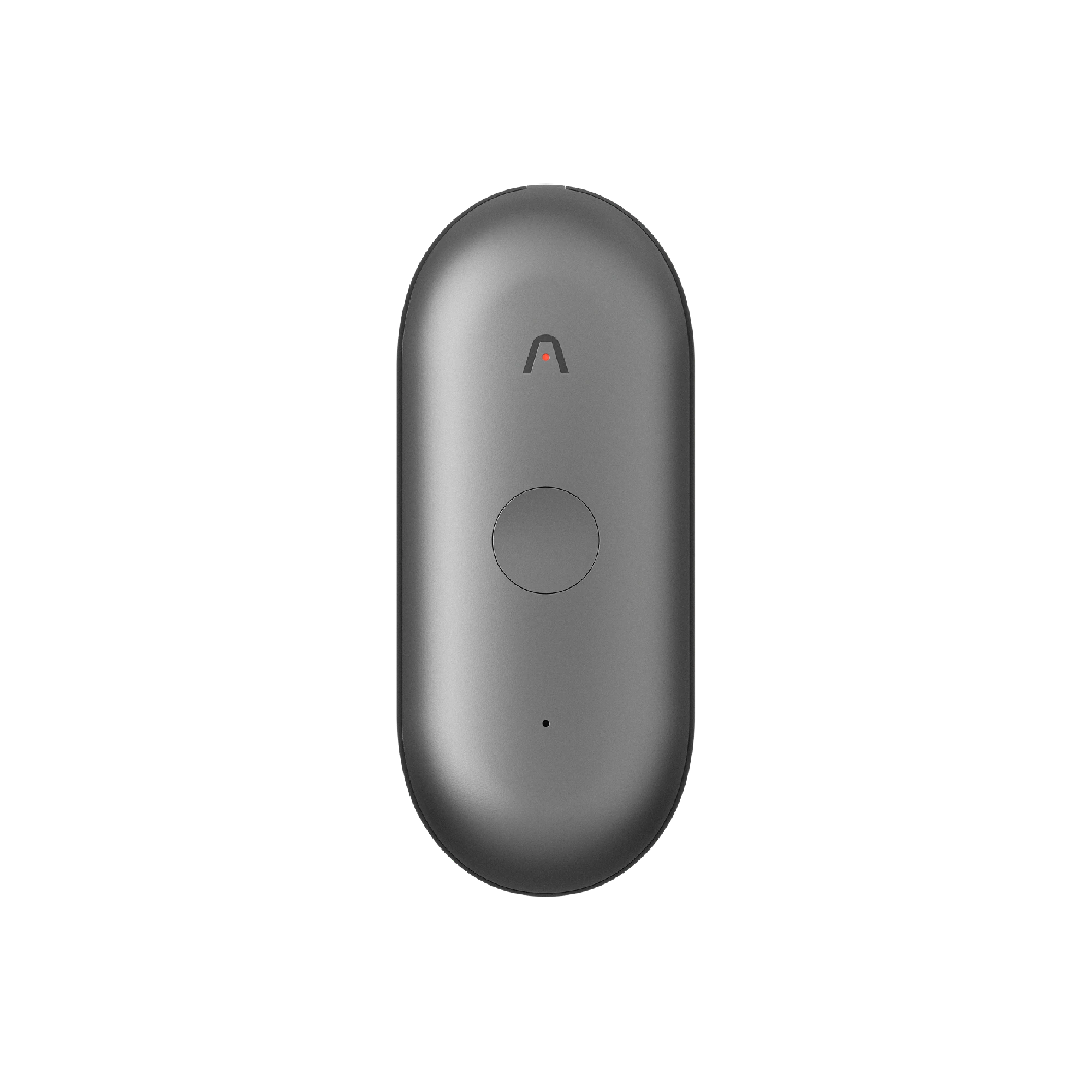
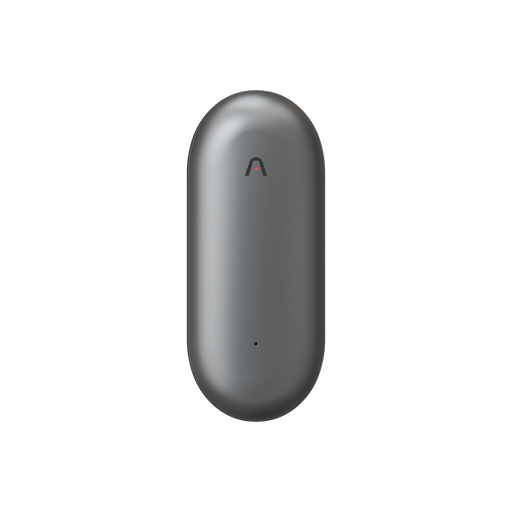
Most days, Dave’s Plaud Note Pro lives on the back of his phone, always ready whenever he is. When the setting calls for something more discreet or hands-free, he clips the NotePin to his lapel and lets it run. He still keeps a paper day planner and writes things down by hand, but the heavy lifting that used to take hours now takes minutes. And his business keeps running the way he’s built it: independently, efficiently, on his terms.
Learn more about Dave's work at w3planning.org and follow his upcoming true crime book at boundbysecrets.com.